

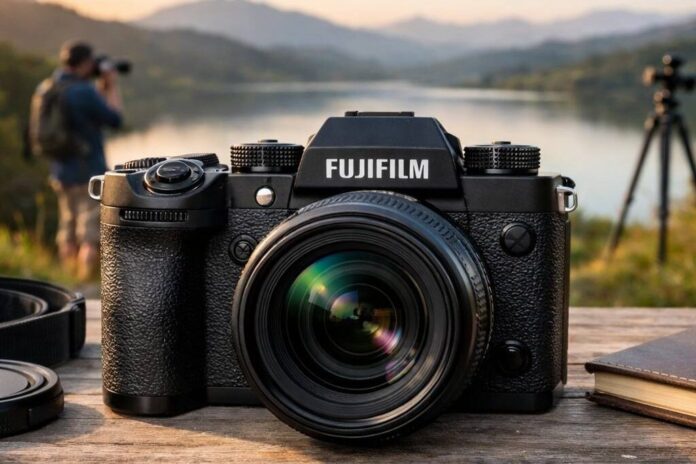
Choosing the best Fujifilm camera is not about finding one body that beats every other Fuji. That camera does not exist. Fujifilm’s strength is that the lineup has real personalities: the X100VI is disciplined and fixed-lens, the X-T5 is a stills camera with serious feel, the X-S20 is the sensible hybrid workhorse, and the X-H2S is the speed body.
My advice is to start with how you shoot, not with the newest spec. A street photographer, a travel creator, a wildlife shooter, and a portrait photographer should not all buy the same Fujifilm camera. The deliberately limited Fujifilm X half makes that point especially clearly: it suits vertical, JPEG-first creative play, not the buyer seeking one versatile body. That is the whole point of this guide.
- Best overall Fujifilm camera for photographers: Fujifilm X-T5
- Best compact fixed-lens Fuji: Fujifilm X100VI
- Best premium fixed-lens Fuji: Fujifilm GFX100RF
- Best hybrid Fuji for travel and video: Fujifilm X-S20
- Best small 40MP body: Fujifilm X-T50
- Best current entry-level Fuji: Fujifilm X-T30 III
- Best Fuji for action and wildlife: Fujifilm X-H2S
Best Fujifilm cameras by use case
| Use case | Best pick | Why it makes sense |
|---|---|---|
| Stills-first photographers | Fujifilm X-T5 | 40MP files, IBIS, weather resistance, dual card slots, and proper tactile controls. |
| Street and daily carry | Fujifilm X100VI | Fixed 35mm-equivalent view, hybrid finder, IBIS, leaf shutter, and a camera that rewards discipline. |
| Hybrid travel and creator work | Fujifilm X-S20 | IBIS, strong battery life, deep grip, 6.2K video, and easier handling than the tiny bodies. |
| Compact high-resolution travel | Fujifilm X-T50 | 40MP sensor and IBIS in a smaller body than the X-T5. |
| Wildlife, sports, and speed | Fujifilm X-H2S | Stacked sensor, 40 fps electronic shooting, CFexpress, strong EVF, and serious video tools. |
| Small rangefinder-style Fuji | Fujifilm X-E5 | 40MP, IBIS, compact styling, and lens flexibility for street and travel. |
| Compact first Fujifilm | Fujifilm X-T30 III | Current autofocus and 6.2K video in a 378g body with an EVF and classic controls. |
| Budget used Fuji | Fujifilm X-T30 II | Classic controls and strong 26MP image quality when priced like an older camera. |
Shop the main Fujifilm picks
If you already know which direction fits you, these are the main bodies I would compare first. I would still read the individual reviews before buying, because price and kit lens bundles can change the decision quickly.
Fujifilm X-T5

Fujifilm X100VI

Fujifilm X-S20

Fujifilm X-T50

Best overall Fujifilm camera: X-T5
If I had to choose one Fujifilm camera for a serious photographer, I would start with the Fujifilm X-T5. It is the best balance of image quality, handling, durability, and photographic intent in the current X lineup.
The reason is not only the 40MP sensor. The X-T5 gives you IBIS, weather-resistant construction, dual UHS-II card slots, a three-way tilt screen, and the classic Fuji dials that make the camera feel direct. In my experience, this body rewards people who like being involved in the exposure decision.
I would buy the X-T5 for travel, landscape, portraits, street, editorial work, and serious personal photography. I would not buy it as the first choice for heavy video or high-speed wildlife. It can do both, but the lineup has better tools for those jobs.
Best Fujifilm camera for street: X100VI
The Fujifilm X100VI is the Fuji camera people talk about for a reason. It gives you a fixed 23mm f/2 lens, a 40MP sensor, IBIS, a hybrid viewfinder, a leaf shutter, and a built-in ND filter in a compact body that genuinely changes how you shoot.
I like the X100VI most for photographers who already understand the point of a fixed lens. If you keep wishing for a zoom, buy something else. If you enjoy moving, waiting, and learning one field of view deeply, the X100VI is one of the most satisfying Fujifilm cameras you can own.
The buying warning is price. The X100VI is excellent at retail. It becomes much harder to recommend at inflated resale prices. If the market gets silly, consider the Fujifilm X-E5 or X-T50 with a compact prime instead.
Best Fujifilm camera for hybrid creators: X-S20
The Fujifilm X-S20 is probably the most rational Fuji body for people who shoot both photos and video. It is not the prettiest camera in the lineup, but it solves real problems: battery life, grip, IBIS, video tools, and travel practicality.
This is the body I would recommend to someone who wants one Fuji for travel stills, family work, YouTube-style clips, social video, and handheld low-light shooting. The larger NP-W235 battery matters. The deeper grip matters. The vari-angle screen matters.
The X-S20 is not weather sealed and it has one card slot, so I would not pretend it is a pro event body. But for a skilled enthusiast or compact hybrid shooter, it is one of the easiest Fujifilm cameras to recommend.
Best compact 40MP Fujifilm camera: X-T50
The Fujifilm X-T50 gives you much of the modern Fuji stills experience in a smaller body: 40MP files, IBIS, current autofocus, and a more compact shape than the X-T5.
I see it as the best Fujifilm camera for photographers who want high-resolution files but know they will carry a smaller body more often. It is a strong travel and everyday camera, especially with compact primes or the newer lightweight zooms.
The price needs discipline. If the X-T50 gets too close to an X-T5 deal, I would think hard. The X-T5 is the more serious body. The X-T50 wins when size and carry comfort matter enough to give up weather sealing, dual slots, and the larger body feel.
Best Fujifilm camera for wildlife and action: X-H2S
The Fujifilm X-H2S is the action specialist. Its stacked sensor, 40 fps electronic shooting, strong EVF, CFexpress support, and serious video tools put it in a different category from the romantic compact Fuji bodies.
If you shoot birds, wildlife, sports, dance, motorsports, or fast documentary work, the X-H2S is the body that makes Fujifilm feel fastest. It is also the Fuji I would choose for more demanding video work before choosing an X-T5 or X-T50.
n
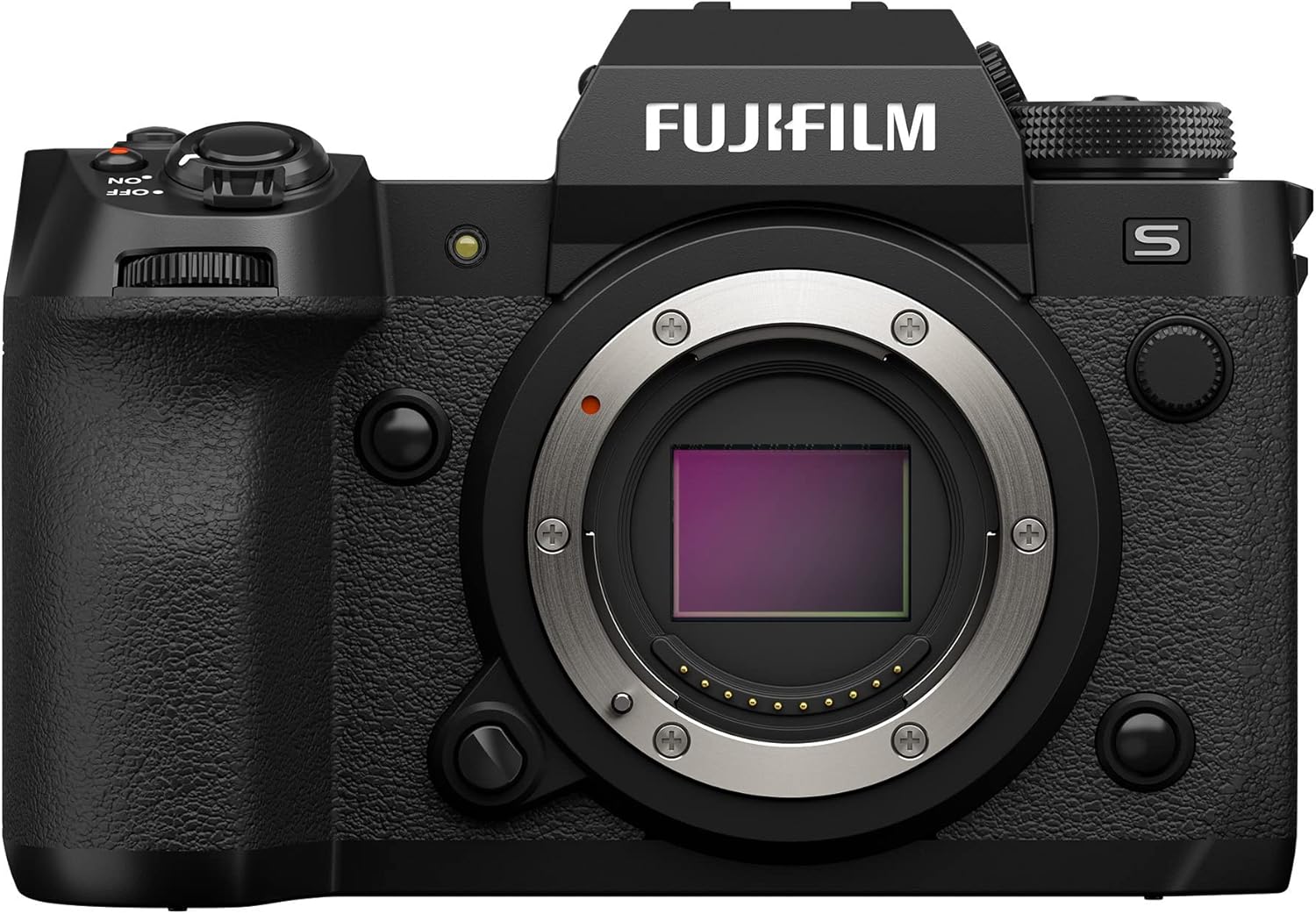
The tradeoff is cost and specialization. Do not buy the X-H2S just because it is a flagship. Buy it because speed is the problem you need to solve.
Best rangefinder-style Fujifilm camera: X-E5
The Fujifilm X-E5 is the best choice if you want a compact rangefinder-style body but do not want to be locked into the X100VI’s fixed lens. It gives you 40MP files, IBIS, modern autofocus, and the freedom to build around compact primes.
I would choose the X-E5 for street, travel, daily carry, and personal work where small size changes how often you shoot. The camera makes the most sense with lenses like a 23mm, 27mm, or 35mm compact prime.
n

It is not the value winner. It is a body you buy because the shape changes your relationship with the camera. If you want the most practical all-around Fuji, look at the X-T5 or X-S20 first.
Best used-value Fujifilm cameras
Used Fuji pricing can be strange because the market rewards charm almost as much as specs. The Fujifilm X-T30 II is a good value when it is priced like an older camera. It gives you classic controls, a 26MP X-Trans sensor, an EVF, and a small body that still feels very photographic.
The Fujifilm X-E4 is more dangerous. It is lovely with a pancake lens, but used prices can drift into nonsense. I would buy it only if the price leaves a clear gap below the X-E5 and X-T50.
The Fujifilm X100F is still a charming fixed-lens camera, but again, price matters. If hype pricing pushes it near newer X100 bodies or modern interchangeable-lens kits, I would walk away.
Where the X-T30 III fits
The Fujifilm X-T30 III is the current entry point for photographers who want a small X-mount body with an EVF and traditional exposure controls. It keeps the familiar 26MP sensor but adds X-Processor 5, current subject detection, and much stronger video than the X-T30 II.
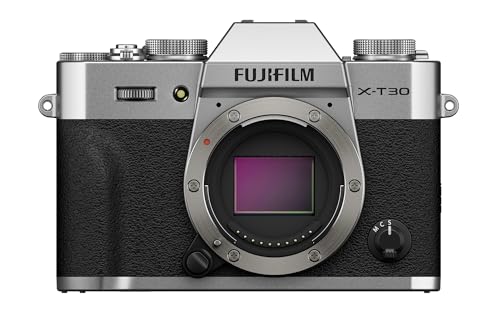
I would choose it over the X-M5 for stills and viewfinder use, and choose the X-T50 when 40MP and IBIS justify the higher price. It is the most balanced first Fuji for buyers who want the classic shooting experience without moving straight to X-T5 money.
Where the X-M5 fits
The Fujifilm X-M5 is the smallest current X-mount body and a very interesting camera for travel, social video, and everyday carry. It gives you Fujifilm color, modern autofocus, open-gate video, and a tiny footprint.


The reason I do not put it at the top of the overall list is simple: no EVF and no IBIS. For some people, that is fine. For photographers who compose through a viewfinder or shoot unstabilized primes in low light, it is a real compromise.
I would buy the X-M5 as a small second Fuji, a travel creator camera, or a casual carry body. I would not buy it as the main Fuji for a stills-first photographer who wants a classic viewfinder experience.
Fujifilm X Series vs GFX
Most readers should start with Fujifilm X Series cameras. X Series bodies are smaller, less expensive, faster, and supported by a lens system that makes sense for travel, street, portraits, video, and general photography.
GFX is different. Fujifilm GFX cameras are medium format tools for photographers who value maximum detail, tonal depth, studio work, landscapes, commercial portraits, and a slower way of shooting. They are not casual upgrades from X Series. They are a different system with different costs.
If you are deciding between systems, start with lenses. Our best Fujifilm X lenses guide covers the practical X-mount choices, while our best Fujifilm GFX lenses guide is the better path if medium format is genuinely on the table.
How to choose the right Fuji body
Pick the body around your shooting friction. If you miss shots because your camera stays home, choose smaller. If you miss shots because your subject moves too fast, choose faster. If you miss shots because the camera feels awkward with your lenses, choose better handling. If you miss shots because the light is low, prioritize IBIS and fast glass.
For most photographers, the decision narrows quickly:
- Choose X-T5 if stills quality, handling, and durability matter most.
- Choose X100VI if fixed-lens street shooting is the point.
- Choose X-S20 if photo and video matter together.
- Choose X-T50 if you want 40MP in a smaller body.
- Choose X-H2S if speed is non-negotiable.
- Choose X-E5 if compact rangefinder-style lens flexibility matters.
Final recommendation
For most serious stills photographers, the X-T5 is the body I would start with. It gives the strongest balance of image quality, handling, weather resistance, dual card slots, and long-term usefulness.
For street photographers, the X100VI is the strongest answer, as long as you buy it at a sane price and actually want the fixed-lens discipline. The best hybrid Fuji is the X-S20. The best speed Fuji is the X-H2S. The best compact high-resolution option is the X-T50.
That may sound like too many winners, but it is the honest answer. Fujifilm cameras are not interchangeable. The right one is the body whose compromises match the way you already like to shoot.
Frequently asked questions
What is the best Fuji camera overall?
For most stills photographers, the Fujifilm X-T5 is the best overall choice. It combines a 40MP sensor, IBIS, weather resistance, dual card slots, and excellent tactile controls.
What is the best Fuji camera for street photography?
The Fujifilm X100VI is the strongest street pick if you want a fixed-lens camera. If you want lens flexibility, consider the X-E5 or X-T50 with a compact prime.
What is the best Fuji camera for video?
The Fujifilm X-S20 is the best practical hybrid choice for most creators. The X-H2S is stronger for more demanding action and production work.
Are Fujifilm cameras good for beginners?
Yes, but choose carefully. The X-S20 is easier for a beginner who wants one flexible body. The X-T50 and X-T5 are better for beginners who specifically want to learn tactile stills photography.
Should I buy Fujifilm X Series or GFX?
Most photographers should buy X Series. GFX makes sense only if medium-format image quality, studio work, landscape detail, or commercial output justifies the larger system and cost.