
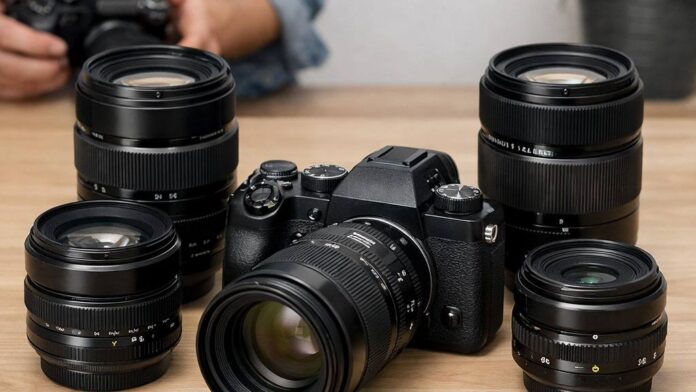
Choosing the best Fujifilm X lenses is less about chasing specs and more about matching glass to how you actually shoot. After years of using the X system in the field, I’ve found a handful of lenses that consistently deliver the right mix of sharpness, character, size, and value.
Quick Fujifilm X-mount lens picks
The best Fujifilm X lenses depend heavily on whether you want the small classic Fuji experience or the highest-performance APS-C kit. For most X-T, X-S, X-E, and X-M users, I would build around one everyday lens, one portrait or low-light prime, and one specialist lens for travel, wildlife, macro, or video.
- Best first Fujifilm X lens: a compact normal prime or a flexible standard zoom.
- Best travel setup: one small prime plus one stabilized zoom if you dislike changing lenses.
- Best portrait setup: a fast short telephoto prime for subject separation.
- Best video setup: quieter autofocus, useful stabilization, and balanced handling matter more than maximum aperture alone.
How to choose the right Fujifilm X lens
Match focal length to the way you shoot
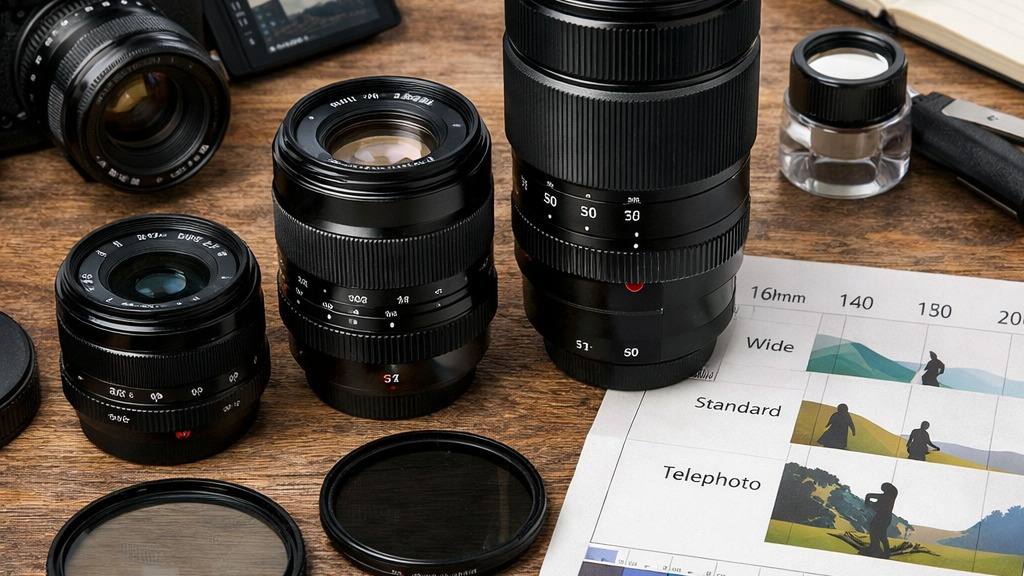
Your lens choice shapes your entire photographic experience. Before you get distracted by technical details, think honestly about what you like to photograph and your personal working distance. Do you find yourself stepping back for wide scenes, or do you instinctively move closer for details and intimate moments? For most photographers, a 23mm or 35mm equivalent (on APS-C, that means a 16mm or 23mm Fujifilm lens) feels natural for both travel and everyday shots.
Once you’ve narrowed down focal length and handling priorities, it helps to see how different Fujifilm bodies and lenses fit into the broader X-series experience. Browsing Fuji vs. Fuji can add useful context when you’re deciding whether a compact prime or a faster, larger option better suits your shooting style.
If you prefer portraits or subject isolation, a slightly longer lens, like a 56mm or 90mm, will give you more background blur and compression. On the other hand, street and documentary shooters often gravitate toward wider lenses for context and storytelling. Matching your focal length to your shooting style is the first and most crucial step in any Fujifilm X lens guide.
Decide how much size, speed, and stabilization matter
Fujifilm X lenses come in all shapes and sizes. Some, like the XF 23mm f/2, are compact and weather-sealed, perfect for travel or street work. Others, such as the XF 56mm f/1.2, are larger and heavier but offer creamy backgrounds and low-light capability. If you plan to shoot handheld in dim conditions or want to leave your tripod at home, in-lens or in-body stabilization can make a huge difference. Modern Fujifilm cameras with IBIS (in-body image stabilization) open up more options, but not every lens has OIS (optical image stabilization), especially the faster primes.
Consider weight, bulk, and your willingness to carry gear all day. For many, a single compact prime or a versatile zoom is easier to live with than a bag full of heavy glass. In short: define your needs, then look for lenses that fit those priorities, not the other way around. This will help you truly find the best Fujifilm X lenses for your shooting style.
Best all-around Fujifilm X lenses for most photographers
The best everyday prime for image quality and portability
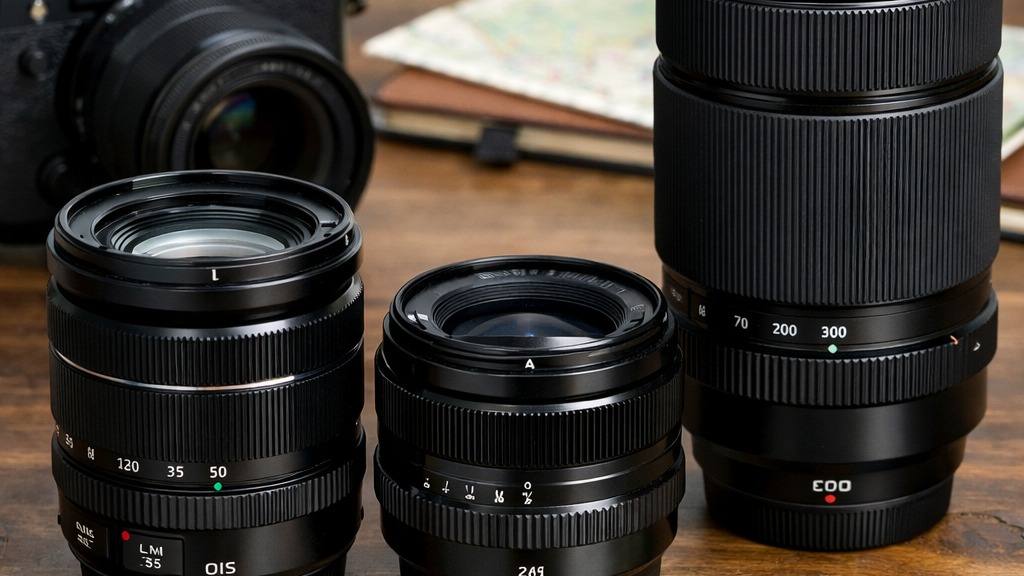
For daily use, nothing beats a fast, small prime lens that feels invisible on your camera. My top pick is the Fujifilm XF 23mm f/2 R WR. This lens is sharp, focuses quickly, and barely adds weight to your kit. Its field of view is equivalent to 35mm on full frame, which is a classic ‘do-it-all’ focal length. Whether you’re shooting family, travel, food, or street scenes, the 23mm f/2 rarely feels out of place.
If you like a slightly longer perspective, the XF 35mm f/2 R WR is another fantastic option. Both lenses are weather-resistant, affordable, and deliver beautiful color and contrast. They’re ideal for shooters who want one lens to cover 80% of daily photography, and they complement the compact size of the latest X-series bodies. If you only buy one lens for a Fujifilm X camera, make it one of these f/2 primes.
The most useful standard zoom for travel and general shooting
While primes offer purity and speed, a well-executed zoom can be more practical for travel or unpredictable situations. The Fujifilm XF 18-55mm f/2.8-4 R LM OIS is, in my view, the best Fujifilm standard zoom for its balance of image quality, compactness, and price. Unlike typical kit zooms, the 18-55mm is sharp across the frame, has a fast aperture for low light, and includes effective optical stabilization. It covers everything from wide landscapes to short telephoto portraits.
If you want even better optics and don’t mind extra weight, the XF 16-55mm f/2.8 R LM WR is a pro-level option with weather sealing and constant f/2.8 aperture. However, for most photographers, the 18-55mm is smaller and more portable, making it the best Fujifilm X lens for everyday use if you want flexibility without a bag full of primes.
Best Fujifilm X lenses for portraits and subject separation
Portrait primes that balance sharpness and character
When it comes to portraits, you want a lens that flatters your subject and gives you control over background blur. The classic choice here is the Fujifilm XF 56mm f/1.2 R. This lens is famous for its soft, smooth bokeh and razor-sharp focus plane. It’s a favorite among professional portrait shooters and anyone who wants that cinematic look. The newer XF 56mm f/1.2 R WR adds weather resistance and further optical refinement, but even the original version remains a top pick if you find it used.
If you prefer a little more compression and even more background separation, the XF 90mm f/2 R LM WR is outstanding. It offers blazing autofocus, beautiful color, and bokeh that melts away distractions. For tighter spaces or more environmental portraits, the XF 35mm f/1.4 R is a legend in the Fuji community, thanks to its unique rendering and creamy backgrounds. Each of these lenses earns its place as a Fujifilm portrait lens for subject separation and character.
When choosing the best Fuji lens for bokeh, consider both focal length and aperture. The longer the lens and the wider the aperture, the more dramatic the effect. However, sometimes the classic look of the 35mm f/1.4 or 56mm f/1.2 renders skin tones and backgrounds in a way that feels more organic than clinical sharpness alone.
Best Fujifilm X lenses for street, documentary, and travel
Compact wide and normal lenses for fast, discreet shooting
Street and documentary photography demand lenses that are fast to use, unobtrusive, and reliable in any weather. The Fujifilm XF 23mm f/2 R WR and XF 35mm f/2 R WR are nearly perfect here, thanks to their compact size, silent autofocus, and weather sealing. You can walk for hours with either lens and never draw attention or feel weighed down. Their moderate field of view lets you include context without distortion and still isolate a subject when needed.
If you lean wider for storytelling, the XF 18mm f/2 R is a unique gem in the system. It’s not the sharpest at the edges, but its pancake form factor, snappy autofocus, and distinctive rendering make it ideal for candid work. Paired with a newer X-series body, it feels almost as small as a compact digital camera, a trend that’s seeing a resurgence as we approach 2026.
For travelers, the classic 23mm or 18-55mm zoom covers nearly any scenario, from city streets to mountain landscapes. These compact Fujifilm X lenses let you work quickly, stay discreet, and travel light. If you want to blend in and capture authentic moments, small primes and the 18-55mm zoom are your best starting points. I’ve used these lenses on assignment and personal trips, and they’re reliable partners in unpredictable conditions.
Best Fujifilm X lenses for landscapes, architecture, and detail
For me, the best Fujifilm X lenses for landscapes and architecture are the ones that combine superb edge-to-edge sharpness, minimal distortion, and weather resistance. Wide-angle primes and zooms dominate here, but your choice depends on how you like to compose, and whether you often shoot interiors, cityscapes, or dramatic vistas. If you also enjoy close-up nature work, a macro lens offers incredible versatility and detail.
Wide-angle options for scenery and interiors
When I want to capture sweeping views or intricate interiors, my go-to is a dedicated wide-angle. The best Fujifilm wide-angle lens for most landscape shooters is the XF 16mm f/1.4 R WR. It is razor-sharp even wide open, with almost no visible distortion, and the weather sealing means I never worry about mist or drizzle. The 24mm equivalent focal length is wide enough for drama but not so extreme that it distorts edges or makes composition tricky.
If you need a true ultra-wide, the XF 10-24mm f/4 OIS WR is the best Fujifilm X lens for landscape photographers who want flexibility. Its zoom range covers everything from broad vistas at 10mm (15mm equivalent) to more natural scenes at 24mm. The updated version is weather-sealed and has improved stabilization, making it a solid choice for travel and hiking. While it is not as small as a prime, the image quality is excellent across the frame.
For architecture and interiors, where straight lines matter, the XF 14mm f/2.8 R stands out. It is small, fast to focus, and virtually distortion-free – still one of the sharpest lenses in the X lineup. I love using it for urban exploration or interior shots where space is tight and perspective control is critical.
Macro-friendly choices for close-up work
If you enjoy capturing fine details – textures, foliage, insects, or product shots – a macro lens opens up a new world. The best Fujifilm macro lens for most users is the XF 80mm f/2.8 R LM OIS WR Macro. It offers true 1:1 magnification, lightning-fast autofocus, and optical stabilization. The working distance is generous, so you will not scare off your subject or cast shadows. It also doubles as a short telephoto for portraits or compressed landscapes.
On a tighter budget or if you want something lighter, the XF 60mm f/2.4 R Macro is a classic. It does not reach full 1:1 but delivers beautiful sharpness and smooth bokeh for flowers, small objects, or detail studies. I have used it for both macro and as a compact portrait lens – its rendering is very natural and pleasing.
For those who want wide-angle macro or creative close-ups, the Laowa 65mm f/2.8 2x Ultra Macro is a manual focus alternative that goes beyond life-size magnification. It has no autofocus, but for patient shooters or those working on a tripod, it unlocks unique perspectives.
Best Fujifilm X telephoto lenses for sports, wildlife, and reach
Telephoto lenses are essential for wildlife, sports, and any subject where you cannot get close. The best Fujifilm telephoto lens balances reach, speed, and handling. I have used both primes and zooms in the field, and each has advantages depending on your subject and working conditions.
The XF 100-400mm f/4.5-5.6 R LM OIS WR is the best Fujifilm X lens for wildlife by far. With a 150-600mm equivalent range, it brings distant animals, birds, and athletes close. Its autofocus is fast and reliable, the stabilization is excellent for handheld shots, and weather sealing keeps out dust and rain. I have shot eagles and field sports with this lens and rarely missed a moment. The only drawback is its size, but serious wildlife or outdoor sports shooters will accept the bulk for the reach and image quality.
If you want a lighter setup, the XF 70-300mm f/4-5.6 R LM OIS WR is a fantastic choice. It is much more portable, balances well even on smaller X bodies, and covers most sports and wildlife scenes. The image stabilization is strong enough for lower light, and autofocus keeps up with action. For travel or hiking, this is often my preferred telephoto.
For pro-level sports, the XF 50-140mm f/2.8 R LM OIS WR is the best Fujifilm lens for sports thanks to its fast constant aperture, quick focusing, and robust build. The 75-210mm equivalent range is perfect for indoor sports, stage events, or portraits from a distance. It is heavy, but if you need consistent f/2.8 and fast tracking, this lens delivers every time.
Prime telephotos, like the XF 200mm f/2 R LM OIS WR, are rare and expensive. For the few who need maximum subject separation and light gathering, they are unbeatable, but most shooters will get more versatility from zooms.
Which Fujifilm X lenses offer the best value
Value is not only about price; it is about what you get for your money in terms of image quality, versatility, and build. Some of Fujifilm’s oldest lenses remain best value Fujifilm X lenses even today. The XF 35mm f/2 R WR and XF 23mm f/2 R WR are affordable Fujifilm lenses that punch well above their weight. They are small, optically excellent, weather-sealed, and focus quickly. I always recommend these to new X shooters or anyone looking for a lightweight kit.
If you are on a strict budget, the XC 35mm f/2 and XC 50-230mm f/4.5-6.7 OIS II are real bargains. The XC primes and zooms lack weather sealing and metal construction, but their optics are surprisingly good for the price. They are a great entry point for students or those upgrading from compact digital cameras, which are making a comeback in 2026.
For zoom lovers, the XF 18-55mm f/2.8-4 R LM OIS is still the budget Fujifilm X lens to beat. It is often included as a kit lens but outperforms most kit zooms from other brands by a wide margin. It covers travel, portraits, and everyday use with confidence.
Occasionally, you may find older, non-weather-sealed primes (like the XF 18mm f/2) at a discount. If you are not shooting in rough conditions, these can be great deals for creative work.
My final recommendations by shooting style
After years with the X system, I have learned that the best Fujifilm X lenses are the ones that fit your style, not just the ones with the most impressive specs. Here are my top picks by genre:
- Travel and street: XF 23mm f/2 R WR or XF 35mm f/2 R WR. Both are discreet, sharp, and quick to focus – ideal for walking cities or candid moments.
- Portraits: XF 56mm f/1.2 R for creamy bokeh and subject separation. The new APD version is even smoother, but the original is still fantastic.
- Landscapes and architecture: XF 16mm f/1.4 R WR for those who want the best wide-angle prime, or XF 10-24mm f/4 OIS WR for zoom versatility.
- Macro and detail: XF 80mm f/2.8 R LM OIS WR Macro for full 1:1 work, or XF 60mm f/2.4 R Macro for lighter, more affordable close-ups.
- Sports and wildlife: XF 100-400mm f/4.5-5.6 R LM OIS WR for maximum reach, or XF 70-300mm f/4-5.6 R LM OIS WR for portability.
If you want a single lens to cover most needs, the XF 18-55mm f/2.8-4 R LM OIS remains a standout. For those on a budget, the XC series primes and zooms deliver far more than their price suggests.
Ultimately, the right lens is the one that inspires you to shoot more. Try before you buy if possible and do not ignore older or third-party options – many offer unique rendering or value that can help you create your signature style. For more hands-on impressions and sample images, resources like Fuji vs. Fuji are worth a visit.
Frequently asked questions
What is the best Fujifilm X lens for beginners?
The XF 35mm f/2 R WR is my top pick for new Fujifilm users. It is small, affordable, delivers beautiful images, and works for portraits, street, and everyday shooting. The 23mm f/2 R WR is another great choice if you prefer a wider view.
Which Fujifilm X lens is best for portraits?
The XF 56mm f/1.2 R is widely regarded as the best Fujifilm X lens for portraits. Its fast aperture creates stunning background blur and sharp subject separation. For a more budget-friendly option, the XF 50mm f/2 R WR is also excellent.
Do I need prime lenses or zoom lenses for Fujifilm X cameras?
Both have advantages. Primes are lighter, faster, and often sharper, making them ideal for low light and creative work. Zooms offer flexibility and convenience, especially for travel and events. Many photographers use a mix of both depending on the situation.
What is the best travel lens for the Fujifilm X system?
For versatility, the XF 18-55mm f/2.8-4 R LM OIS is hard to beat. If you want to go even lighter, pair the XF 23mm f/2 R WR or XF 35mm f/2 R WR with your X body for a discreet and sharp travel setup.