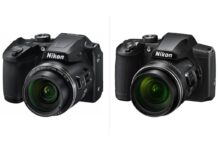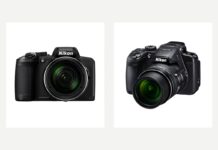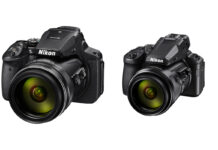

The best Nikon Coolpix camera in 2026 depends on which part of the Coolpix world you are shopping. For a current US-market camera with serious reach, the Nikon Coolpix P1100 is the flagship and the P950 is the more balanced value. Used-camera buyers also have a deep bench of older superzooms, while the renewed interest in pocket digicams has created a separate market for S- and A-series models.
Those are three different buying decisions. A P1100 is a large 125x bridge superzoom built for distant birds, aircraft, wildlife, and the moon. A retro Coolpix is usually a small used compact bought for its flash-heavy look, pocketability, and shooting experience. Comparing them as if they compete for the same job produces a useless list.
This guide separates current cameras, used superzooms, rugged models, and retro pocket Coolpix cameras. The ranked seven remain the models I would consider first for practical photography; the retro section explains what to inspect and when an older pocket model is actually worth its inflated used price.
Which Nikon Coolpix should you buy in 2026?
Start with the kind of camera you want, not the largest zoom number.
Buying a current Nikon Coolpix in the US
- P1100: the best current Coolpix for maximum reach, especially for birding, moon photography, distant wildlife, and aviation.
- P950: the smarter all-day choice when 2000mm-equivalent reach is enough and you value lower weight and a better live price.
Shopping for a used superzoom
- P1000: consider it only when it is meaningfully cheaper than a P1100 in comparable condition.
- B500 or B600: simpler, less expensive options for family trips, outdoor events, and casual long-zoom shooting.
- A1000: the pocketable travel choice, but only at a sensible used price.
- W300: the rugged option for water, sand, cold, and rough travel.
Looking for a retro pocket Coolpix
Look mainly at the slim S-series and selected A-series compacts, then buy on condition rather than internet hype. The Coolpix S6900 is a good example of the category: its vari-angle touchscreen and built-in stand make it more distinctive than a generic old compact, but it is not a substitute for a modern superzoom or a low-light camera.
The Nikon Coolpix comparisons that matter
The model names make this range look more complicated than it is. These are the comparisons that actually change the buying decision.
P1100 vs P950: maximum reach or better everyday value?
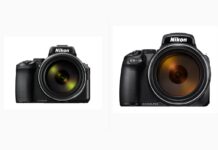
Choose the P1100 when 3000mm-equivalent reach is the reason you are buying the camera: moon photography, distant birds, aircraft, or subjects where 2000mm is genuinely not enough. Choose the P950 when you want a lighter camera, substantial 2000mm-equivalent reach, and a more balanced live price. Both use 16MP 1/2.3-inch sensors, shoot RAW and 4K, and share the small-sensor limitations discussed below. The P1100 does not deliver a proportional image-quality upgrade; you are mainly paying for the final 1000mm of reach and the newer body.
P1100 vs P1000: new replacement or older bargain?
The P1100 is a modest evolution of the P1000 rather than a new imaging platform. They share the same core 125x, 24-3000mm concept, so the decision is driven by live price, condition, warranty, USB-C charging, and the P1100’s smaller operational updates. If their prices are close, buy the P1100. For every technical difference, read the Nikon P1100 vs P1000 comparison.
B500 vs P900: family simplicity or serious superzoom?
The B500 is smaller, lighter, simpler, and convenient for casual family use with AA batteries. The P900 is the more serious long-range camera, with an 83x zoom and electronic viewfinder, but it is larger and more demanding. Both are older used-market purchases, so condition and live price matter as much as specifications. See the full Nikon B500 vs P900 comparison.
Current Nikon Coolpix lineup vs older models
This is where many buying guides get sloppy. Nikon USA’s current Coolpix range is centered on the P1100 and P950. P950 new and refurbished availability can fluctuate, but both belong to the current long-zoom buying conversation. The other cameras in this guide are used, renewed, refurbished, or old-stock purchases in the US.
Older Coolpix cameras remain relevant when they solve a specific problem: they offer far more optical reach than a phone, fit a pocket, survive water and sand, or deliver the direct-flash digicam look a buyer actually wants. Their age alone does not make them bargains. Condition, accessories, return policy, and live price matter at least as much as the original specifications.
What the Nikon Coolpix letters mean
The letters are useful signposts, not a perfect hierarchy. Nikon reused them across a long and varied product history.
- P-series: performance-oriented Coolpix cameras. Recent examples are enthusiast superzooms, although older P models were not all bridge cameras.
- B-series: approachable bridge-style zoom cameras, usually simpler and less expensive than the large P-series bodies.
- S-series: slim, style-led pocket compacts. These are central to the current retro-digicam interest.
- A-series: the least consistent label. It includes basic compacts, the A1000 travel zoom, and the very different APS-C Coolpix A. Always check the full model name.
- W- and AW-series: waterproof or rugged cameras designed for harsher use.
A modern phone will usually beat an older small-sensor compact in dim indoor light, night scenes, and automatic HDR. It cannot reproduce a true 35x, 83x, or 125x optical zoom, and it is not a replacement for a properly sealed rugged camera. That is the practical reason Coolpix cameras still have a place.
How I ranked the best Nikon Coolpix cameras
I did not rank these models by spec-sheet bragging rights alone. With Coolpix cameras, the right choice depends heavily on use case because the lineup stretches from pocket travel zooms to giant bridge-style superzooms and rugged waterproof compacts.
Here is what I care about most when comparing Nikon Coolpix models:
- Real zoom usefulness: Not just the number on the box, but whether the camera is actually stable and practical at the long end.
- Handling: Grip, controls, finder, and whether the camera is enjoyable to carry for a full day.
- Image quality in the situations people really buy these for: daylight travel, family outings, wildlife, casual video, and outdoor use.
- Current relevance: whether the model is still sold new, easy to support, or only worth buying used at the right price.
- Value: whether the camera still earns its size and cost compared with a phone or a mirrorless alternative.
Top 7 Nikon Coolpix cameras worth buying
1. Nikon Coolpix P1100: Best Nikon Coolpix camera overall
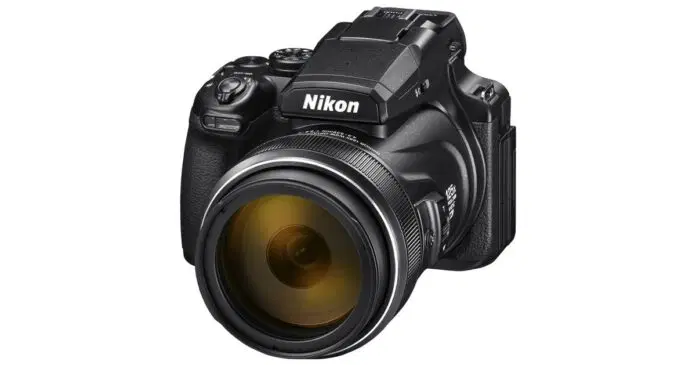
If your goal is to buy the best Nikon Coolpix camera available new, the P1100 is the cleanest answer. It is Nikon’s current flagship compact superzoom, and it keeps the defining Coolpix strength alive: absurd optical reach in one self-contained camera.
What makes the P1100 special is not just the 125x zoom headline. It is the fact that Nikon still gives you a 24-3000mm equivalent range in a body that a dedicated birder, wildlife traveler, or moon shooter can actually bring into the field without carrying lenses. That is the entire point of this camera. You trade pocketability and low-light finesse for reach that no phone can fake.

Why it ranks first:
- Current Nikon flagship, so it is the safest new-buy recommendation.
- 125x optical zoom remains the defining Coolpix advantage.
- Best fit for birding, safari travel, moon shots, air shows, and distant landscape detail.
- Still easier and cheaper than building a long-lens mirrorless kit for casual supertelephoto use.
Watch-outs:
- Large body for a “compact” camera.
- Small sensor means only average low-light performance.
- Best results come when you shoot with patience and good technique, especially at extreme focal lengths.
Who should buy it: Serious zoom users, wildlife hobbyists, aviation shooters, and travelers who specifically want extreme reach in one camera.
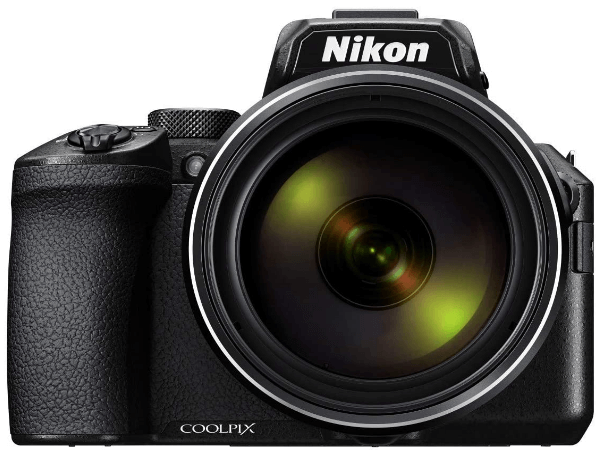
2. Nikon Coolpix P950: Best value for most Coolpix buyers
The P950 is the Nikon Coolpix I would recommend to most US buyers who want serious reach but do not specifically need 3000mm equivalent. Its 83x, 24-2000mm-equivalent zoom is still enormous in practical terms, while the body is roughly 400g lighter than the P1100. Nikon USA refurbished pricing also makes it substantially easier to justify.
In real use, that matters more than chasing the longest number on paper. A camera you are willing to carry, raise quickly, and use often is more valuable than a longer zoom you leave at home. The P950 also makes more sense if you want a current Nikon superzoom but do not need the P1100’s full telescope effect.
Why it stands out:
- Available through Nikon USA refurbished stock, with a Nikon-backed buying route.
- 83x zoom is still massive for wildlife, travel, and outdoor events.
- Easier to carry than the P1100 for longer days.
- A smarter fit for buyers who want giant reach without going all the way to the flagship.
Who should buy it: Birders, zoo shooters, travelers, and hobbyists who want serious range with slightly less bulk.
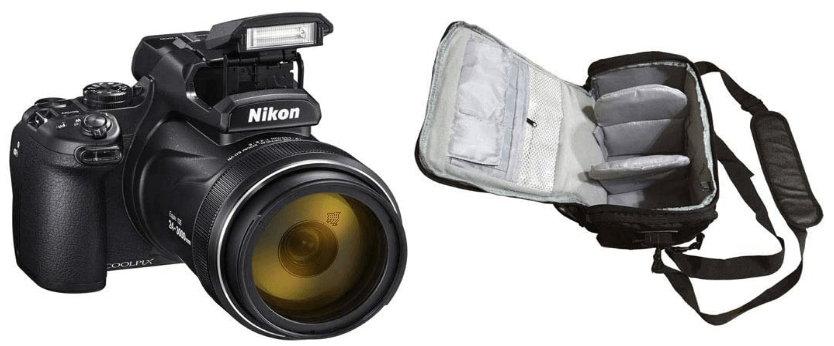
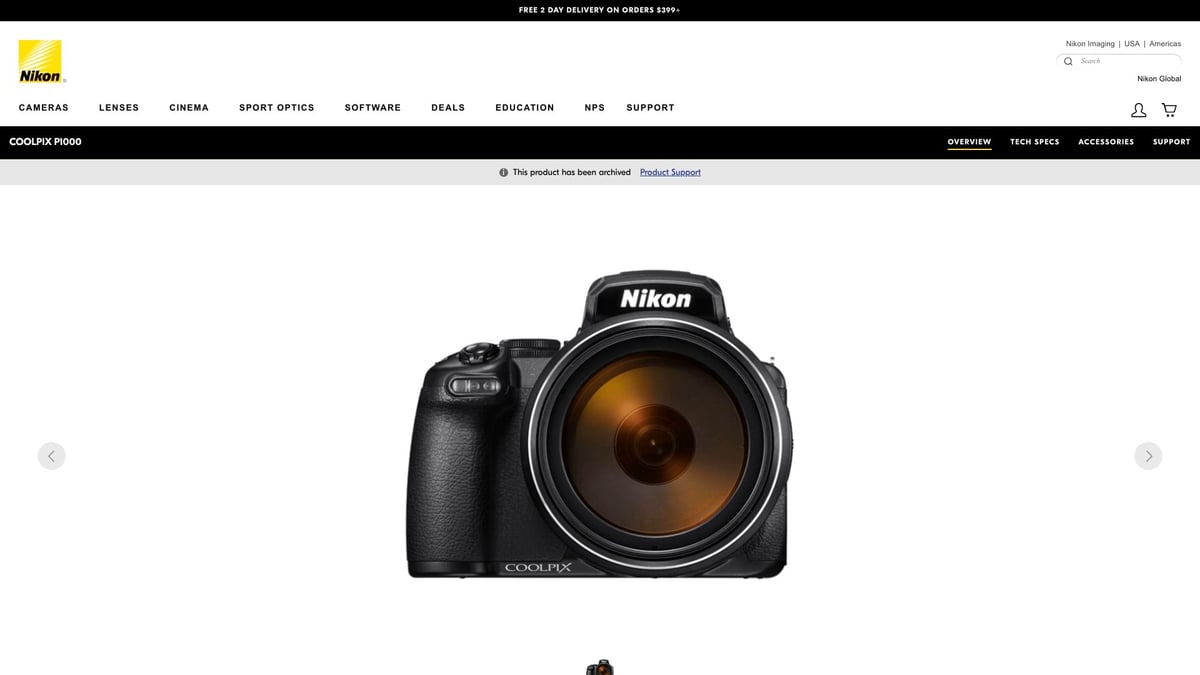
3. Nikon Coolpix P1000: Buy only at a genuine used discount
The P1000 is older now, but it is still one of the most recognizable Nikon Coolpix cameras ever made. The problem is current US pricing: warrantied used examples can cost almost as much as a used or discounted P1100. It is a legitimate recommendation only when the actual saving is large enough to compensate for its age, older USB connection, and lack of the P1100 updates.
Do not assume the P1000 is automatically the value choice because it is older. Check its live price against the P1100 before buying. If the prices are close, choose the newer P1100. Consider the P1000 only when the saving is genuinely meaningful and the seller includes the battery, charging equipment, hood, cap, and a solid return policy.
Best points:
- 125x optical zoom still feels unique.
- Excellent for moon photography, distant wildlife, and specialty long-reach work.
- Can make sense only when the used price is substantially below a comparable P1100.
Main compromises:
- Big, heavy, and not subtle.
- Not a low-light specialist.
- Used-market condition matters a lot, so buy carefully.
Who should buy it: Buyers who specifically want 3000mm-equivalent reach and find a warrantied P1000 at a genuine discount. Everyone else should compare the P1100 and refurbished P950 first.
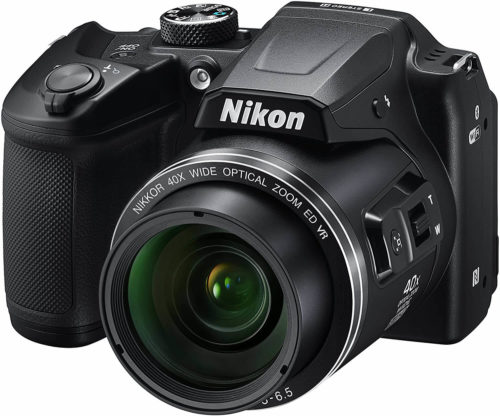
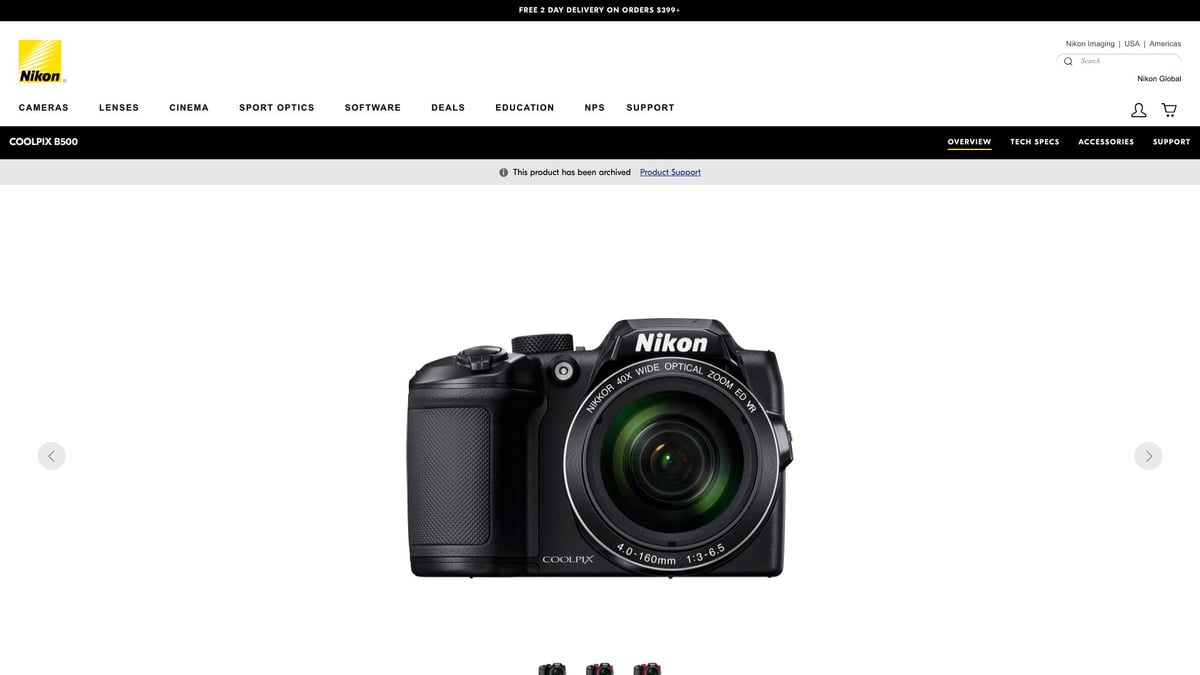
4. Nikon Coolpix B500: Best Nikon Coolpix for families
The B500 remains one of the easiest Coolpix recommendations because it understands what casual buyers actually need. You get a 40x zoom, simple controls, a tilting rear screen, SnapBridge, and the practical convenience of AA batteries. That last point matters more than many spec lovers admit, especially for family travel and occasional use.
This is not the Coolpix for photographers chasing control, RAW-heavy workflows, or serious low-light work. It is a convenience camera with real optical reach, and that makes it more useful than many older point-and-shoots. If your camera mostly comes out at vacations, school events, parks, and family gatherings, the B500 still earns its keep.
Why it still works:
- 40x zoom covers most family and travel needs better than a phone.
- AA batteries are convenient for occasional users and trips.
- Easy menus and forgiving handling make it beginner-friendly.
Where it falls short:
- No serious enthusiast control set.
- Indoors and in poor light, your phone may still win on convenience and processing.
Who should buy it: Families, casual travelers, parents, and beginners who want a simple zoom camera that does not feel intimidating.
If you want more detail on how it handles in real use, the B500 section above points to the full review.
5. Nikon Coolpix A1000: Conditional pocket-travel choice
The A1000 is the Nikon Coolpix I would steer toward travelers who want a compact camera that still feels like a real camera. Its 35x zoom, 4K video, tilting touchscreen, and built-in electronic viewfinder make it more photographer-friendly than many small travel zooms.
The A1000 is small enough to bring along and capable in bright travel conditions, but scarcity can push used examples toward premium prices. Check the current price before treating it as a value option. Compare it with newer compact and mirrorless alternatives, and buy only when pocketability plus its 35x zoom and EVF are worth the trade-off to you.
Why it is here:
- Best balance of pocketability and useful zoom in the lineup.
- EVF helps in bright light where phone screens become annoying.
- 4K and RAW support give it more headroom than many casual compacts.
Trade-offs:
- Small sensor means limited low-light margin.
- Not the camera for serious action or indoor sports.
Who should buy it: Travelers, city walkers, cruise and vacation shooters, and anyone who wants a smaller alternative to a bridge camera.
If you want a wider category comparison, pair this with our best point and shoot camera guide.
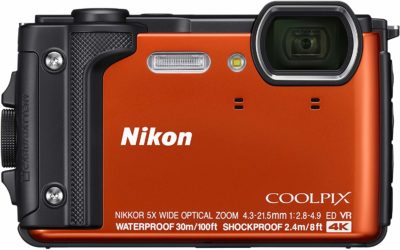
6. Nikon Coolpix W300: Best rugged and waterproof Coolpix
The W300 is still the Nikon Coolpix to buy when the environment is the main challenge. It is not about maximum zoom. It is about being able to shoot in places where you would rather not expose a standard compact or a phone.
That makes it especially useful for beach travel, boats, snorkeling, rainy hikes, pool days, and family trips where durability matters more than lab-perfect image quality. The W300 also makes more sense than many “action camera alternatives” for buyers who still want a conventional camera experience with a rear screen and straightforward shooting.
Why it remains relevant:
- Rugged body for water, sand, cold, and rough travel.
- 4K video and GPS are genuinely useful for adventure use.
- A safer choice than a standard compact in harsh conditions.
Limits to understand:
- Only a modest 5x optical zoom.
- Image quality is fine for its role, but not exceptional in dim light.
- You buy it for toughness first, not for pure image quality.
Who should buy it: Outdoor travelers, divers, hikers, boaters, beach families, and anyone who wants a camera that can take abuse.
For similar use cases, also compare broader waterproof-camera options before buying.
7. Nikon Coolpix B600: Best used bridge-camera value
The B600 is the most sensible recommendation for buyers who want a bridge-style Coolpix with more reach than the B500, but do not want the size, weight, or cost jump of the giant superzooms. Its 60x lens gives you meaningful extra flexibility for wildlife parks, outdoor events, and sightseeing.
I would not rank it above the P950 or A1000 in the current market, but it still deserves a place because it hits a useful middle ground. The B600 is not glamorous. It is simply practical, and practical cameras often age well.
What it gets right:
- 60x zoom is a real step up from the B500.
- Bridge-style shape is comfortable for many casual shooters.
- Useful as a value buy if found at a sensible used price.
What holds it back:
- No 4K.
- Not compact enough to pocket, not advanced enough to excite enthusiasts.
Who should buy it: Casual wildlife, event, and family shooters who want more reach than the B500 and are shopping on value.
The full B600 review goes deeper on that middle-ground role.
Nikon Coolpix comparison table
The lens figures below are 35mm equivalents. Weights include the battery and memory card where Nikon specifies them that way.
| Model | Class / year | Lens | Weight | RAW / video | US buying route | Best use and main catch |
|---|---|---|---|---|---|---|
| P1100 | P superzoom / 2025 | 24-3000mm, 125x | 1410g | Yes / 4K 30p | Current, new | Maximum reach; very large and limited by its 1/2.3-inch sensor in poor light |
| P950 | P superzoom / 2020 | 24-2000mm, 83x | 1005g | Yes / 4K 30p | New, refurbished, or used | Best balance for serious zoom; still a substantial camera |
| P1000 | P superzoom / 2018 | 24-3000mm, 125x | 1415g | Yes / 4K 30p | Used or renewed | Extreme reach at the right price; poor value when priced near a P1100 |
| B500 | B bridge zoom / 2016 | 22.5-900mm, 40x | 542g | No / 1080p 30p | Used | Simple family zoom with AA batteries; no EVF or RAW |
| A1000 | A travel zoom / 2019 | 24-840mm, 35x | 330g | Yes / 4K 30p | Used | Pocket travel and an EVF; scarcity can inflate the price |
| W300 | W rugged / 2017 | 24-120mm, 5x | 231g | No / 4K 30p | Used or renewed | Water and rough travel; used seals and corrosion require inspection |
| B600 | B bridge zoom / 2019 | 24-1440mm, 60x | 500g | No / 1080p 30p | Used | Affordable reach; no EVF, RAW, or 4K |
Best Nikon Coolpix by buyer type
If you want the decision boiled down even further, this is how I would split it:
- Best Nikon Coolpix camera for wildlife: P1100 if budget and size are not deal-breakers. P950 if you want a more manageable field camera.
- Best Nikon Coolpix for most casual buyers: B500.
- Best Nikon Coolpix for travel: A1000 if compact size matters, W300 if rugged conditions matter more.
- Best Nikon Coolpix for the used market: P950 refurbished for the strongest value and support balance; B500 when its live price remains comfortably below the more capable alternatives. Treat P1000, A1000, W300, and B600 as price-dependent purchases.
- Best retro pocket Coolpix: S6900 when you specifically value its vari-angle touchscreen and social-camera design; otherwise buy the cleanest sensibly priced S-series compact you can test.
Are Nikon Coolpix cameras still worth buying?
Yes, but only if you buy them for the right reason.
If your main goal is casual indoor family photos, quick social sharing, or night scenes in mixed light, a modern phone is often the smarter tool. The older small-sensor Coolpix models do not magically beat smartphone processing in those situations.
If your goal is optical reach, travel flexibility, or rugged use, Coolpix still makes sense. That is why the line survives. A phone cannot give you the P1100’s 3000mm equivalent reach. A phone cannot replace a dedicated waterproof W300 at the beach or underwater. A phone also does not give you the A1000’s combination of travel zoom and EVF in a compact camera body.
The trick is to be honest about what problem you are solving. Buy Coolpix for zoom, convenience, and durability. Do not buy it because you assume any dedicated camera will automatically beat your phone in every situation.
What matters most when comparing Nikon Coolpix models
1. Zoom range only matters if you can hold it steady
It is easy to get hypnotized by 60x, 83x, and 125x claims. In real shooting, stabilization, grip, shutter speed, and patience matter just as much. The P1100 and P1000 are wonderful when used deliberately. They are not cameras that reward sloppy technique at the long end.
2. Small-sensor reality matters
Most Coolpix models here use small sensors. In good daylight, they can produce perfectly enjoyable travel, wildlife, and family images. In poor indoor light, they hit their limits quickly. That is normal, and it is the trade you make for long zoom lenses in compact bodies.
3. Handling matters more than many buyers expect
The biggest difference between something like the A1000 and the P1100 is not just zoom. It is how likely you are to bring the camera with you. The best Nikon Coolpix camera is not always the one with the most range. It is the one that matches your actual shooting habits.
4. Battery type changes the ownership experience
The B500’s AA batteries still make sense for occasional users and travel. Other models use proprietary rechargeable packs, which are more streamlined day to day but require a bit more planning.
How I would choose today
If I were helping a friend shop this category right now, this is how I would narrow it:
- If they asked for the best Nikon Coolpix camera with no qualifiers, I would say P1100.
- If they wanted the best balance of price, weight, and serious reach, I would check Nikon-refurbished P950 stock first.
- If they wanted the easiest family camera with real zoom, I would say B500.
- If they wanted a travel-friendly compact that still feels like a camera, I would say A1000.
- If they wanted a beach and adventure camera, I would say W300.
- If they were bargain hunting used gear, I would compare the live prices first and reject any P1000 priced close to a P1100.
If you are already in the Nikon ecosystem or just want to get more out of a compact zoom setup, our guide to essential Nikon Coolpix accessories is also worth reading.
Waterproof Nikon Coolpix cameras: W300, W150, and used buying cautions
If your reason for buying a Coolpix is water, sand, kids, beach travel, or snorkeling, treat the waterproof models differently from the zoom models. A used waterproof camera can look fine on the outside but still have tired seals, corrosion, a cloudy lens cover, or battery-door damage that makes it a bad buy.
The W300 is the more serious rugged Coolpix option, while the W150 is closer to a simple family and kid-friendly waterproof camera. I would buy either only if the seller can show clean battery contacts, a tight door seal, a clear lens cover, and working buttons. If there is any sign of saltwater corrosion or a swollen battery, I would skip it.
For most buyers, the waterproof Coolpix question is not just image quality. It is risk. A phone in a waterproof pouch can handle casual splashes, but a rugged compact is still nicer for pool days, beach bags, and handing a camera to a child. For broader non-Nikon options, compare the best waterproof camera guide and the best underwater camera for snorkeling guide.
Retro Nikon Coolpix cameras: what is worth buying?
The renewed interest in old pocket digicams has changed Coolpix pricing. Buyers are not necessarily chasing technical image quality. They want a small camera, direct flash, simple operation, and a rendering that feels less processed than a phone. That is a legitimate creative preference, but it also means a fashionable model can cost far more than its specifications justify.
The slim S-series is the obvious place to look. The Nikon Coolpix S6900 is particularly interesting because its vari-angle touchscreen, front shutter release, and built-in stand give it a genuine social-camera identity. Models such as the S7000 and S3700 are more conventional pocket compacts. The A-series needs more care because Nikon used that letter for everything from basic cameras to the A1000 travel zoom and the premium APS-C Coolpix A.
My used Coolpix inspection checklist
- Lens mechanism: power the camera on several times and run the zoom through its full range. Grinding, hesitation, or a lens error is a reason to leave it.
- Flash and controls: fire the flash, test every button and dial, and check touchscreens at the edges as well as the center.
- Battery and charger: confirm the exact battery model, charger, and USB cable. Replacements can erase the apparent saving.
- Memory card support: very old Coolpix cameras may have card-capacity limits. Confirm compatibility before buying a large modern SD card.
- Sample files: inspect images at full size for dust, haze, dead pixels, uneven sharpness, and sensor damage.
- Seller protection: a return window is worth paying for. A clean exterior does not prove that the retracting lens or flash works reliably.
I would pay a modest premium for a genuinely clean, complete example. I would not pay collector pricing for an untested camera simply because it appears in social-media posts.
Older Nikon Coolpix superzooms: when they still make sense
The best older Coolpix superzooms still solve a clear problem: more optical reach than a phone in a self-contained camera. The B500 remains friendly for family use because the grip is comfortable, the 40x range is useful, and AA batteries are easy to replace. The B600 and B700 suit buyers who want stronger reach in a bridge-style body. The P900 and P1000 remain relevant for extreme zoom, but compare their condition and live price with the current P950 and P1100 before spending serious money.
These cameras perform best in good light. At the long end, heat haze, subject movement, shutter speed, and support technique can damage detail before the lens runs out of reach. I would rather have a clean P950 that I am willing to carry than a bargain P1000 with a rough zoom mechanism and no return policy.
How to compare Coolpix cameras without getting lost
When you compare Coolpix cameras, start with four practical questions instead of starting with megapixels.
- Do you need new-camera support? Start with the P1100 or P950.
- Do you need maximum zoom? Look at the P1100, P1000, P950, P900, B700, and B600 in that order.
- Do you need something easy for family use? The B500 remains the simplest used-market answer.
- Do you need waterproofing? Look at the W300 or W150, but inspect condition carefully.
That is why I do not think there is one best Nikon Coolpix camera for everyone. There is a best current Coolpix, a best used superzoom, a best family Coolpix, a best pocket travel Coolpix, and a best waterproof Coolpix. The ranking above is built around those real buying situations.
Nikon Coolpix FAQ
Which Nikon Coolpix is the best?
The best Nikon Coolpix camera for maximum reach in 2026 is the P1100. For most value-conscious US buyers, a Nikon-refurbished P950 is the more balanced purchase because it is lighter, substantially cheaper, and still reaches 2000mm equivalent.
Which Nikon Coolpix camera is best for travel?
The A1000 is the best travel-focused Coolpix for most buyers because it balances compact size, 35x zoom, 4K, and an electronic viewfinder. If your travel includes water, sand, or rough weather, the W300 is the better choice.
Does Nikon still make Coolpix cameras?
Yes. Nikon USA still lists current Coolpix cameras, with the P1100 and P950 forming the long-zoom lineup as of July 27, 2026. Most pocket and rugged Coolpix models are now used-market purchases.
Is the Nikon Coolpix better than a phone?
For low light and casual everyday snapshots, not always. For long optical zoom, rugged travel use, and subjects that a phone cannot physically reach, yes.
What is the difference between the Nikon Coolpix B500 and B600?
The B600 gives you a longer 60x zoom, while the B500 adds a tilting screen and AA-battery endurance. The B500 is the better family pick. The B600 makes sense when more reach is the priority. See our Nikon B500 vs B600 comparison for the full used-buying decision.