
View full specs
The Fujifilm X half makes an unusual bargain with the photographer: accept vertical framing, baked-in color, and a simulated-film ritual in exchange for much of a modern camera’s flexibility. This Fujifilm X half review asks whether that bargain fits the way you shoot. At its much lower 2026 price, the answer can be yes, but it remains a creative side camera rather than a sensible all-rounder.
- Best for: daylight walks, parties, travel diaries, diptychs, and photographers who enjoy committing to a look in-camera.
- Skip if: you need RAW files, stabilization, burst shooting, weather protection, reliable action AF, or serious video.
- Buying line: Fujifilm’s US store showed prices as low as $500.95 in July 2026. Near $500 it is interesting; near its $849.99 launch price it is poor value.
- Core compromise: this camera delivers an experience and a finished JPEG, not a flexible digital negative.
What the Fujifilm X half actually is
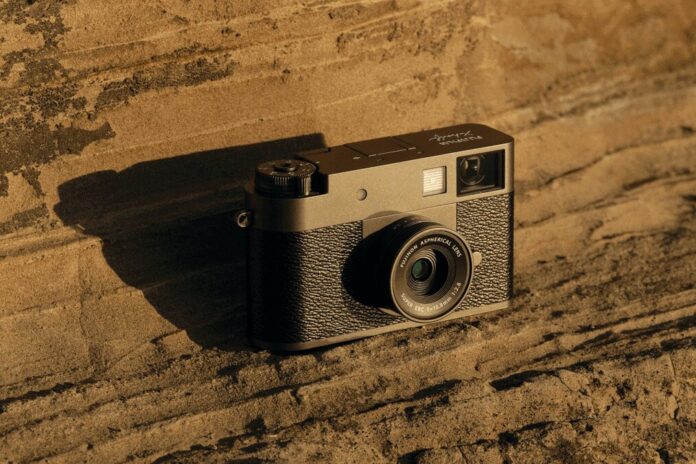
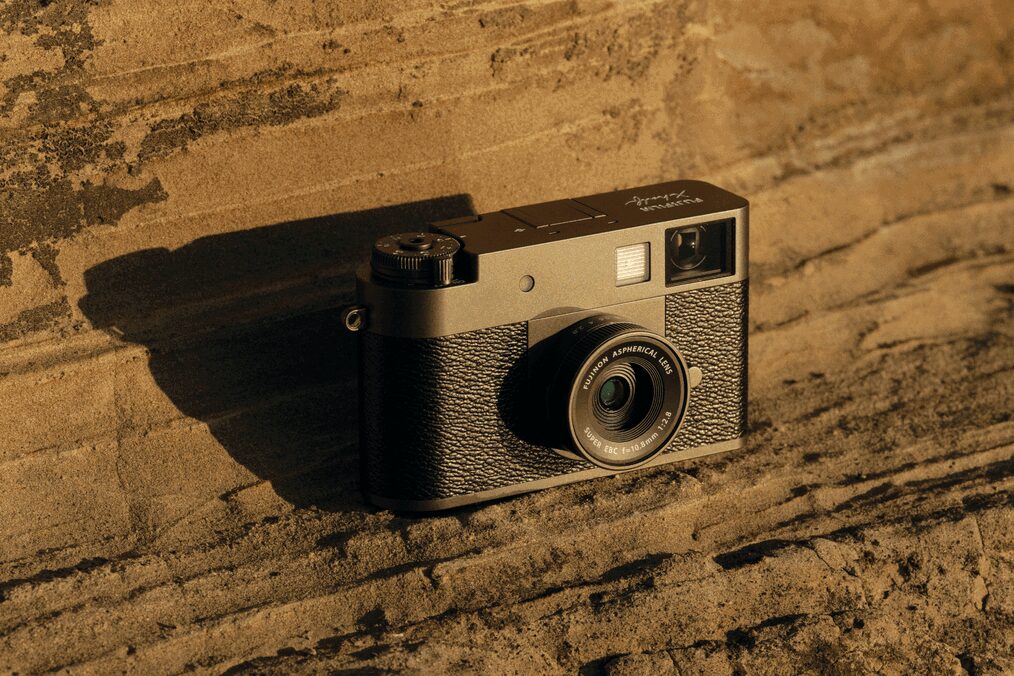
The X half, formally the X-HF1, is a 240g fixed-lens compact built around a vertically oriented 1-inch-type sensor. It records 17.74MP 3:4 JPEGs through a 10.8mm f/2.8 prime lens, which gives the angle of view of a 32mm lens on full frame. Hold the camera normally and you get a vertical picture. Turn it on its side for a horizontal frame.
That sounds like a digital half-frame camera, but the analogy only goes so far. A film half-frame camera exposes half of a 35mm frame and doubles the number of photographs per roll. The X half simply uses a vertical digital sensor and borrows the rituals. Its lever, sub-display, Film Camera Mode, date stamp, and optical finder are designed to change how you shoot.
Fujifilm’s official X half specifications also reveal how specialized it is. There is no RAW capture, no stabilization, no burst mode, and no electronic viewfinder. This is not a small X100VI or an entry-level X-system body. It is a self-contained visual toy in the best and worst senses of that word.
Design and the vertical shooting experience
The 105.8 x 64.3mm body is genuinely compact, although its 45.8mm depth means “jacket pocket” is more honest than “jeans pocket.” It weighs 8.5 ounces with battery and card. The body is not weather sealed, so a loose everyday carry still needs a small case around rain, sand, and lint.
The reverse-Galilean optical viewfinder is central to the idea. It offers about 0.38x magnification and roughly 90% coverage, but it is not through the lens. Framing is approximate, there is no exposure preview, and parallax becomes relevant at close range. You also do not get the hybrid overlays that make the X100 series finder so useful. Allow extra space around important edges until you learn what the finder excludes.
A 2.4-inch, 920k-dot vertical touchscreen handles live view, menus, and playback. A second narrow display shows the selected Film Simulation or filter. The exposure-compensation dial and aperture ring give the camera some tactile credibility, while the advance lever activates its signature modes. Still, much of the operation depends on swipes and taps. Photographers who prefer direct buttons may find the interface more cute than quick.
The fixed 32mm-equivalent view is an excellent everyday compromise. It is wide enough for groups, streets, food, and environmental portraits without the stretched look of an ultrawide phone camera. It is not wide enough for cramped interiors, and it offers no optical zoom. That single perspective is either welcome discipline or the first reason to walk away.
Image quality and the JPEG-only bargain
The 1-inch-type BSI sensor sits between a typical phone sensor and APS-C in size. In good light, 17.74MP is enough for detailed social output, photo books, and moderate prints. The f/2.8 lens and 32mm-equivalent angle are also well suited to ordinary life. What the camera does not offer is much recovery room when the exposure or white balance is wrong.
Every still is a JPEG. Fujifilm provides 13 Film Simulations, including Provia, Velvia, Classic Chrome, Reala Ace, Classic Neg, Nostalgic Neg, Eterna, and Acros variants. There are also 26 creative filters. Light Leak, Halation, Expired Film, Double Exposure, and other effects can make a series feel coherent before it reaches a phone. Film Simulations and filters cannot be stacked, however, so the creative menu is broad rather than infinitely combinable.
The practical cost is finality. A high-contrast street scene that clips a highlight stays clipped. Mixed indoor light is harder to correct cleanly, and aggressive shadow recovery can expose noise and JPEG artifacts. ISO runs from 200 to 12,800, but the small sensor and lack of stabilization make the upper range an emergency tool. I would treat the X half as a daylight and bright-interior camera, not a night compact.
That limitation can be productive. Choosing color and exposure before the shutter press keeps the edit short and makes a set feel intentional. It only works if you want that discipline. If you routinely deliver files to clients, print large, or revisit color months later, JPEG-only capture is a buying stop sign.
Film Camera Mode, 2-in-1, and the app cost
Film Camera Mode is the feature that makes the X half more than a vertical point-and-shoot. Pick a Film Simulation or filter and a “roll” of 36, 54, or 72 frames. Live view and playback then disappear, and you must compose through the optical finder and pull the lever after each exposure. When the roll is finished, the dedicated X half app “develops” and transfers it. You can cancel a roll early, but the app remains part of seeing those images.
This can turn an evening or weekend into one visual sequence instead of hundreds of isolated files. It also adds friction. A phone connection, another app, and delayed review are not inherently more authentic than digital playback. They are useful only if postponing judgment changes your attention for the better.
The lever also creates 2-in-1 files. You can pair two stills, two videos, or a still and a video in-camera. The app can combine existing stills and adjust the divider, but mixed-media combinations must be made in-camera. Diptychs are the most original part of the concept because they encourage sequence, contrast, and cause-and-effect rather than a single polished frame.
Normal JPEGs can move by USB-C or through the app, and firmware 1.30 expands direct instax printer support. The camera uses one UHS-I SD/SDHC/SDXC slot. A basic Class 10 UHS-I card is sufficient for its Full HD video; expensive UHS-II media will operate only at UHS-I speed.
Autofocus, low light, battery, and video limits
Autofocus is contrast-detect, with single or continuous AF, area selection, and face/eye detection. Manual focus is available on the lens ring. That is adequate for people who pause, travel details, and ordinary street scenes. There is no animal, bird, or vehicle recognition, and no continuous shooting at all. Erratic children, pets, sports, and fleeting gestures expose the camera’s limits quickly.
The lens shutter runs as fast as 1/2000 second and as long as 15 minutes in manual or shutter-priority modes. There is no mechanical or electronic stabilization. A steady 1/60 second is a safer everyday floor than gambling on very slow handheld exposures, especially with an 18MP file that offers limited room to hide blur.
Battery life is the pleasant surprise. The NP-W126S is rated for about 510 frames using the LCD or 880 through the optical finder. It is a real Fujifilm battery used by several X-series cameras, not a disposable generic pack. USB-C charging is supported, and Fujifilm also lists the BC-W126S external charger as compatible.
Video is strictly for fragments. The X half records vertical Full HD H.264 at 24p in 8-bit 4:2:0, plus slow-motion options captured at 28, 36, or 48 fps. Each clip is limited to 60 seconds. There is no stabilization, microphone input, HDMI output, or 4K. Audio is stereo, and a supplied USB adapter can provide headphone monitoring, but that does not turn this into a creator camera.
X half vs X-M5, X100VI, and other compact cameras
The Fujifilm X-M5 is the rational alternative. It has a much larger APS-C sensor, RAW capture, interchangeable lenses, stronger autofocus, burst shooting, and serious 6.2K video. It lacks a viewfinder and becomes larger once a lens is attached. Choose it when photographic flexibility matters more than the X half ritual.
The Fujifilm X100VI is the premium photographer’s compact. It offers a 40.2MP APS-C sensor, RAW, IBIS, a faster f/2 lens, and a hybrid finder, but it costs far more and is not nearly as light. Its 35mm-equivalent view is close enough that the decision is about file quality and control, not perspective.
A Ricoh GR III, GR IIIx, or newer GR IV is better for a truly pocketable APS-C stills camera. Those models provide RAW and stabilization but no built-in viewfinder. A used Sony RX100 model is better if one small zoom camera must handle travel. A recent phone remains better for stabilized video, instant sharing, and low-light computational processing.
Our compact-camera buying guide is the better starting point if you have not yet decided between fixed lens, pocket zoom, creator compact, or rugged camera. The X half should be chosen after that decision, not because its styling wins the first impression.
Price, buying traps, and who should buy it
Fujifilm launched the X half in the US at $849.99 in June 2025. That was too close to more capable APS-C bodies. By July 2026, Fujifilm’s own US store displayed pricing as low as $500.95. At roughly $500, the camera moves from indefensible luxury to a plausible second camera for someone who specifically wants its process.
Confirm the color, condition, warranty, and return policy before treating an “as low as” price as universal. Do not overpay for a bundle padded with a slow card, generic batteries, a mini tripod, and cleaning accessories. The useful extras are modest: a reliable UHS-I Class 10 SD card, a wrist strap, and perhaps a genuine spare NP-W126S.
On a used body, check the lens for haze and impact damage. Test the optical finder, both rear displays, aperture ring, exposure dial, lever, USB-C port, card slot, face detection, and Film Camera Mode connection. Heavy discounting from launch also means resale value is uncertain. Buy this camera to use, not as a collectible.
Buy it for a distraction-limited daylight diary, for vertical compositions, or because diptychs and delayed review will genuinely shape a project. Skip it as your only camera, for paid work, action, night streets, long video, or any workflow built around RAW development.
Fujifilm X half verdict
The Fujifilm X half is not a miniature X100VI and should not be judged as one. It is a purpose-built prompt: see vertically, choose a look, accept the file, and sometimes wait before reviewing it. That prompt can be creatively valuable. The compact body, 32mm-equivalent lens, long battery life, and excellent 2-in-1 idea make it more thoughtful than a novelty filter wrapped in retro styling.
The compromises remain severe. JPEG-only capture, no stabilization, no burst, approximate framing, basic autofocus, a 60-second Full HD video ceiling, and app dependence all reduce its usefulness. I would not recommend it at anything close to launch price. Around $500, I would recommend it narrowly to experienced photographers who already own a dependable camera and want this exact set of constraints.
For everyone else, the X-M5, a Ricoh GR, a used premium zoom compact, or a good phone is the smarter purchase. The X half earns a qualified yes only when its limitations are the feature you came to buy.
Fujifilm X half (X-HF1) alternatives
The main alternatives to the Fujifilm X half (X-HF1) are Fujifilm X-M5, Ricoh GR III/IIIx/IV, Fujifilm X100VI, used Sony RX100 models. Compare autofocus, stabilization, video limits, lens choice and current price before deciding which camera fits you best.
Frequently asked questions
Does the Fujifilm X half shoot RAW?
No. It records JPEG stills only. Film Simulation, filter, white-balance, and exposure decisions are baked into the file, so there is much less editing latitude than with RAW.
Does the Fujifilm X half have image stabilization?
No. There is no optical, in-body, or electronic stabilization for stills or video. Use sensible shutter speeds, steady technique, or a tripod when the light falls.
Can the X half shoot horizontal photos?
Yes. The sensor and interface default to a vertical 3:4 frame when the body is held normally. Rotate the whole camera 90 degrees to make a horizontal photograph.
Is the Fujifilm X half good for beginners?
It is easy to start with, but not the best camera for learning a flexible digital workflow. Beginners who want RAW, lenses, video, and room to grow should look at the X-M5 or another entry-level mirrorless camera.
What memory card does the X half use?
It has one UHS-I SD/SDHC/SDXC slot. Fujifilm calls for Class 10 or faster media for HD video. UHS-II cards work, but the camera reads and writes them at UHS-I speed.
Daylight diaries, vertical storytelling, diptychs, and photographers who want a JPEG-first simulated-film ritual.
You need RAW, stabilization, burst shooting, weather sealing, action performance, or serious video.
Low initial complexity, but unusual framing, JPEG finality, and app-based Film Camera Mode add workflow friction.
X-M5 for lens and RAW flexibility; Ricoh GR for pocketable APS-C stills; X100VI for a premium fixed-lens experience.
Vertical Full HD only, 60-second clips, no stabilization, no mic input, and no HDMI output.
Yes near $500 for a narrow creative use; no near launch price or as an only camera.