

View full specs
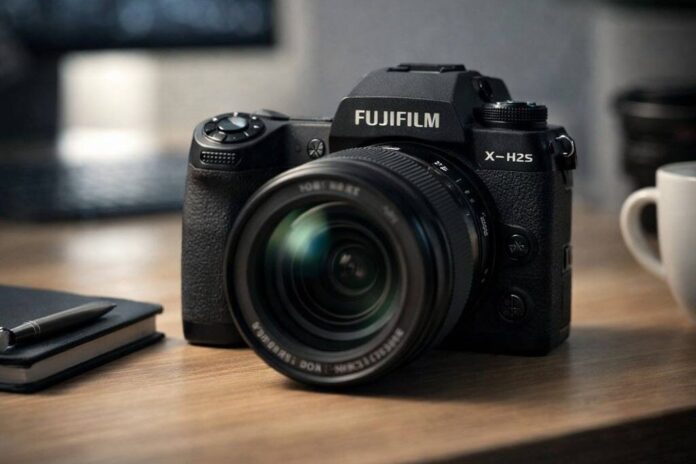
In this Fujifilm X-H2S review, the camera has to be judged by a different standard than the romantic Fuji bodies. This is not the small street camera you buy because it looks beautiful on a cafe table. It is Fujifilm’s speed body: stacked sensor, CFexpress, 40 fps electronic shooting, serious video, and a grip built for long lenses.
- Best for: wildlife, sports, motorsports, events, and hybrid shooters who want Fujifilm color with real speed.
- Skip if: you mostly shoot slow stills, want maximum resolution, or do not need expensive media and pro video tools.
- Price discipline: the X-H2S makes the most sense discounted or used; at full price, compare hard against full-frame bodies.
- Lens pairing: this body deserves Fujifilm’s better telephotos, fast zooms, and WR primes.
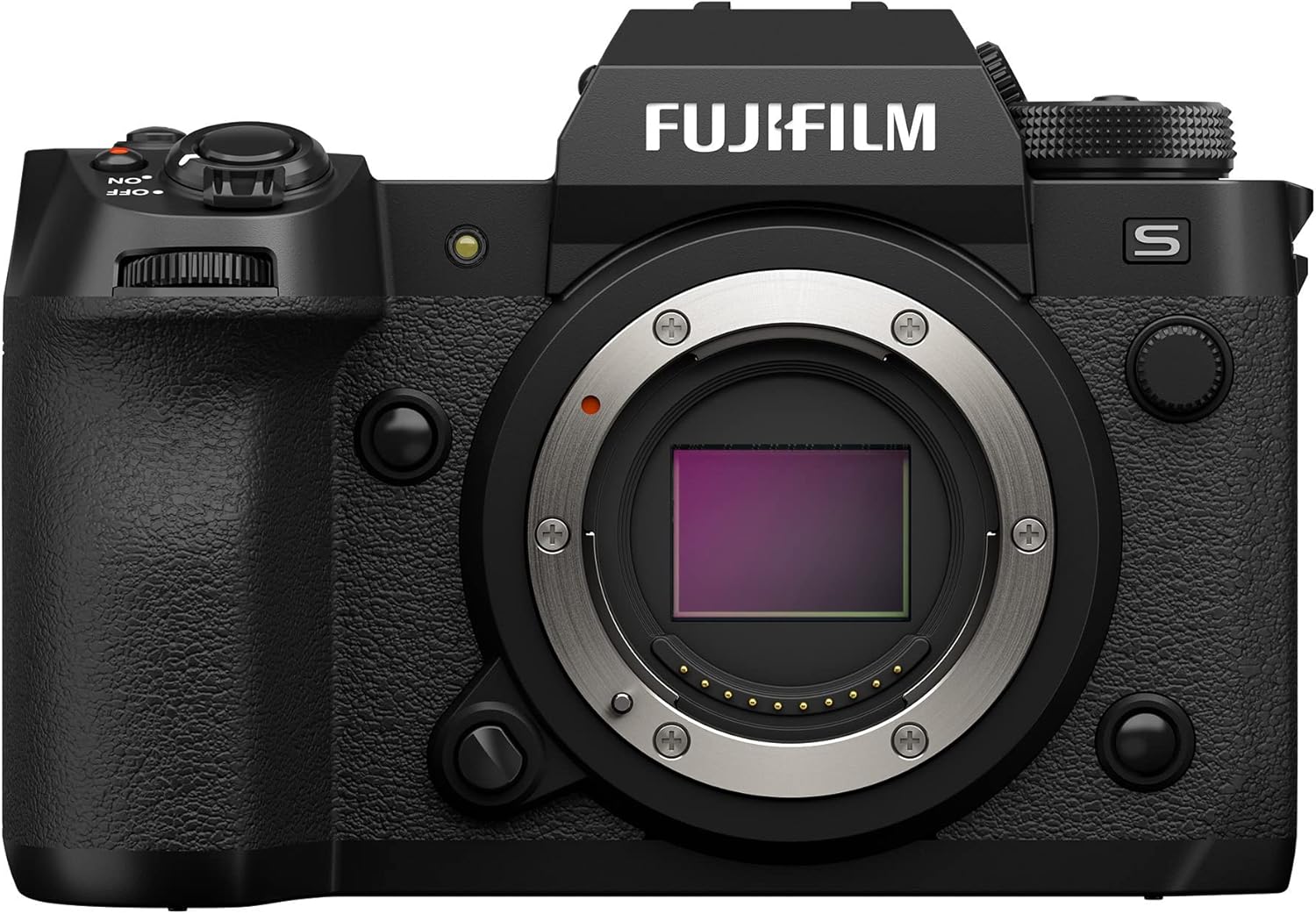
Fujifilm’s official X-H2S specifications confirm why this camera sits apart from the regular X line: a 26.16MP stacked X-Trans CMOS 5 HS sensor, one CFexpress Type B slot, one UHS-II SD slot, 6.2K video, ProRes recording, a 5.76M-dot EVF, and NP-W235 battery power.
Who the Fujifilm X-H2S is really for
The X-H2S is for photographers who have missed shots because a camera was not fast enough. That sounds blunt, but it is the cleanest way to understand it. If you photograph birds, field sports, indoor action, motorsports, dance, or fast documentary work, a stacked sensor changes the way the camera behaves between frames.
In my experience with action bodies, the difference is not only burst rate. It is confidence in the viewfinder, reduced rolling-shutter anxiety, deeper buffers, and less hesitation when the subject finally does something interesting. The X-H2S is Fujifilm’s answer to that problem.
It is also the least sentimental Fujifilm body in this group. You do not buy it because it is tiny or nostalgic. You buy it because you want Fuji color and X-mount lenses without giving up the speed features that action shooters expect from more clinical systems.
Handling, build, and field use
The X-H2S feels like a working camera. The grip is deep, the body is weather resistant, and the top status display is useful when you are moving quickly. With longer lenses, this body makes much more sense than the smaller X-T or X-E designs. It gives your hand somewhere to go.
That matters with lenses like the XF 150-600mm, XF 100-400mm, XF 50-140mm f/2.8, or XF 16-55mm f/2.8. The body is not light, but it is balanced. For wildlife and sports, I would rather carry the extra weight than fight a small grip all afternoon.
The 5.76M-dot EVF is another major part of the experience. It gives a clearer, more stable view than Fujifilm’s smaller bodies, and that helps when tracking erratic subjects. The vari-angle screen is useful for video and low-angle work, though still photographers who prefer a tilt-only screen may find it less elegant.
Image quality and the 26MP stacked sensor
The X-H2S uses a 26MP stacked sensor, not Fujifilm’s 40MP high-resolution chip. That is the correct decision for this camera. The files are detailed enough for most wildlife, event, and sports work, while the faster readout supports the camera’s real mission.
Color is recognizably Fujifilm. JPEGs look excellent, especially if you build a consistent film simulation workflow. RAW files hold up well for event and wildlife editing, though photographers who crop heavily may prefer the X-H2 or X-T5. That is the central tradeoff: speed versus resolution.
For wildlife, I would rather have the stacked sensor if the subject is fast and unpredictable. For landscapes, studio portraits, or travel detail, the 40MP bodies are more appealing. The X-H2S is not the highest-detail Fujifilm. It is the one that gives you a better chance of catching the frame. For stills-first alternatives, our best Fujifilm camera guide compares where the X-H2S sits against the X-T and X-S bodies.
Autofocus and burst shooting
Autofocus is the reason this Fujifilm X-H2S review cannot be treated like an ordinary APS-C review. Subject detection, faster sensor readout, and 40 fps electronic shooting make it far more convincing for action than older Fuji bodies. It still rewards careful setup, but once configured, it tracks with real authority.
I would still test it with your specific sport or wildlife subject before replacing a pro Canon, Nikon, or Sony setup. Fujifilm has improved enormously, but lens selection and AF behavior are system decisions, not just body decisions. For X-mount shooters, though, the X-H2S is the obvious action body.
The CFexpress slot matters here. It is expensive, but it is part of why the camera can sustain heavy bursts and serious video. If that feels unnecessary, you may not need this camera. If it feels obvious, you are probably the target buyer.
Video and hybrid work
The X-H2S is one of Fujifilm’s most convincing hybrid bodies. Internal ProRes, 6.2K open-gate recording, 4K120, F-Log2, full-size HDMI, headphone and mic jacks, and optional cooling support give it a production-minded feature set. This is not just a stills camera with video added.
Hands-on, what I like is that the video features match the body design. The grip, ports, battery, and card setup all make sense for heavier use. A small Fuji may have impressive specs, but the X-H2S feels like it was built to be rigged, monitored, and pushed.
The drawbacks are cost and complexity. CFexpress cards, high-bitrate files, and serious lenses add up quickly. For casual video, the X-S20 or X-M5 is easier to justify. For paid hybrid work inside Fujifilm’s system, the X-H2S is the more honest tool.
X-H2S vs X-H2, X-T5, and Canon R7
The X-H2 gives you 40MP files and is better for detail-heavy stills. The X-T5 gives you a more classic stills experience and a smaller body. Both are excellent cameras, but neither is the same kind of action tool.
The Canon R7 is the most obvious APS-C rival for wildlife shooters. Canon’s RF telephoto options and autofocus ecosystem are compelling, but Fujifilm counters with excellent color, strong video, and a more mature APS-C lens catalog in some areas. The right answer depends on lenses as much as bodies.
If you are starting from scratch, compare total system cost. If you already own serious Fujifilm glass, the X-H2S is the body that lets that kit move into faster work.
Best lens direction for the X-H2S
The Fujifilm X-H2S review verdict depends heavily on lens choice. For wildlife, the XF 150-600mm is the obvious reach lens, while the XF 100-400mm remains attractive if you want a more compact telephoto. For indoor sports and events, the XF 50-140mm f/2.8 still makes more sense than trying to force a slow telephoto into bad light.
For hybrid work, I would look at the XF 16-55mm f/2.8, XF 18-120mm f/4 PZ, or one of Fujifilm’s faster primes depending on whether you value range, power zoom behavior, or low-light rendering. The body is strong enough that weak lens choices become the bottleneck quickly. Our best Fujifilm X lenses guide is worth using before you spend money on the body alone.
What to check before buying used
Used X-H2S bodies can be excellent value, but this is a camera people buy to work hard. I would check the CFexpress slot carefully, test the SD slot, inspect the HDMI and USB-C ports, confirm the IBIS behaves normally, and make sure the EVF and rear screen have no flicker or hinge damage. If the camera was used heavily for video, I would ask directly about overheating, rig use, and port wear.
Shutter count matters less than overall condition, because electronic shutter use may hide how much the camera has actually worked. Look at the body edges, strap lugs, hot shoe, card doors, and rubber grips. Those usually tell the truth.
Where the X-H2S still feels special
The X-H2S still feels special because it is one of the few APS-C cameras that does not apologize for being APS-C. It is not pretending to be cheaper full frame. It gives you speed, crop reach, Fujifilm color, and serious video in a system where the lenses can still be smaller than equivalent full-frame options.
That is the camera’s unique value. If you want shallow depth of field above everything else, buy full frame. If you want reach, speed, and manageable lenses for moving subjects, the X-H2S remains one of the most interesting Fujifilm bodies to own.
Final verdict
This Fujifilm X-H2S review is positive, but only for the right photographer. I admire the X-H2S because it is unusually clear about its purpose. It is fast, durable, video-capable, and built around the needs of action and hybrid shooters.
I would not recommend it as a luxury Fuji for general photography. It is too expensive and too specialized for that. But for wildlife, sports, and serious hybrid work, especially if you already believe in Fujifilm color and X-mount lenses, the X-H2S remains the body that makes the system feel fastest and most professional.
Fujifilm X-H2S alternatives
The main alternatives to the Fujifilm X-H2S are Sony A6700, Canon R7, Nikon Z6 III, Sony A7 IV, Fujifilm X-H2. Compare autofocus, stabilization, video limits, lens choice and current price before deciding which camera fits you best.
Frequently asked questions
Is the Fujifilm X-H2S good for wildlife?
Yes. Its stacked sensor, fast burst modes, strong EVF, subject detection, weather-resistant body, and telephoto-friendly grip make it Fujifilm’s best current action and wildlife body.
Is the Fujifilm X-H2S better than the X-H2?
For speed and video, yes. For resolution and detail, no. The X-H2S is the action body; the X-H2 is the 40MP detail body.
Does the Fujifilm X-H2S need CFexpress cards?
For the heaviest burst and video workflows, yes. The camera also has a UHS-II SD slot, but CFexpress is part of the reason the X-H2S can handle its most demanding modes.
Wildlife, sports, motorsports, events, and hybrid shooters who want Fujifilm color with real speed.
You mostly shoot slow stills, want maximum resolution, or do not need CFexpress and 4K120-level video.
High; this is a serious body with pro menus, pro media, and pro-sized expectations.
X-H2 for 40MP detail, X-T5 for stills-first handling, or full-frame if lens ecosystem matters more than Fuji color.
Very strong internally, but CFexpress cost and APS-C depth-of-field expectations matter.
Yes, when speed is the reason you are buying it; no, if you only want a premium Fuji body.