

View full specs
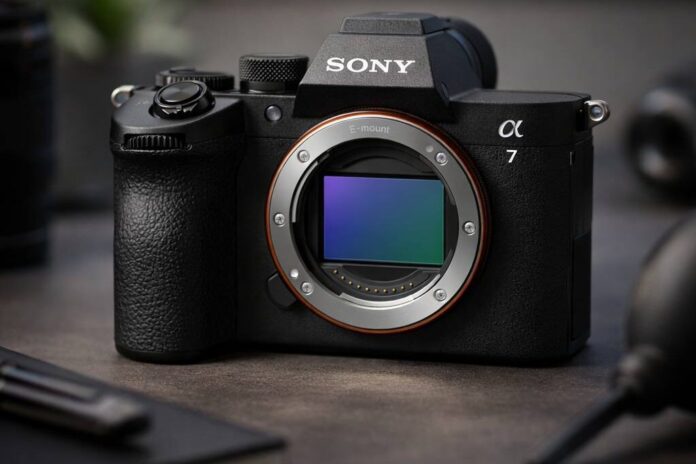
The Sony A7 V is the most important mainstream full-frame camera Sony has released in years. I do not say that because 33MP sounds dramatic, because it does not. I say it because Sony has improved the parts of a camera that quietly decide whether you come home with the frame: sensor readout, autofocus intelligence, burst shooting, video modes, stabilization, battery life, and day-to-day responsiveness.
This Sony A7 V review is written for photographers deciding whether the upgrade is meaningful, not for spec-sheet collectors. The short version: the A7 V is a major upgrade if you shoot with an A7 III, A7 II, older A7R body, or an APS-C Sony and want a full-frame hybrid camera. It is a more selective upgrade from the A7 IV. If your A7 IV already handles your portraits, landscapes, and controlled work, you can wait. If you shoot events, weddings, wildlife, action, video, or mixed professional jobs, the A7 V is much harder to ignore.
Sony A7 V at a glance
| Best for | Hybrid photographers, event shooters, travel/documentary work, weddings, family action, serious enthusiasts, and Sony A7 III/A7 II owners ready for a real upgrade. |
|---|---|
| Skip it if | You mainly shoot slow stills on an A7 IV, need 60MP+ resolution, want a sports flagship, or prefer the smallest possible full-frame body. |
| Sensor | 33MP full-frame partially stacked Exmor RS CMOS. |
| Speed | Up to 30 fps blackout-free electronic shooting with AF/AE tracking. |
| Video | 7K-oversampled 4K 60p full-frame, plus 4K 120p with crop. |
| Main rivals | Canon EOS R6 Mark III, Nikon Z6 III, Panasonic S1 II, Sony A7 IV, Sony A7C II. |
What changed from the Sony A7 IV
A useful Sony A7 V review has to start here, because the A7 IV is still the camera many buyers are comparing against. The question is not whether the new model is better. It is whether the better parts affect your actual work.
The A7 IV was already a very good camera, which is why the A7 V can look less dramatic if you only compare megapixels. Both sit around 33MP. Both use Sony E mount. Both are hybrid full-frame bodies aimed at photographers who shoot a bit of everything. But cameras are not used in spreadsheets. They are used when a bride turns her head, a child runs toward the light, a bird lifts off, or a client expects stills and clips from the same hour. The meaningful change is not resolution; it is speed and confidence.
Sony’s official A7 V materials describe a new 33MP partially stacked Exmor RS sensor with much faster readout than the previous generation. That matters because readout speed affects electronic shutter distortion, blackout-free shooting, burst rate, autofocus updates, and video performance. In plain terms, the A7 V should feel less like a careful all-rounder and more like a camera that can react when the scene changes.
The second major change is processing. The A7 V uses BIONZ XR2 with integrated AI processing, which pushes it closer to Sony’s newer high-end bodies. The practical benefit is not “AI” as marketing language; it is subject recognition that behaves better when a person turns away, an animal crosses a busy background, or a subject moves unpredictably across the frame.
Image quality: still the 33MP sweet spot
I like Sony’s decision to stay at 33MP. In practice, this is one of the most sensible full-frame resolutions for photographers who actually have to edit, deliver, archive, and back up their work. It is enough for cropping, albums, prints, commercial portraits, travel, events, and web delivery without creating the file-management burden of a high-resolution A7R body. You get more detail than 24MP bodies such as the older A7 III, but you avoid the storage and lens-demand penalties of 60MP-plus cameras.
The A7 V is not the camera I would choose if maximum landscape detail is the whole point. For that, the Sony A7R V and newer high-resolution bodies make more sense. But for a photographer who shoots portraits one day, product work the next, family travel on the weekend, and some video in between, 33MP is the better balance.
The biggest image-quality upgrade is likely not raw sharpness but file flexibility under stress. Sony claims up to 16 stops of dynamic range, and whether or not you treat that as a lab number, the important point is that the A7 V is designed to hold highlight and shadow detail better while keeping faster sensor readout. That combination is valuable for weddings, interiors, travel light, stage work, and high-contrast outdoor portraits.
Autofocus and subject tracking
Autofocus is the main reason many photographers will buy the A7 V. Sony lists 759 phase-detection points and AI-based real-time recognition for humans, animals, birds, insects, cars, trains, and airplanes in stills and video. Those categories are not just menu decoration. What I care about is the practical result: fewer moments where you are fighting the focus box instead of watching the subject.
If you shoot portraits, the upgrade is about fewer small misses. If you shoot events, it is about tracking people through cluttered scenes. If you photograph kids, pets, sports, or wildlife, it is about the camera keeping up while you concentrate on composition. The A7 V is not an A9 III replacement, but it borrows enough speed and subject-recognition thinking from the higher Sony bodies that it should feel like a serious step up from the A7 III and a more responsive camera than the A7 IV.
The 30 fps headline also needs context. You do not need 30 fps for every job, and you should not use it casually unless you enjoy culling thousands of frames. But it is valuable when the moment caot be repeated: a first kiss, a bird taking off, a child’s expression, a gesture during a performance, or a sports sequence. Pre-Capture also matters here because it can save moments that happen just before you fully press the shutter.
Video: the A7 V is now a stronger hybrid body
The A7 IV was useful for video, but its crop and readout limitations made some hybrid shooters look elsewhere. The A7 V fixes the biggest frustration by offering 7K-oversampled 4K 60p full-frame recording. The feature list also includes 4K 120p options, 10-bit 4:2:2 recording modes, proxy recording, timecode/user bit, focus map, breathing compensation, and multiple stabilization modes.
This makes the A7 V much more attractive for wedding filmmakers, solo creators, small production teams, and photographers who increasingly need to deliver short video clips. You still do not get every Cinema Line advantage. There is no internal electronic ND filter, no active cooling fan like an FX body, and no reason to pretend it replaces a dedicated cinema camera for long-form production. But for a hybrid mirrorless body, the video feature set is now much closer to what serious users expect in 2026.
If video is your main income, compare it carefully with the Sony FX3 or Sony FX30. If video is one part of your stills business or creator workflow, the A7 V is probably the more flexible camera.
Handling, viewfinder, screen, and memory cards
The A7 V keeps the familiar Sony full-frame shape, which is both good and bad. I like Sony bodies for how much performance they fit into a small bag, but I also know the tradeoff after a long day with heavy glass. The body is compact enough for travel and events, but it is still a small camera once you mount a 24-70mm f/2.8, 70-200mm f/2.8, or 200-600mm. If your hand already complains with an A7 IV, the lens choice will matter as much as the body.
The viewfinder is a 3.68M-dot OLED EVF with 60 fps and 120 fps modes. That is not class-leading on paper, especially next to some higher-resolution EVFs, but it is good enough for serious work. The rear screen is a 3.15-inch multi-angle touchscreen with about 2.1M dots, which is much more useful for low angles, vertical video, tripod work, and hybrid shooting than older tilt-only designs.
Storage is sensibly split: slot 1 accepts SD UHS-I/II or CFexpress Type A, while slot 2 accepts SD UHS-I/II. This is the right compromise for this camera. Most photographers can use fast SD cards, while burst-heavy and high-bitrate video users can put CFexpress Type A in slot 1 when needed.
Battery life and travel reliability
The A7 V uses the NP-FZ100 battery, which is one of the best practical advantages of Sony’s current full-frame system. Sony’s specifications list about 630 shots using the viewfinder or 750 using the LCD, plus roughly 210 minutes of continuous movie recording under CIPA conditions. In real photography, battery life will vary with bursts, video, Wi-Fi, temperature, and EVF use, but the A7 V should be a comfortable all-day stills body for many users with one spare battery in the bag.
USB-C charging and USB Power Delivery support are also important. For travel, events, and hybrid shoots, being able to top up from a power bank or charger between locations is a real workflow advantage. The A7 V is not a rugged expedition camera, but it is built for professional daily use in a way older A7 bodies did not always feel.
Best lenses for the Sony A7 V
The A7 V deserves lenses that match its autofocus and sensor performance. This is where Sony’s system advantage becomes very real. I would rather own a slightly less exotic camera with the right lens than a perfect body with the wrong glass, and E mount gives you more sensible paths than almost any other full-frame system, including excellent third-party lenses from Sigma, Tamron, Samyang, and others.
For one-lens professional work, the Sony FE 24-70mm f/2.8 GM II is the obvious premium choice. For travel and documentary work, the FE 24-105mm f/4 G OSS remains a very practical lens because the range matters more than the extra stop of aperture. For portraits, the FE 85mm f/1.8 is still one of the smartest value buys, while the 85mm GM options make sense if portrait work is central to your income.
For hybrid creators, I would look hard at the FE 20mm f/1.8 G, FE 35mm f/1.4 GM, or a lighter standard zoom depending on your style. For wildlife and field sports, the FE 200-600mm G becomes far more appealing on the A7 V than it was on older bodies because subject tracking and burst speed are now much stronger.
If you already own Sony lenses, that is part of the upgrade argument. If you are switching systems, lens cost matters as much as body cost. The A7 V is excellent, but it becomes expensive quickly if you pair it only with premium GM glass.
Sony A7 V vs A7 IV
The A7 IV is still a good camera. Do not let the A7 V make it look obsolete overnight. If your work is mostly portraits, studio, products, landscapes, family photos, or controlled documentary shooting, the A7 IV can remain a very sensible body.
The A7 V becomes worth the upgrade when your keeper rate depends on speed. The partially stacked sensor, 30 fps shooting, stronger subject recognition, improved video modes, and better battery life all matter for photographers who shoot unpredictable subjects. If the A7 IV ever felt just a little too slow or video-limited for your work, the A7 V directly answers that complaint.
If price matters more than speed, buy the A7 IV discounted. If reliability under pressure matters more than savings, the A7 V is the better long-term camera.
Sony A7 V vs A7R V, A7R VI, and A9 III
The A7 V is not the highest-resolution Sony and not the fastest Sony. That is the point. It is the balanced body. Our Sony Alpha camera comparison maps the wider A7, A7R, A7S, A9, and A1 lineup.
Choose the A7R V or A7R VI if you need maximum detail for landscape, studio, reproduction, high-end commercial work, or heavy cropping. Choose the Sony A9 III if global shutter speed and professional action reliability are the reason you are buying a camera. Choose the A7 V if you want one full-frame body that can cover paid work, personal work, travel, video, and demanding autofocus without pushing you into a specialist price tier.
Compared with the Sony A7C II, the A7 V is the stronger working camera. The A7C II is smaller and better for lightweight travel, but the A7 V is a better choice if you care about dual card workflow, higher speed, and a more serious control layout.
Who should buy the Sony A7 V?
The buying advice in this Sony A7 V review comes down to pressure: how often do your subjects, clients, or video jobs push your current camera beyond its comfort zone?
Buy the Sony A7 V if you are coming from the A7 III, A7 II, A7C, older APS-C bodies, or another system and want a current full-frame hybrid camera with serious autofocus. It is also a strong choice for working photographers who do not want a different body for every job. If your week can include portraits, an event, travel, short video clips, and unpredictable movement, this is exactly the kind of camera that makes sense.
A7 IV owners should be more careful. Upgrade if you need 30 fps, better electronic shutter behavior, stronger video, better subject recognition, or better battery life. Wait if your A7 IV already does the job and your money would make a bigger difference in lenses, lighting, storage, or travel.
Who should skip it?
Skip the A7 V if you mainly shoot landscapes and want the most detail per frame. Skip it if you are a pure video shooter who needs active cooling, internal ND, or a cinema-style body. Skip it if you want the smallest full-frame Sony for travel. And skip it if the A7 IV is already more camera than you need.
The A7 V is best when speed, autofocus, and hybrid reliability are worth paying for. If those are not your pain points, the upgrade will feel expensive.
Final verdict
After fact-checking the specifications, market position, and upgrade path, my Sony A7 V review verdict is straightforward: this is the A7-series body for photographers who need speed without moving into a specialist flagship.
The Sony A7 V is not exciting because it has 33 megapixels. It is exciting because it makes Sony’s most important full-frame line feel faster, calmer, and more trustworthy. That is the kind of upgrade photographers notice over months, not just on launch day: fewer missed frames, less hesitation, better video flexibility, and files that remain practical to manage.
For A7 III owners, this is a very strong upgrade. For A7 IV owners, it depends on how often speed, video, and autofocus limits actually cost you shots. For new Sony buyers, the A7 V is probably the best all-around full-frame body in the system unless you know you need the resolution of an A7R or the speed specialty of an A9.
My practical recommendation: buy the A7 V if you want one full-frame camera to trust across many types of work. Buy the A7 IV if budget matters more. Buy an A7R body if detail matters most. Buy an A9 III if speed is everything.
Sony Alpha 7 V / a7 V alternatives
The main alternatives to the Sony Alpha 7 V / a7 V are Canon EOS R6 Mark III, Nikon Z6 III, Panasonic S1 II, Sony A7 IV, Sony A7C II. Compare autofocus, stabilization, video limits, lens choice and current price before deciding which camera fits you best.
Frequently asked questions
Is the Sony A7 V worth upgrading from the A7 IV?
It is worth upgrading if you shoot action, events, weddings, wildlife, or serious hybrid video and the A7 IV feels limiting. If you mostly shoot slower stills, the A7 IV remains a strong camera and may be better value.
Is the Sony A7 V good for professional photography?
Yes. The A7 V has the autofocus, dual-card workflow, battery life, lens ecosystem, and image quality needed for professional portrait, event, wedding, editorial, travel, and hybrid work.
Does the Sony A7 V replace the A7R V?
No. The A7 V is the better all-rounder, while the A7R V is still the better choice for maximum resolution. Choose based on whether you need speed and hybrid flexibility or high-resolution files.
What memory cards should you use with the Sony A7 V?
Fast UHS-II SD cards are enough for many photographers. Use CFexpress Type A in slot 1 if you shoot long bursts, high-bitrate video, or want the fastest clearing performance.
What is the best first lens for the Sony A7 V?
For most photographers, start with the Sony FE 24-70mm f/2.8 GM II if budget allows, or the FE 24-105mm f/4 G OSS if you want a more flexible travel and event range. Add a fast prime later based on your shooting style.
Hybrid photographers, events, weddings, travel, action, and A7 III/A7 II upgrades
You only need slow stills, maximum resolution, or a compact travel body
Moderate; powerful but menus and setup need time
Strong upgrade from A7 III and older; selective upgrade from A7 IV
No internal ND or fan-cooled cinema body, but very strong hybrid video
Yes, if speed and hybrid reliability matter more than lowest price