
View full specs
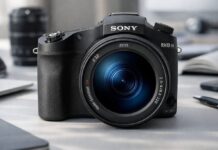
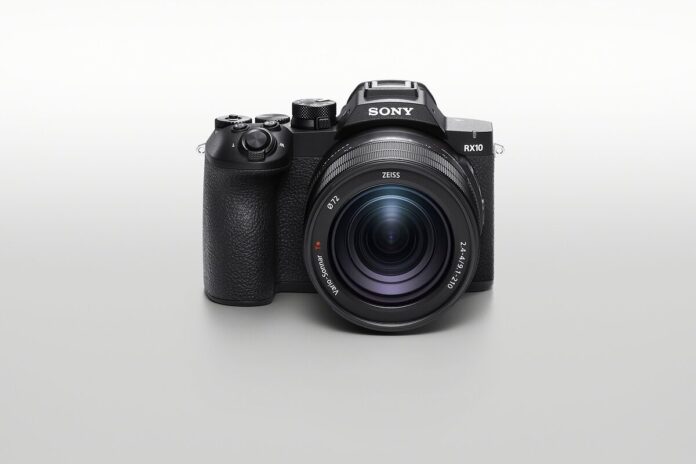
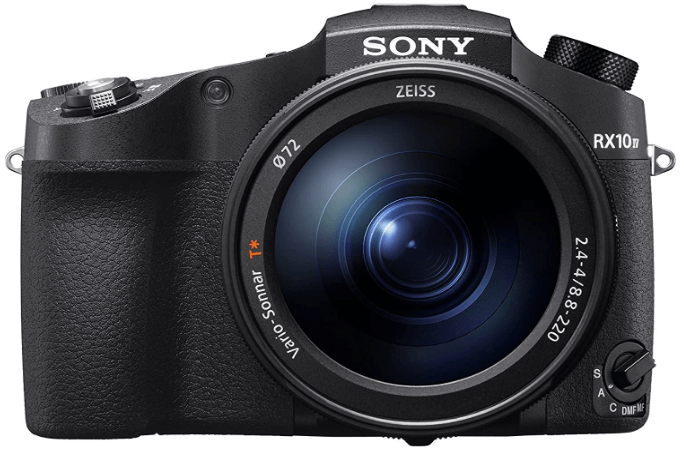
The Sony RX10 V is the best bridge camera I would hesitate to recommend. Its 24-600mm lens, Alpha-derived autofocus, 30fps shooting and much better battery solve problems that matter to wildlife and sports photographers. Sony has also kept the headline 20.1MP sensor and 24-600mm lens specifications from the RX10 IV, then set the US price at $2,299.99.
That price changes the verdict. The RX10 V is not a sensible way to buy maximum image quality for $2,300. It is a way to put a bright 24-600mm equivalent lens, reliable subject recognition and serious speed in one weather-resistant camera without carrying or changing lenses.
Review status: this is a launch review, not a claimed long-term test. Sony has not supplied Lens & Shutter with a production RX10 V. We have separated Sony’s confirmed specifications from conclusions based on independent launch testing and our experience evaluating bridge-camera systems.
Sony RX10 V review: quick verdict
Buy the RX10 V if one camera must cover landscapes, family travel, birds and field sports, and missed focus costs you more than the last word in high-ISO image quality. Its 1-inch sensor is substantially larger than the sensors in extreme superzooms such as the Nikon P1100, while its f/2.4-4 lens is unusually bright for a zoom that reaches 600mm equivalent.
Do not buy it simply because it is the newest RX10. An RX10 IV owner gets almost no basic image-quality incentive to upgrade. The new camera earns its price through autofocus, burst speed, video, battery life and handling. If those are not limiting your photography, keep the RX10 IV.
If it were my money, I would make the decision around missed photographs. I would not spend $2,300 to improve a landscape taken at ISO 100. I would spend it if my current camera regularly loses a bird against branches, runs out of battery during an event or leaves me choosing between the wide shot and the distant action because the other lens is still in the bag.
| Reasons to buy | Reasons to pause |
|---|---|
| 24-600mm equivalent f/2.4-4 lens in one body | $2,299.99 is mirrorless-camera money |
| Up to 30fps with blackout-free viewing | No pre-capture for unpredictable action |
| Excellent subject recognition for wildlife and sports | A 1-inch sensor still has high-ISO and depth-of-field limits |
| 4K60 without a crop and 4K120 with a crop | Tilting screen, not a fully articulating one |
| 630-shot LCD battery rating | No built-in flash and no top status display |
Sony RX10 V price and availability
Sony announced the RX10 V on July 9, 2026. The US list price is $2,299.99, with deliveries expected in August 2026. Sony is taking preorders directly, with an estimated August 6-7 delivery window at the time of this review.
Check Sony RX10 V price and availability at Sony
Amazon does not yet expose a verified US RX10 V product page or ASIN. We will not substitute an RX10 IV product card and pretend it is the new camera. Buyers should check the model number carefully: the RX10 V is DSC-RX10M5.
Sony RX10 V specifications
| Sensor | 20.1MP 1.0-type stacked Exmor RS CMOS |
|---|---|
| Processor | BIONZ XR with dedicated AI processing unit |
| Lens | ZEISS Vario-Sonnar T* 24-600mm equivalent, f/2.4-4 |
| Stabilization | Optical image stabilization; electronic Active Mode for compatible video modes |
| Autofocus | 575 points with about 71% frame coverage; recognizes people, animals, birds, insects, cars, trains and airplanes |
| Continuous shooting | Up to 30fps with electronic shutter and AF/AE tracking |
| Video | Up to 4K120; 4K60 without a crop, 4K120 with a narrower angle of view |
| Viewfinder | 3.68-million-dot OLED EVF, approximately 0.78x magnification |
| Rear screen | 3-inch, 1.62-million-dot tilting touchscreen |
| Storage | Single UHS-II SD card slot in the battery compartment |
| Battery | NP-FZ100; approximately 630 shots with LCD or 570 with EVF |
| Weight | Approximately 1,111g with battery and card |
| Weather protection | Dust- and moisture-resistant construction, not waterproof |
What actually changed from the Sony RX10 IV
The lazy description is “RX10 IV with AI autofocus.” The more useful answer is that Sony left the optical core alone and replaced much of the camera around it. The RX10 V is a speed, control and video update rather than a resolution update.
| Feature | RX10 V | RX10 IV |
|---|---|---|
| Sensor | 20.1MP stacked 1-inch | 20.1MP stacked 1-inch |
| Lens | 24-600mm equivalent f/2.4-4 | 24-600mm equivalent f/2.4-4 |
| Processor | BIONZ XR plus AI unit | BIONZ X |
| Maximum burst | 30fps electronic | 24fps electronic |
| Subject recognition | People, animals, birds, insects, vehicles and aircraft | Older human and animal tracking |
| Maximum 4K | 4K120, cropped at 120p | 4K30 |
| Card support | UHS-II SD | UHS-I SD |
| Battery rating | 630 LCD / 570 EVF | 400 LCD / 370 EVF |
| Viewfinder | 3.68 million dots | 2.36 million dots |
| Body changes | AF-ON, joystick, USB-C | Built-in flash and top LCD |
The same sensor and lens do not make the RX10 V pointless. They do mean that a perched bird at ISO 100 will not suddenly show a generation of extra detail. The gain appears when the bird takes off, crosses branches, turns away or forces a long burst. Better recognition, more AF/AE calculations and blackout-free 30fps shooting should increase the number of usable frames, not the resolution of each frame.
The 24-600mm lens remains the reason to buy an RX10
A 24-600mm equivalent range sounds like a specification until you try to cover it with interchangeable lenses. At 24mm, the RX10 V handles interiors, streets, groups and landscapes. At 200mm, it covers portraits and events. At 600mm and f/4, it reaches birds, aircraft and distant sport without the very slow aperture common on cheaper superzooms.
This is how I use a range like this in the field: start wider than the final composition, find the subject quickly, then tighten the frame once tracking has settled. Going straight to 600mm is tempting, but it is also the easiest way to lose a flying bird or aircraft against an empty sky. That shooting rhythm matters more than the zoom ratio printed on the box.
The lens also focuses to about 3cm at the wide end and 72cm at 600mm, which gives it useful close-up ability. It is not a replacement for a true macro lens, but it can photograph flowers, insects and small details without adding another lens to the bag.
One detail has caused needless confusion: the RX10 V lens barrel says 9.1-210mm, while the RX10 IV says 8.8-220mm. Sony states that the optical design and 24-600mm equivalent range are the same. The different engraving reflects a change in how CIPA requires the physical focal length to be reported, not a shorter zoom.
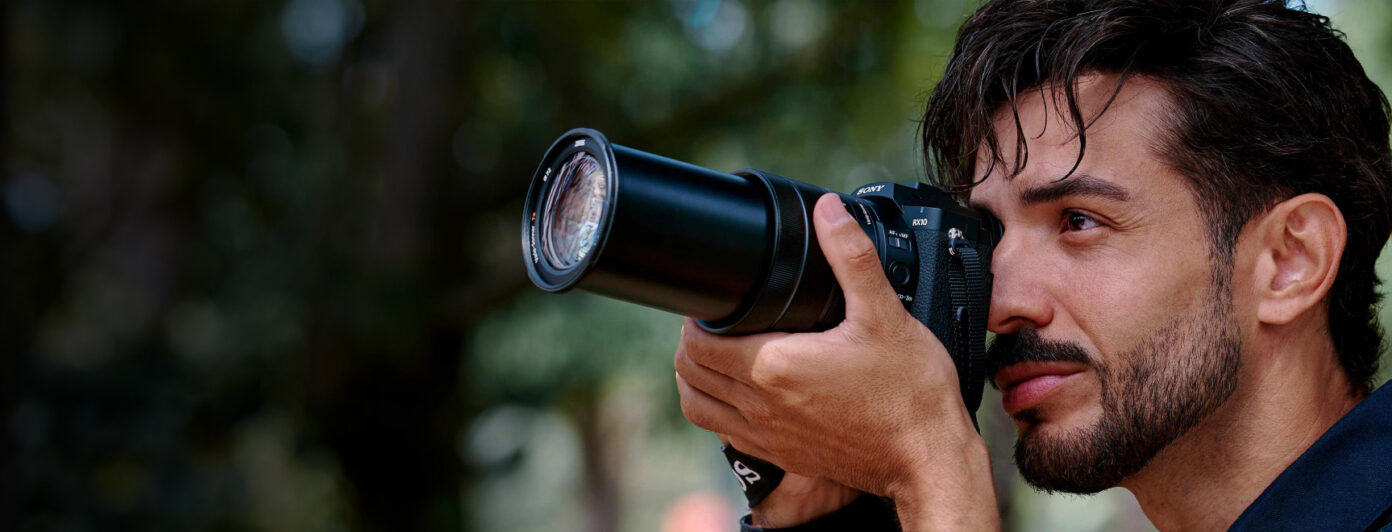
There is still a physical limit. A 1-inch sensor is smaller than APS-C and full frame, so it shows noise sooner when light falls and offers less freedom to blur a messy background. At 600mm f/4, subject separation can still look convincing because focal length and shooting distance help. In poor light, however, a modern mirrorless body with a fast telephoto lens gives cleaner files and more editing latitude.
This is why the RX10 V belongs near the top of our best zoom cameras, but it does not replace every interchangeable-lens option in our wildlife camera guide.
Autofocus and 30fps: the upgrade that matters
The RX10 IV was fast for a 2017 bridge camera. The RX10 V brings the subject-recognition logic of recent Sony Alpha bodies into a fixed-lens camera. It can identify people, animals, birds, insects, cars, trains and airplanes, and its Auto mode can choose the subject category without a menu change.
Independent testers disagree on how consistent it is. One reported a very high keeper rate on aircraft and general wildlife; another found birds and insects unreliable as light fell or backgrounds became busy. Both observations can be true because subject size, contrast and AF setup change the result. The useful point is that Auto is not magic. For difficult wildlife, selecting Bird or Animal/Bird manually is safer than asking the camera to identify the subject category. Sony also recommends manual selection when Auto recognition chooses incorrectly.
The 30fps headline also needs context. It requires the electronic shutter, suitable settings and a card fast enough to clear the buffer. At the highest rate, RAW capture is lossy compressed. The important part is not six extra frames over the RX10 IV. It is the combination of blackout-free viewing, up to 60 AF/AE calculations per second and a deeper burst sequence. A fast burst with weak tracking produces thirty versions of the wrong focus plane. The RX10 V’s value is that the autofocus system is designed to stay with the subject through that burst.
There is no pre-capture. That omission matters on a camera sold for birds and sport. Pre-capture continuously buffers frames before the shutter is fully pressed, which is exactly what helps with a bird taking off or a bat meeting a ball. Sony’s recent BIONZ XR cameras can do it, but the RX10 V cannot at launch.
The mechanical leaf shutter has another trap. With apertures from f/2.4 to f/7.1, it tops out at 1/1000 second. Mechanical 1/2000 second requires f/8, where diffraction costs detail on a 1-inch sensor. For fast action at 1/2000 second or quicker, the electronic shutter is normally the sensible choice.
For school sports, air shows and birds in flight, this is the strongest reason to pay for the new body. For landscapes, posed portraits or perched wildlife, it is not.
How I would set up the RX10 V for wildlife
I would not leave every decision to the camera. Sony’s Auto subject recognition is convenient for a mixed day, but a known subject deserves a deliberate setup.
- Select Bird or Animal/Bird recognition manually. This removes one layer of guessing when the background is cluttered.
- Use 1/1000 second as a practical floor for active wildlife. I would move to 1/2000 or faster for flight, running animals or field sports.
- Keep the lens near f/4 at the long end. There is little reason to sacrifice light and invite diffraction unless depth of field genuinely requires it.
- Use 10fps for ordinary sequences and assign Continuous Shooting Speed Boost to a custom button. Thirty frames per second is useful around takeoff, impact or a decisive gesture, but wasteful for every movement.
- Assign Zoom Assist where the left thumb can reach it. At 600mm, temporarily widening the view is often the quickest way to recover a subject.
- Shoot RAW to a fast UHS-II card. The 1-inch sensor benefits more than most from careful noise reduction and restrained sharpening.
Those settings are not universal. A perched owl at dusk needs a different compromise from a gull in full sun. The point is to make the camera predictable before the subject moves, rather than discovering during the burst that Auto picked the background and the mechanical shutter forced f/8.
Image quality: excellent for a bridge camera, not a new sensor class
The RX10 V should produce detailed, contrasty files in good light, particularly when the lens is allowed to work at sensible shutter speeds. The ZEISS zoom was already the RX10 IV’s greatest strength. Retaining it avoids the optical uncertainty that often comes with a completely new superzoom design.
Do not confuse a new processor with a larger sensor. Noise reduction, color processing and autofocus can improve, but the basic 20.1MP capture area remains in the 1-inch class. RAW shooters should expect the same broad tradeoff as before: very good daylight detail across an extraordinary focal range, followed by a more visible loss of fine texture as ISO rises than they would see from APS-C or full frame.
Early reviews appear to disagree about high ISO, but the file type explains much of it. Straight-out-of-camera JPEGs become heavily smoothed around ISO 1600 and above. Independently processed RAW files retain more useful detail, and modern denoise software can make ISO 3200 or 6400 serviceable for modest output. That does not turn the RX10 V into a low-light camera. It means dawn and dusk wildlife photographers should plan to shoot RAW and process the files rather than trust aggressive in-camera noise reduction.
At 600mm, technique matters as much as the sensor. Optical stabilization helps with camera shake, but it cannot stop a moving bird. In decent light, use a shutter speed around 1/1000 second or faster for active wildlife and accept the ISO increase. A clean low-ISO frame with motion blur is not a useful file.
Handling, screen and battery life
Sony has moved the controls closer to its Alpha cameras. The deeper grip, AF-ON button and eight-way joystick are meaningful improvements when tracking through the viewfinder. The 3.68-million-dot EVF is also a welcome upgrade from the RX10 IV’s 2.36-million-dot finder.
The camera is not instantly ready. Independent field testing puts startup at roughly two seconds while the powered lens extends, and large changes in focal length are slower than twisting a mechanical zoom ring. Zoom Assist partly offsets that at 600mm by pulling back temporarily so you can find a lost subject, then returning to the previous focal length. Keep the camera awake when action is likely; powering it down between sightings can cost the opening frame.
The rear screen tilts for high- and low-angle work. It does not swing to the side or face forward, which makes the RX10 V less convenient for self-recording than its video specifications suggest. There is no in-body stabilization either. Stills use optical stabilization in the lens, while video can add Active Mode with an extra crop and mode restrictions.
The new NP-FZ100 battery is a major practical gain. A 630-shot LCD rating is about 50 percent higher than the previous model and reduces the need to open the battery door during a long event. That matters because the single UHS-II card slot sits beside the battery. Changing cards on a tripod can be awkward.
Sony has also removed the RX10 IV’s pop-up flash and top status display. Neither is fatal, but both losses should be counted. External flash remains available through the Multi Interface Shoe.
Video: powerful, but not a perfect hybrid
The RX10 V records 4K60 without a crop and 4K120 with a narrower field of view. It supports 10-bit 4:2:2 recording, S-Cinetone, S-Log3, user LUTs, Auto Framing and digital audio through compatible Sony microphones. Those are serious improvements over the RX10 IV’s 4K30-era video system.
Three qualifications matter:
- 4K120 is cropped. Sony states that the angle of view becomes narrower.
- Active Mode is not available at 120p. The stabilization mode also crops the image when it is available.
- The screen does not face forward. Solo presenters will need an external monitor or a different camera.
For wildlife clips, travel sequences, school sport and a photographer who also needs good video, the RX10 V is unusually capable. For a creator who mainly films themselves, a fully articulating mirrorless or dedicated vlogging camera is easier to operate.
Who should buy the Sony RX10 V
Buy it for travel when changing lenses is the problem
The RX10 V is large for a compact camera but small for a system that genuinely covers 24-600mm at f/2.4-4. It suits safaris, cruises, air shows and family trips where the wide shot and distant subject can appear seconds apart. It is less attractive for city breaks where a pocketable camera such as the Sony RX100 VII covers enough reach.
Buy it for wildlife when portability beats ultimate file quality
Birders who walk far, shoot in daylight and dislike lens changes are the clearest audience. The 600mm equivalent reach, f/4 telephoto aperture and modern recognition AF form a much better-balanced package than a cheap extreme superzoom. The RX10 V cannot match a good APS-C or full-frame body with a serious telephoto lens in poor light, but that alternative is larger, heavier and often more expensive as a complete kit.
Skip it if you already own a healthy RX10 IV
Upgrade only if the older autofocus, battery, controls or 4K30 ceiling are costing you photographs or assignments. If you photograph static subjects in good light, the same sensor resolution and lens range make the RX10 IV the rational camera to keep.
Sony RX10 V alternatives
Sony RX10 IV: similar files for less money
The RX10 IV keeps the same headline sensor resolution and 24-600mm f/2.4-4 lens. Its autofocus, battery, controls and video are older, but it remains the value choice when a clean used or remaining-new example costs substantially less. Check condition, zoom operation and sensor cleanliness before buying used.
Nikon P1100: far more reach, much smaller sensor
The Nikon P1100 reaches an extraordinary 3000mm equivalent and costs far less. It is the better tool for moon shots and distant subjects in bright light. The Sony has the larger sensor, brighter lens, faster burst and far more advanced autofocus. These cameras share a bridge-camera shape, not the same photographic priorities.
Sony A6700 with a telephoto zoom: better files, less convenience
The Sony A6700 gives you a larger APS-C sensor, interchangeable lenses and a more flexible upgrade path. Add a quality telephoto zoom and it should beat the RX10 V for high-ISO quality and background separation. It will not cover 24-600mm with one lens, and a strong long-lens kit can exceed the RX10 V in both price and weight.
Final verdict: is the Sony RX10 V worth $2,300?
Yes, but only when the integrated 24-600mm system is the reason for buying it. I would not dismiss the RX10 V because an APS-C body can be bought for less. That body still needs lenses. I would challenge the price because Sony asks $2,299.99 while retaining the RX10 IV’s headline sensor and lens specifications.
The new money buys a far better action camera: smarter subject recognition, 30fps blackout-free shooting, a better viewfinder, Alpha-style controls, UHS-II storage, a much stronger battery and modern 10-bit 4K video. Wildlife, sports and travel photographers will feel those gains. Static-subject photographers may not.
My buying line is simple. A new RX10 buyer who needs one weather-resistant camera with serious autofocus and 24-600mm coverage should put the RX10 V at the top of the bridge-camera shortlist. A content RX10 IV owner should keep shooting unless autofocus or video is the problem. If I were chasing the cleanest files for $2,300, I would build an interchangeable-lens kit instead.
Frequently asked questions
When will the Sony RX10 V be released?
Sony announced the RX10 V on July 9, 2026 and says US availability begins in August 2026. Sony’s US store showed estimated delivery on August 6-7 when this review was updated.
How much does the Sony RX10 V cost?
The official US list price is $2,299.99. The model number is DSC-RX10M5.
Does the Sony RX10 V use a new sensor and lens?
The headline specifications are unchanged from the RX10 IV: a 20.1MP stacked 1-inch sensor and a 24-600mm equivalent f/2.4-4 ZEISS zoom. The major changes are processing, autofocus, burst speed, video, battery and controls.
Is Sony RX10 V 4K120 cropped?
Yes. Sony states that 4K120 recording produces a narrower angle of view. Active Mode stabilization is not available at 120p.
Is the Sony RX10 V good for bird photography?
It is one of the strongest all-in-one bird cameras because it combines 600mm equivalent reach, an f/4 telephoto aperture, bird recognition and up to 30fps shooting. An APS-C or full-frame camera with a good telephoto lens will produce cleaner files in poor light, but the complete kit is larger and usually more expensive.
Should RX10 IV owners upgrade to the RX10 V?
Upgrade for autofocus, action shooting, battery life, controls or 4K video. Do not upgrade expecting a large jump in resolution or basic daylight image quality, since the sensor resolution and lens specifications remain the same.
Wildlife, sports, travel, and events when one 24-600mm camera matters more than maximum sensor size.
You already own an RX10 IV, need the cleanest high-ISO files, or can carry an interchangeable-lens kit.
Medium; the all-in-one lens is simple, but Sony autofocus and video menus reward setup time.
Move to APS-C or full frame with dedicated telephoto lenses for better low-light quality and subject separation.
Strong 10-bit 4K, but 4K120 crops, Active Mode is unavailable at 120p, and the screen does not face forward.
Yes for buyers who specifically need modern autofocus and 24-600mm coverage in one body.