
View full specs
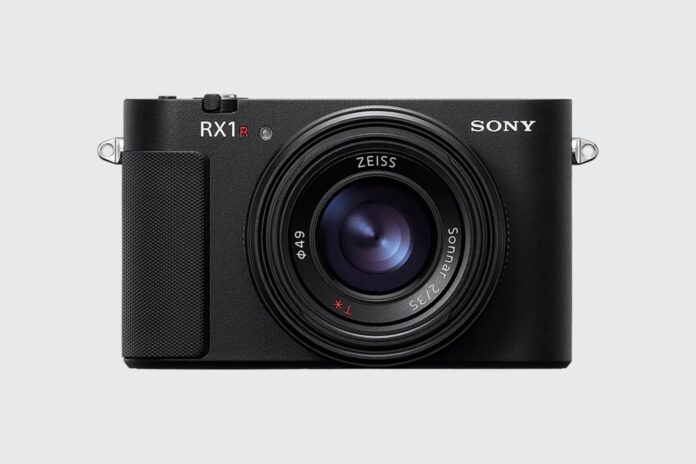
This Sony RX1R III review is about a camera that is easy to admire and difficult to recommend casually. Sony has put a 61MP full-frame sensor, excellent autofocus and a fixed ZEISS 35mm f/2 lens into a 498g body. It then asks $5,099 while omitting stabilization, a tilting screen and weather protection. The result is not a sensible all-rounder. It is a remarkably focused camera for photographers who already know why they want 35mm.
Sony RX1R III review: the short verdict
The RX1R III delivers the kind of detail and tonal flexibility normally associated with Sony’s high-resolution Alpha bodies, but in a camera that is quieter and smaller than an a7CR with a comparable lens. Its leaf shutter is discreet, its autofocus is modern, and its 35mm f/2 Sonnar gives the camera a consistent visual point of view.
It is also strangely austere for the money. The rear screen is fixed. The 2.36-million-dot EVF is adequate rather than luxurious. Neither the sensor nor lens is stabilized for stills, and Sony explicitly says the body is not dustproof or drip-proof. At this price, those omissions deserve more weight than another list of Creative Looks.
- Buy it for: 61MP full-frame files, the compact integrated 35mm f/2 lens, near-silent leaf shutter and Sony’s reliable subject recognition.
- Skip it if: you need stabilization, low-angle screen composition, interchangeable lenses, serious video features or worry-free bad-weather use.
- Best for: experienced street, documentary and travel photographers committed to a 35mm field of view.
What the RX1R III actually is
Sony revived the RX1R line in July 2025, almost ten years after the RX1R II. The central idea has not changed: pair a full-frame sensor with a fixed 35mm f/2 lens and remove everything that makes an interchangeable-lens system bulky.
The Mark III moves the electronics forward dramatically. It uses a 61MP back-illuminated Exmor R sensor without an optical low-pass filter, a BIONZ XR processor and a separate AI processing unit. This is serious high-resolution hardware, not a compact-camera sensor dressed in an expensive body.
Sony’s official RX1R III specifications list dimensions of 4.5 x 2.75 x 3.5 inches. The camera is smaller than it appears in photographs, but “pocket camera” needs qualification. Its lens makes it too deep for most pants pockets. It belongs in a jacket pocket or a very small bag, which is still an impressive achievement for a full-frame body with an f/2 lens.
The 35mm f/2 lens is the entire proposition
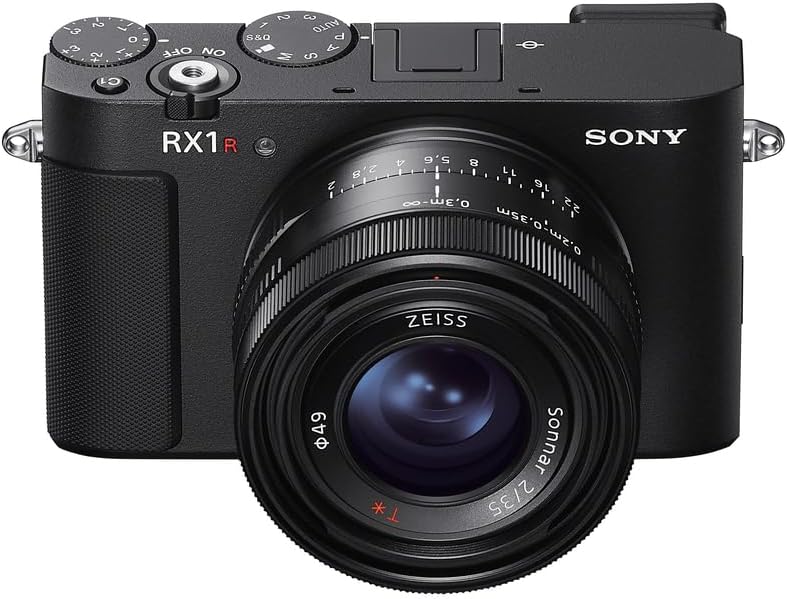
The fixed ZEISS Sonnar T* 35mm f/2 is not a restriction attached to the RX1R III. It is the reason to own it. Sony can align the lens and sensor at the factory to micron-level tolerances, avoiding the compromises involved in making one interchangeable lens behave consistently across thousands of bodies.
Thirty-five millimeters is wide enough to place a person in context, but not so wide that every frame becomes an exercise in managing empty edges. It suits street scenes, environmental portraits, family documentary work and travel details. I find 35mm most convincing when the photographer moves toward a scene instead of standing back and treating it as a wide-angle safety lens.
The aperture ring and macro switching ring reinforce that deliberate rhythm. Normal focus runs from about 24cm to infinity. Macro mode covers roughly 14cm to 29cm and reaches 0.26x magnification. It is not true macro, but it is useful for food, objects and close travel details without adding an accessory lens.
Can the older lens satisfy 61 megapixels?
The optical specification is familiar from earlier RX1 generations, which immediately raises the right question: why put a modern 61MP sensor behind a long-established design? The answer is that resolution is not a binary lens test. The pairing produces excellent real-world detail, particularly through the central and mid-frame areas, and stopping down gives the sensor more room to show what it can do.
At f/2, I would use the lens for subject separation, low light and its rendering rather than expecting clinical equality from center to extreme corner. That is not an apology. A compact 35mm f/2 designed around character and size can be more interesting than a larger prime optimized only for charts. Buyers expecting modern GM-lens perfection at every aperture should inspect full-resolution RAW samples before spending $5,099.
Image quality and the useful 50mm and 70mm crops
The 61MP sensor produces 9504 x 6336 files and gives the RX1R III enormous cropping freedom. Dynamic range is generous at low ISO, fine textures hold up in large prints, and the lack of an optical low-pass filter prioritizes detail. This is the camera’s clearest technical success.
High resolution also makes technique visible. A slightly missed focus point or small amount of camera shake is obvious at 100%. The files are not inherently “less sharp” handheld, but they reveal errors that a 24MP file may hide. Judge the photograph at its intended output size before blaming the camera.
Sony’s Step Crop Shooting turns the 35mm view into simulated 50mm and 70mm perspectives. JPEG resolution falls from about 60MP at 35mm to 29MP at 50mm and 15MP at 70mm. RAW files retain the full image with crop information, so the framing can be reconsidered later.
The feature is more useful than ordinary digital zoom because the sensor starts with enough resolution to leave credible files. Still, it does not change perspective or depth of field. A 70mm crop is compositionally convenient; it does not become a true 70mm portrait lens.
No stabilization changes how I would shoot it
The RX1R III has no optical stabilization and no sensor-shift stabilization for still photography. Video gets electronic Active stabilization with an additional crop, but photographs receive no such help.
That omission matters more on a 61MP camera than it would on a casual compact. For static subjects, I would set Auto ISO to protect a minimum shutter speed around 1/125 second and move higher when the photographer or subject is active. Sony’s high-resolution sensor gives you latitude to use more ISO; a clean low-ISO file blurred by movement is still a failed photograph.
The lack of stabilization also reduces the camera’s advantage in dim interiors. The f/2 lens helps, and the sensor performs well, but stabilized competitors can use slower shutter speeds when the subject is still. If night city photography is central to your work, this is not a theoretical drawback.
Autofocus is the modernization the RX1 needed
The autofocus system uses up to 693 phase-detection points covering about 78% of the still-image area. Sony’s AI processing recognizes people, animals, birds, insects, cars, trains and aircraft. Human pose estimation can continue tracking when a face turns away or is partly obscured.
For street photography, this removes much of the hesitation associated with older premium compacts. The camera can recognize an eye quickly, but it also lets you choose a flexible spot and control the decision. I would not leave every recognition option active and expect the camera to understand a crowded scene. Decide what matters, then let the tracking do the mechanical work.
Continuous shooting tops out at 5fps. That is adequate for a short gesture or a person crossing a frame, but it confirms the camera’s purpose. The RX1R III is responsive, not a sports body. Its 61MP readout and compact design favor considered timing over long bursts.
The leaf shutter is a quiet advantage
The integrated leaf shutter is one of the RX1R III’s most distinctive practical features. It is extremely quiet and supports flash synchronization up to 1/4000 second under compatible conditions. That opens creative daylight-flash options that conventional focal-plane shutters cannot match without high-speed sync.
Silence also changes the relationship with a scene. In a ceremony, cafe or quiet street, the camera does not announce every frame. Electronic shutters can be silent too, but they bring rolling-shutter and artificial-light considerations. The RX1R III can remain discreet without relying entirely on electronic readout.
Handling: beautifully compact, needlessly restrictive
The magnesium-alloy body weighs about 498g with battery and card. The grip is shallow but usable, while the aperture and exposure controls give the camera a direct photographic feel. It is dense rather than flimsy, and the fixed lens keeps the balance close to the hand.
Sony’s optional TG-2 thumb grip improves leverage, but it occupies the Multi Interface Shoe and costs roughly $300. On a $5,099 camera, needing an expensive accessory for a more secure hold is difficult to celebrate.
The fixed rear screen is the wrong compromise
The 3-inch, 2.36-million-dot touchscreen does not tilt. That is a regression from the RX1R II and an especially awkward decision for a street camera. Low viewpoints, waist-level framing and overhead shots are exactly where a discreet compact should excel.
You can shoot from the hip and accept some uncertainty, but that is not the same as composing. A tilting mechanism would add thickness, yet Sony has already accepted a protruding lens and premium price. I would rather have two extra millimeters than lose one of the most useful street-photography controls.
The integrated 0.39-inch OLED EVF has 2.36 million dots and 0.70x magnification. Unlike the RX1R II finder, it is fixed rather than pop-up. That makes the camera quicker to raise and removes a fragile motion, but its resolution looks modest beside current high-end bodies.
It is good enough to frame and assess focus. It does not deliver the luxurious viewing experience the price suggests. The distinction matters because the fixed screen makes the EVF carry more of the compositional workload.
Battery, cards and travel durability
The RX1R III uses the NP-FW50 battery and is rated for roughly 300 photographs with the rear screen or 270 with the EVF. USB-C supports charging and USB Power Delivery, so a power bank can rescue a long day. I would still carry a spare battery; high-resolution review, wireless transfer and finder use consume power quickly.
There is one SD UHS-II card slot. That is normal for the camera’s size, but 61MP RAW files make card capacity and write speed worth planning. This is not a body for photographers who require in-camera redundancy on paid assignments.
More importantly, Sony states that the camera is not dustproof, drip-proof or waterproof. A premium travel camera should invite constant use, but this one asks for caution in rain, blowing sand and dusty environments. The fixed lens prevents sensor dust from lens changes, yet the body itself still needs protection.
Video is secondary despite the 10-bit specification
The RX1R III records 4K up to 30p, including 10-bit 4:2:2 options, and Full HD up to 120p. It has a 3.5mm microphone input and a digital-audio-capable Multi Interface Shoe, but no headphone jack. The fixed screen cannot face forward, and there is no 4K60.
Electronic Active stabilization is available for movies, with a crop. That can steady casual clips, but it does not transform the camera into a serious handheld video tool. Rolling shutter from a high-resolution sensor also encourages controlled movement rather than fast pans.
The files can look excellent, especially for short travel sequences and documentary inserts. The limitations are ergonomic as much as technical. This is a stills camera that records good video, not a hybrid purchased because both modes are equally important.
RX1R III versus the realistic alternatives
Sony a7CR with a compact prime
The Sony a7CR offers a related 61MP concept with stabilization, a tilting screen and interchangeable lenses. Add a compact 40mm f/2.5 G or 35mm prime and it remains reasonably small while costing less. The RX1R III answers with a quieter leaf shutter, an f/2 integrated lens and a noticeably cleaner one-camera experience.
Fujifilm X100VI
The Fujifilm X100VI uses a 40MP APS-C sensor and 35mm-equivalent f/2 lens. It has stabilization, a tilting screen, a hybrid finder and a much lower list price. Sony offers a full-frame sensor, more resolution, stronger subject-recognition AF and a smaller body-lens package than those specifications might suggest.
Leica Q3 and Q3 43
The Leica Q3 provides a wider 28mm f/1.7 lens, stabilization and a tilting screen. The Q3 43 offers a more portrait-oriented 43mm view. Both deliver a more tactile luxury experience, while the Sony is smaller and its autofocus is more technically assertive. None is a rational value purchase; focal length and handling should decide.
Fujifilm GFX100RF
The GFX100RF costs in the same broad territory and offers a 102MP medium-format sensor. It is substantially larger, its 28mm-equivalent lens is only f/4, and its autofocus is less suited to spontaneous subject tracking. The Fujifilm is the landscape and deliberate-image-quality alternative; the Sony is the compact 35mm documentary tool.
Our best compact cameras guide provides broader options when size matters more than owning this exact full-frame concept.
Price and value in 2026
The US launch price was $5,099.99, and Sony’s store still lists the camera at that level. The price is not automatically absurd: the lens is part of the camera, the sensor is high-end, and the engineering required to make the package this small has value.
What makes the price difficult is not the fixed lens. It is paying flagship money while accepting a fixed screen, no stills stabilization, a modest EVF and no weather protection. Those are daily-use compromises, not obscure specification gaps.
The RX1R III becomes rational when compactness is worth more to you than versatility. If it replaces a body, a premium 35mm prime and the temptation to carry two additional lenses, the cost can make sense. If it becomes an expensive second camera used twice a month, it is a beautiful way to immobilize $5,100.
Final verdict
The Sony RX1R III is one of the smallest serious full-frame cameras ever made, and it can produce exceptional photographs. The 61MP sensor, integrated 35mm f/2 lens, modern autofocus and leaf shutter form a coherent photographic tool. The 50mm and 70mm crops extend its usefulness without pretending to replace real lenses.
I also think Sony misjudged which compromises photographers would forgive. A fixed lens creates discipline. A fixed screen creates inconvenience. No stabilization demands better technique, while no weather protection makes a travel camera feel precious in the wrong way.
For the photographer who already sees in 35mm and wants full-frame quality in the smallest credible package, the RX1R III can be deeply satisfying. Everyone else should buy the more flexible camera they actually need rather than the compact object they most enjoy imagining themselves carrying.
Frequently asked questions
Does the Sony RX1R III have image stabilization?
It has no optical or sensor-shift stabilization for still photographs. Video offers cropped electronic Active stabilization.
Does the RX1R III screen tilt?
No. Its 3-inch touchscreen is fixed, unlike the tilting display on the RX1R II.
Can the Sony RX1R III change lenses?
No. Its ZEISS Sonnar T* 35mm f/2 lens is permanently integrated and calibrated with the sensor.
Is the Sony RX1R III weather sealed?
Sony states that the camera is not dustproof, drip-proof or waterproof. It should be protected in rain, sand and dusty conditions.
Can the Sony RX1R III shoot 4K60?
No. It records 4K up to 30p and Full HD up to 120p.
Is the Sony RX1R III worth $5,099?
It can be for a committed 35mm photographer who prioritizes minimum size, 61MP files and a leaf shutter. An a7CR-based kit is better value when stabilization, a tilting screen or lens choice matters more.
Experienced street, documentary and travel photographers committed to a 35mm field of view.
You need stabilization, a tilting screen, weather protection, interchangeable lenses or strong hybrid video.
Medium; autofocus is easy, but the fixed lens and high-resolution technique demand intention.
No direct system path; choose an a7CR for interchangeable lenses or Leica Q3 for a different premium compact experience.
Good 10-bit 4K30 clips, but no 4K60, no headphone jack and a fixed screen.
Yes for a narrow, committed audience; poor value as a general-purpose camera.