
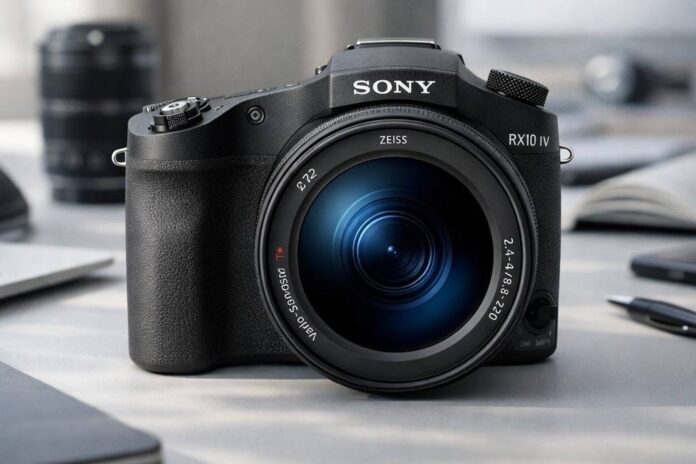
View full specs
This Sony RX10 IV review has a different conclusion now that the RX10 V exists. The IV is no longer the current model. Yet its 20.1MP stacked 1-inch sensor and unusually good 24-600mm equivalent f/2.4-4 lens remain the heart of the newer camera too. That makes the RX10 IV potentially excellent value, provided you do not pay yesterday’s scarcity prices for it.
The important question is not whether a 2017 camera can still take good photographs. It can. The question is whether its older autofocus, battery, controls and 4K30 video will cost you enough missed shots to justify spending more on the Sony RX10 V.
For travel, daylight wildlife, air shows and family sport, a well-priced RX10 IV still offers something unusual. It combines genuine 24mm-to-600mm coverage, a bright telephoto aperture and fast shooting in one weather-resistant body. I would buy it for that integrated system, not because it is small, cheap or new. It is none of those things.
nn
What stays with me about the RX10 IV is not the 24fps figure. It is the relief of seeing a wide scene, noticing something interesting in the distance and getting both photographs without opening a bag. On a long walk or a family day, that changes my attention: I watch what is happening instead of planning the next lens change.
Sony RX10 IV review: quick verdict
Buy the RX10 IV when one camera must cover wide scenes, portraits and distant action. It makes sense when a clean example costs substantially less than the RX10 V. In good light, the older model gives away surprisingly little in basic image quality. Sony retained the same headline sensor resolution and lens range for the V.
Skip it when subject-recognition autofocus is central to your photography, you regularly work at dawn or dusk, or the asking price approaches new-camera money. The IV can track action, but it cannot recognize birds, animals, insects and vehicles with the intelligence of the new model. Its 1-inch sensor also remains a physical limitation when shutter speed and light both become scarce.
| Reasons to buy | Reasons to pause |
|---|---|
| Excellent 24-600mm equivalent f/2.4-4 lens | Used prices can remain irrationally high |
| Fast 24fps burst and capable phase-detect AF | No modern bird, animal or vehicle recognition |
| Strong daylight image quality from a 1-inch sensor | High-ISO files trail APS-C and full frame |
| Built-in flash, top display, mic and headphone ports | Older NP-FW50 battery and UHS-I card support |
| Useful 4K30, S-Log2 and S-Log3 video | No 10-bit 4K, 4K60 or fully articulating screen |
Sony RX10 IV specifications
| Sensor | 20.1MP 1-inch stacked Exmor RS CMOS |
|---|---|
| Lens | ZEISS Vario-Sonnar T* 24-600mm equivalent, f/2.4-4 |
| Autofocus | 315 phase-detection points plus 25 contrast-detection points |
| Continuous shooting | Up to 24fps with AF/AE tracking |
| Stabilization | Optical SteadyShot in the fixed lens |
| Video | 4K up to 30p; Full HD up to 120p; high-frame-rate modes up to 960fps at reduced capture resolution |
| Viewfinder | 2.36-million-dot OLED EVF, approximately 0.70x magnification |
| Rear screen | 3-inch, 1.44-million-dot tilting touchscreen |
| Storage | Single UHS-I SD card slot; selected Memory Stick formats also supported |
| Battery | NP-FW50; approximately 400 LCD or 370 EVF shots |
| Weight | Approximately 1,095g with battery and card |
| Weather protection | Dust- and moisture-resistant construction; not waterproof |
The full format and mode details are available in Sony’s official RX10 IV specifications. The two figures that matter most in practice are 1,095g and 600mm equivalent. This is a substantial camera, but it replaces a substantial bag of lenses.
What the RX10 V launch changes for RX10 IV buyers
The RX10 V ends the strange period in which the discontinued RX10 IV could command inflated used prices simply because there was no successor. Sony’s new camera costs $2,299.99 in the US. That is expensive, but it gives buyers a hard ceiling against which every RX10 IV listing should now be judged.
The newer model keeps a 20.1MP stacked 1-inch sensor and a 24-600mm equivalent f/2.4-4 ZEISS lens. Its money goes elsewhere: a BIONZ XR processor, dedicated AI processing, broader subject recognition and 30fps shooting. It also adds 4K60 and 4K120 options, a better EVF, UHS-II storage, Alpha-style controls and the much larger NP-FZ100 battery.
That distinction is unusually clean. If you photograph landscapes, perched wildlife, travel details and family moments in decent light, the RX10 IV can produce files with much of the same basic appeal. Birds crossing branches and erratic sport expose the difference more clearly. The RX10 V earns its advantage through keeper rate and workflow, while video shooters gain modern frame rates and 10-bit flexibility.
I would not pay close to the IV’s old $1,699.99 list price without comparing the total against the new model. Around $1,500 for an excellent, warrantied example is the upper edge of what feels sensible to me after the V announcement. Below that, the calculation improves quickly. Above it, the age of the battery, card interface and autofocus system becomes harder to ignore.
The 24-600mm lens is still the real product
The body says RX10 IV, but the lens is what you are buying. I tend to begin wider than I think I need, because 24mm makes it easy to find the subject and understand the scene. Then I tighten the frame: 70-135mm for people and event details, or all the way to 600mm for birds, aircraft and field sports. That last setting still gives me f/4 rather than the f/6.3 or f/8 common on long consumer zooms.
That f/4 telephoto aperture matters more than the 25x label. It gives the autofocus system more light, keeps ISO lower and helps separate a subject from the background. A 1-inch sensor will not imitate full frame, but 600mm, a close subject and a distant background can still produce convincing isolation.
The lens is sharp enough to reward careful technique across most of its range. The long end benefits from stopping down only modestly; on a 1-inch sensor, chasing depth of field at f/11 or f/16 invites diffraction before it solves many problems. For wildlife in good light, I would rather stay near f/4, raise the shutter speed and accept a moderate ISO increase.
Close focus is useful too: approximately 3cm from the lens at the wide end and 72cm at full telephoto. That does not turn the RX10 IV into a true macro camera. It is still excellent for flowers, food, insects and travel details when carrying one camera is the whole point.
One omission catches photographers coming from earlier RX10 models: there is no built-in neutral-density filter. In bright light, the electronic shutter reaches 1/32000 second for stills, but video shooters who want a controlled shutter speed and wide aperture should carry a 72mm ND filter.
Image quality: excellent reach, realistic sensor limits
At base ISO and in good daylight, the RX10 IV produces detailed files with strong contrast and enough editing latitude for serious travel and wildlife work. The sensor’s stacked design is about speed, but the 20.1MP resolution is also a sensible match for the lens. You are not feeding enormous files through a 25x zoom merely to discover that the optics cannot support them.
My practical comfort zone is ISO 100-400 when fine feather, fur or landscape texture matters. I have no hesitation using ISO 800 when the shutter speed needs it, especially from RAW. At ISO 1600 and above, noise reduction begins to trade away the very detail you bought the 600mm lens to capture. The files are still usable for smaller output, but an APS-C or full-frame camera with a good telephoto lens opens a visible gap.
This is why low light changes the verdict. Optical stabilization can reduce camera shake on a stationary subject, but it cannot freeze a moving bird or athlete. If the subject requires 1/1000 second at 600mm, the camera may have to raise ISO aggressively. The better decision is usually to accept some grain rather than bring home a clean file with motion blur.
JPEG color is punchy and immediately usable, although fine detail can look over-processed at higher sensitivities. RAW gives the RX10 IV more room to breathe. I would reduce chroma noise first, protect edge detail and resist the temptation to apply heavy global sharpening to distant wildlife.
Autofocus and 24fps shooting in 2026
The RX10 IV was a remarkable action camera when it arrived. Its 315 phase-detection points cover roughly 65 percent of the frame, and the camera can shoot at up to 24fps with focus and exposure tracking. That remains fast enough for almost any subject.
Frame rate is not the same as intelligence, however. The IV’s High-density Tracking AF can follow a selected subject, and its human Eye AF is useful. However, it predates the broad recognition systems trained to identify birds, animals, insects, cars, trains and aircraft. Against a clean sky or uncluttered field, it remains impressively capable. Against branches, reeds or a crowd, the photographer has to give it more help.
The camera has given me its most predictable results when I stop asking Wide AF to read my mind. I use a flexible spot or expanded flexible spot to establish focus, then let continuous AF track from there. A running child or a dog crossing clean grass is not a difficult assignment for it; a bird weaving through branches is where the age of the system appears.
nn
At 600mm, my bad habit is zooming in before I have properly found the subject. The cure is simple: start wider, acquire the bird or aircraft, and tighten the frame only after tracking settles. I assign Zoom Assist to a custom button because temporarily pulling back is far faster than searching an empty sky through the viewfinder.
The 24fps mode also produces a lot of files very quickly. Use it around takeoff, impact or a decisive expression, not as the default for every movement. The UHS-I card interface is a genuine age marker, so a long burst can leave you waiting while the buffer clears. A fast UHS-I U3 SD card is the sensible match.
Wildlife and bird photography: where the IV still works
The RX10 IV remains a persuasive daylight wildlife camera because the whole system weighs about 1.1kg. A mirrorless body and a lens reaching 600mm can produce better files, especially in poor light, but it will usually be larger, heavier and more expensive. I would rather carry the Sony for ten miles than a complete interchangeable-lens kit. It suits days when the subject might be a landscape at 24mm or a small bird across a pond.
For active birds, I would begin around 1/1600 second, continuous AF and f/4 at the long end. For a perched subject, stabilization may let you slow down, but watch the bird rather than the meter. A twitching head or moving feathers can still ruin a frame at a shutter speed that looks safe for the focal length.
The biggest limitation is not reach. It is the combination of older recognition AF and a 1-inch sensor when light falls. Dawn woodland, indoor sport and nocturnal wildlife are not where this camera earns its reputation. Open landscapes, wetlands, air shows, zoos and daytime field sport suit it much better.
If wildlife is your main subject and you are comparing complete systems rather than bodies alone, our wildlife camera guide puts the RX approach in context.
Handling and travel: one camera, not a small camera
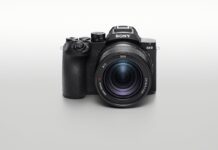
Calling the RX10 IV a compact is technically defensible and practically misleading. It is close to DSLR-sized, with a deep grip and a lens barrel that dominates the body. After an hour, my right hand knows that 1.1kg is hanging from it, so I prefer a supportive cross-body strap to a thin neck strap. What makes the camera travel-friendly is consolidation: the second body, wide zoom, telephoto zoom and lens-changing routine can stay at home.
The triple control rings give the lens a more deliberate feel than a basic power zoom, although focal length changes are still motorized. I like having the aperture ring under my left hand and exposure compensation under my right; it lets the camera fade into the background once the setup becomes familiar. The top status display is useful when working quickly, and the pop-up flash can rescue a backlit face. Both features disappeared from the RX10 V, so the old body is not inferior in every handling detail.
The 2.36-million-dot EVF is clear enough for tracking and manual focus, but the RX10 V’s newer finder is visibly better. The rear screen tilts up and down and supports touch focus. It does not face forward, and touch control is far more limited than on a modern smartphone or recent Sony body.
The menus feel like Sony in 2017: deep, capable and slower to navigate than they need to be. I put focus area, subject tracking, drive mode and silent shooting in the Fn menu, then save a fast-action setup to memory recall. That ten-minute investment matters more than memorizing every page of the manual.
nn
Battery life is adequate rather than generous. The NP-FW50 is rated for about 400 shots with the LCD or 370 through the EVF, but long bursts and disciplined power management can produce more frames in practice. I would still carry at least one genuine spare for wildlife or a full travel day. Charging and power run through Micro USB rather than USB-C.
Video: better than the draft-era reputation, older than the RX10 V
The RX10 IV records detailed 4K up to 30p and offers full pixel readout without pixel binning. It also includes S-Log2, S-Log3, microphone input and headphone monitoring. I would happily use it for a travel sequence, an interview or wildlife behavior when changing lenses would be disruptive. This is not a casual compact with a 4K badge.
The limitations are equally real. Internal recording is 8-bit, there is no 4K60, the screen does not articulate to face the operator, and the autofocus system lacks the V’s modern subject recognition. High-frame-rate modes reach headline figures up to 960fps, but capture resolution falls sharply at the highest settings. I regard 240fps as the more useful creative option and the extreme modes as occasional tools.
Optical stabilization helps handheld clips, especially at moderate focal lengths. At 600mm, it reduces shake but does not create tripod-like footage. A monopod, beanbag or properly balanced tripod remains the better answer for long wildlife sequences.
The RX10 V is the obvious upgrade for 4K60, 4K120 and 10-bit workflows. The IV still makes sense when good 4K30 clips are enough alongside stills. Some photographers would gain more by spending the difference on travel, support gear or time in the field.
Buying a used Sony RX10 IV
The arrival of the RX10 V should eventually pull RX10 IV prices back toward reality, but used markets do not correct overnight. Compare the final price, warranty and return policy rather than assuming an older listing is automatically good value.
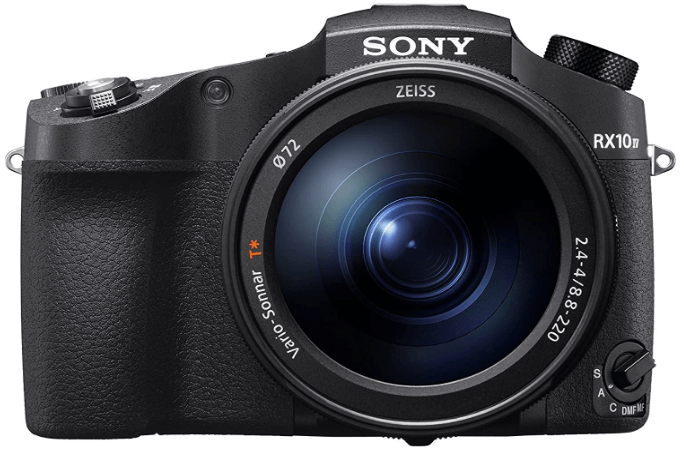
On a used body, test the powered zoom from 24mm to 600mm several times and listen for hesitation or roughness. Inspect the fixed lens for haze, internal dust and impact marks because replacing the lens is not like swapping a damaged interchangeable lens. Check stabilization at the long end, autofocus on a moving subject, every control ring, the tilting screen, EVF sensor, card slot, Micro USB port and headphone jack.
Look closely for signs of moisture around doors and seams. Sony describes the construction as dust- and moisture-resistant, not waterproof. Finally, budget for a fresh NP-FW50 battery. An original pack from 2017 may still work while delivering far less than its rated capacity.
My buying rule is simple: the IV needs to be meaningfully cheaper than the RX10 V. I would feel good about a clean, warrantied camera near or below $1,500. I would feel manipulated by a scarcity-era listing near new-model money. A small discount is not enough compensation for a nine-year gap in autofocus, video, battery and interface design.
Sony RX10 IV alternatives
Sony RX10 V
Choose the V for difficult action, subject recognition, stronger battery life, a better EVF, UHS-II storage and modern 10-bit video. Keep or buy the IV when those improvements do not justify the price difference.
Nikon P1100
The Nikon P1100 reaches an extraordinary 3000mm equivalent and is a more specialized moon and distant-subject camera. The RX10 IV has the much larger sensor, brighter telephoto aperture and faster autofocus. They share a bridge-camera shape but solve different problems.
Panasonic Lumix FZ80D
The Panasonic FZ80D costs far less and reaches 1200mm equivalent. Its smaller sensor, slower lens and more modest action performance place it in a different class. Buy it for affordable daylight reach, not as a direct substitute for the Sony’s image quality and speed.
Final verdict: is the Sony RX10 IV still worth buying?
Yes, at the right price. The RX10 V did not make the RX10 IV’s lens shorter, its daylight files worse or its 24fps burst slow. It exposed exactly where the older camera has aged: subject recognition, battery life, card speed, controls and video formats.
That makes the RX10 IV easier to recommend honestly. It is still one of the most complete single-camera solutions for travel, birds, aircraft, outdoor sport and family events. It is not the best low-light camera, the smartest tracking camera or a bargain at any price.
If I wanted the highest keeper rate from erratic wildlife and could afford the difference, I would buy the RX10 V. If I found a clean RX10 IV around or below $1,500 with a warranty, I would take its 24-600mm lens seriously. If a seller asked near-new-model money because the IV was once scarce, I would walk away.
Frequently asked questions
Is the Sony RX10 IV discontinued?
The RX10 V has replaced the RX10 IV as Sony’s current premium RX10 model. RX10 IV availability now depends mainly on remaining stock, refurbished cameras and the used market.
Is the Sony RX10 IV mirrorless?
It uses an electronic viewfinder and has no reflex mirror, but it is normally classified as a fixed-lens bridge camera rather than an interchangeable-lens mirrorless camera.
Is the RX10 IV good for bird photography?
Yes, especially in daylight. Its 600mm equivalent reach, f/4 telephoto aperture, phase-detect autofocus and 24fps burst make it capable for birds. The RX10 V tracks difficult subjects more intelligently, while larger-sensor systems produce cleaner files in poor light.
Does the Sony RX10 IV have image stabilization?
Yes. Optical SteadyShot is built into the fixed lens. It reduces camera shake but cannot freeze subject movement, so active wildlife and sport still require fast shutter speeds.
Does the RX10 IV shoot log video?
Yes. It includes both S-Log2 and S-Log3 picture profiles, plus microphone input and headphone monitoring. Recording is limited to older 8-bit formats and 4K up to 30p.
Should an RX10 IV owner upgrade to the RX10 V?
Upgrade when subject recognition, action autofocus, battery life, 4K60/120 or 10-bit recording solve a real limitation. Keep the IV when you mainly photograph static or predictable subjects in good light and remain satisfied with its 4K30 video.
Travel, wildlife, aircraft and outdoor sport when one 24-600mm camera matters more than maximum sensor size.
You need modern subject recognition, strong low-light files, 10-bit video, or the asking price approaches RX10 V money.
Medium; the fixed lens is simple, but autofocus setup and Sony menus reward preparation.
Move to the RX10 V for tracking and video, or APS-C/full frame with dedicated telephoto lenses for better low-light quality.
Detailed 4K30 with S-Log2/3, mic and headphones, but no 10-bit, 4K60 or forward-facing screen.
Yes, when a clean example is substantially cheaper than the RX10 V.