
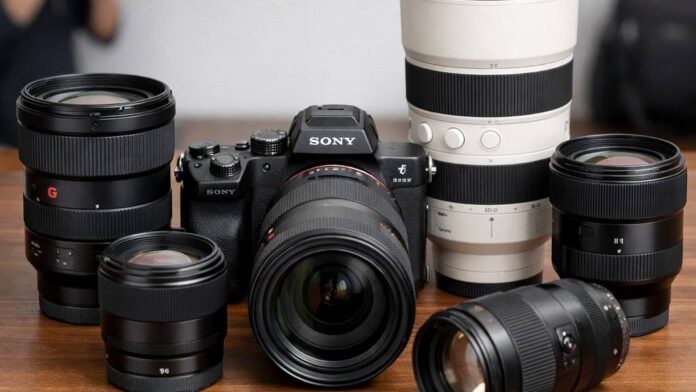
Choosing the best Sony FE lenses can feel overwhelming because the system now covers everything from compact walkaround glass to serious pro optics. In this guide, I’ll break down the lenses that truly stand out in real shooting, with practical advice for different styles, budgets, and priorities.
Quick Sony FE lens picks by camera type
If you came here searching for the best Sony FE lenses, start by matching the lens to the full-frame Sony body you actually own. A Sony a7 III or a7 IV owner usually needs a practical travel zoom or one good portrait prime first. A Sony a7R V or a7CR owner should care more about edge sharpness and resolving power. A Sony a9 III or A1 II shooter should prioritize autofocus speed, balance, and telephoto handling.
- Best first Sony FE lens: a 24-70mm or 28-75mm standard zoom for everyday work.
- Best portrait direction: 50mm, 85mm, or 135mm depending on working distance.
- Best travel direction: compact zooms and small primes that you will actually carry.
- Best high-resolution direction: lenses that stay sharp across the frame on 50MP and 60MP bodies.
How to choose the right Sony FE lens
Match the lens to what you actually shoot
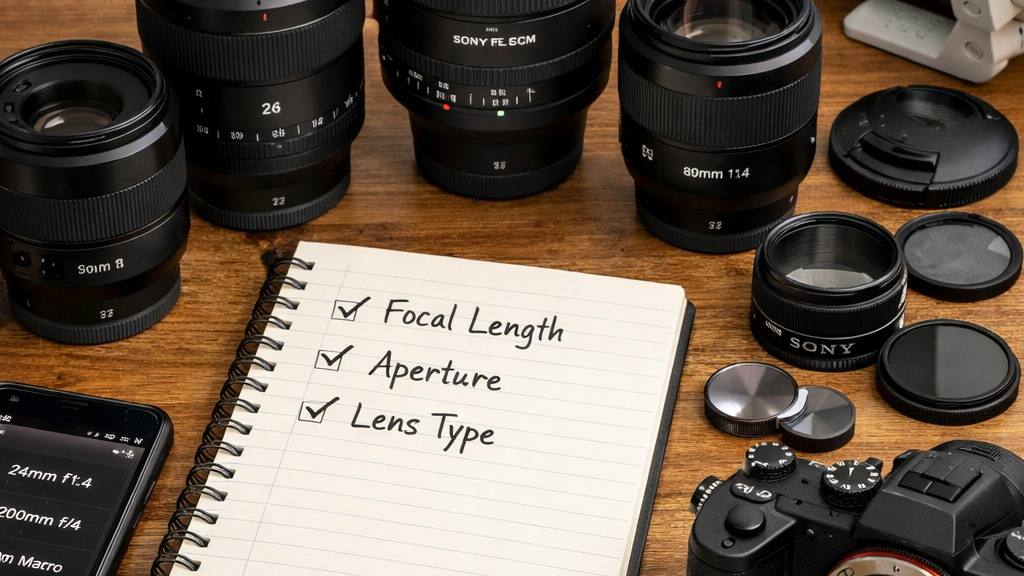
Sony FE mount offers more than sixty full-frame lenses, so the variety is incredible. But the best Sony FE lenses for you depend on what you actually photograph day to day. Are you mainly shooting friends and family, or do you spend weekends hiking and capturing landscapes? Do you want to take pro-level portraits, or are you seeking a single lens to cover everything on vacation?
That body-and-lens balance matters even more once you realize how broad the lineup has become. Before narrowing your shortlist, separate full-frame FE lenses from APS-C E lenses so you do not build around the wrong image circle or field of view.
Once you know your main subjects, it also helps to think about the camera body you’ll pair with the lens, since size and handling can shape your everyday experience. If portability matters, the Sony a7C II is a useful example of how compact full-frame bodies influence smarter FE lens choices.
I always recommend starting your decision by thinking about your main subject matter. For example, a portrait photographer usually wants lenses with wide apertures, like f/1.4 or f/1.8, to create background blur. Street photographers often prefer something smaller and less conspicuous, allowing them to blend in. If you shoot a lot of video, you may need a lens with quiet autofocus and minimal focus breathing. Wildlife and sports shooters, on the other hand, tend to gravitate toward telephoto zooms.
So before you get lost in technical specs, list three types of photos you want to take most often. This will focus your search and help you avoid buying a lens that ends up sitting unused.
Decide when size weight and price matter most
Once you know your main subjects, consider how much you want to carry. Sony’s FE lineup ranges from slim, lightweight primes to hefty pro zooms. If you travel or walk a lot, a lighter lens can make a huge difference. But lighter lenses sometimes offer slower apertures or more modest sharpness. For example, the FE 40mm f/2.5 G is tiny and sharp, but not as bright as the 35mm f/1.4 GM.
Similarly, price can jump dramatically in the FE system. Sony’s GM (G Master) lenses are the top performers, but G and third-party lenses from Tamron or Sigma are often great value. Our best Tamron lenses guide sorts the current options by mount and shooting use. Decide up front how much you want to invest. If you need more than one lens, spreading your budget across two or three well-chosen models often makes more sense than buying a single “dream” lens.
Finally, always factor in handling and autofocus. Some lenses feel better balanced or focus more quickly than others, which impacts your daily shooting. I suggest trying lenses in a store if possible, or reading hands-on reviews from experienced photographers, not just looking at test charts.
Best Sony FE lenses for everyday photography
The best standard zoom for most photographers
If I had to recommend just one lens for most Sony full-frame users, it would be a standard zoom covering wide to short telephoto. These “walkaround” lenses let you shoot everything from landscapes to portraits without switching glass. The classic choice in this range is the Sony FE 24-70mm f/2.8 GM II. It’s sharp, fast, and weather-sealed, with reliable autofocus for both stills and video. For many, it is the best Sony FE everyday lens, though it is not cheap or particularly small.
If you want something lighter or less expensive, the Sony FE 24-105mm f/4 G OSS is a terrific alternative. It’s a bit slower (f/4 instead of f/2.8), but it is sharp, versatile, and includes optical stabilization, which is handy for handheld shots. For travel or family use, this lens covers almost everything. The FE 28-70mm f/3.5-5.6 OSS, often bundled with cameras, is compact and affordable, but its image quality and build are not at the level of the G or GM lenses.
Those who prefer primes for everyday shooting should look at the Sony FE 35mm f/1.8 or the FE 40mm f/2.5 G. Both are lightweight, fast to focus, and excellent in low light. In my experience, a 35mm or 40mm prime is a joy for daily photography, especially if you want a discreet package.
Best Sony FE lenses for portraits and people
Why 50mm 85mm and 135mm still matter on full frame
For portraits, the classic focal lengths remain popular for good reason. The 50mm lens is versatile, working for half-body shots, environmental portraits, and even street scenes. The Sony FE 50mm f/1.2 GM is the flagship here, delivering stunning sharpness and dreamy bokeh, but the FE 50mm f/1.8 is a fantastic budget option. I’ve used both, and while the f/1.8 is not as robust or fast to focus, it punches well above its price.
The 85mm lens is the true portrait specialist. The Sony FE 85mm f/1.4 GM II is the current flagship portrait choice, with the classic 85mm look, smoother handling for video, and faster autofocus than the original GM. If you shoot people for a living, this is the premium pick. The FE 85mm f/1.8 is lighter, more affordable, and still delivers beautiful results. I often recommend it as the best Sony FE portrait lens for enthusiasts and even many professionals.
If you want even more compression and separation, the Sony FE 135mm f/1.8 GM has become a cult favorite. This lens produces razor-sharp images and melts backgrounds into smooth colors, perfect for headshots or creative portraits. It is larger and heavier, but nothing matches its look for certain styles of people photography.
Best Sony FE lenses for travel and street photography
When a compact prime beats a zoom on the road
Travel and street photography reward lenses that are small, light, and fast to use. Carrying a heavy zoom all day can get old fast, especially if you want to blend in or move quickly. This is where compact primes shine. The Sony FE 35mm f/1.8 is one of my top picks for travel – it is sharp, bright, and not much bigger than a deck of cards. For even more discretion, the FE 28mm f/2 offers a wider view in a tiny package, perfect for cityscapes or group shots.
If you prefer a slightly longer focal length for isolating subjects, the FE 55mm f/1.8 Zeiss remains a favorite. Its autofocus is quick, and the rendering is beautiful, making it ideal for candid portraits on the go. For those wanting a true pancake lens, the FE 24mm f/2.8 G is barely thicker than a lens cap and surprisingly sharp, ideal for street snaps and wide travel scenes.
Of course, if you want the convenience of a zoom, the FE 24-105mm f/4 G OSS mentioned earlier is a solid travel companion. It is not as inconspicuous as a prime, but it lets you frame a huge range of shots without swapping lenses in dusty or wet conditions. In markets or busy streets, though, I find a prime lets me move faster and stay less noticed, which leads to more natural photos.
For more detailed comparisons and the full current lineup, this list of all Sony E-mount lenses is a great reference.
Best Sony FE lenses for landscapes architecture and wide scenes
Wide-angle photography is one of the true strengths of the Sony FE mount. Whether you are shooting sweeping mountain vistas, dramatic cityscapes, or intricate interiors, having the right lens is critical. The best Sony FE wide angle lens options combine excellent sharpness, minimal distortion, and strong resistance to flare. Let’s explore what matters most and which models truly deliver for landscape, architecture, and wide scene shooters.
What to look for in a wide angle FE lens
For landscapes and architecture, sharpness across the frame is essential. Look for lenses with low distortion and strong corner-to-corner performance. Sunstars, flare resistance, and color rendering also play a big role, especially if you shoot into the light. Weather sealing is a bonus for outdoor work, while a lightweight build makes long hikes easier.
- Sony FE 16-35mm f/2.8 GM II: This is the reference standard for serious landscape and architecture shooters. It offers exceptional sharpness and contrast across the zoom range, fast autofocus, and robust weather sealing. While expensive, it’s lighter than its predecessor and delivers pro-level results even on high-resolution bodies.
- Sony FE 20mm f/1.8 G: For those who prefer primes, this is the sleeper hit of the Sony wide family. It is extremely sharp, lightweight, and fast, making it perfect for nightscapes and astrophotography. It also handles distortion and flare better than most competitors. If you want an all-around wide prime that is easy to carry, this is a top pick.
- Sony FE 12-24mm f/4 G: If you crave ultra-wide perspectives, the 12-24mm zoom offers an incredible field of view. With surprisingly good sharpness for such a wide lens and a compact profile, it’s an excellent choice for dramatic architecture shots or tight spaces. Just note the bulbous front element can complicate filter use.
- Sigma 14-24mm f/2.8 DG DN Art: This third-party option rivals Sony’s best for sharpness and build. It is heavier, but offers fantastic image quality at a friendlier price. The color rendering is slightly cooler, but it’s a favorite among Sony FE landscape lens fans who want top optical performance without the GM price.
For those working on a tighter budget, the Sony FE 28mm f/2 is surprisingly sharp and compact, though it is not as wide as the others. If you shoot mostly stopped down for landscapes, this lens offers great value and portability.
Best Sony FE lenses for sports wildlife and action
Shooting fast action, distant wildlife, or dynamic sports scenes requires a lens that can keep up. The best Sony FE telephoto lens choices deliver fast, accurate autofocus, long reach, and strong image stabilization. When split-second reactions matter, lens performance can make or break your shot.
- Sony FE 70-200mm f/2.8 GM OSS II: This lens is a staple for sports and event shooters. The latest version is much lighter than the original, with faster autofocus and improved optical stabilization. It delivers sharp, contrasty images across the zoom range and performs well with Sony’s teleconverters for extra reach. If you want one lens for field sports, motorsports, or indoor action, start here.
- Sony FE 200-600mm f/5.6-6.3 G OSS: For wildlife, birding, and distant action, this is the best Sony FE wildlife lens for most people. It offers a huge zoom range, reliable autofocus, and built-in stabilization. The lens is surprisingly sharp at the long end and works well with 1.4x and 2x teleconverters. The weight is manageable for hiking, and the price is reasonable for the reach.
- Sony FE 100-400mm f/4.5-5.6 GM OSS: If you need a more versatile zoom that still packs a punch for sports and wildlife, the 100-400mm GM is a favorite. It’s lighter than the 200-600mm, focuses faster, and delivers near-prime sharpness. This lens is especially good if you often switch from field sports to wildlife or want to travel with one telephoto.
- Tamron 150-500mm f/5-6.7 Di III VC VXD: Tamron’s telephoto zoom is a popular alternative for those on a budget. It’s lighter than Sony’s big zooms and offers strong stabilization. While not as fast to focus as the Sony GM models, it’s well suited to casual wildlife, airshows, and outdoor sports.
For those just getting started, the Sony FE 70-300mm f/4.5-5.6 G OSS is a more affordable entry point. While it doesn’t match the speed or reach of the higher-end models, it’s great for local sports, zoo trips, or airshows.
Sony G vs GM vs third party lenses
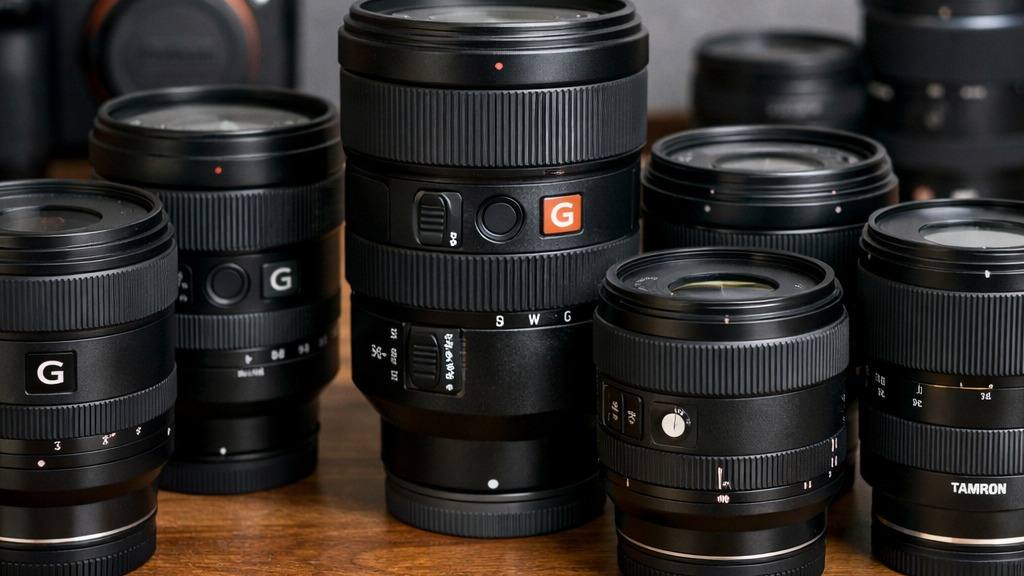
When picking the best Sony FE lenses, you’ll see three main categories: Sony G, Sony GM, and third-party brands like Sigma and Tamron. Each has its strengths and tradeoffs.
- Sony G lenses: These offer a balance between quality and price. They feature good optics, weather sealing, and reliable autofocus. G lenses are often lighter and less expensive than the GM series, making them great for travel or hiking.
- Sony GM (G Master) lenses: GM lenses are Sony’s top-tier professional line. They feature the best optics, widest apertures, fastest autofocus, and pro-grade builds. GM glass is ideal if you need the absolute best sharpness, subject separation, and low light performance. Expect to pay more and carry more weight.
- Third-party lenses (Sigma, Tamron): These brands offer excellent value and unique focal lengths. Sigma’s Art line competes directly with GM for sharpness, often at lower prices. Tamron’s zooms are lighter, more affordable, and great for travel, though they may lack some weather sealing or features found in Sony’s own glass.
For a mount-specific shortlist and the body-integration caveats, see our guide to the best Sigma mirrorless lenses.
n
Recent native Sigma and Tamron lenses support Sony autofocus and stabilization on compatible bodies. On Sony’s fastest cameras, however, third-party glass can limit AF-C burst speed and may not support first-party features such as breathing compensation or Sony teleconverters. For most shooters, mixing Sony, Sigma, and Tamron is still a smart way to build a kit around real priorities and budget.
My final recommendations by budget and shooting style
With dozens of options in the Sony FE lineup, building your lens kit can feel overwhelming. Here are my personal recommendations, based on real-world use, for different budgets and styles:
- For beginners: Start with the Sony FE 28-70mm f/3.5-5.6 OSS kit lens or upgrade to the Tamron 28-75mm f/2.8 G2 for better image quality and low light performance. Add the Sony FE 50mm f/1.8 for portraits and street shots.
- For travel and all-around shooting: The Sony FE 24-105mm f/4 G OSS is a fantastic one-lens solution that balances reach, sharpness, and weight. Pair it with the Sony FE 20mm f/1.8 G for wide scenes and low light.
- For landscape and architecture: Go with the Sony FE 16-35mm f/2.8 GM II or the Sigma 14-24mm f/2.8 Art. If you want a lightweight setup, the Sony FE 20mm f/1.8 G is hard to beat.
- For sports and wildlife: The Sony FE 70-200mm f/2.8 GM OSS II is the best all-rounder for action. For wildlife, the Sony FE 200-600mm G OSS is a top performer, with the Tamron 150-500mm as a strong value alternative.
- For professionals: Build around the GM primes and zooms. The Sony FE 24-70mm f/2.8 GM II, 70-200mm f/2.8 GM OSS II, and 16-35mm f/2.8 GM II cover most needs. Add primes like the Sony FE 85mm f/1.4 GM or 135mm f/1.8 GM for specialized work.
Regardless of your level, the most important thing is to match your lens choices to how and what you actually shoot. Many of the best Sony FE lenses are available used or refurbished, making it easier to build a strong kit without breaking the bank.
Frequently asked questions
What is the best Sony FE lens for beginners?
For most beginners, the Sony FE 28-70mm f/3.5-5.6 OSS kit zoom is a good place to start. If your budget allows, the Tamron 28-75mm f/2.8 G2 offers better sharpness and low light ability. Both are easy to use and cover a wide range of subjects.
Which Sony FE lens is best for portraits?
The Sony FE 85mm f/1.8 is affordable, sharp, and delivers beautiful background blur. For those wanting a pro look or shooting in low light, the Sony FE 85mm f/1.4 GM II is the stronger current choice. Both offer fast autofocus and flattering results.
Are Sony GM lenses worth the extra money?
If you need the best image quality, fastest autofocus, and robust construction, GM lenses are worth it. They shine in demanding conditions and with high-resolution cameras. For most casual shooters, G and third-party lenses offer excellent value and performance.
What is the best Sony FE travel lens?
The Sony FE 24-105mm f/4 G OSS is a top choice for travel. It covers wide to short telephoto, is sharp edge-to-edge, and is not too heavy. If you want to travel light, the Sony FE 28-60mm f/4-5.6 is extremely compact and pairs well with smaller bodies.
For a full list of Sony E-mount lens options, see the comprehensive guide at Shutter Muse.