
View full specs
This Sony A7R V review is really a 2026 buying decision now. The Sony A7R V, also searched as the Sony A7R-V and Sony A7RV, is no longer the newest high-resolution Alpha body. The A7R VI has arrived with a stacked 66.8MP sensor, faster shooting, and a $4,499.99 launch price. That changes the question from “is the A7R V the best?” to something more useful: is the A7R V now the smarter high-resolution buy?
If you are comparing older high-resolution Sony bodies rather than buying the newest model, our Sony a7R IV review covers the predecessor and where it still makes sense as a lower-cost 61MP option.
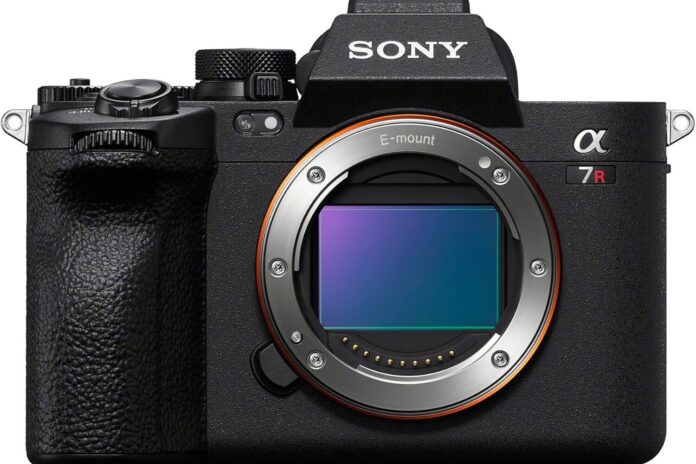
For many photographers, the answer is yes. The A7R V still gives you a 61MP full-frame sensor, Sony’s excellent AI subject recognition, a superb 9.44M-dot EVF, a genuinely useful four-axis screen, and mature NP-FZ100 battery support. It is not a casual camera. It rewards sharp lenses, steady technique, and a workflow that can handle big files. But if your photography depends on detail, the A7R V remains one of the most satisfying full-frame cameras Sony has made.
Sony A7R V review verdict in 2026
The Sony A7R V is still worth buying in 2026 if you want high-resolution stills and can get it meaningfully below the A7R VI. With the A7R V selling below its original launch price and used bodies often appearing around the high-$2,000 range, the value argument is much stronger than it was at launch.
I would buy it for landscapes, product photography, studio work, architecture, artwork reproduction, fine-art printing, and careful portrait sessions. I would hesitate if most of my work involved fast sport, unpredictable wildlife, low-light events, or video-first production. The A7R V can handle more than people give it credit for, but its personality is clear: it is a detail-first camera, not a speed-first camera.
| Buy the A7R V if… | Skip it if… |
|---|---|
| You print large or crop heavily. | You mostly shoot fast action. |
| You own or plan to buy sharp E-mount lenses. | You want small, forgiving files. |
| You shoot landscapes, studio, product, architecture, or fine-art work. | You need the newest video and readout performance. |
| The price gap versus the A7R VI can pay for a serious lens. | The A7R VI is within easy reach of your budget. |
Who should buy the Sony A7R V?
The right A7R V buyer already has a reason for 61MP. Maybe you photograph landscapes and want texture in rocks, trees, and distant ridgelines. Maybe you shoot products or artwork where clients inspect details. Maybe you crop wildlife or environmental portraits and still need a clean final file. In those situations, the A7R V feels less like spec-sheet vanity and more like extra working room.
It is also a strong choice for photographers who like to slow down. That does not mean tripod-only photography; the autofocus and stabilization make handheld work very practical. But the camera is at its best when you notice edges, backgrounds, lens choice, shutter speed, and focus placement. It gives you a beautiful file when you do your part, and it exposes laziness when you do not.
I would not recommend it as a first full-frame camera for most people. If you want a more forgiving all-rounder, the Sony A7 IV, Sony A7 V, or Sony a7C II will usually be easier to live with. If you want compact high-resolution full-frame, the Sony A7C R is the smaller alternative, though it gives up some of the A7R V’s working-body advantages.
Design, handling, and the screen that actually matters
The A7R V feels like a mature Sony professional body. The grip is comfortable, the controls are highly customizable, and the body balances well with serious glass. That last point matters because this sensor deserves good lenses. A tiny body with a heavy GM zoom is not always fun; the A7R V is large enough to feel stable without becoming a studio brick.
The 9.44M-dot OLED viewfinder is one of the camera’s best features. On a 61MP body, the EVF is not just a luxury spec. It helps you judge focus, fine detail, exposure, and composition before you bring files into Lightroom and discover whether your technique held up.
The four-axis rear screen is another real-world advantage. It tilts like a photographer’s screen and also articulates when you need it. For tripod landscapes, vertical compositions, low product angles, overhead shots, and occasional video, it is far better than a simple side-flip screen. This is one of the reasons I still prefer the A7R V body over the smaller A7C R for deliberate work.
Image quality: why 61MP is both lovely and unforgiving
The A7R V uses a 61MP full-frame back-illuminated Exmor R CMOS sensor. At low ISO, the files are excellent: detailed, flexible, and capable of large prints. Dynamic range is strong, color is easy to work with, and the files tolerate serious cropping when the lens and technique are good.
The flip side is that 61MP makes small mistakes visible. Slight camera shake, a soft lens corner, missed focus, heat shimmer, or overly optimistic shutter speed choices show up quickly when you zoom in. That is not a flaw; it is part of using a high-resolution body. The camera gives you more information, including information about your mistakes.
For portraits, the detail can be beautiful, especially for controlled beauty, fashion, and editorial work. For casual portraits, it can be too honest unless you are careful with lighting and retouching. For landscapes and product photography, it is exactly the kind of honesty many photographers want.
Autofocus and subject recognition
The A7R V was a major step forward for the R line because of its dedicated AI processing unit and subject recognition system. Human eye AF is excellent, and the camera is noticeably smarter with posture, faces turned away from camera, animals, birds, and more awkward compositions than older Sony bodies.
For portraits, that matters because 61MP plus shallow depth of field leaves very little margin for focus error. The A7R V makes high-resolution portrait shooting feel less fragile. For wildlife, it can create spectacular files, but this is where expectations need discipline. Ten frames per second is useful, not magical. If your priority is birds in flight, field sports, or erratic action, the A7R VI, A1 II, or another speed-oriented body is the cleaner choice.
Stabilization, lenses, and technique
Sony rates the A7R V’s in-body stabilization up to 8 stops under CIPA conditions. In practice, it is genuinely helpful, especially for static subjects and careful handheld shooting. I would still use a tripod for critical landscape work, long exposures, stitched work, or anything where I want the full 61MP reward, but the stabilization makes handheld high-resolution photography realistic.
Lens choice is not optional here. The A7R V will work with almost any E-mount lens, but it shines with sharp modern glass: Sony G Master lenses, strong G lenses, Sigma Art DG DN options, and the better Tamron zooms. A mediocre lens does not become unusable, but it stops being invisible.
Our a7R V lens guide compares the premium 24-70mm GM II route with a lighter Tamron G2 setup, then covers portrait and landscape choices. I would settle that part of the budget before choosing between camera bodies.
My practical rule is simple: treat shutter speed more conservatively than you would on a 24MP camera. If a shot matters, add more shutter speed, brace properly, use electronic first-curtain or the right shutter mode, and check focus at the shooting stage rather than hoping the file will save you later.
Video: capable, but not the reason to buy it
The A7R V records 8K 24p and 4K up to 60p with 10-bit options, so it is absolutely capable of serious hybrid work. For interviews, product clips, travel footage, behind-the-scenes video, and occasional commercial work, it can produce excellent results.
But I would not buy the A7R V primarily as a video camera in 2026. Readout, crop behavior, heat management, and newer Sony bodies all matter. The A7R VI moves the high-resolution line forward, while the FX3, FX30, A7 V, and other Sony bodies make more sense when video is the main job.
The best way to think about the A7R V is as a stills-first camera that happens to have strong video. If video pays your bills, buy a video-first body. If photography pays your bills and video is part of the package, the A7R V is still very usable.
Sony A7R V vs A7R VI
The A7R VI is the better camera if budget is secondary. Sony moved the R line forward with an approximately 66.8MP fully stacked Exmor RS sensor, BIONZ XR2 processing, faster readout, and up to 30 fps shooting. It is the more future-proof choice for photographers who want high resolution and speed in the same body.
The A7R V is the better value play when the price difference is large enough to matter. If saving roughly a thousand dollars compared with the A7R VI lets you buy a better lens, a stronger tripod, lights, storage, or a printing budget, the older body can produce better real-world results for your work.
The real question is not whether the A7R VI is more advanced. It is. The question is whether your subjects need those upgrades. For landscapes, studio, product, architecture, and controlled portrait work, the A7R V remains very hard to dismiss.
Sony A7R V vs A7 IV, A7 V, A7C R, and A1 II
If the smaller high-resolution body is tempting, the Sony a7CR vs a7R V comparison lays out the handling, EVF, card slot, and travel tradeoffs more directly.
The A7 IV and A7 V are better all-rounders. They produce smaller files, are easier for events and travel, and make more sense for photographers who split their time evenly between stills and video. The A7R V is the specialist: slower, heavier in workflow, but more rewarding when resolution matters.
The A7C R is the compact high-resolution alternative. It makes sense for travel and everyday high-resolution carry, but I prefer the A7R V for serious work because of the viewfinder, handling, screen, and comfort with larger lenses.
The A1 II is the premium do-everything option if speed, autofocus, pro durability, and budget all point upward. It is not a direct replacement for the A7R V’s value proposition. It is the camera you consider when missed action costs more than the body.
If you are still sorting Sony’s full-frame lineup, the Sony Alpha camera comparison is the better place to compare the families before choosing a body.
Pros and cons
- Pros: exceptional 61MP detail, excellent low-ISO dynamic range, strong AI subject recognition, superb EVF, clever four-axis screen, effective stabilization, mature E-mount lens support.
- Cons: big files, demanding technique, not a true action body, video is good rather than class-leading in 2026, now clearly superseded by the A7R VI.
Final verdict: should you buy the Sony A7R V now?
Yes, if you are a detail-driven photographer and the price is meaningfully below the A7R VI. The Sony A7R V is still excellent for landscape, studio, product, architecture, fine-art, and careful portrait work. It gives you huge, flexible files and a body that makes high-resolution shooting feel practical rather than precious.
No, if your photography is mostly speed, low-light events, or video-first work. In that case, the A7R VI, A7 V, A1 II, or an FX body will probably fit better. The A7R V is not the newest answer anymore. It is the value-aware high-resolution answer, and that is exactly why it remains interesting.
Related comparisons
Sony A7R V / Alpha 7R V alternatives
The main alternatives to the Sony A7R V / Alpha 7R V are Sony A7R VI, Sony A7C R, Nikon Z8, Canon EOS R5 Mark II, Sony A1 II. Compare autofocus, stabilization, video limits, lens choice and current price before deciding which camera fits you best.
Frequently asked questions
Is the Sony A7R V still worth buying after the A7R VI?
Yes, if the discount is substantial and your work is mostly high-resolution still photography. The A7R VI is faster and newer, but the A7R V still delivers excellent 61MP image quality.
Is the Sony A7R V good for landscapes?
Yes. Landscapes are one of its strongest uses because the 61MP sensor, strong dynamic range, excellent EVF, and flexible screen all support careful tripod or handheld composition.
Does the Sony A7R V need expensive lenses?
It benefits from very good lenses. You can use cheaper E-mount lenses, but the 61MP sensor will reveal softness, field curvature, and chromatic aberration more clearly than a lower-resolution body.
Is the Sony A7R V good for video?
It is good for occasional high-quality video, including 8K 24p and 4K 60p, but it is not the best Sony choice if video is your main work. Dedicated hybrid or cinema-oriented Sony bodies are better for demanding video.
What is the best Sony A7R V price to look for?
In 2026, the A7R V is most attractive when it is clearly below the A7R VI’s $4,499.99 price. A discounted new body around the low-$3,000 range or a clean used body in the high-$2,000 range is where the value argument becomes strong.
Key takeaways
- The Sony A7R V is now best understood as a discounted high-resolution specialist.
- The main search variants are Sony A7R V review, Sony A7R-V review, and Sony A7RV review.
- Its 61MP files are excellent, but they demand sharp lenses, careful technique, and serious storage.
- The A7R VI is better for speed and future-proofing, but the A7R V can be the smarter value buy.
- Choose it for landscapes, studio, product, architecture, fine art, and detail-heavy portrait work.
Landscape, studio, architecture, product, fine-art, and detail-heavy portrait photographers.
You mostly shoot fast action, low-light events, or video-first work.
High; files and technique are demanding.
Excellent E-mount lens ecosystem; A7R VI is the high-resolution successor.
Strong video specs, but stills-first readout and newer alternatives matter in 2026.
Yes, if discounted well below the A7R VI.