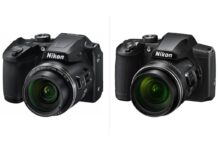

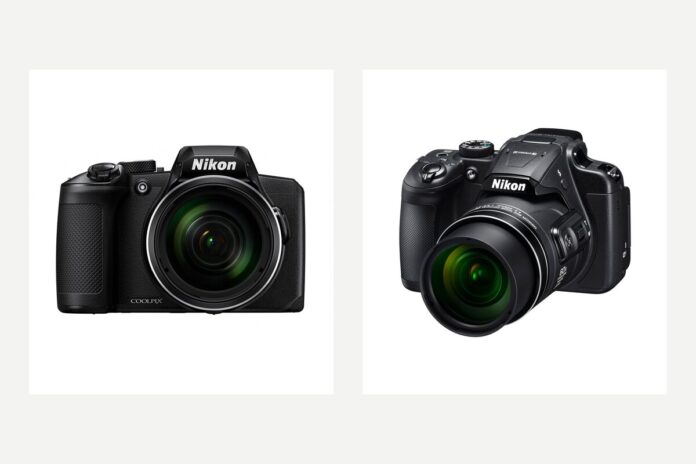
Nikon B600 vs B700 is a choice between simple automatic shooting and a much more capable photographer’s interface. Buy the B700 if its condition and price are sensible. Its viewfinder, vari-angle screen, RAW files, manual exposure controls, 4K video, and longer battery rating make the shared 60x lens easier to use. Choose the B600 only when you want uncomplicated JPEG shooting and it costs substantially less.
These are older bridge cameras, so condition matters as much as the model name. Neither is a low-light or fast-action specialist. Both make the most sense for daylight travel, backyard wildlife, the moon, and distant subjects that a phone cannot frame optically.
Nikon B600 vs B700: the short verdict
The B700 is the better camera for most photographers. I would pay for its electronic viewfinder before I paid for its extra four megapixels. At 1440mm equivalent, holding a camera to your eye adds a third point of contact. It also avoids the glare that can make the B600’s rear screen hard to see outdoors.
The B700 also gives you room to grow. You can shoot NRW RAW files, select aperture or shutter speed, use full manual exposure, and record 4K video. Its fully articulated screen is useful at ground level, above a crowd, or in front of the camera.
The B600 remains the more approachable choice. It is 2.5 ounces lighter, has a straightforward mode dial, and keeps the workflow to JPEG. That simplicity can suit a family camera or a casual vacation kit. It becomes a poor value when priced close to a clean B700, though.
Buy the B700: for wildlife, bright outdoor work, RAW editing, manual control, 4K, or flexible framing. Buy the B600: for mostly automatic JPEG shooting when the price gap is large. Skip both: for indoor sports, fast birds in flight, frequent low-light work, or dependable modern subject tracking.
The important specifications
Nikon’s official B600 specifications and B700 specifications show why this is not a simple newer-versus-older comparison. The B600 arrived almost three years later, yet Nikon positioned it below the B700.
- Lens: both use a 60x, 24–1440mm-equivalent f/3.3–6.5 NIKKOR zoom.
- Sensor: B600, 16MP 1/2.3-inch BSI CMOS; B700, 20.2MP 1/2.3-inch CMOS.
- Files: B600, JPEG; B700, JPEG and Nikon NRW RAW.
- Exposure: B600, programmed auto and scene modes; B700, P/S/A/M plus automatic modes.
- Framing: B600, fixed 3-inch 921k-dot LCD; B700, vari-angle LCD plus a 921k-dot EVF.
- Video: B600, Full HD up to 30p or 60i; B700, 4K UHD up to 30p and Full HD up to 60p.
- Burst: B600, about seven frames at 7 fps; B700, five frames at about 5 fps.
- Battery: B600, EN-EL12 and about 280 shots; B700, EN-EL23 and about 420 shots.
- Weight: B600, 17.7 oz / 500 g; B700, 20 oz / 570 g, including battery and card.
Both have lens-shift stabilization for stills, contrast-detect autofocus, SD/SDHC/SDXC storage, Micro-USB-era connections, Wi-Fi, and Bluetooth. Neither camera is weather sealed.
The same 60x lens does not mean the same shooting experience
On paper, lens reach is a tie. Both start at a genuinely useful 24mm equivalent and end at 1440mm. The optical construction and f/3.3–6.5 maximum aperture are also the same. Do not pay more for a B700 because a listing implies that it zooms farther.
The B700 makes that lens easier to exploit. A 0.2-inch, 921k-dot EVF sounds modest beside a current mirrorless finder, but it remains valuable. It gives a clear view in harsh sun and steadies the camera against your face. The B600 forces you to frame every shot on its fixed rear LCD.
Both bodies have a snap-back zoom button. Hold it when a bird or aircraft leaves the frame, reacquire the subject at a wider view, then release it. This is helpful, but it does not turn either camera into a modern action body. At the long end, heat shimmer and haze can erase detail even when focus and stabilization are working.
The B600’s 70g weight advantage is real on a long walk. Still, I would accept the B700’s extra weight for handheld telephoto work. The viewfinder changes more photographs than the small saving in bag weight.
Image quality, RAW files, and manual control
The B700 records 20.2MP files while the B600 records 16MP. That gives the B700 about 12% more linear resolution, not a dramatic leap. Both sensors are the same small format, and both lenses share the same range. Expect broadly similar daylight quality at matched focal lengths.
The meaningful B700 advantage is the file and exposure workflow. NRW RAW files let you set white balance later and apply noise reduction or sharpening with more restraint. RAW cannot create extra dynamic range or clean high-ISO detail that the small sensor never captured. It does give you more control over the available data.
P, S, A, and M modes matter even more for some subjects. Shutter priority lets you choose a speed that can freeze a perched bird’s sudden movement. Manual mode makes lunar exposure repeatable. The B600 offers exposure compensation, but its automatic exposure system still chooses the shutter speed and aperture.
Choose the B600 if you want finished JPEGs with minimal decisions. Choose the B700 if you already edit, want to learn exposure, or dislike having the camera make every technical choice. Our full Nikon B600 review and Nikon B700 review examine each model in more detail.
Autofocus, burst shooting, and video
Both cameras use contrast-detect autofocus. They can focus reliably on clear, stationary subjects in good light. They are less convincing with erratic movement, low contrast, or branches between the camera and a bird. Neither offers the animal and bird detection now common in mirrorless cameras.
The B600 has the faster headline burst, but its advantage is narrow. It captures roughly seven full-resolution frames at about 7 fps, then must recover. The B700 manages five frames at about 5 fps. Use short, timed bursts rather than holding the shutter and hoping.
For video, the B700 wins clearly. It records 4K UHD at 30p and Full HD at up to 60p. The B600 stops at Full HD 30p or 60i. The B700’s articulated screen also makes low-angle clips and self-framing easier.
Neither is an ideal creator camera. There is no microphone input, the autofocus is from an earlier generation, and extreme zoom magnifies every vibration. Treat 4K as useful extra detail, not proof of a modern video system. Test zoom noise, focus transitions, and a complete file transfer before relying on either body.
Battery, cards, wireless transfer, and ownership costs
The B700’s official rating is about 420 stills from its EN-EL23 battery. The B600 is rated for about 280 from an EN-EL12. Used batteries may deliver much less. Budget for a genuine or reputable replacement, and verify that the camera charges correctly through its USB connection.
Both cameras accept SD, SDHC, and SDXC cards. A modest UHS-I card from a known brand is enough. Before buying, shoot a burst and a video clip, then play both back. Card errors, damaged doors, and intermittent contacts are more important than an inflated accessory bundle.
SnapBridge can transfer images and provide remote shooting through a phone. The B700 also includes NFC, while the B600 does not. Wireless compatibility can be less predictable with older cameras and newer phones. Pair the exact camera with your phone before purchase if wireless transfer is essential.
Remember that the two models use different batteries. A B600 kit with spare EN-EL12 packs does not reduce the ownership cost of a later B700 purchase. Chargers, lens caps, straps, and sound battery doors should all be included in your price comparison.
How to buy either camera used
Judge the individual camera before the cosmetic grade. Run the lens from 24mm to 1440mm several times. Listen for grinding, hesitation, or a zoom barrel that sits unevenly. Focus on a detailed target at wide, middle, and maximum zoom positions.
- Inspect the front element for haze, fungus, scratches, and separation.
- Check the LCD, EVF on the B700, flash, buttons, ports, and tripod socket.
- Confirm stabilization changes the view without jumping or clicking.
- Record stills and video to your own card, then review the original files.
- Look for corrosion, swelling, or damaged contacts in the battery compartment.
- Prefer a return window over a bundle of low-quality accessories.
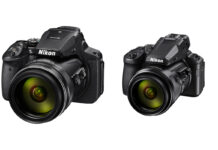
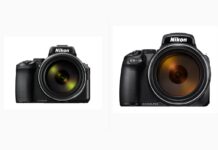
Scarcity can make these cameras look more valuable than they are. If a B700 approaches the cost of a new Panasonic FZ80D, compare them carefully. The Panasonic gives up some telephoto reach, but offers a current warranty, USB-C, RAW, 4K, a viewfinder, and faster shooting. If maximum Nikon reach matters more, a used P900 extends to 2000mm equivalent. Read our Nikon P900 review before paying a collector-style premium.
Our broader Nikon Coolpix buying guide also places both B-series cameras beside newer and longer-zoom options.
Final verdict
Buy the Nikon Coolpix B700 if you can find a clean example at a rational price. The EVF is the decisive upgrade for long-lens photography. RAW capture, manual exposure, the articulated screen, 4K, and stronger battery life make it the camera that better supports an improving photographer.
Buy the B600 when simplicity is the point. It is lighter, easy to hand to another family member, and capable of the same 24–1440mm optical framing. Its JPEG-only files, fixed screen, and automatic exposure controls are not hidden beginner aids. They are permanent limits.
Skip both if the asking price is driven by compact-camera fashion rather than photographic value. A current bridge camera is safer when you need a warranty. A used mirrorless body is a better foundation when autofocus, low-light quality, and future lens choices matter more than getting 1440mm in one affordable package.
Frequently asked questions
Does the B700 have a better lens than the B600?
No. Both cameras use a 60x 24–1440mm-equivalent f/3.3–6.5 lens with the same 16-element, 11-group construction. The B700’s advantage comes from framing, controls, files, video, and battery life.
Is the B700 better for bird photography?
Yes, for mostly stationary birds in good light. Its EVF, manual exposure options, and RAW files are useful. Neither camera is well suited to fast birds in flight because autofocus tracking and burst depth are limited.
Can the B600 shoot RAW or manual exposure?
No. The B600 records JPEG stills and uses programmed automatic exposure with compensation. It does not provide the B700’s RAW capture or P, S, A, and M exposure modes.
Which camera is better for video?
The B700. It records 4K UHD up to 30p and Full HD up to 60p. The B600 records Full HD up to 30p or 60i. The B700 also has a vari-angle screen.