

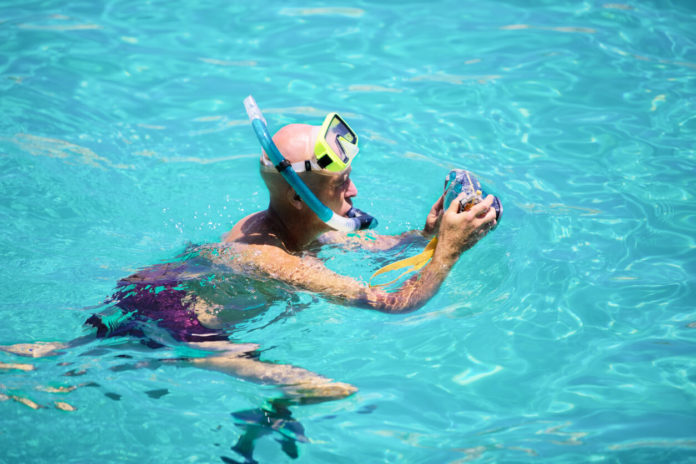
For most travelers, the best underwater camera for snorkeling is the GoPro HERO13 Black. It is easy to buy, easy to accessorize and particularly strong for smooth wide-angle video. If photographs matter more than video, I would choose the OM System Tough TG-7 for its optical zoom, RAW files and close-up modes. On a tighter budget, the Kodak Pixpro WPZ2 is the sensible waterproof compact, provided you accept basic 1080p video and modest low-light quality.
Snorkeling is a different assignment from scuba diving. Most of the time you are within a few feet of the surface, moving constantly, working in bright but reflective light, and trying to frame a fish before it changes direction. A huge depth rating is reassuring, but it matters less than reliable seals, controls you can operate with wet hands, a lens that suits your subject, and a camera you can secure to your wrist.

Best underwater cameras for snorkeling: quick picks
| Camera | Best for | Waterproof without housing | Main compromise |
|---|---|---|---|
| GoPro HERO13 Black | Stabilized reef, turtle and swimming video | 10m / 33ft | Fixed wide lens and limited close-up control |
| Kodak Pixpro WPZ2 | Budget still photos and casual vacations | 15m / 49ft | Slow operation and dated 1080p video |
| OM System Tough TG-7 | Underwater photos, macro, fish and family trips | 15m / 49ft | Video and stabilization trail action cameras |
| DJI Osmo Action 5 Pro | Long sessions, low light and value | 20m / 66ft | Action 6 is newer, but less straightforward for US buyers |
| Insta360 Ace Pro 2 | Creators who want a large flip screen | 12m / 39ft | Heavy for an action camera and not a close-focus specialist |
This guide is deliberately about surface snorkeling, swimming, beach trips and shallow freediving. If you need lights, housings, interchangeable-lens systems or equipment for repeated scuba use, start with the broader best underwater cameras guide. A camera that is excellent at five feet is not automatically the right tool at sixty.
1. GoPro HERO13 Black: best snorkeling camera for video
The easiest recommendation for stable, wide underwater video and the strongest accessory ecosystem in the US market.
The HERO13 Black makes sense when you want to swim and let the camera handle the movement. HyperSmooth stabilization, a very wide field of view and high frame-rate options are exactly what snorkeling video needs. A turtle crossing the frame or a friend diving below you is easier to follow with a GoPro than with a conventional compact.
GoPro’s other advantage is everything around the camera. Floating grips, wrist straps, bite mounts, replacement doors and protective housings are easy to find. That matters more than a small specification advantage when you are packing for a trip and need one missing part quickly.
The fixed wide lens is both the strength and the limitation. It is excellent for reef scenes, large animals and footage that includes the swimmer. It is less satisfying for a small fish several feet away. Digital zoom does not replace the TG-7’s optical zoom, and pushing the camera very close can produce softer results than beginners expect.
Use a housing when you expect repeated impacts, surf entries or deeper freediving. The bare camera is rated to 10m, which is enough for snorkeling, but wave pressure and a poorly closed door can ruin a camera well above its quoted limit.
Best for: video-first travelers who want dependable stabilization, familiar controls and accessories available almost anywhere.
2. Kodak Pixpro WPZ2: best cheap underwater camera for snorkeling
A simple waterproof compact with optical zoom for buyers who prioritize price and photographs over modern video.
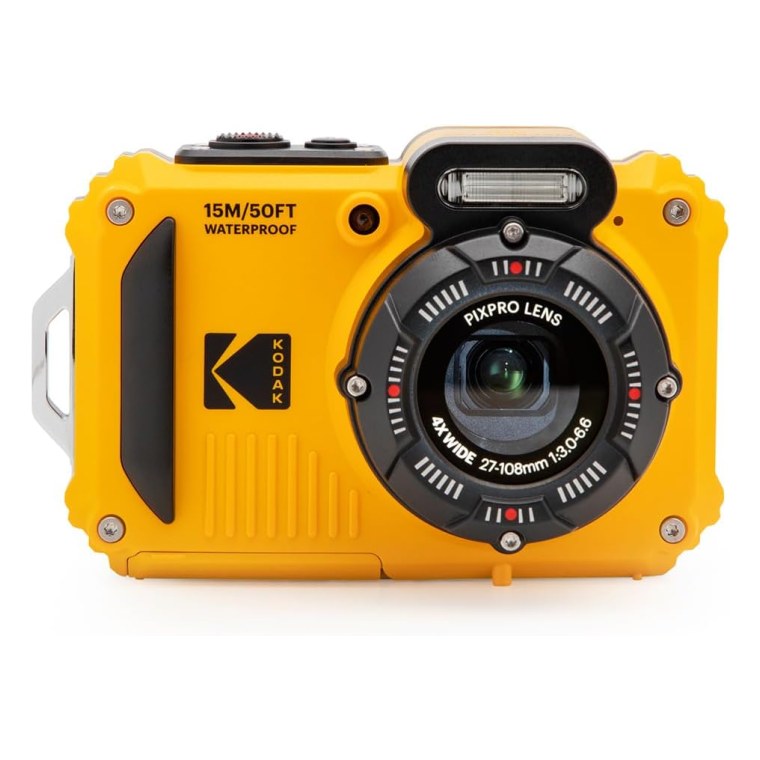
The WPZ2 is the budget answer because it behaves like a normal compact camera that happens to survive water. You get a 4x optical zoom, a conventional shutter button and a familiar still-photo shape. For families who want photographs in the pool or on a reef without risking a phone, that proposition is easy to understand.
It is not a cheap substitute for the TG-7. Autofocus and shot-to-shot speed are slower, the rear screen is modest, and video stops at 1080p30. Underwater JPEGs can look overprocessed, especially in murky light. Keep the camera close to the subject and use it in bright water; distance magnifies every weakness.
The 15m rating is more than enough for ordinary snorkeling. The optical zoom is also genuinely useful, although zooming in makes camera shake and water haze more visible. I would stay near the wide end for most reef scenes and use modest telephoto only when the water is clear.
Our full Kodak Pixpro WPZ2 review covers its image quality, battery and handling in more detail. The short version is simple: buy it for inexpensive waterproof stills, not for cinematic video.
Best for: occasional snorkelers, families and younger photographers who want a dedicated camera at the lowest sensible price.
3. OM System Tough TG-7: best underwater camera for snorkeling photos
The strongest dedicated compact here for still photographs, close subjects and anyone who wants more control than an action camera provides.

The TG-7 is the camera I would choose when the goal is to return with photographs rather than a long reel of video. Its 25-100mm equivalent optical zoom is much more useful than it sounds. At the wide end you can frame a reef or a swimmer; at the longer end you can tighten the composition without chasing a nervous fish. Action cameras cannot offer that optical flexibility.
It is also the best close-subject camera in this group. The microscope and underwater modes make small shells, reef details and creatures near the surface easier to photograph. RAW capture gives you more room to correct white balance afterward, which is valuable because water starts removing warm color almost immediately.
OM System rates the TG-7 to 15m without a housing. That comfortably covers ordinary snorkeling, but the rating is not permission to ignore the seals. Sand, hair, sunscreen and salt around a door gasket are a greater practical threat than the depth of a normal surface swim.
The caution is image quality. The 12MP sensor is small, and the TG-7 does not become a premium compact merely because it is expensive for a rugged one. Buy it for the lens, close-focus ability, controls and durability. If your priority is smooth moving footage, buy an action camera instead.
Best for: snorkelers who care most about still photographs and want a camera that remains useful on hikes, beaches and family trips.
4. DJI Osmo Action 5 Pro: best-value action camera for US snorkelers
Excellent battery life, a larger sensor and a 20m bare-camera rating, with a more straightforward US purchase than the newer Action 6.

The Osmo Action 5 Pro is not DJI’s newest action camera, but it is still the DJI model I would recommend most readily to a US buyer. The Action 6 is technically better and increases sensor size, but US availability, seller provenance and after-sales support are less straightforward. A vacation camera should not begin with a warranty investigation.
The Action 5 Pro remains a very strong snorkeling tool. It is waterproof to 20m without its case, records 4K120, has useful front and rear screens, and lasts longer than many rivals in normal recording modes. The 1/1.3-inch sensor also gives it a little more breathing room when clouds pass over or the water becomes darker.
I particularly like it for people who record long clips rather than isolated moments. Battery anxiety changes how you shoot. With more endurance, you are less likely to miss the one encounter that happens near the end of the swim.
GoPro still wins for accessory availability and the simplicity of replacing something locally. DJI counters with strong value, deeper native waterproofing and excellent video. Check the seller and warranty terms before buying, especially if a listing appears to be an imported bundle.
Best for: value-conscious video shooters who want long runtime and strong underwater specifications without moving to a dedicated dive system.
5. Insta360 Ace Pro 2: best for creators who want a large screen
A capable 8K action camera with a flip screen that makes framing easier before and after you enter the water.
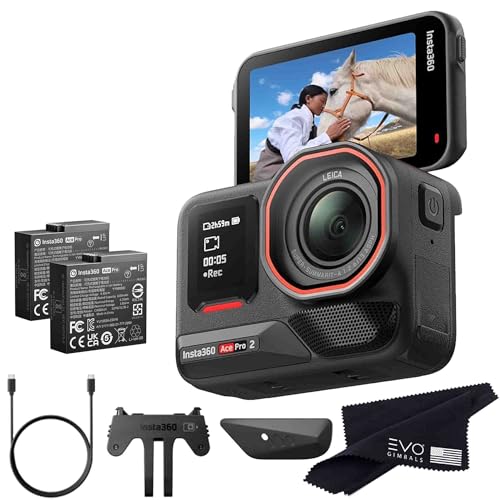

The Ace Pro 2 is appealing when the snorkeling footage is only one part of a larger travel story. Its flip screen is useful for pieces to camera, family framing and checking compositions on land. Underwater mode locks the screen behavior and adjusts stabilization and distortion correction, which makes the transition into the water less awkward.
It is waterproof to 12m without the dive case, enough for snorkeling and shallow dives. The 1/1.3-inch sensor and strong video modes make it competitive with GoPro and DJI, while the large screen gives it a different personality.
The tradeoff is physical. At roughly 180g, it feels heavier on a small grip than a GoPro, and its 37cm minimum focusing distance means you should not push it inches from coral or tiny marine life. It is a wide-scene camera, not a macro camera.
I would choose it over the HERO13 when the flip screen and creator workflow matter every day. I would still choose the GoPro for the simplest underwater accessory path, or the TG-7 for deliberate still photography.
Best for: travel creators who want one action camera for underwater footage, self-filming and the rest of the trip.
Rugged compact, action camera or phone housing?
| Camera type | What it does best | Where it frustrates |
|---|---|---|
| Rugged compact | Still photos, optical zoom, close subjects, familiar controls | Video stabilization and processing are less advanced |
| Action camera | Wide stabilized video, swimming movement, mounts | No optical zoom; small subjects stay small |
| Phone in a proper housing | Good computational photos and immediate sharing | Touch controls, condensation and the risk to your primary phone |
| Disposable underwater camera | Novelty, simplicity and film character | No review screen, limited exposures and inconsistent processing |
A waterproof phone is not the same as a snorkeling camera. IP ratings are tested under controlled conditions, and phone warranties commonly exclude liquid damage. A purpose-built housing can work well, but test it empty first, inspect the gasket, and remember that touchscreens are often poor underwater. I would not put my only phone in a bargain pouch before an important trip.
For more action-camera choices, see our GoPro alternatives guide. Budget action cameras can be good value, but many require a housing even for shallow water. That adds another seal to inspect and often makes the buttons less pleasant.
What matters when choosing a waterproof camera for snorkeling
Stills versus video is the first decision
Do not start with megapixels. Start with what you want to bring home. If the answer is short clips of swimming, reef movement and family activity, buy an action camera. If the answer is individual photographs of fish, shells and people, buy the TG-7 or WPZ2. The form factor changes how you work far more than a small difference in resolution.
Depth ratings need a safety margin
Most snorkelers remain within a few feet of the surface, so every camera on this list has enough nominal depth. The margin still matters. Duck dives, waves and fast entries create pressure changes, while seals age and collect debris. I prefer a camera rated well beyond the depth I expect to reach, and I use a housing for repeated impact or any trip where failure would be especially costly.
Optical zoom is useful, but water punishes distance
The TG-7 and WPZ2 can zoom optically. That helps with shy subjects, but underwater photography rewards proximity. Water reduces contrast, absorbs color and adds suspended particles between the lens and subject. A wide shot from three feet usually looks better than a tight shot made through twelve feet of water.
Wet fingers, masks and bright surface reflections make menus harder to use. Set the camera before entering the water, lock touch controls where possible, and learn which physical button starts video or changes modes. A large record button is worth more than a long feature list when a ray passes beneath you.
A float and wrist leash are part of the camera
A waterproof camera that sinks is still lost. Use a visible floating grip or a secure wrist strap, but avoid long loose cords around coral and other swimmers. Bright accessories are easier to spot when dropped. Verify buoyancy with the full setup because a housing, light or metal mount can overwhelm a small float.
Practical snorkeling camera settings
- Stay wide: use the wide end unless a subject is close and the water is exceptionally clear.
- Use 4K60 for action video: it gives smooth movement and enough resolution for reframing. Drop to 4K30 when light is weak.
- Keep shutter speed healthy for stills: moving water, moving subjects and a moving photographer make blur more likely than expected.
- Use underwater white balance or RAW: warm colors disappear quickly. RAW is valuable on the TG-7, but good light and close distance still matter more than aggressive correction.
- Avoid constant digital zoom: it magnifies haze and camera movement without recovering real detail.
- Record short clips: ten useful seconds are easier to watch and edit than several minutes of drifting footage.
- Check the lens port: bubbles and droplets can ruin an otherwise good sequence. A quick glance before the important shot helps.
Saltwater care: the step that protects the next trip
Close every door before reaching the beach, not while standing over sand. Inspect the gasket for hair, fibers and sunscreen. After saltwater use, keep the doors closed and rinse or soak the camera in clean fresh water according to its manual. Work the buttons gently while submerged so salt does not dry around them.
Dry the exterior completely before opening a battery or card compartment. Do not use a hair dryer, and do not leave the camera baking in a closed car. If a seal looks damaged or a door no longer closes with the same confidence, stop treating the camera as waterproof until it is serviced.
Frequently asked questions
What is the best-rated underwater camera for snorkeling?
The OM System Tough TG-7 is the best all-round choice for snorkeling photographs because it combines a 15m rating, optical zoom, RAW capture and excellent close-up modes. The GoPro HERO13 Black is better when stabilized video is the priority.
What is the best cheap underwater camera for snorkeling?
The Kodak Pixpro WPZ2 is the best inexpensive dedicated option. It is waterproof to 15m and includes a 4x optical zoom. Buy it for bright-water stills and family use; its 1080p video and operating speed are clearly behind modern action cameras.
Is a GoPro the best underwater camera for snorkeling?
A GoPro is usually the best choice for wide, stabilized snorkeling video. It is not automatically the best camera for still photographs, small fish or close reef details. The TG-7 gives photographers more useful lens and focusing options.
Do I need a waterproof housing for snorkeling?
Not with the cameras listed here if you remain within their depth limits and the seals are clean. A housing is still sensible for surf entries, repeated impact, deeper freediving or extra protection on an expensive trip.
Are disposable underwater cameras good for snorkeling?
They can be fun, but they are no longer the best value. You cannot review exposure or focus, film and processing add cost, and results depend heavily on bright water. Choose one for the film experience, not because it will outperform an inexpensive digital waterproof camera.
What camera should a professional underwater photographer use?
Professional underwater work usually requires a larger-sensor compact, mirrorless or cinema camera in a dedicated housing, often with lights and wet lenses. That equipment belongs to a different budget and workflow from snorkeling cameras. See the broader underwater guide for those systems.
Final verdict
For snorkeling photographs, buy the OM System Tough TG-7. Its zoom, RAW files, close-focus tools and physical controls make it the most useful photographic instrument in this group. For video, buy the GoPro HERO13 Black; stabilization and accessories make it the least complicated choice. Buy the Kodak WPZ2 when budget matters more than speed or video quality.
The camera is only half the result. Stay close, shoot when sunlight reaches the subject, secure the camera, and care for the seals after saltwater. Those habits improve underwater photographs more reliably than buying the model with the longest specification sheet.