
View full specs
This Nikon COOLPIX S6900 review needs a different lens than a normal camera review. The S6900 is not interesting because it beats a modern phone on image quality. It is interesting because it is a tiny 2010s selfie compact with a flip screen, a built-in stand, real optical zoom, and the kind of simple JPEG look people are actively hunting again.
That makes the buying decision tricky. I like the S6900 as a fun pocket camera, but I would not chase it at any price. If you find one clean, complete, and reasonably priced, it can be a charming everyday compact. If the seller is asking collector money because of the digicam trend, I would be very careful.
Who the Nikon COOLPIX S6900 is really for
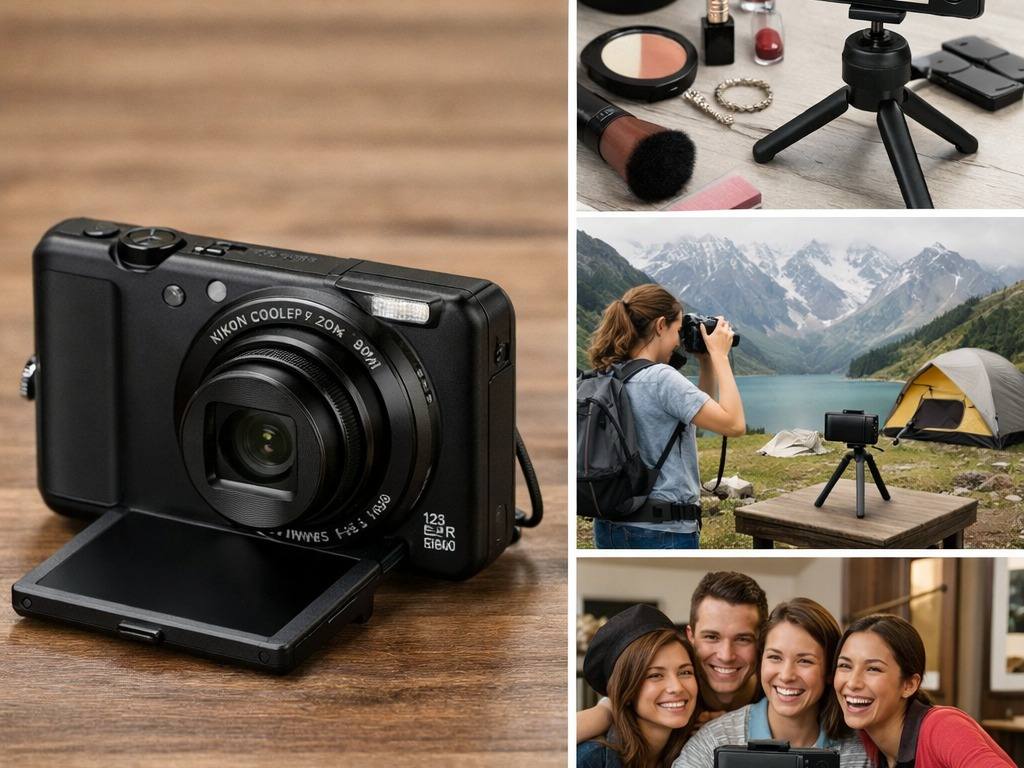
The S6900 is for someone who wants a playful compact camera more than a serious photographic tool. It suits casual travel, nights out, family snapshots, self portraits, simple video clips, and anyone who enjoys the tactile feeling of a dedicated point-and-shoot.
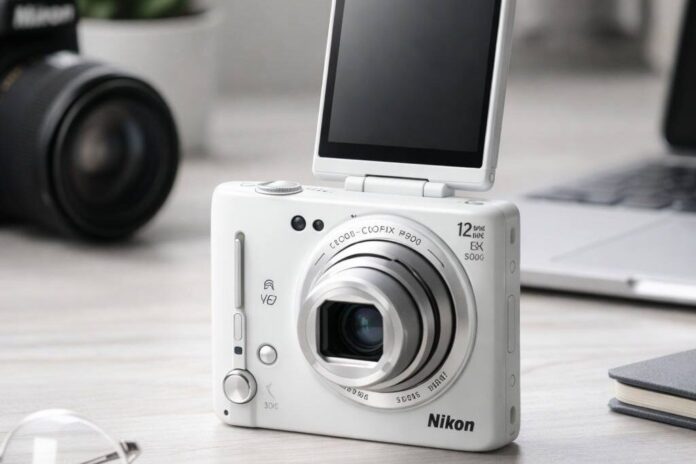
The camera’s personality is obvious. You get a 16MP 1/2.3-inch CMOS sensor, a 12x optical zoom, a vari-angle touchscreen, a front shutter button, gesture control, Wi-Fi, NFC, and a small built-in stand. Nikon clearly designed it for people who wanted selfies and group shots before that became completely normal on phones.
If you are looking for manual control, RAW files, strong low-light quality, or a camera that can replace a serious compact like a Ricoh GR, this is not it. The S6900 is best when you treat it as a social camera. It is a camera you bring because it is fun, not because it has the best sensor in the room.
The 2026 buying problem: used prices can be silly
The compact-camera comeback is real, and we have covered that broader trend in our guide to why digital cameras are making a comeback. The S6900 sits right in that wave. It has the flip screen, the compact body, the older-camera look, and the Nikon name. That makes it more desirable than its spec sheet alone would suggest.
My advice is simple: buy the camera, not the hype. The S6900 launched as an affordable compact, not as a premium collector camera. If a listing is priced like a modern high-end compact, walk away. At that point, you are paying for trend energy, not photographic value.
A fair purchase depends on condition and completeness. I would want the EN-EL19 battery, working charging cable or charger, clean lens, responsive touchscreen, healthy zoom mechanism, and no signs of lens error. Color matters too, because white and pink versions can attract more nostalgia buyers. That does not make them better cameras.
What the strong reviews and trend pieces get right
The best traditional S6900 reviews focus on the details that matter: the 12x zoom, the flip screen, the stand, the front shutter button, Wi-Fi, and the limits of the small sensor. The newer trend pieces focus on a different truth: this camera became desirable because it looks fun on social media, not because it suddenly became technically excellent.
Both views are useful. The S6900 is genuinely clever as a selfie compact, and the stand is more practical than it looks. It is also an ordinary small-sensor camera in image quality. That tension is the whole buying decision. You can love the experience and still admit the files are not worth collector pricing.
Image quality and the small-sensor look
The S6900 uses a 16MP 1/2.3-inch type CMOS sensor. In good light, it makes pleasant, punchy JPEGs with enough detail for sharing, small prints, and casual travel photos. The files have the crisp compact-camera look many people now want: direct, a little digital, and less computationally polished than a phone.
Low light is where expectations need to stay grounded. The sensor is small and the lens is f/3.3 at the wide end, falling to f/6.3 at full zoom. Indoors, image quality drops quickly unless the light is decent. You can use flash, embrace the rougher look, or keep the camera for daylight and social snapshots. I would not buy it for clean night photography.
Compared with a current smartphone, the S6900 often loses on dynamic range, night modes, and automatic processing. It wins when you want real optical zoom, a different rendering style, a camera that does not feel like your phone, and a more deliberate shooting experience.
Image quality by situation
In daylight, the S6900 is at its best. ISO 125 and ISO 200 are where I would want to live. Colors are pleasing, the lens has enough bite in the middle of the frame, and the 25-300mm equivalent zoom gives you framing options a phone cannot always match naturally.
At ISO 400, the camera is still fine for casual use. At ISO 800, detail starts looking more processed. Above that, the files become more about mood than quality. That can be part of the charm if you like the digicam look, but it is not the same as good low-light performance.
There are also classic compact-camera flaws: some softness, occasional purple fringing in high-contrast edges, and weaker detail at the long end of the zoom. None of this ruins the camera for casual photos. It does mean you should not buy the S6900 expecting premium compact output.
Handling, flip screen, and selfie features
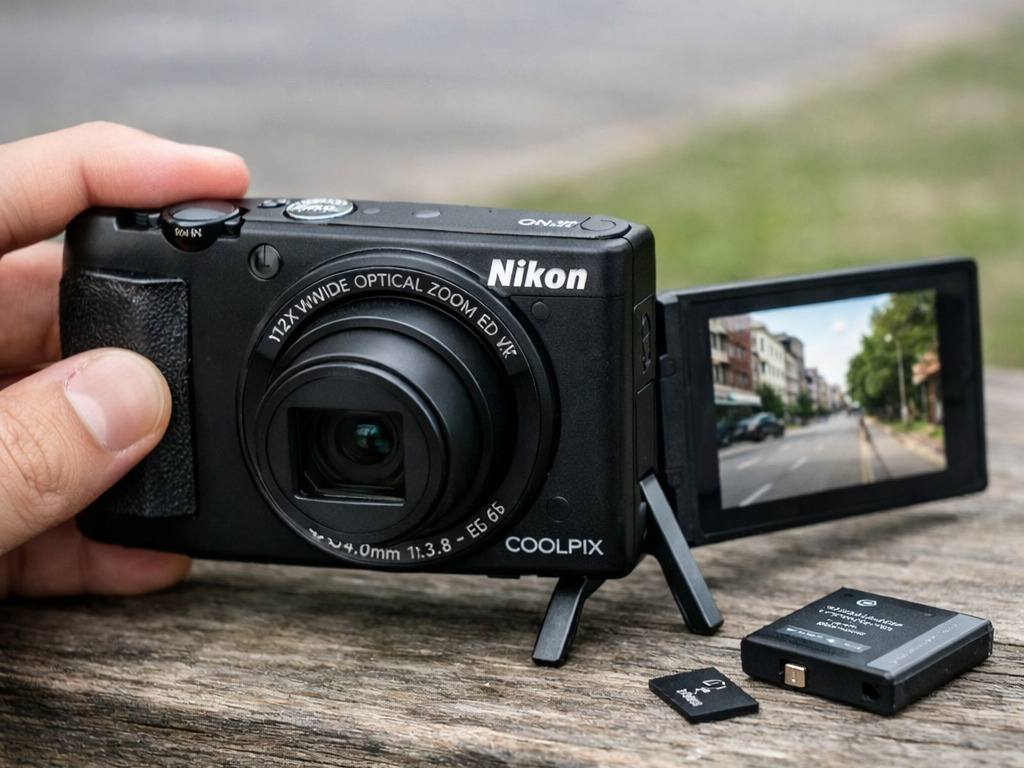
The S6900 is small, light, and easy to carry. At about 181 g with battery and card, it slips into a jacket pocket or small bag without becoming another piece of gear you have to plan around. The front shutter button and flip screen are not gimmicks if you actually take self portraits or group shots. They make the camera feel purpose-built.
The vari-angle touchscreen is the camera’s best feature. You can flip it forward for selfies, tilt it for low angles, and compose without guessing. The built-in stand is also more useful than it sounds. Put the camera on a table, flip the screen forward, use the self-timer or gesture control, and it becomes a simple little social camera.
The tradeoff is that the body is still a small compact. The grip is modest, buttons are small, and touchscreen operation can feel slow compared with a phone. If you expect 2026 responsiveness, the S6900 will feel old. If you expect a compact from 2014, it feels clever and friendly.
Zoom lens and autofocus behavior
The 12x NIKKOR zoom is one of the S6900’s real advantages over a phone. It covers a 25-300mm equivalent range, which is genuinely useful for travel, portraits, details, pets, and casual distant subjects. Optical zoom is the reason I would choose this over many random old digicams.
Stay inside the optical zoom range when image quality matters. Nikon also advertised Dynamic Fine Zoom and digital zoom, but those modes rely on cropping and processing. They are fine for a quick memory, not for your favorite frame from a trip. Once you push beyond optical zoom, detail gets softer and camera shake becomes more obvious.
Autofocus is good enough for casual use, especially with faces and static subjects. It is not a sports camera. Kids running toward you, pets in dim rooms, and fast action can all expose the limits of a small-sensor compact. The best technique is old-fashioned: give the camera a half-press, let it confirm focus, then shoot.
The underrated macro and table-camera use
One thing I would emphasize more than most listings do is close-up shooting. The S6900 can focus very close at the wide end, which makes it useful for food, small objects, travel details, flowers, and everyday visual notes. This is exactly where an old compact can feel enjoyable: quick, close, imperfect, but expressive.
The built-in stand also changes how you use the camera. It is not just for selfies. It is useful for table-level photos, quick group shots, and casual video clips where you do not want to carry a tripod. I would still keep expectations modest, but this is the feature that gives the S6900 more personality than many similar compacts.
Video, Wi-Fi, and everyday convenience
The S6900 records Full HD video with stereo sound, which was useful for its class. The flip screen makes casual clips and self-recording easier than on most fixed-screen compacts. I would still treat video as casual. Stabilization helps, but this is not a modern creator camera and it will not compete with a current phone for video quality.
Built-in Wi-Fi and NFC were strong convenience features at launch. In 2026, they are a mixed blessing. The camera itself still has the hardware, but app support, phone compatibility, and setup friction can vary. I would not buy the S6900 only for wireless transfer. I would buy it assuming I may need to use the memory card directly.
Battery life is another practical limit. Nikon rates the EN-EL19 battery at about 180 still shots, with around 40 minutes of movie recording. That is not generous. If you plan to carry the camera all day, budget for a spare battery or a way to charge it.
Storage, charging, and setup details
The S6900 uses SD, SDHC, and SDXC memory cards and also has a small amount of internal memory. Treat internal memory as an emergency backup only. It is useful if you forget a card, but it is not how I would shoot a trip, a party, or a full day out.
Charging is done through the camera with the USB cable and Charging AC Adapter, and Nikon lists charging time at about two hours from empty. When buying used, verify that the camera charges correctly. A compact camera with a tired battery, missing cable, or faulty USB port is not the bargain it first appears to be.
Before any real outing, format the card in the camera. Old compacts can be picky with cards that have been used in other devices. A fresh format avoids many boring problems, and boring problems are exactly what ruin casual cameras.
What to check before buying used
The S6900 has more moving parts than a basic old compact. The lens extends, the screen flips, the touchscreen handles many controls, and the stand is part of the physical appeal. I would test all of it before paying collector-style prices.
- Zoom the lens from wide to telephoto and listen for grinding or hesitation.
- Check the lens for haze, scratches, dust, and signs of impact.
- Flip the screen through its full range and confirm the display stays stable.
- Test the touchscreen, front shutter button, rear controls, flash, and charging port.
- Take a few photos at wide and full zoom, then review them for softness or obvious sensor/lens issues.
- Confirm the battery, cable, strap, and memory card are included or priced into the deal.
If the camera fails any of those checks, I would rather wait. The S6900 is fun, but it is not rare enough to justify ignoring mechanical problems.
What I would buy instead at inflated prices
If the S6900 is priced normally, it is easy to understand. If it is priced at $500 or more, the conversation changes. At that point, I would look at other options before paying for trend scarcity.
- For cheap new simplicity, look at current Kodak PIXPRO compacts.
- For serious pocket image quality, look at a Ricoh GR-style camera instead.
- For interchangeable lenses, even an older mirrorless kit is more flexible.
- For pure nostalgia, consider less-hyped Nikon, Canon, Sony, or Panasonic compacts.
The S6900 is special because of its design, not because no other camera can take this kind of photo. If the price removes the fun, the camera loses much of its appeal.
Alternatives worth considering
If you want a cheap new compact with warranty, a Kodak PIXPRO model may be more sensible. Our Kodak PIXPRO camera guide covers that path. The Kodak look is different, and the cameras are not as charming as the S6900, but buying new removes some used-market risk.
If you want image quality, skip this class and look at a larger-sensor compact or mirrorless camera. If you want nostalgia and a flip-screen social camera, the S6900 remains interesting. That distinction matters. It is not the best camera for the money in a technical sense. It may still be the camera you enjoy carrying.
Nikon’s own COOLPIX S6900 page is useful for checking the original specifications, and the reference manual is worth saving if you buy one without printed documentation.
Final verdict
The Nikon COOLPIX S6900 is a fun compact camera with a very specific appeal. The flip screen, built-in stand, optical zoom, and selfie-first design give it more personality than many ordinary point-and-shoots. I understand why people are rediscovering it.
I would still be disciplined on price. Buy it because you want the experience, the form factor, and the compact-camera look. Do not buy it because someone online made every old digicam sound magical. The S6900 is enjoyable, limited, and very price-sensitive.
The S6900 is a specialist used compact rather than the default Coolpix choice. Our Nikon Coolpix model guide shows how it compares with current superzooms and other legacy options.
Frequently asked questions
Is the Nikon COOLPIX S6900 still worth buying?
Yes, if you want a fun selfie compact and the price is reasonable. It is not worth inflated used prices if you mainly care about image quality.
Does the Nikon COOLPIX S6900 have optical zoom?
Yes. It has a 12x optical zoom covering a 25-300mm equivalent range. That is one of its biggest advantages over many phones.
What battery does the Nikon COOLPIX S6900 use?
The S6900 uses the Nikon EN-EL19 rechargeable battery. Nikon rates it at about 180 still photos per charge.
Does the Nikon COOLPIX S6900 shoot video?
Yes. It records Full HD video with stereo sound, but it should be treated as casual video rather than modern creator-camera video.
Does the Nikon COOLPIX S6900 support Wi-Fi?
Yes. The camera has built-in Wi-Fi and NFC, but modern phone compatibility and app convenience can vary. I would not buy it only for wireless transfer.
Why is the Nikon COOLPIX S6900 so expensive used?
The S6900 became popular because of the compact-camera revival and its selfie-friendly design. The flip screen, built-in stand, and social-camera look make it more desirable than its specs alone justify.
Is the Nikon COOLPIX S6900 better than a phone?
Not in every way. A modern phone usually wins in night photos, HDR, and video processing. The S6900 wins when you want optical zoom, a dedicated camera feel, a flip screen, and the older compact-camera look.
Key points to remember
- The S6900 is a fun selfie compact, not a technical replacement for a modern phone or serious camera.
- The 12x optical zoom, flip screen, front shutter button, and built-in stand are the main reasons to care.
- Image quality is best in good light and drops quickly in dim conditions.
- Used prices can be inflated by the compact-camera trend, so condition and price matter.
- Check the lens, flip screen, touchscreen, charging port, battery, and included accessories before buying.
Selfies, casual travel, social snapshots, nostalgia compact-camera shooting, and users who want optical zoom in a tiny body.
You need RAW, manual exposure control, strong low-light quality, reliable modern wireless workflow, or serious video.
Low; automatic shooting is easy, but used-condition checks and app compatibility can be annoying.
Kodak PIXPRO for cheap new compact simplicity, Ricoh GR/Fujifilm X100-style cameras for serious compact image quality, or mirrorless for growth.
Full HD is fine for casual clips, but stabilization, low-light quality, and modern creator features are limited.
Yes for the right price and the right buyer; no at inflated trend prices if image quality is the main goal.