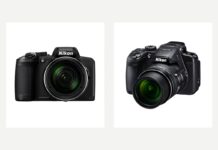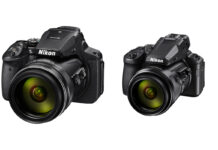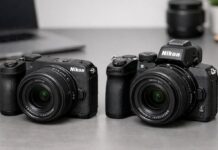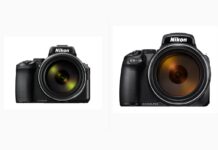

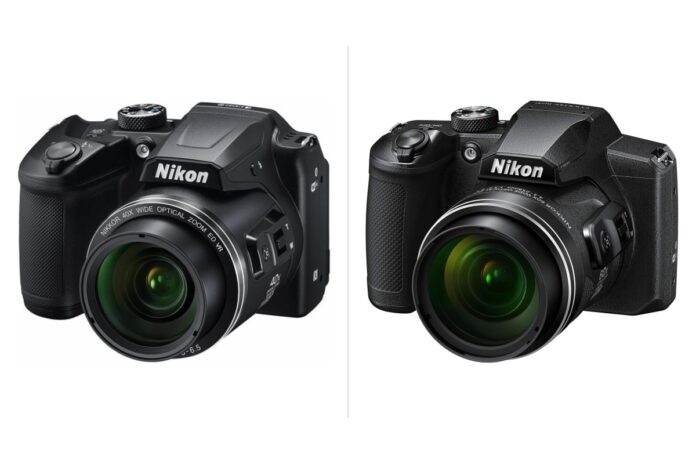
The Nikon B500 vs B600 choice is really a choice between everyday usability and extra telephoto reach. Buy the B600 if you regularly need its 1440mm-equivalent long end for distant wildlife or field sports. For most family, travel, and casual nature photography, I would buy the B500 instead. Its 22.5mm-equivalent wide end, tilting screen, and excellent AA-battery endurance are more useful more often. Neither camera is an image-quality upgrade over the other.
Quick verdict: B500 for most, B600 for reach
The B600 is not simply a newer and better B500. It stretches the optical zoom from 40x to 60x and adds a deeper grip, a lighter shooting weight, and in-camera charging. In return, it loses the B500’s tilting screen, wider field of view, AA flexibility, and much longer rated endurance.
Choose the Nikon Coolpix B500 for vacations, family events, flowers, zoos, and occasional birds. It is also the safer choice if you shoot from low angles or spend long days away from power.
Choose the Nikon Coolpix B600 when 900mm equivalent is genuinely too short. Its 1440mm-equivalent reach can put more pixels on a distant bird or player. That benefit needs good light, disciplined support, and realistic expectations.
If the two cost about the same in equal condition, decide by subject matter. Do not pay a large premium for the B600 unless you will use the range beyond 900mm. Our detailed Nikon B500 review and Nikon B600 review cover each camera separately.
The differences that change the decision
These are the specifications that matter in actual shooting. Nikon’s archived B500 specifications and B600 specifications provide the regional reference.
- Lens: B500, 22.5–900mm equivalent, 40x, f/3–6.5; B600, 24–1440mm equivalent, 60x, f/3.3–6.5.
- Sensor and files: both use a 16MP 1/2.3-inch CMOS sensor and record JPEG stills. Neither records RAW files.
- Screen: both have a 3-inch, 921k-dot display. The B500 screen tilts; the B600 screen is fixed.
- Viewfinder: neither camera has one.
- Exposure: both are automatic cameras with exposure compensation, scene modes, selectable ISO, and white balance. Neither offers PASM control.
- Power: the B500 takes four AA batteries. The B600 uses one EN-EL12 rechargeable battery and charges in the camera over Micro-USB.
- Weight: about 542g for the B500 with alkaline batteries and a card; about 500g for the B600 with battery and card.
- Video: both top out at Full HD rather than 4K.
The cameras share more than their model numbers suggest. They have similar autofocus options, optical stabilization, 1cm wide-angle macro capability, stereo sound, Wi-Fi, Bluetooth, and SD-family storage.
Zoom and image quality: more reach is not more quality
The B600 gives you 60 percent more focal length at the long end. That is a meaningful framing advantage when you cannot move closer. A small bird that occupies too little of a B500 frame can fill more of the B600 frame before cropping.
There is no corresponding sensor upgrade. Both cameras have the same sensor size, resolution, and 4608 × 3456 maximum image size. Expect broadly similar detail and noise at comparable focal lengths. The lenses are different, so individual frames will not be identical.
The B500 is slightly wider and faster at its wide end. Its 22.5mm-equivalent view is useful for interiors, group photographs, and broad landscapes. The f/3 versus f/3.3 difference is small, but it favors the B500 in dim wide-angle scenes.
At 1440mm equivalent, technique becomes the limit. Heat shimmer, haze, subject motion, and tiny hand movements all reduce detail. Stabilization helps with camera shake, but it cannot freeze a moving animal. Use the side zoom control, brace the camera, shoot short bursts, and keep shutter speed high when the light allows.
Screen, viewfinder, and handling
The B500 wins the screen comparison. Its monitor tilts upward and downward, which helps at waist height, over a crowd, or close to the ground. It does not face forward and it is not touch-sensitive, but the movement is valuable.
The B600’s screen is fixed. That feels like a serious cost at long focal lengths because neither camera has an electronic viewfinder. Holding a camera away from your face is less stable than bracing one at your eye. Bright sun can also make a rear screen harder to judge.
The B600 is larger in every dimension, yet about 42g lighter with its battery and card. Its deeper grip suits long-lens handling. The B500 is marginally smaller in the bag, though four AAs add weight. I would prioritize the screen over that modest weight difference.
Both cameras include a snap-back zoom button. Hold it to zoom out and relocate a subject that has left the frame, then release it to return. This is genuinely helpful with birds and aircraft.
Batteries, cards, and phone workflow
The power systems create the biggest ownership difference. Nikon rates the B500 for about 600 shots with alkaline AAs, 750 with EN-MH2 NiMH cells, or 1,240 with lithium AAs. Those figures vary with use, but the advantage over the B600 is substantial. A matched set of quality low-self-discharge NiMH batteries is the sensible reusable option.
The B500 cannot charge batteries in the camera. Pack an external charger and keep each four-cell set together. Avoid mixing brands, capacities, or charge states. Cheap cells also make used-camera troubleshooting needlessly confusing.
Nikon rates the B600 for about 280 shots from its EN-EL12. Its battery charges over Micro-USB while installed, but the camera is tied up during charging. A healthy spare EN-EL12 matters more than another decorative bundle accessory. Check that any third-party pack fits properly and reports charge reliably.
Both cameras accept SD, SDHC, and SDXC cards. A reputable Class 10 card is ample for their Full HD video. Format the card in the camera after backing it up. SnapBridge can transfer reduced-size images by Bluetooth and full-resolution files over Wi-Fi, but a card reader remains faster for a large import.
Autofocus and video limitations
Both cameras use contrast-detect autofocus with face priority, subject tracking, target finding, center, and manual-area options. They are comfortable with static subjects in good light. They are much less convincing with erratic motion or low contrast.
The B600’s extra reach does not turn it into a serious sports camera. A 7fps headline sounds useful, but the full-resolution high-speed burst is only about seven frames. Focus behavior and the short burst matter more than the rate alone. Prefocus where action will occur and anticipate the moment.
Video is basic on both models. Each records 1080/30p and 1080/60i with stereo audio, but neither offers 4K, a microphone input, or manual movie exposure. The B500 also provides more lower-resolution high-speed options. The B500’s tilting screen makes unusual camera angles easier, while neither screen can face the operator for vlogging.
How to buy either camera used
Both models are discontinued, so condition outranks age. Test the lens through its complete range several times. It should extend smoothly without grinding, hesitation, or a lens error. Make photographs at wide, middle, and full telephoto settings, then inspect the original files.
- Check the front element for scratches and the lens interior for haze or fungus.
- Confirm that autofocus locks at several distances and that stabilization does not make abnormal noises.
- Test the flash, every button, both zoom controls, video, sound, playback, USB, and HDMI.
- Inspect the card and battery door, tripod socket, strap lugs, and lens-cap attachment.
- Look for repeated spots in images shot against a plain bright surface.
- Confirm the return window before buying remotely.
B500-specific traps
Open the AA compartment and look carefully for white or green corrosion. Leaked alkaline cells can damage contacts and nearby electronics. Move the tilting screen through its full range while the camera is on. Watch for flicker, color changes, or interruptions.
B600-specific traps
Confirm that the EN-EL12 holds charge and that the camera charges through its USB port. Check that the battery is flat, not swollen. Test the fixed screen in bright conditions because it is your only finder. The ML-L7 Bluetooth remote is optional, not standard equipment.
Better alternatives if both feel too limited
The Nikon B700 is the obvious step up within the family. It keeps a 60x, 24–1440mm-equivalent lens but adds an electronic viewfinder, RAW files, manual exposure, a vari-angle screen, and 4K video. Read our Nikon B600 vs B700 comparison before paying a high B600 price.
The Nikon P900 reaches 2000mm equivalent and includes an EVF, but it is much larger and heavier. Our B500 vs P900 comparison explains whether the extra reach is worth the burden.
For a current alternative, the Panasonic Lumix FZ80D combines a 20–1200mm-equivalent 60x lens with an EVF, 4K video, and USB-C charging. Panasonic’s US product page is the best place to check its present specification and availability. It is a better fit when warranty and modern conveniences matter more than buying cheaply.
A used APS-C mirrorless camera will give cleaner low-light files and more control. It will not match these zoom ranges with a small, inexpensive lens. Decide whether reach or overall image quality is the real priority.
Final verdict
My default recommendation is the Nikon Coolpix B500. The tilting screen, wider lens, AA endurance, and usually lower used price make it the more rounded camera. Its 900mm-equivalent reach is already substantial.
Buy the B600 only when you can name the subjects that require 900–1440mm equivalent. It is the stronger specialist choice for distant wildlife and field sports in good light. The fixed screen and 280-shot battery are real workflow costs, not footnotes.
Whichever model you choose, buy on verified condition. A clean B500 is better than a B600 with a tired zoom mechanism, and the reverse is also true. Walk away from corrosion, lens errors, vague sample files, or a seller who will not demonstrate the camera.
Frequently asked questions
Is the Nikon B600 a worthwhile upgrade from the B500?
Only if you need more telephoto reach. The B600 extends from 900mm to 1440mm equivalent, but it loses the tilting screen and AA endurance. It does not improve sensor size, resolution, RAW support, or manual exposure control.
Do the Nikon B500 and B600 have the same image quality?
They share a 16MP 1/2.3-inch sensor format and produce similar JPEG quality at comparable settings. Their lenses differ, so performance is not identical. The B600’s main advantage is tighter framing beyond the B500’s maximum reach.
Can either camera shoot RAW or use interchangeable lenses?
No. Both are fixed-lens bridge cameras that record JPEG stills. Neither offers RAW capture or a lens mount.
Which camera is better for bird photography?
The B600 is better for small, distant birds in good light because 1440mm equivalent fills more of the frame. The B500 is easier for long outings and low-angle work. Neither is ideal for birds in flight because autofocus and burst depth are limited.