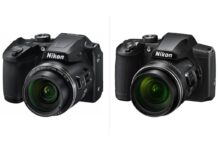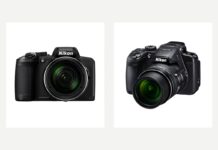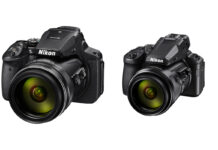

- Same core camera: 16MP sensor, 125x 24-3000mm-equivalent lens and essentially the same image quality.
- P1100 advantages: USB-C, selectable AF-area mode in Bird-Watching mode, clean HDMI and several smaller control updates.
- P1000 advantage: potentially better value when a good used, refurbished or clearance example costs meaningfully less.

Nikon P1000 vs P1100: what really changed
Core specs that stayed the same
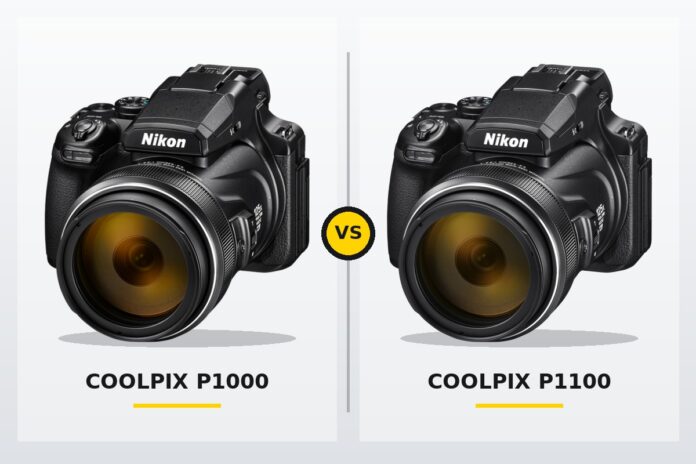
If you put the Nikon Coolpix P1100 and P1000 side by side, the first thing you’ll notice is how similar they look and feel. Both cameras stick to the same proven 125x optical zoom lens, giving you a 24-3000mm equivalent range that made the P1000 legendary among superzooms. The sensor remains a 16-megapixel, 1/2.3-inch BSI CMOS, so don’t expect a jump in resolution or light-gathering capability. The handling, battery type, and overall size also remain largely unchanged. For many photographers, especially those upgrading from earlier bridge cameras, this continuity is a good thing. You still get the same class-leading reach and recognizable Nikon ergonomics, meaning muscle memory from the P1000 translates directly to the P1100.
What does this mean in practice? If you’re already familiar with the P1000’s controls, menus, and shooting feel, there’s almost no learning curve with the P1100. Accessories like batteries, lens hoods, and even many cases are cross-compatible. This makes upgrading or switching between the two straightforward for anyone invested in Nikon’s bridge camera system.
Small upgrades that may matter in daily shooting
The Coolpix P1100 makes a short list of documented usability changes. USB-C replaces the P1000’s Micro-USB connection. Bird-Watching mode allows you to select the AF-area mode, and functions assignable to the camera’s Fn button can also be assigned to the Fn1 and Fn2 buttons on the optional ML-L7 remote. Nikon also added a Fireworks option to Multiple Exposure Lighten and an Auto or Off setting for long-exposure noise reduction.
Those are useful refinements, but they should not be confused with a new imaging system. Nikon specifies the same sensor, lens, contrast-detect autofocus type and principal shooting performance. There is no documented basis for expecting faster buffer clearing, a newer processor, generally faster autofocus or better image quality from the P1100. The practical upgrade is modern connectivity and a handful of control changes.
Zoom range, reach, and real-world shooting scenarios
Birds, wildlife, and distant subjects
Both the Nikon P1000 and P1100 are built around the same 125x lens, and this reach defines what you can do with them. For birding, safaris or any situation where your subject is far away, both cameras let you fill the frame without the size and expense of an interchangeable-lens system with an extreme telephoto lens.
In real-world use, the difference in zoom range is nonexistent: both top out at 3000mm equivalent. That is useful for shorebirds, raptors and wildlife where you cannot control your proximity. Both cameras demand careful technique at extreme telephoto settings, especially when shooting handheld. A brace, tripod or monopod remains valuable for the sharpest results at full zoom.
Moon photography and extreme telephoto limits
The P1000 earned a following among moon shooters because it can resolve lunar craters and even record Jupiter’s moons under suitable conditions. The P1100 offers the same optical potential, with no documented increase in zoom reach or image quality. Both cameras include dedicated Moon and Bird-Watching modes. At maximum zoom, the small sensor, atmospheric conditions and support technique matter more than which of these two bodies you use.
For travel, the 24mm wide end is useful for landscapes and cityscapes, but the real draw is the extreme telephoto capability. If your style relies on reach, either model will deliver; technique and support matter more than the model name at the longest settings.
Image quality and autofocus in practical use
Daylight sharpness, noise, and stabilization
Because the P1000 and P1100 share the same sensor and lens, base image quality is effectively identical. In good daylight, both can produce crisp images with useful color and contrast. At very long distances, atmospheric haze, heat shimmer and camera movement can soften detail before the camera itself becomes the main limitation. Neither model has an inherent image-quality advantage here.
Noise is a challenge for both models, especially above ISO 800. For birding or wildlife in low light, keep ISO as low as subject movement allows and use burst mode to improve the chance of a sharp frame. Built-in stabilization helps, but it cannot freeze a moving subject or remove atmospheric distortion.
Autofocus behavior for moving and static subjects
Both cameras use contrast-detect autofocus with the same principal focus-area options, so the P1100 should not be presented as a major autofocus-speed upgrade. Its documented advantage is narrower: Bird-Watching mode now lets you select the AF-area mode instead of accepting the mode’s original behavior.
For static subjects, both cameras can focus reliably, even at full zoom. Perched birds, distant ships and the moon are less demanding than erratic movement. For birds in flight or fast pans, pre-focusing and anticipating movement will improve your hit rate. The P1100 gives bird photographers a little more control, but both models reward patience and practice with dynamic subjects.
Handling, ergonomics, and field usability
Both the Nikon P1000 and P1100 are substantial cameras because the 125x lens requires a large body and deep grip. Their dimensions, controls, electronic viewfinders and vari-angle screens are very similar, so a P1000 user faces almost no learning curve when moving to the P1100.
The weight becomes noticeable during hikes and long sessions. A shoulder strap or harness helps, and support is useful when working near 3000mm equivalent. Weather resistance remains limited, so both cameras need care in damp or dusty conditions. They also use the same EN-EL20a battery, making spare batteries one of the easier accessories to carry between them.
The P1100’s USB-C port and revised Bird-Watching controls are more defensible reasons to prefer it than claims of faster menus or stronger stabilization. Most handling strengths and weaknesses remain shared.
For further insights on real-world field use, you can also reference the in-depth field test at this Nikon P1000 safari and wildlife review.
Video features and connectivity for modern workflows
Both cameras record 4K UHD at 30p or 25p with stereo sound and manual exposure control in Movie manual mode. Nikon does not document a new sensor, higher frame rates, improved microphone hardware or reduced rolling shutter for the P1100, so internal video quality should be treated as fundamentally similar.
The meaningful P1100 workflow addition is clean HDMI output. It can send a live view without the information overlay to a compatible recorder, although Nikon limits the clean feed to Full HD rather than 4K. This is useful for external recording and presentations, but it does not make the P1100 a substantially more capable internal video camera.
Both cameras support Wi-Fi, Bluetooth and SnapBridge. The P1100 uses newer connection standards, but transfer speed and stability depend on the phone, app and shooting setup; they should not be treated as guaranteed performance upgrades. If you already own a P1000 and record internally, the P1100 adds little. If clean HDMI or USB-C matters to your workflow, the newer body has a clear practical advantage.
Price, value, and who should buy each camera
Price and condition are the deciding factors in the P1100 vs P1000 value question. The P1100 launched in the US at USD 1,099.95, while P1000 pricing now varies because the older model is generally found used, refurbished or as remaining stock. Compare the live price, return policy and condition rather than treating an old list price as the real saving.
A well-kept P1000 is the value choice because it provides the same sensor, lens, zoom range and core image quality. The P1100 is easier to justify when you want a new warranty, USB-C charging and data, selectable AF-area control in Bird-Watching mode or clean HDMI output.
The which Nikon bridge camera to buy decision should therefore be practical. If the prices are close, buy the P1100. If the P1000 is meaningfully cheaper and in good condition, you are not surrendering image quality or zoom reach.
For more insights into how these cameras perform in real-world wildlife and safari conditions, you can check out this detailed Nikon P1000 field review from experienced photographers.
My verdict after weighing the pros and cons
My P1100 vs P1000 verdict comes down to condition, price and a few specific features. The P1100 is the safer new purchase, but it is not a meaningful image-quality upgrade. Existing P1000 owners should upgrade only if USB-C, clean HDMI or the revised Bird-Watching controls solve a real problem.
The P1100 pros and cons:
- Pros: USB-C, clean HDMI, selectable AF-area mode in Bird-Watching mode, current new-camera availability.
- Cons: Higher price, almost identical imaging hardware, still large and heavy.
The P1000 pros and cons:
- Pros: Same 125x reach and core image quality, potentially much lower price, proven design.
- Cons: Older Micro-USB connection, no P1100-specific control updates, availability and condition vary.
For the same zoom and imaging hardware at a lower price, a good P1000 remains compelling. For a new camera with USB-C and the latest usability updates, choose the P1100.
Key takeaways
- The zoom range, sensor and core image quality are effectively the same; the decision is about price, condition and usability features.
- The P1100’s clearest additions are USB-C, clean HDMI and more control in Bird-Watching mode, not faster core imaging performance.
- If prices are close, the P1100 is the straightforward buy; a discounted P1000 remains the value option.
If neither 125x model is the right balance of size, reach, and live price, compare the rest of the range in our Nikon Coolpix buying guide. A lighter 2000mm option may suit mobile birders better; our Nikon P950 vs P1000 comparison explains that tradeoff.
Frequently asked questions
What is the difference between Nikon P1000 and P1100?
Both use a 16MP 1/2.3-inch sensor and a 125x 24-3000mm-equivalent lens. The P1100 adds USB-C, selectable AF-area control in Bird-Watching mode, clean HDMI, expanded ML-L7 remote assignments and several smaller menu and scene-mode changes.
Is the Nikon Coolpix P1100 better than the P1000 for bird photography?
Not automatically. Both use contrast-detect autofocus and the same lens and sensor. The P1100 lets you select the AF-area mode in Bird-Watching mode, which gives birders more control, but Nikon does not claim a generally faster autofocus system. Technique remains decisive for birds in flight.
Does the P1100 have better image quality than the P1000?
No meaningful improvement should be expected. Both use the same 16MP sensor and 24-3000mm-equivalent lens, and Nikon does not identify a new imaging processor. Light, atmospheric conditions and camera support will create larger differences than the model name.
Is the Nikon P1000 still worth buying if the P1100 is available?
Yes, if it is in good condition and meaningfully cheaper. It provides the same sensor, lens and 125x zoom. The P1100 is preferable when USB-C, clean HDMI, revised Bird-Watching controls, a new warranty or easier availability justify the premium.
Which camera is easier to use handheld at full zoom, the P1100 or P1000?
Neither has a clear documented handheld advantage at 3000mm equivalent. Both require careful technique, and a monopod or tripod remains useful for critical shots. The P1100’s changes focus on controls and connectivity rather than a new lens or stabilization system.