

View full specs
This Nikon P950 review is for the photographer who wants ridiculous reach without carrying ridiculous gear. The P950 is not a camera you buy for creamy full-frame files or fast sports autofocus. You buy it because a 24-2000mm equivalent lens in one body lets you photograph birds, aircraft, distant mountains, and the moon from places where a normal camera simply gives up.
That is the right way to judge it. The P950 is a small-sensor bridge camera with a spectacular lens, not a mirrorless replacement. When the light is good and your technique is steady, it can feel almost unfair. When the light drops or the subject moves unpredictably, the limits show quickly.
Who the Nikon P950 is really for
The Nikon P950 is for birders, travelers, moon shooters, aviation watchers, and curious photographers who value reach above almost everything else. If you want to frame a heron across a lake, a plane on final approach, or lunar detail without buying a large telephoto setup, the P950 still has a clear purpose.
It is also a good camera for people who enjoy photography but do not want an interchangeable-lens system. There is no sensor dust, no lens swapping, no teleconverter math, and no decision about which long lens to pack. You turn it on, zoom, and shoot.
Our Nikon P950 vs P1100 comparison shows exactly what the extra 1000mm costs in weight and field handling.
The caveat is important: the P950 is not the current king of Nikon reach. The Nikon P1100 goes much longer, while the Nikon P1000 sits between them in the used/current superzoom conversation. The P950 makes most sense if you want the 2000mm experience in a more manageable body, or if the price is meaningfully better than the larger models.
The 83x zoom is the whole point
The headline feature is the 83x optical zoom. Nikon lists the lens as a 4.3-357mm f/2.8-6.5 in the official P950 specifications, which gives the angle of view of a 24-2000mm lens on full frame. That range is difficult to appreciate until you use it. One moment you can shoot a wide travel scene; a few seconds later you can isolate a bird that looked like a speck to your eyes.
For wildlife and moon photography, that is addictive. I have used enough long lenses to know the difference between optical quality and simple access. The P950 is not optically better than a serious mirrorless camera with a professional telephoto. It is simply more accessible. Most people will never carry a 600mm lens plus teleconverter on a casual walk. They might carry the P950.
Digital zoom can push the view even farther, but I would treat that as emergency reach, not the main reason to buy the camera. The optical range is the real value. Once you lean heavily on digital zoom, technique, air quality, heat shimmer, and sharpening artifacts become much more visible.
Design, handling, and field use
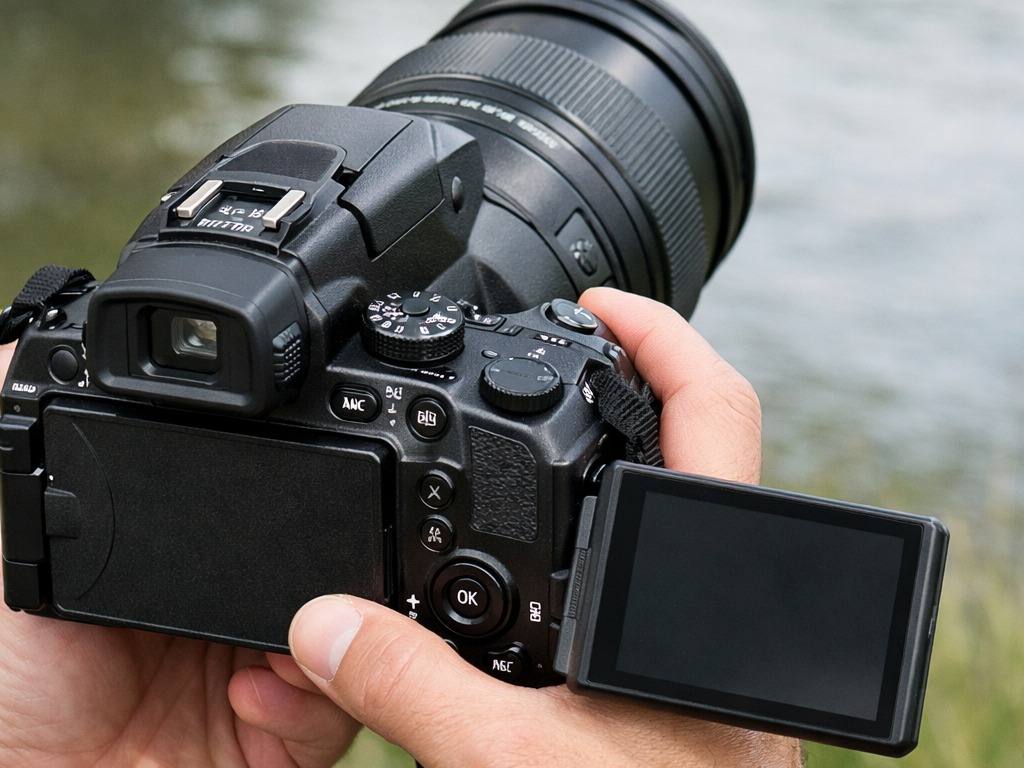
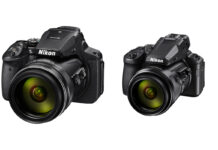
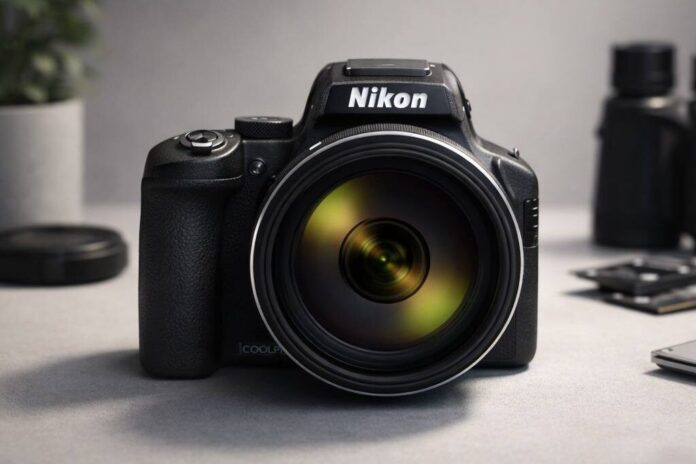
The P950 looks like a small DSLR with a serious built-in lens. It is not pocketable, but it is far easier to carry than a camera bag built around long interchangeable lenses. The grip is deep enough to control the body at full zoom, and the lens barrel gives your left hand somewhere natural to support the weight.
At about 1 kg with battery and card, it is not featherweight. Still, the weight feels reasonable because everything is integrated. A mirrorless body with a lens that even approaches this reach would be much larger, much more expensive, and less spontaneous.
The vari-angle rear screen is useful for low angles, tripod work, and moon shots. The electronic viewfinder is not modern mirrorless luxury, but it is essential in bright sun and at long focal lengths. Trying to track a distant subject at 2000mm on the rear screen is possible, but the viewfinder gives you much more control.
Autofocus and stabilization at 2000mm
The P950 uses contrast-detect autofocus. In good light, on perched birds, static wildlife, buildings, aircraft, and moon shots, it is accurate enough. The problem is speed. If a bird launches suddenly or flies against a busy background, the camera can hesitate. You learn to pre-focus, zoom out to find the subject, then zoom in only when you have it framed.
Stabilization is the feature that makes the lens usable. Nikon’s Dual Detect Optical VR is rated for 5.5 stops, and that matters enormously at the long end. At 2000mm equivalent, tiny movements become huge. The P950 cannot beat physics, but it does make handheld super-telephoto shooting far more realistic than it has any right to be.
For serious moon shots, a tripod still helps. For birding walks and travel, I would rather use a monopod or simply brace against something when possible. The camera can be handheld, but the best files come from good technique: stable stance, controlled breathing, enough shutter speed, and patience.
The technique matters more than the spec sheet
The P950’s 2000mm equivalent reach looks easy on paper. In the field, it demands patience. Heat shimmer, atmospheric haze, hand movement, subject movement, and autofocus hesitation all become more visible at the long end. A bird across a lake may fill the frame and still look soft because the air between you and the subject is moving.
For better results, I would shoot in strong but not harsh light, use the EVF instead of holding the camera at arm’s length, brace against a tree or railing, and keep shutter speed higher than beginners expect. If the subject is moving quickly, zoom out slightly. A sharp 1200mm-equivalent frame is usually better than a soft 2000mm frame.
Image quality: good light is everything
The P950 uses a 16MP 1/2.3-inch CMOS sensor. That is the hard limit behind every image-quality discussion. In sunlight, the files can look surprisingly good. Feather detail, aircraft markings, distant landscapes, and lunar texture can all be satisfying, especially for web use, sharing, and moderate prints.
As light drops, the small sensor becomes obvious. Noise rises, fine detail smears, and dynamic range is limited compared with APS-C or full-frame cameras. This is not a flaw unique to Nikon. It is the physics of putting extreme focal length and a compact sensor into one relatively affordable camera.
I would keep ISO as low as practical and avoid expecting miracles at dusk. The P950 rewards daylight, clear air, and stable support. It punishes sloppy technique more than a short-lens camera because any shake, haze, or missed focus is magnified by the zoom.
Video, RAW files, and extra modes
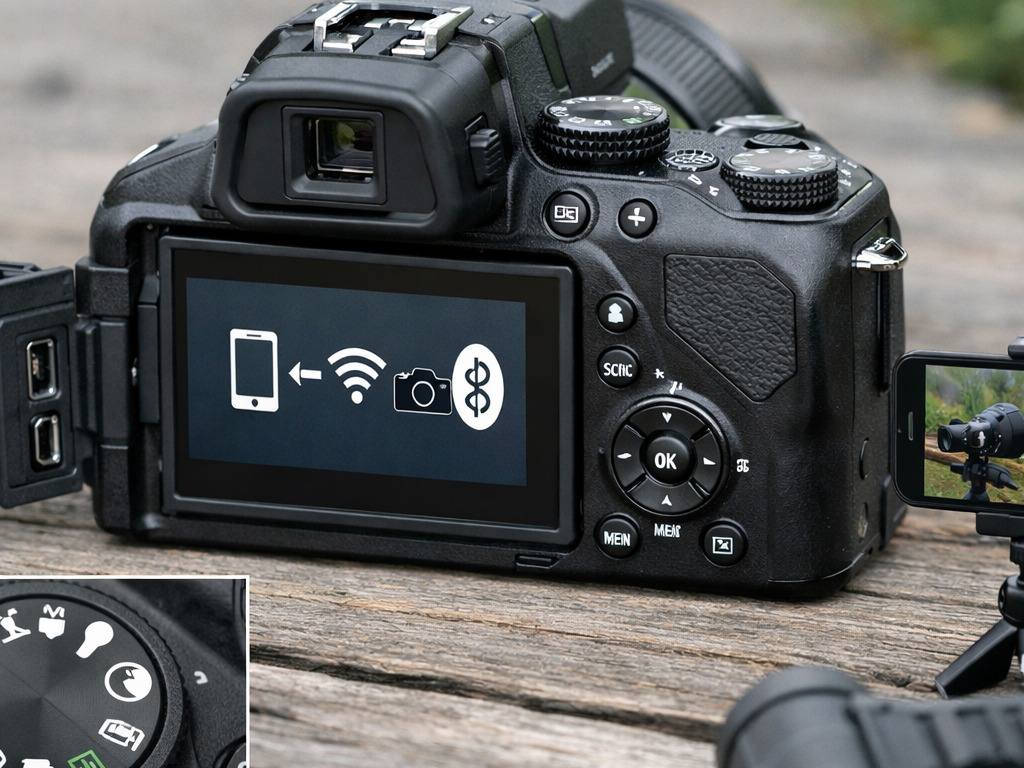
The P950 records 4K UHD up to 30p and Full HD video, which gives it more usefulness than older superzooms. The long lens can produce dramatic clips of birds, moonrise, ships, or distant details, but video at extreme zoom needs support. Handheld 2000mm video is rarely pretty unless the subject and operator are both very forgiving.
RAW still capture is one of the P950’s important advantages over older bridge cameras. It gives you more room to adjust exposure, contrast, and white balance. Do not expect RAW files to behave like a Z6 III or D850 file, but they are useful when photographing high-contrast subjects like the moon or bright birds against dark water.
SnapBridge gives you wireless transfer and remote triggering. The remote function is especially useful for moon shots, because touching the camera at long focal lengths can soften the image. Bird-watching and Moon modes are also worth mentioning. Experienced photographers may prefer manual control, but those modes help newer users get in the right neighborhood quickly.
Nikon P950 vs P1000 and P1100
Our Nikon P950 vs P1000 comparison explains the practical trade: the P1000 and P1100 reach 3000mm equivalent, while the P950 stops at 2000mm in a lighter body. The extra reach is genuinely useful for lunar detail and very distant subjects, but 2000mm is already more than most photographers can easily stabilize or frame.
If your goal is the most extreme moon and distant wildlife framing, the P1100 is the more tempting Nikon. If you want a more manageable field camera and can find the P950 at a sensible price, the P950 may be the smarter buy. For many people, 2000mm is not the limitation. Light, focus, atmosphere, and technique are.
The Nikon P1100 vs P1000 comparison is useful if you are already leaning toward the bigger bodies. The P950 belongs in the conversation when portability and price matter more than maximum reach.
Best subjects for the Nikon P950
The P950 is at its best with static or predictable distant subjects. Perched birds, wildlife across open ground, ships, aircraft, mountains, architecture details, and the moon are all natural fits. It is less convincing for fast birds in flight, indoor sports, dim forests, or situations where autofocus speed and high ISO quality matter more than reach.
For travel, the appeal is obvious. You can photograph a city skyline, then pick out architectural detail from the same viewpoint. You can shoot a landscape, then zoom into wildlife without changing lenses. The files will not beat a larger-sensor system, but the shot opportunities are very different.
Discontinued buying logic
The P950 is now a price-sensitive buy because stock has been winding down and the P1100 is Nikon’s current extreme superzoom direction. That does not make the P950 obsolete. It does mean you should compare the real price carefully. A discounted P950 can be excellent value. An overpriced P950 sitting close to the P1100 makes less sense.
Used buyers should check the zoom mechanism, EVF, rear screen, battery, charger, and tripod socket. Bridge cameras can live hard lives in dusty outdoor bags. A clean copy matters more than saving the last few dollars.
Final verdict
My Nikon P950 review verdict is simple: buy it for reach, not perfection. It is a fun, capable, highly specific camera that can get photos most ordinary cameras cannot touch. The 83x zoom and stabilization are the reasons it exists, and they remain impressive.
The tradeoffs are just as clear. The small sensor limits low-light performance, autofocus is not ideal for fast action, and availability may push some buyers toward the P1100 or the used market. But if you understand those limits, the P950 can be a rewarding field camera for wildlife, travel, moon photography, and the kind of visual curiosity that keeps photography enjoyable.
I would recommend it most to enthusiasts who want a practical all-in-one superzoom and do not want to invest in a large telephoto system. I would avoid it if your priority is ultimate image quality, indoor shooting, or professional action work.
If you are moving up from the older 2000mm model, our Nikon P900 vs P950 comparison separates the shared lens and sensor from the P950 upgrades that matter in practice.
nn
Before choosing the P950, compare its reach, weight, buying route, and used-market alternatives in our Nikon Coolpix model guide.
Nikon COOLPIX P950 alternatives
The main alternatives to the Nikon COOLPIX P950 are Nikon P1000, Nikon P1100, Canon SX70 HS, Panasonic FZ80D/FZ82D, Kodak AZ901. Compare autofocus, stabilization, video limits, lens choice and current price before deciding which camera fits you best.
Frequently asked questions
Is the Nikon P950 good for bird photography?
Yes, especially for perched birds, distant birds, and slow-moving wildlife in good light. It is less reliable for fast birds in flight because the contrast-detect autofocus can hesitate.
Can the Nikon P950 take good moon photos?
Yes. The 2000mm equivalent zoom and dedicated Moon mode make it one of the easiest cameras for detailed moon shots. A tripod or remote trigger improves sharpness.
Is the Nikon P950 better than the Nikon P1000?
It depends. The P1000 gives you more reach at 3000mm equivalent, but the P950 is smaller, lighter, and easier to carry. For many users, the P950 is the more practical superzoom.
Does the Nikon P950 shoot RAW?
Yes. The P950 can shoot RAW still files, which gives you more flexibility for editing exposure, contrast, and white balance than JPEG alone.
Is the Nikon P950 still worth buying in 2026?
Yes, if you find it at a sensible price and want 2000mm reach in a manageable all-in-one camera. If new stock is expensive or limited, compare it carefully with the Nikon P1100 and used P1000 options.
Birding, moon shots, aviation, travel, distant landmarks, and photographers who want huge reach without interchangeable lenses.
You need strong low-light files, fast action autofocus, weather sealing, or large-sensor image quality.
Low-medium; Auto and subject modes help, but 2000mm requires good light and steady technique.
Nikon P1100 for more reach, or Nikon Z mirrorless plus telephoto lenses for better image quality.
4K is useful, but small-sensor quality, AF hunting, and extreme-zoom shake keep it casual.
Yes at the right price if 2000mm reach is the reason. No if you mainly want low-light or action performance.