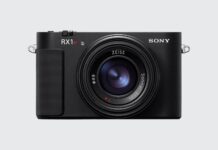

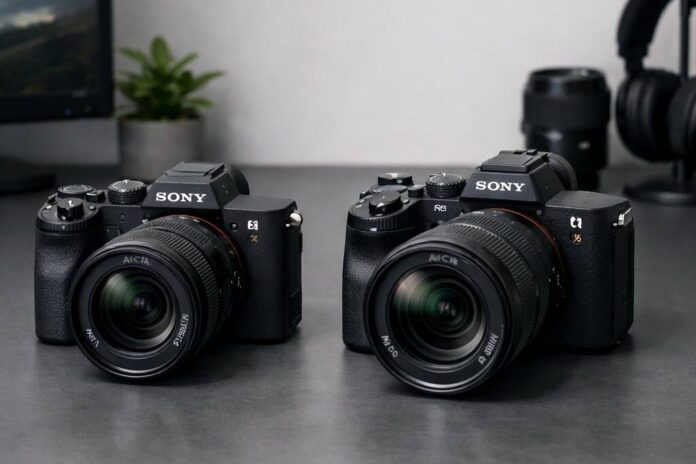
Choosing between the Sony a7CR vs a7R V is not as simple as comparing spec sheets. I have found these two cameras appeal to very different photographers, even though they share a sensor. This guide breaks down the real-world differences that matter most for travel, portraits, landscapes, and hybrid shooting. If you search for Sony a7R V vs a7CR, start with handling rather than megapixels: the a7R V is the better working body, while the a7CR packages the same 61MP resolution into a camera you are more likely to carry all day.
| Decision point | Sony a7CR | Sony a7R V |
|---|---|---|
| Sensor | 61MP full-frame BSI CMOS | 61MP full-frame BSI CMOS |
| Best strength | Huge resolution in a smaller travel body | Better EVF, controls, stabilization, and professional handling |
| Viewfinder and screen | Compact EVF and vari-angle screen | 9.44M-dot EVF and 4-axis multi-angle screen |
| Cards | Single SD UHS-II slot | Dual CFexpress Type A / SD slots |
| Buy it if | You want 61MP files without carrying a large body | You want the strongest 61MP Sony body for serious work |
What these two cameras are really designed for
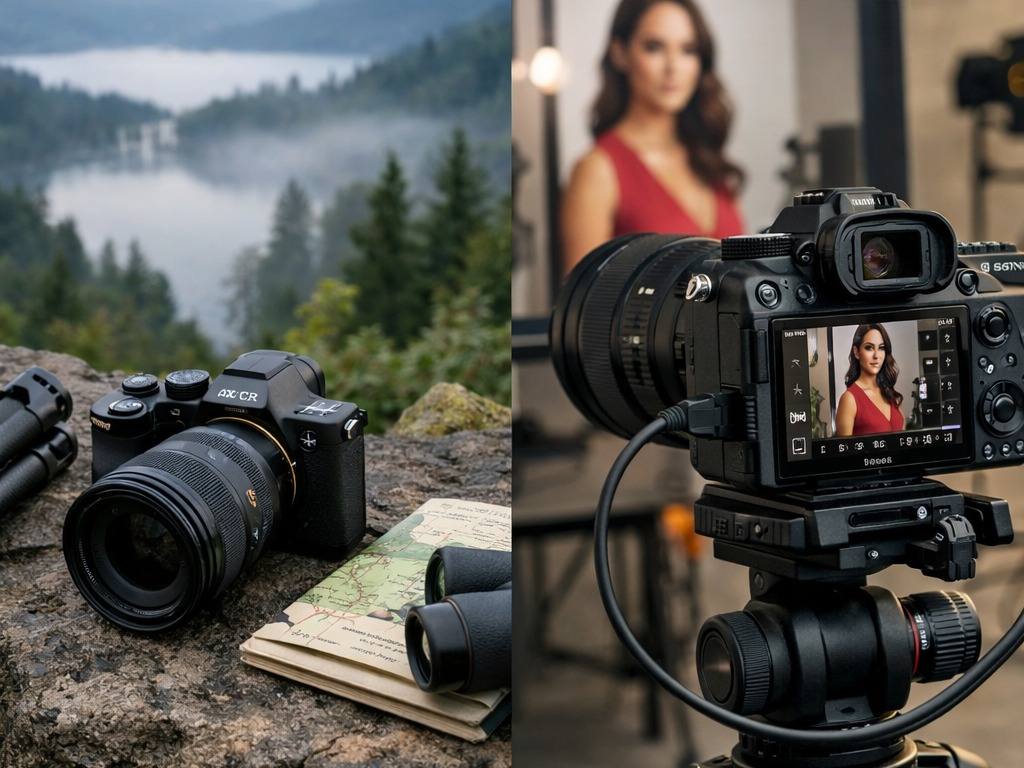
At first glance, you might think the Sony a7CR and a7R V are interchangeable. Both offer the same 61MP full-frame sensor, high-resolution files, and compatibility with the full range of Sony E-mount lenses. However, my experience using both in the field made it clear that their design philosophy and target users are quite different.
If portability is the deciding factor, it helps to look beyond the comparison and consider how the smaller body performs on its own in everyday use. This Sony a7CR review adds practical context on handling, travel readiness, and whether the compact design fits the way you actually shoot.
The Sony a7CR is designed for photographers who prioritize portability without compromising on sensor performance. It’s part of Sony’s “C” line, where “C” stands for “compact.” The goal is to provide a lightweight, travel-friendly body, ideal for those who want to carry their camera everywhere – whether hiking, exploring cities, or packing light for overseas trips. If you love the freedom of a small camera but refuse to settle for less than top-tier image quality, the a7CR is built for you.
What this means in real use
On the other hand, the Sony a7R V is a flagship model in the “R” (Resolution) series. It’s for photographers who want the full professional experience: robust ergonomics, maximum customization. The best Sony has to offer in autofocus, stabilization, and screen technology. Wedding shooters, studio portrait photographers, and serious landscape artists will appreciate the a7R V’s handling, weather sealing, and deep menu options. It shines in situations where you set up for a shot and need absolute control, or when you’re shooting all day and want a camera that feels like an extension of your hand.
In short, while both cameras can do almost anything, the a7CR is the high-resolution camera you can throw in your bag and forget until inspiration strikes. The a7R V is the tool you reach for when your photography demands the best the Sony alpha system can deliver, especially for consistent professional work.
Sensor and image quality in real-world shooting
Both cameras feature Sony’s remarkable 61-megapixel back-illuminated sensor. This sensor is a marvel for anyone seeking extreme detail, flexibility in cropping, and the ability to make large prints. In controlled conditions – think landscapes on a tripod or well-lit portraits – the image quality from the a7CR and a7R V is indistinguishable. Files are sharp, dynamic range is class-leading, and colors are rich yet natural. If you’re shooting RAW and editing in post, you will love the latitude the sensor provides.
Where the differences begin to show is in how each camera lets you put that sensor to use. The a7R V includes Sony’s newest image processor and advanced AI-driven subject recognition. This can help you get more out of that resolution in challenging conditions. For example, if you’re tracking a moving subject or working in low light, the a7R V’s processing power can help nail critical sharpness in more frames.
The a7CR, while sharing the sensor, uses a more compact processor and has a slightly lighter buffer for burst shooting. In real-world use, this means that if you’re primarily shooting static subjects – architecture, still life, or travel scenes – you won’t notice much difference. But if you’re pushing the camera to its limits with fast action or complex scenes, the a7R V’s extra muscle becomes apparent. This is especially true In how fast it processes images and recovers between shots.
Dynamic range is excellent on both bodies. I have pulled deep shadows and recovered blown highlights with ease, especially at base ISO. Noise performance is also strong, though 61MP means files can look a bit grainier at very high ISOs compared to lower-resolution models. Still, for most scenarios, both cameras deliver files you can confidently edit and print at large sizes.
Size, grip, and day-to-day handling
Why the EVF, screen, and controls change the experience
Perhaps the most immediate difference between the a7CR and a7R V is how they feel in your hands. The a7CR is remarkably compact for a full-frame camera. It’s only a little larger than Sony’s APS-C models. With a small prime lens, it can slip into a modest shoulder bag or even a large coat pocket. This is liberating for travel, street, or spontaneous photography – any scenario where you don’t want to draw attention or carry heavy gear.
However, that compactness comes with trade-offs. The grip on the a7CR is noticeably smaller and less sculpted than the a7R V’s. For photographers with larger hands, or those using heavy lenses, the a7CR can feel cramped after extended use. Sony does include an optional grip extension, which helps. But it never achieves the full comfort of the a7R V’s body.
The a7R V’s grip is deep and confidence-inspiring. With a big lens, like a 70-200mm, it balances beautifully, and your hand naturally finds its place. The a7R V also offers more physical buttons and dials, making it easier to change settings without diving into menus. This matters more than you’d think during fast-paced shoots or in cold weather when you’re wearing gloves.
Controls, screen, and comfort in practice
Another key difference is the viewfinder and rear screen. The a7R V has one of the best electronic viewfinders Sony has ever made: large, bright, and high-resolution. This makes composing, focusing, and reviewing images a pleasure, especially in bright sunlight. The rear screen is fully articulating and high quality, perfect for awkward angles or video work.
The a7CR’s EVF, by comparison, is smaller and lower in resolution. It’s usable, but less immersive, and sometimes challenging for manual focus or critical review. The rear screen is tilting rather than fully articulating. This is convenient for most stills but less flexible for vlogging or complex framing.
- a7CR: Smaller, lighter, less to hold onto, simpler controls, basic EVF and screen.
- a7R V: Larger, heavier, robust grip, more dials, premium EVF and fully articulating screen.
If you value compactness above all, the a7CR is hard to beat. For longer shoots, large lenses, or demanding sessions, the a7R V’s comfort and usability are far superior.
Autofocus, stabilization, and shooting performance
Tracking subjects for portraits, events, and wildlife
Sony’s autofocus technology is among the best in the business. Both the a7CR and a7R V benefit from rapid, accurate focusing. But the a7R V raises the bar with its advanced AI-driven subject detection. This means the a7R V can recognize and track a wider variety of subjects, including human eyes, animals, birds, cars, and even insects, with greater reliability. For action photography, event coverage, or wildlife, this is a real advantage.
In my experience shooting portraits and events, the a7R V almost feels like it reads your mind. It locks onto eyes, even in crowded scenes or tricky lighting, and keeps focus as subjects move. The a7CR is very good, but occasionally loses track if the subject turns or moves quickly. For most casual or travel shooters, the difference might be minor. For professionals or anyone who shoots fast-moving subjects, the a7R V’s autofocus is a clear step up.
Stabilization and burst depth
Stabilization is another area of distinction. Both cameras feature in-body image stabilization (IBIS), but the a7R V’s system is more sophisticated, offering up to 8 stops of compensation compared to the a7CR’s 7 stops. In practice, this means the a7R V is just a bit better at keeping images sharp at slow shutter speeds. This is especially true With high-resolution files where every pixel counts.
Burst shooting is also worth mentioning. The a7R V offers a slightly higher buffer and faster processing, making it better suited for sequences – think wildlife, sports, or moments where you need several frames per second without slowing down. The a7CR can handle bursts, but the smaller buffer and slower write speeds mean you might hit a wall sooner during long shoots.
To sum up, both cameras are fast and reliable. If you demand the absolute best in autofocus, stabilization. All-day performance, the a7R V is the winner. The a7CR is more than capable for most scenarios, but it prioritizes lightness and size over maximum performance.
Video features and hybrid workflow considerations
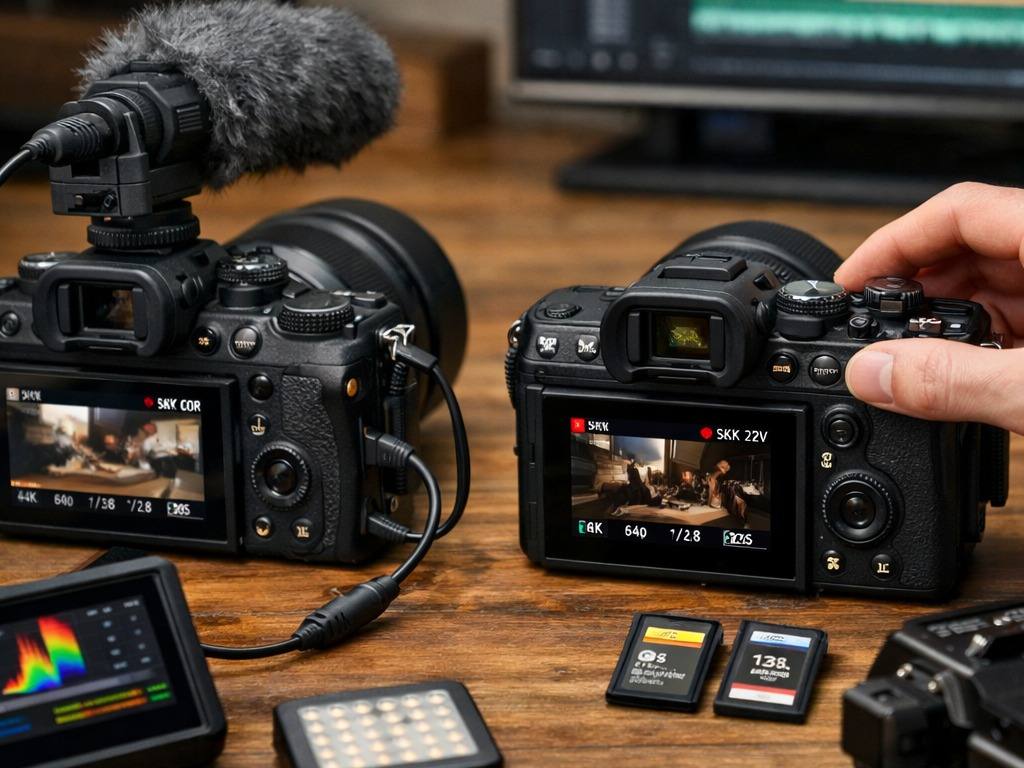
For many modern photographers, a camera that handles both stills and video well is a must. The Sony a7CR and a7R V both offer solid video capabilities. But their real-world suitability for content creation and hybrid shooting diverges in ways that matter.
Let’s start with the basics. Both cameras can record 4K video, downsampled from their 61MP sensor, delivering excellent detail. However, the a7R V offers a broader suite of video-centric features. You get 10-bit 4:2:2 internal recording, S-Cinetone color profile for a pleasing look straight out of camera. A more flexible range of frame rates. For creators who color grade or want to match footage with other Sony cameras, these options make a clear difference.
The a7CR is perfectly capable for casual video clips, vlogs, or social media content. It also supports 10-bit internal recording and S-Log3. But it lacks the more advanced codecs and higher bitrate recording options of the a7R V. For many hybrid shooters, the biggest difference is not raw video quality, but usability features. The a7R V has a full articulating screen with a four-axis tilt, making it much easier to shoot at odd angles or frame yourself for talking-head content. The a7CR’s flip-out screen is functional, but less versatile for complex setups.
Workflow differences for hybrid shooters
Another subtle but important area is heat management during longer video sessions. The a7R V’s body is larger and has better thermal dissipation. In my experience, it is less likely to overheat during extended 4K recording. While the a7CR is more prone to temperature warnings if you push it with long takes. This might not matter for quick travel clips, but it’s something hybrid professionals need to consider.
Both cameras feature Sony’s latest autofocus system with Real-time Tracking and Eye AF for humans and animals. This is a game changer for solo creators. The a7R V tracks subjects more confidently in low light and has additional focus assist tools. These seem minor, but if you film fast-moving content or want total reliability, they tilt the experience in the a7R V’s favor.
If you are a photographer who records video occasionally, the a7CR will get the job done without weighing you down. If you shoot interviews, events, or professional video projects, the a7R V’s handling, video tools. Reliability are worth the extra size and cost. For true hybrid shooters, the a7R V feels more like a dedicated video body that also excels at stills.
Lens pairing and balance for different photography styles
Best lens matches for travel kits and high-resolution work
Choosing the right camera is just one part of the equation. Your lens choices and how they balance with the body make a huge difference, especially on extended shoots. Both the Sony a7CR and a7R V use the same FE mount, so you have access to Sony’s full lens ecosystem. However, their ergonomics change how different lenses feel in practice.
The a7CR is clearly designed with compact primes and lightweight zooms in mind. Pair it with a Sony FE 35mm f/2.8 or the FE 24mm f/2.8, and you have a kit that fits in a small bag and weighs less than some APS-C setups. For travel, street photography, or hiking, this combo is a joy to carry all day. Even with the FE 24-70mm f/4, the a7CR stays well balanced and never feels front-heavy.
However, when you start mounting larger lenses – think the FE 70-200mm f/2.8 GM or the FE 24-70mm f/2.8 GM II – the a7CR’s small grip and lightweight body become a limitation. Heavy glass makes the camera feel less stable, and the shallow grip makes long sessions less comfortable. If you plan on using high-end Sony GM lenses for portraiture, wildlife, or landscape work with heavy tripods, the a7R V’s larger grip and more substantial weight are a real advantage.
Lens balance and kit-building advice
The a7R V feels purpose-built for demanding lenses. Its deeper grip, sturdier build, and improved balance mean you can confidently use any FE lens, from the compact primes to the 400mm f/2.8. This is especially important for genres like high-resolution landscape photography, where you want stability and the ability to use tilt-shift or adapted medium format lenses. The a7R V’s heavier body helps dampen vibrations, which is noticeable when pixel-peeping those 61MP files.
For travel photography, my favorite a7CR pairings are the FE 24-105mm f/4 for all-around versatility, or a trio of small primes for minimalism. For portrait or studio work, I prefer the a7R V with the FE 85mm f/1.4 GM or the FE 135mm f/1.8 GM. The camera’s handling makes these heavier lenses much easier to manage. This is especially true During long shoots or when using flash triggers and accessories.
Ultimately, if your photography revolves around lightweight kits and inconspicuous shooting, the a7CR is a better match. If you want maximum flexibility with Sony’s top-tier glass. This is especially true For demanding genres, the a7R V’s balance and ergonomics win out.
Price, value, and which one I would buy
Pros and cons of the Sony a7CR and Sony a7R V
Price often determines what ends up in your bag. As of this writing, the Sony a7CR sells for noticeably less than the a7R V. The a7CR is positioned as a premium compact camera. But it is still more affordable, making it tempting for those who want high resolution without breaking the bank.
Let’s look at the value proposition for each:
- Sony a7CR: Offers the same 61MP sensor as the flagship, excellent image quality, good video features, and a compact build. Its price makes it one of the most accessible high-resolution full-frame cameras. The trade-offs are a smaller grip, less robust body, a less advanced viewfinder, and fewer video-centric features. For travel, street, or anyone who wants to keep weight down, it’s a strong value.
- Sony a7R V: Commands a premium price, but delivers top-tier handling, weather sealing, the best viewfinder and LCD in the lineup. The most complete autofocus and video feature set. It also has better heat management for long shoots, dual card slots, and more customization. If you rely on your camera for professional work, or need the best user experience, the extra cost is justified.
Who should buy each camera
As someone who shoots both travel and studio work, I find myself reaching for the a7CR when I want to blend in, travel light, or shoot in tight spaces. It slips into my everyday bag and never feels like a burden. However, when I’m shooting demanding assignments, portraits, or working with clients, the a7R V’s handling and build quality give me more confidence and fewer compromises.
If I could only buy one, my choice would depend on my main use case. For pure travel and personal work, the a7CR delivers nearly everything I need in a smaller, more affordable package. For mixed professional work, especially where lens flexibility and handling matter, the a7R V is the camera I trust most.
Frequently asked questions
Is the Sony a7CR better than the a7R V for travel photography?
For travel, the Sony a7CR is often the easier camera to live with. It gives you the same 61MP resolution in a smaller body, although the a7R V is more comfortable with larger lenses and long shooting sessions.
Do the Sony a7CR and a7R V have the same image quality?
They are very close because both use a 61MP full-frame sensor. The a7R V has stronger handling, stabilization. Workflow features. But raw image detail is not the main reason to choose one over the other.
Which camera is better for professional portrait work?
The Sony a7R V is usually the stronger professional portrait body. Its larger grip, better EVF, dual card slots. More flexible screen make it easier to use with heavy portrait lenses for long sessions.
Is the a7R V worth the extra cost over the a7CR?
It is worth it if you need the best handling, viewfinder, card setup, and video flexibility in Sony’s 61MP line. If your priority is a smaller high-resolution travel body, the a7CR is the better value.
Key takeaways
- The a7CR and a7R V share excellent resolution, but they feel very different in the hand.
- The a7CR makes more sense for photographers who want high resolution in a smaller travel-friendly body.
- The a7R V is the stronger choice if you value handling, viewfinder quality, screen flexibility, and a more robust shooting experience.
- Your lens choices and shooting style matter more here than the shared sensor specs.