
View full specs
Quick verdict: the Sony ZV-1 II is still one of the easiest dedicated cameras to recommend to solo creators who want a pocketable vlogging setup with better handling, audio options, and optical zoom than a phone. It is not a tiny cinema camera, and it is not a serious stills body. Its appeal is speed: flip the screen, hit record, trust the autofocus, and move on.
This Sony ZV-1 II review is a 2026 buying decision. The important question is no longer whether the camera was impressive at launch, but whether it still makes sense now that phones are better, Sony has stronger interchangeable-lens creator cameras, and compact cameras are fashionable again. For the right user, the answer is yes. For the wrong one, the limits show quickly.
Sony ZV-1 II review verdict in 2026
I would buy the Sony ZV-1 II if I wanted a small, simple video-first camera for travel vlogs, product clips, family videos, social media, or YouTube talking-head work. The 18-50mm equivalent lens is the biggest reason it works: it is wide enough for arm’s-length filming, but still gives you a useful short zoom for details and casual portraits.
I would skip it if I planned to grow into lenses, shoot a lot in low light, record long events, or walk-and-talk without a grip. Electronic stabilization helps, but it is not magic. The ZV-1 II is at its best when you are deliberate: standing, seated, filming short clips, or moving slowly.
| Buy it if… | Skip it if… |
|---|---|
| You want a pocketable camera for vlogging. | You need interchangeable lenses. |
| You shoot yourself at arm’s length. | You want gimbal-smooth walking footage. |
| You care about autofocus and simple audio. | You mainly shoot still photography. |
| You want an easy camera, not a rig. | You need 4K 60p, an EVF, or long battery life. |
Who the Sony ZV-1 II is really for
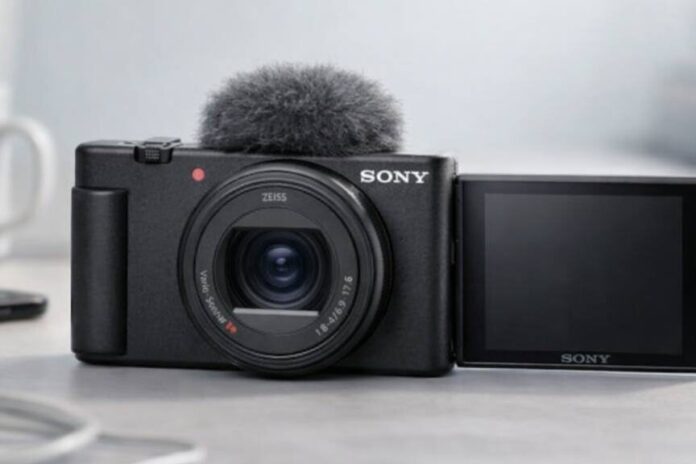
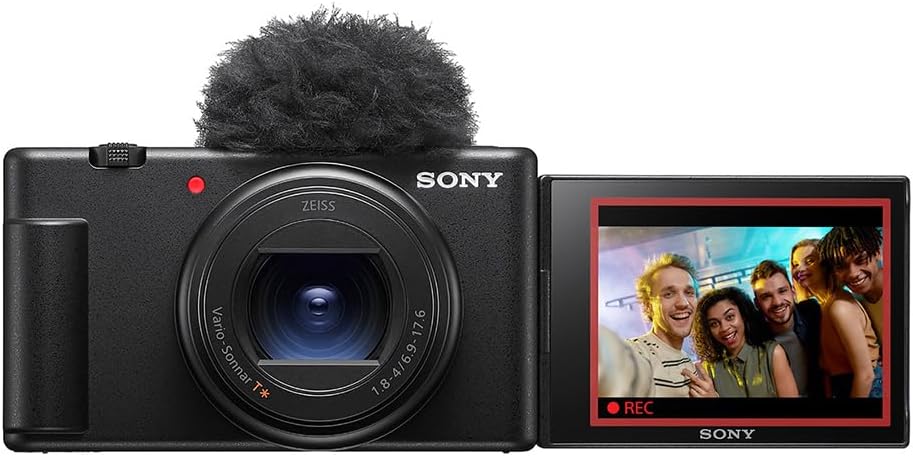
The ZV-1 II is built for creators who want a dedicated camera without building a full camera system. If you are coming from a phone, the upgrade is not just image quality. It is the physical record button, the flip screen, the real zoom lens, the hot shoe, the 3.5mm microphone input, the windscreen, and Sony’s very dependable face and eye autofocus.
That makes it especially useful for solo creators. Product reviewers can use Product Showcase mode. Travel creators get a camera that fits in a small sling. Beginners get a camera that does not punish them with a complicated lens decision on day one.
If you want an even simpler and cheaper fixed-lens Sony, our Sony ZV-1F review is the obvious comparison. If you already know you want lens flexibility and a bigger sensor, the ZV-1 II starts to lose ground to interchangeable-lens options.
Design, handling, and everyday usability
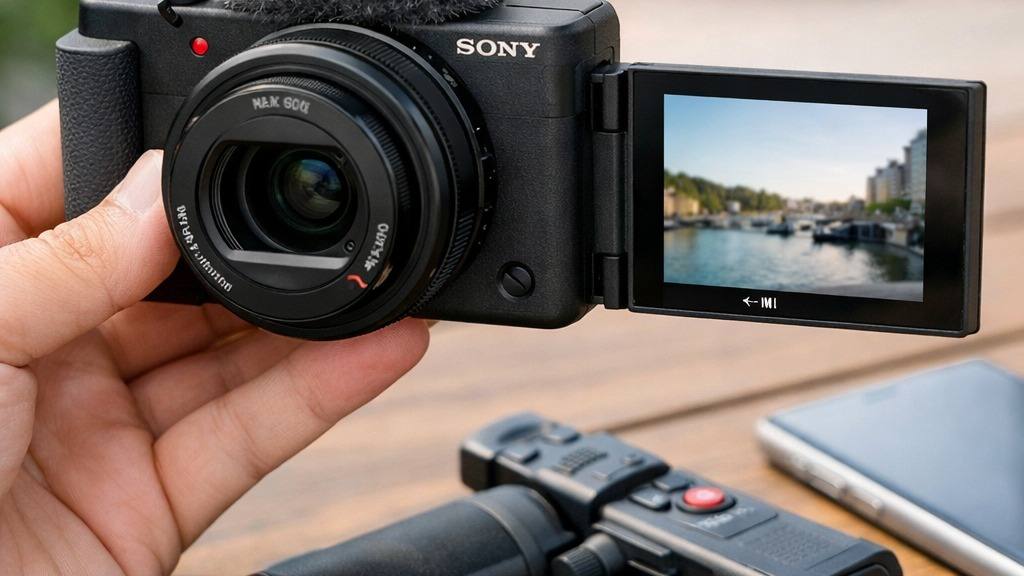
The body is small and light, about 292 g with battery and memory card. It is the kind of camera you can keep in a jacket pocket or the front of a travel bag, which matters more than spec-sheet bragging for daily content creation. A camera this small gets used more often.
The control layout is creator-first. There is a large record button, a Background Defocus button, a Still/Movie/S&Q switch, a zoom lever, and a fully articulating screen. The touchscreen interface is more modern than older Sony compact cameras and is much easier for beginners to understand.
The compromise is grip. The camera is usable one-handed, but not especially secure. I would pair it with a small grip or tabletop tripod for vlogging. The body is also not weather sealed, so this is not the camera I would casually expose to rain, blowing sand, or rough outdoor production.
The 18-50mm lens is the reason to choose it
The ZV-1 II uses an 18-50mm equivalent f/1.8-4.0 zoom. Compared with the original ZV-1’s tighter 24-70mm range, the wider end makes a real difference for handheld vlogging. You can hold the camera at arm’s length and still show your face, shoulders, and background without needing a long selfie stick.
The trade-off is reach and aperture. The long end is only 50mm equivalent, so this is not a distant-subject camera. The aperture also drops to f/4.0 at the telephoto end, so low-light and background blur are strongest when you stay wide.
Video quality, autofocus, and audio
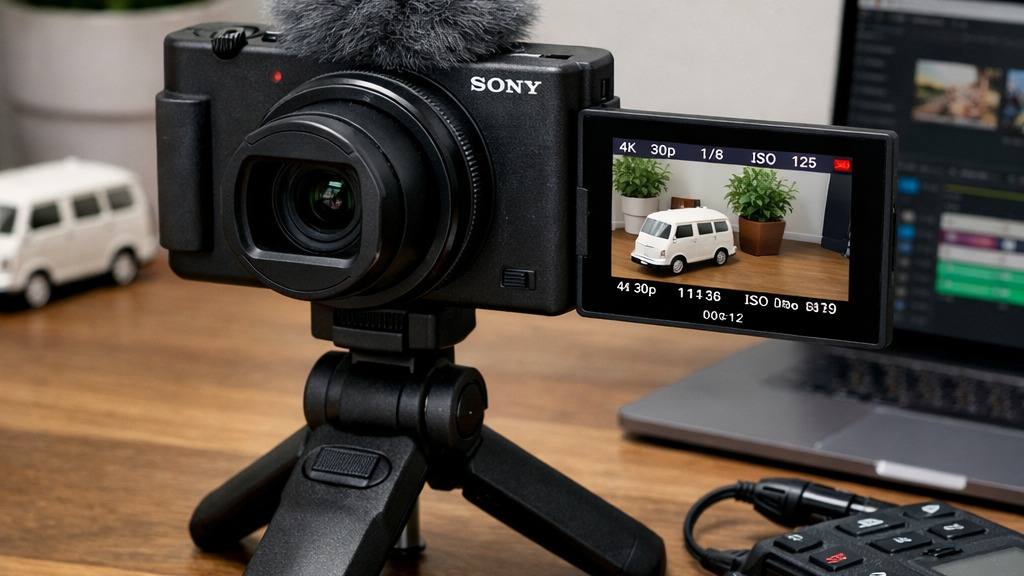
The ZV-1 II records 4K up to 30p and Full HD at higher frame rates. Footage is detailed, colors are pleasant with a little tuning, and the 1-inch sensor still gives you more flexibility than most phones in controlled light. For YouTube, travel clips, product videos, and short-form social content, the quality is more than enough.
Sony’s autofocus is the main reason the camera feels easy. Face and eye detection are reliable, and Product Showcase mode is genuinely useful if you hold objects up to the lens. Instead of hunting between your face and the product, the camera shifts focus quickly and predictably.
Audio is also better than the camera’s size suggests. The built-in microphone is useful with the supplied windscreen, and the 3.5mm microphone input lets you add a lavalier or small shotgun mic. The important limitation: there is no built-in headphone jack for live monitoring. For casual creator work that is acceptable; for paid or interview-heavy work, it is a real workflow compromise.
Stabilization is good enough, not great
Stabilization is electronic, with Active Mode available for video. It helps with small hand movements, but it crops the image and can look strained when you walk. The wide 18mm end helps offset the crop, but it does not turn the ZV-1 II into an action camera.
For standing clips, table shots, product demos, and slow travel footage, stabilization is fine. For constant walking, use a grip, keep your steps soft, or consider a gimbal or a different camera.
Photo quality and stills limitations
The 20.1MP 1-inch sensor can produce sharp, attractive stills in good light. RAW support is useful, and the lens is sharp enough for travel photos, food, street details, and behind-the-scenes images. If you mostly need thumbnails, social posts, or casual travel shots, the ZV-1 II does the job well.
It is not a photographer’s compact in the classic sense. There is no viewfinder, the grip is small, the shutter experience is basic, and the zoom range is limited. If still photography is the priority, I would look at a larger-sensor mirrorless body or a more photography-focused compact.
Battery life, ND filter, and workflow
Sony rates the ZV-1 II for about 290 stills, about 45 minutes of actual movie recording, or about 75 minutes of continuous movie recording. In real creator use, that means one battery is enough for short outings, but not for a full day of filming. Carry at least one spare NP-BX1 or a USB-C power bank.
The built-in ND filter is a useful advantage for video. It helps you keep shutter speed under control in bright light without immediately overexposing at wider apertures. This matters if you want more natural motion blur in daylight.
USB-C charging and power support make the workflow much better than older compact cameras. You can top up from a power bank, transfer quickly enough for casual work, and use USB streaming when you need a cleaner webcam look.
Sony ZV-1 II vs ZV-1F, ZV-E10 II, and phones
The ZV-1 II sits in a narrow but useful middle ground.
- Against the ZV-1F: the ZV-1 II wins because of its zoom lens, stronger flexibility, and better all-around creator feature set. The ZV-1F is cheaper and simpler, but the fixed wide lens is limiting.
- Against the ZV-E10 II: the ZV-E10 II is the better growth platform because it uses interchangeable E-mount lenses and a larger APS-C sensor. The ZV-1 II is smaller, simpler, and easier to carry.
- Against phones: a good phone is more convenient and often better for instant sharing. The ZV-1 II wins on grip, optical zoom, microphone options, longer-form recording habits, and the discipline of using a dedicated camera.
If you want a more ambitious creator body, our Sony ZV-E1 review shows what Sony can do when it puts full-frame video features into a creator-focused camera.
Pros and cons
- Pros: genuinely pocketable body, wide 18-50mm equivalent lens, reliable Sony autofocus, good built-in audio for casual work, microphone input, built-in ND filter, USB-C power, easy creator modes.
- Cons: no EVF, no headphone jack, limited battery life, electronic-only stabilization, no interchangeable lenses, modest low-light performance, no weather sealing, 4K limited to 30p.
Related comparison
If you are choosing between the original pocket creator camera and the newer wide-angle version, read our Sony ZV-1 vs ZV-1 II comparison. It helps clarify whether the ZV-1 II’s wider lens is worth giving up some telephoto reach.
Final verdict
The Sony ZV-1 II is worth buying if you want a compact, dedicated vlogging camera that removes friction. Its best quality is not one spec; it is how quickly it lets you film something usable. The wider lens, autofocus, audio setup, and pocketable body make it a practical creator camera in a way many larger cameras are not.
It is less appealing if you want a long-term camera system. Once you start caring about lenses, 10-bit video, stronger stabilization, or serious stills handling, you will outgrow it. But for travel creators, product reviewers, and beginners who want to film more often with less fuss, the ZV-1 II still makes sense in 2026.
Sony ZV-1 II / ZV-1M2 alternatives
The main alternatives to the Sony ZV-1 II / ZV-1M2 are Sony ZV-1F, Sony ZV-E10 II, Canon PowerShot V1, smartphones. Compare autofocus, stabilization, video limits, lens choice and current price before deciding which camera fits you best.
Frequently asked questions
Is the Sony ZV-1 II worth buying in 2026?
Yes, if you want a small fixed-lens vlogging camera with strong autofocus, good audio options, and an easy workflow. It is less compelling if you need interchangeable lenses or advanced video specs.
Does the Sony ZV-1 II have a headphone jack?
No. It has a 3.5mm microphone input, but not a dedicated headphone output for live monitoring.
Does the Sony ZV-1 II have a built-in ND filter?
Yes. The built-in ND filter is useful for video in bright light because it helps control exposure while keeping more natural shutter speeds.
Is the Sony ZV-1 II better than a phone?
For quick sharing, a phone is easier. For controlled vlogging, optical zoom, microphone use, product demos, and a dedicated shooting experience, the ZV-1 II is better.
Can the Sony ZV-1 II take good photos?
Yes, in good light. The 1-inch sensor and RAW support are useful, but the camera is designed around video first, not serious photography.
Solo vloggers, travel creators, product demos, and everyday video-first shooting.
You need interchangeable lenses, strong walking stabilization, an EVF, or serious stills ergonomics.
Low; menus and creator modes are friendly, but exposure and audio still reward learning.
Move to ZV-E10 II, ZV-E1, or an Alpha body when lenses, larger sensors, or stronger video controls matter.
Excellent convenience, but electronic stabilization crops and 4K is limited to 30p.
Yes for compact vlogging if the price is sensible.