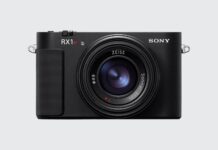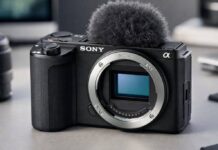

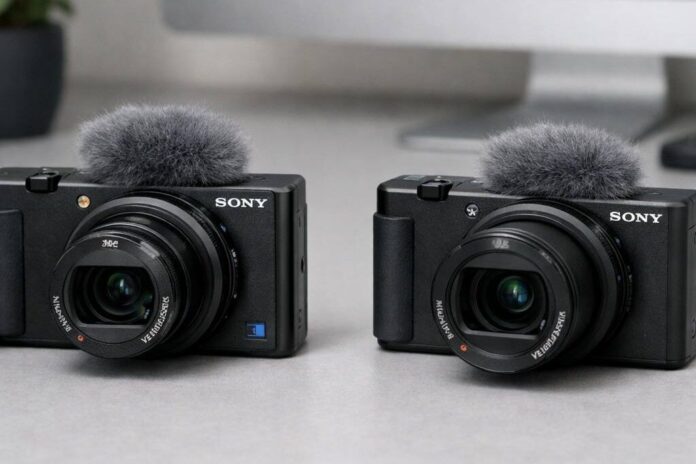
The Sony ZV-1 vs ZV-1 II decision comes down to one practical question: do you need more zoom, or do you need a wider lens for filming yourself? The cameras look similar, use the same broad idea, and target the same creator crowd. In actual use, the lens difference changes everything.
My quick take: choose the original ZV-1 if you shoot mixed travel, family, details, and casual photos. Choose the ZV-1 II if your camera is mainly pointed back at you.
Quick Verdict
The Sony ZV-1 II is the better compact vlogging camera. Its 18-50mm equivalent lens is much easier for handheld video, indoor filming, group selfies, desk content, and walk-and-talk clips.
The original Sony ZV-1 is the more flexible pocket camera. Its 24-70mm equivalent lens gives you more reach for portraits, travel details, food, pets, and everyday stills. That missing 70mm end is the thing I notice most when switching to the Mark II.
| Feature | Sony ZV-1 | Sony ZV-1 II |
|---|---|---|
| Sensor | 20.1MP 1-inch stacked CMOS | 20.1MP 1-inch stacked CMOS |
| Lens | 24-70mm equiv. f/1.8-2.8 | 18-50mm equiv. f/1.8-4 |
| Best use | Mixed photo/video travel | Handheld vlogging |
| Video | 4K up to 30p | 4K up to 30p |
| Charging | Micro USB | USB-C |
| Battery | NP-BX1 | NP-BX1 |
The Lens Is the Main Difference
Sony’s official ZV-1 specifications list a 2.7x optical zoom lens. In full-frame terms, that is the familiar 24-70mm range. It is not ultra-wide, but it is very useful for everyday photography.
The official ZV-1 II specifications move to an 18-50mm equivalent lens. That is wider at the short end and shorter at the long end. For creators, this is not a minor trade. It decides how the camera behaves.
At arm’s length, 24mm can feel tight. You can see your face, but not much environment. Add active stabilization and the crop gets tighter. The ZV-1 II solves that. At 18mm, it gives you room to breathe, even indoors.
Why the ZV-1 II Is Better for Vlogging
If you film yourself often, the ZV-1 II is easier. The wider lens means less stretched-arm filming, less awkward framing, and more background context. It also helps when you are walking, sitting at a desk, or filming in a small room.
The improved microphone design is another creator-friendly upgrade. You still get better sound with an external mic, but the ZV-1 II’s built-in audio is more purposeful for front-facing content.
The touchscreen interface and USB-C port also make the newer camera feel less dated. Those things do not improve image quality, but they reduce small daily annoyances. For solo creators, small annoyances matter because you are already directing, presenting, framing, and monitoring yourself.
For a deeper look at the newer body, read our Sony ZV-1 II review.
Why the Original ZV-1 Still Matters
The original ZV-1 has one advantage I would not casually dismiss: reach. The 70mm equivalent long end gives your photos and videos a more compressed, flattering look. It is better for details, street scenes, casual portraits, food, and travel moments where you cannot move closer.
The brighter f/2.8 aperture at the long end also helps subject separation. The ZV-1 II reaches only 50mm equivalent and drops to f/4 there. That is fine for vlogging, but less interesting for classic compact-camera shooting.
If I were packing one small camera for a family trip, I would still think hard about the original ZV-1. It is less comfortable for selfie video, but more useful when the camera is pointed outward.
Video Quality and Autofocus
Video quality is close. Both cameras use a 1-inch stacked sensor and both shoot sharp 4K up to 30p. Neither gives you the depth, dynamic range, or low-light latitude of a larger-sensor interchangeable-lens camera, but both are strong for their size.
Autofocus is also good on both. Face and eye detection are reliable, and Product Showcase mode remains one of Sony’s most useful creator features. If you hold a product toward the camera, focus shifts quickly without making you tap the screen.
The difference is not whether one camera can focus and the other cannot. The difference is framing. The ZV-1 II gives autofocus more room to work because your face is not crammed into the frame.
Photos and Everyday Carry
For still photography, I prefer the original ZV-1. The 24-70mm range feels more natural for a compact camera. It lets you shoot a wider variety of scenes without relying on cropping.
The ZV-1 II can still take good photos. The sensor is capable, colors are pleasant, and autofocus is quick. But the 18-50mm lens pushes you toward wide environmental images. That is useful for groups, interiors, and travel scenes, but less satisfying for portraits or details.
If your priority is photography-first compact shooting, you may also want to compare broader options in our best digital compact cameras guide.
Battery Life, Stabilization and Handling
Both cameras use the NP-BX1 battery, so neither is an all-day workhorse. Bring a spare if you record lots of 4K clips. This is especially true if you keep the screen on, use wireless features, or film in short bursts all day.
The ZV-1 II has the nicer modern workflow thanks to USB-C. The original ZV-1’s micro USB port feels older every time you pack cables.
Stabilization is worth thinking about carefully. The wider ZV-1 II lens helps handheld video because even with electronic stabilization crop, the frame stays usable. The original ZV-1 starts tighter, so stabilization can make selfie framing feel cramped.
Which One Should You Buy?
Buy the Sony ZV-1 if you want a pocket camera for mixed shooting. It is better for travel photos, casual portraits, details, and situations where you want a real zoom range. It is also attractive if the price is lower.
Buy the Sony ZV-1 II if your main output is vlogging, YouTube, TikTok, Reels, desk video, or handheld creator work. Its wider lens is the upgrade that matters. The better interface and USB-C port make it feel more current.
If you are choosing your first creator camera, the ZV-1 II is easier to recommend. If you already own the original ZV-1 and mostly film outward-facing travel or family content, I would not rush to replace it.
How It Fits Against Other Creator Cameras
The ZV-1 II is a compact, fixed-lens creator camera. That simplicity is its strength. If you want interchangeable lenses and better image quality, the next step is something like the Sony ZV-E10 II.
If budget is tight and you want a simpler wide-lens camera, the Sony ZV-1F also belongs on your shortlist. It is less flexible, but it can make sense for pure beginner vlogging.
For broader creator picks, our best vlogging cameras guide gives the ZV line more context.
Frequently Asked Questions
Is the Sony ZV-1 II better than the ZV-1?
It is better for vlogging and self-filming. The wider lens, improved microphone setup, USB-C port, and updated controls make it easier for creator work. The original ZV-1 is still more flexible for mixed photo and video use.
Does the Sony ZV-1 still make sense today?
Yes. The original ZV-1 still makes sense if you want the 24-70mm equivalent zoom range. It is especially useful for travel, family, food, details, and casual portraits.
Which camera is better for YouTube?
The ZV-1 II is usually better for YouTube because the 18mm wide end makes handheld framing much easier. The original ZV-1 can work well if you use a tripod or do not film yourself at arm’s length.
Is image quality different between the ZV-1 and ZV-1 II?
Image quality is very similar. The bigger difference is how the lens frames the scene. Choose based on field of view, not sensor performance.
Final Recommendation
The Sony ZV-1 II is the creator-first choice. The original Sony ZV-1 is the more flexible compact camera. That is the decision.
If the camera points at your face most of the time, get the ZV-1 II. If it points at the world more often, the original ZV-1 may still be the smarter buy.