

If you are shopping for the best digital compact cameras in 2026, the first thing to understand is that this category has split into clear lanes. Phones killed off the forgettable middle. What survives now are compact cameras that do one of four things better than a phone: give you a much larger sensor, give you real optical reach, give you a more deliberate photography-first shooting experience, or survive places where you would never trust your phone.
That is why the right compact camera is still worth buying. The wrong one is easier than ever to regret. A fixed-lens cult favorite is not automatically the best compact camera for travel. A creator compact is not automatically the best point-and-shoot for photos. And a pocket zoom with a giant reach number is not automatically the smartest buy if the image quality falls apart when the light gets bad.
I re-checked the current compact market from scratch against official manufacturer pages, current model lineups, and current retailer listings. These are the compact cameras I would actually shortlist today.
Best digital compact cameras in 2026: quick picks
| Use case | Top pick | Why it earns the spot | Main compromise |
|---|---|---|---|
| Best overall premium compact | Panasonic Lumix L10 | Large 4/3 sensor, bright 24-75mm equivalent lens, viewfinder, strong hybrid feature set | Too large for a real pocket and expensive by compact-camera standards |
| Best fixed-lens compact for enthusiasts | Fujifilm X100VI | 40.2MP APS-C sensor, IBIS, excellent JPEG workflow, iconic 35mm-equivalent shooting style | Single focal length and a very specific way of shooting |
| Best compact camera for creators | Canon PowerShot V1 | Modern autofocus, large 1.4-type sensor, cooling fan, creator-first video design | No EVF and less appealing for pure stills photographers |
| Best pocket zoom compact | Sony RX100 VII | 24-200mm equivalent zoom, excellent AF, EVF, and a body that still fits a jacket pocket | Still expensive for a 1-inch camera |
| Best street photography compact | Ricoh GR IIIx | APS-C sensor, 40mm-equivalent lens, fast startup, genuinely easy everyday carry | No zoom and minimal video appeal |
| Best travel zoom for image quality | Panasonic Lumix ZS300 | 1-inch sensor plus 24-360mm equivalent zoom remains a smart travel combination | Not as fast or modern as newer premium compacts |
| Best value travel zoom | Panasonic Lumix ZS99 | 30x optical zoom, USB-C charging, pocketable body, simpler price than premium compacts | Smaller sensor means weaker low-light files |
| Best rugged compact | OM System Tough TG-7 | Waterproof, shockproof, useful macro features, still one of the few tough cameras worth recommending | Image quality is nowhere near the large-sensor models above |
Compact camera comparison table
| Camera | Sensor | Lens | Viewfinder | Best for |
|---|---|---|---|---|
| Panasonic Lumix L10 | 20.4MP 4/3 BSI CMOS | 24-75mm equiv. f/1.7-2.8 | Yes | Photo-first buyers who still want zoom flexibility |
| Fujifilm X100VI | 40.2MP APS-C | 35mm equiv. f/2 prime | Yes | Enthusiasts who want a fixed-lens daily camera |
| Canon PowerShot V1 | 22.3MP 1.4-type | 16-50mm equiv. zoom | No | Creators, vloggers, and hybrid travel shooting |
| Sony RX100 VII | 20.1MP 1-inch | 24-200mm equiv. f/2.8-4.5 | Yes | Real pocketability without giving up useful zoom |
| Ricoh GR IIIx | 24.24MP APS-C | 40mm equiv. f/2.8 prime | No | Street, documentary, and everyday carry |
| Panasonic Lumix ZS300 | 20.1MP 1-inch BSI CMOS | 24-360mm equiv. zoom | Yes | Travelers who want reach without the usual tiny-sensor penalty |
| Panasonic Lumix ZS99 | 20.3MP 1/2.3-inch MOS | 24-720mm equiv. zoom | No | Reach-first travel and family use |
| OM System Tough TG-7 | 12MP 1/2.33-inch BSI CMOS | 25-100mm equiv. zoom | No | Water, rough travel, kids, hiking, and macro fun |
How I would choose a compact camera in 2026
If you mainly care about still photography, file quality, and enjoying the act of shooting, I would start with the Panasonic Lumix L10, Fujifilm X100VI, and Ricoh GR IIIx. Those are the compacts that feel most like cameras built for photographers rather than content pipelines.
If you care about creator video, solo shooting, livestreaming, vertical clips, and the practical friction of filming yourself, the Canon PowerShot V1 is the smartest modern answer. If you want something smaller and simpler than that, the Sony ZV-1 II is still relevant, but I think the V1 is the stronger all-round buy now.
If your main reason for buying a compact camera is travel, I would separate that into two questions. Do you want the best files you can reasonably get from a self-contained travel camera? Then look at the L10, RX100 VII, or ZS300. Do you mainly want optical reach in a bag-friendly body? Then the ZS99 makes more sense than pretending a fixed-lens premium compact will solve the same problem.
If you want a compact camera that is fun but also brutally honest about its limitations, that is where the category gets better. The X100VI is brilliant if you want that 35mm-equivalent experience. The GR IIIx is brilliant if you want stealth and simplicity. The TG-7 is brilliant if your life includes water, sand, kids, or impact. None of those cameras are universal winners. All of them are easy to love when they match the job.
The most complete premium compact here: large-sensor image quality, a bright Leica zoom, EVF, stabilization, and modern hybrid tools in one body.
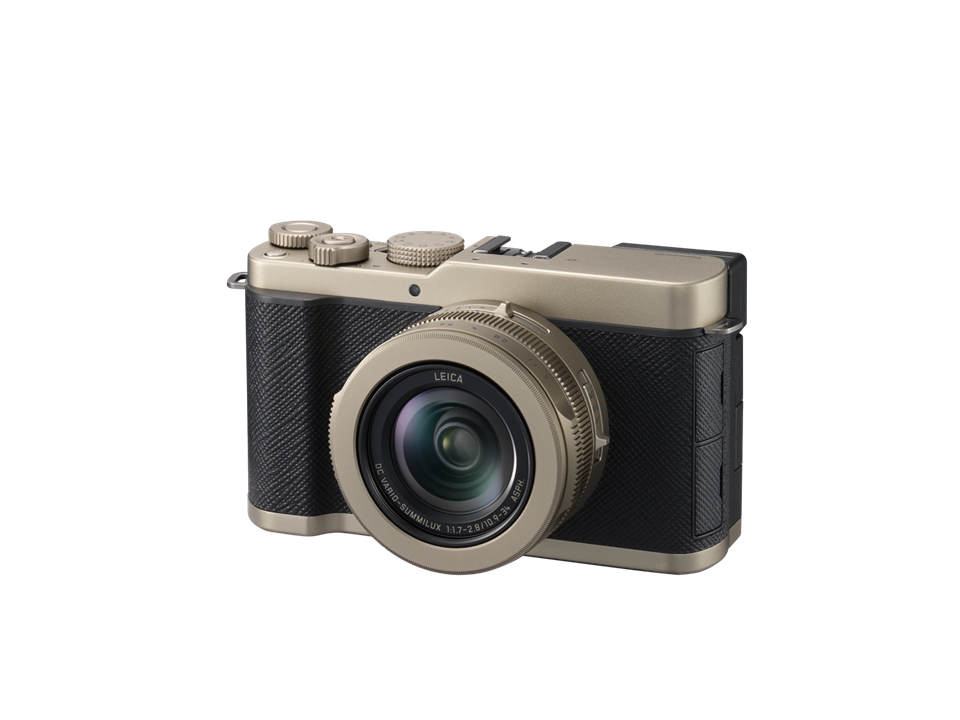
The biggest change in this market is that Panasonic now has a serious answer for buyers who wanted a premium compact with more flexibility than the usual fixed 35mm-equivalent cult camera. The Lumix L10 gets a 20.4MP 4/3-type BSI sensor, a bright 24-75mm equivalent Leica zoom, optical stabilization, an OLED viewfinder, and a free-angle screen in one self-contained body. That is a much more rounded proposition than most premium compacts currently on sale.
That zoom range matters. A lot of compact-camera recommendations become less useful the moment real life happens and you want one frame wide, the next tighter, and the next more portrait-friendly. The L10 gives you that flexibility without falling into the usual travel-zoom trap of pairing a huge range with a weaker imaging foundation.
It is also one of the more interesting new compact launches because Panasonic clearly built it for modern use instead of nostalgia alone. Real Time LUT tools, higher-end video modes, and a stronger hybrid feature set make it feel contemporary. If you want one premium compact that can cover travel, daily carry, family shooting, street work, and respectable creator use, this is the most complete answer on the page.
The main caution is size. This is compact compared with carrying a mirrorless body plus lenses. It is not tiny. If your definition of compact means jacket-pocket, move to the RX100 VII or GR IIIx. If your definition means a serious all-in-one camera that saves you from building a lens kit, the L10 is the standout.
If that sounds close to your use case, the key question is whether you want a premium zoom compact that replaces a small mirrorless kit rather than a true pocket camera.
Best for: photographers who want the most complete premium compact without locking themselves into one focal length.
2. Fujifilm X100VI: best fixed-lens compact camera for enthusiast photographers
The stills-first choice for photographers who want a deliberate 35mm-equivalent shooting experience, not a do-everything pocket zoom.
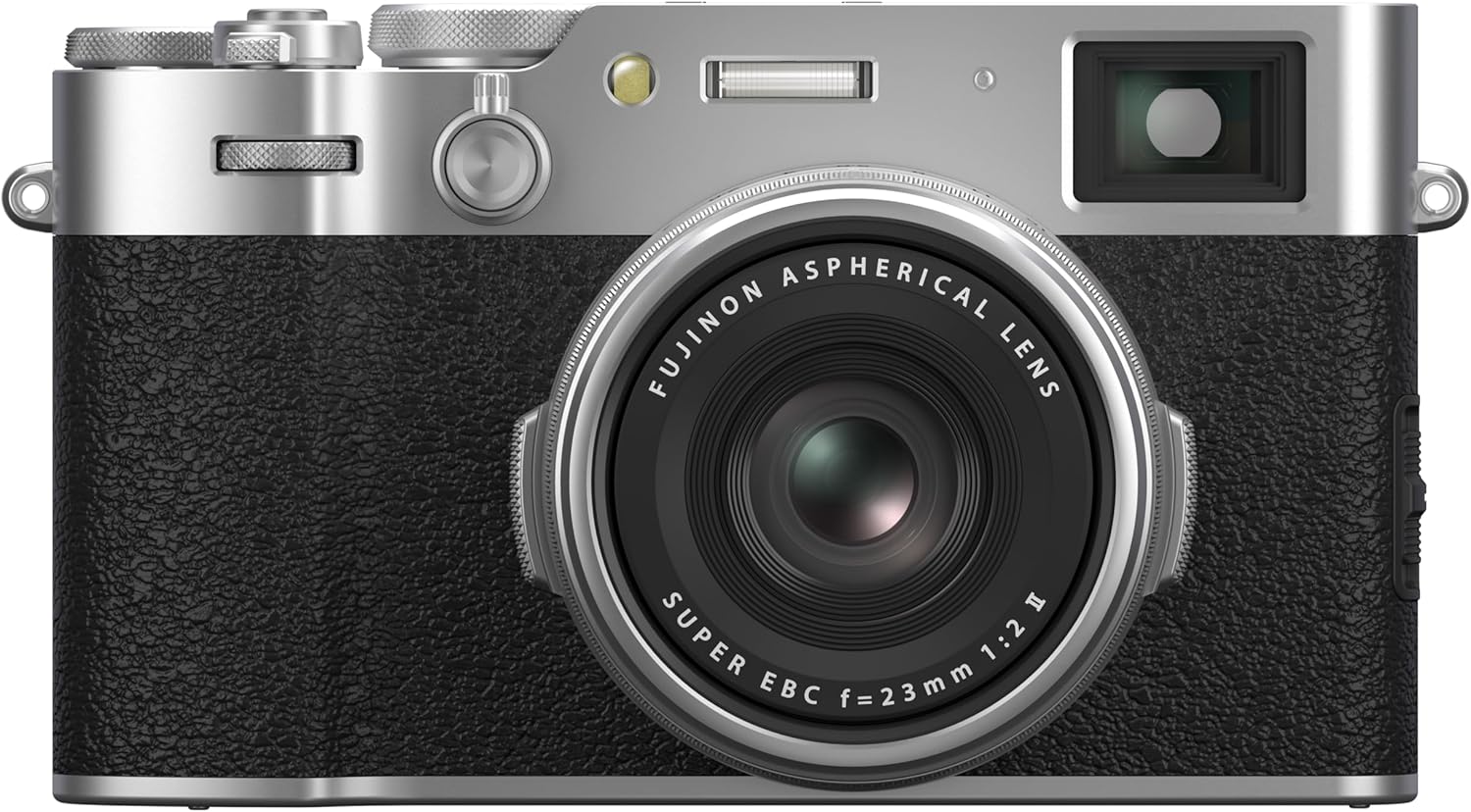
The X100VI still deserves to be in the conversation because it remains one of the most satisfying compact cameras for people who actually want a compact camera to change how they shoot. The 40.2MP APS-C sensor, in-body stabilization, hybrid viewfinder, and Fujifilm’s JPEG and film-simulation workflow make it a uniquely addictive tool.
But this is exactly where lazy recommendation lists go wrong. The X100VI is not the best compact camera for everyone just because it is desirable. It is the best compact camera for people who are excited by a fixed 35mm-equivalent lens and the discipline that comes with it. If that sounds restrictive, it is the wrong pick no matter how beautiful the body is.
I would buy the X100VI if I wanted a stills-first camera for documentary, travel, street, and personal work where the camera itself is part of the creative appeal. I would not buy it if I wanted long-zoom flexibility, creator-first ergonomics, or the best all-round value per dollar. It is more specialized than the internet often admits, but when it fits, it is still one of the best compact cameras you can own.
Best for: enthusiasts who specifically want a fixed-lens photography experience and know they are happy around a 35mm-equivalent field of view.
3. Canon PowerShot V1: best compact camera for creators and hybrid travel
The creator-first compact in this list, with a large 1.4-type sensor, wide zoom, modern autofocus, and video-first handling.
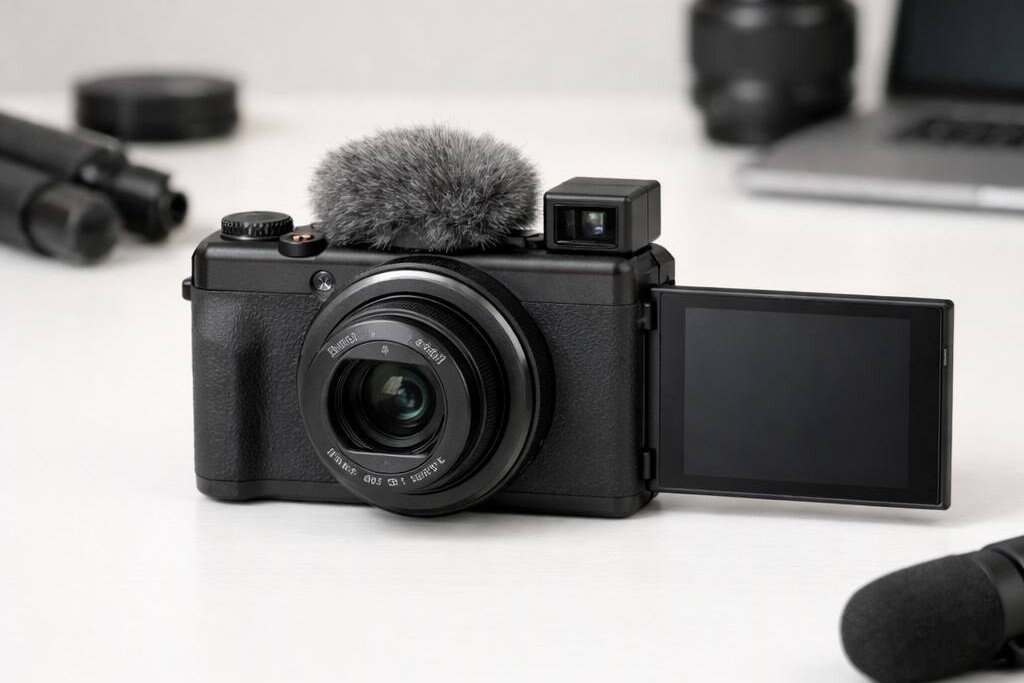
The PowerShot V1 is the compact camera I would point most creators toward now, because it was designed around current shooting behavior instead of being retrofitted into it. Canon gave it a 22.3MP 1.4-type sensor, a useful 16-50mm equivalent zoom, modern autofocus, a built-in cooling fan, and a workflow that makes sense for solo video and mixed stills-plus-video use.
That matters because a lot of famous compact cameras are now living on reputation. The V1 feels like a newer answer. It is wider than the old influencer pocket-camera formula, better aligned to video, and less compromised if you move between talking-to-camera clips, travel footage, quick stills, and social-first vertical shooting.
I still would not buy it as a pure photographer’s compact if your main joy comes from a viewfinder, tactile stills controls, and image-making that feels slower and more deliberate. This is a hybrid compact. That is a compliment, not a criticism. If your camera will live next to a power bank, a small mic, and a fast export workflow, the PowerShot V1 is one of the smartest choices on the market.
The deeper breakdown is in this Canon PowerShot V1 review.
Best for: vloggers, solo creators, and travelers who want a camera that is more serious than a phone without stepping up to interchangeable lenses.
4. Sony RX100 VII: best pocket zoom compact camera
The most practical pocketable zoom compact if you want real reach, an EVF, and Sony autofocus in a genuinely small body.
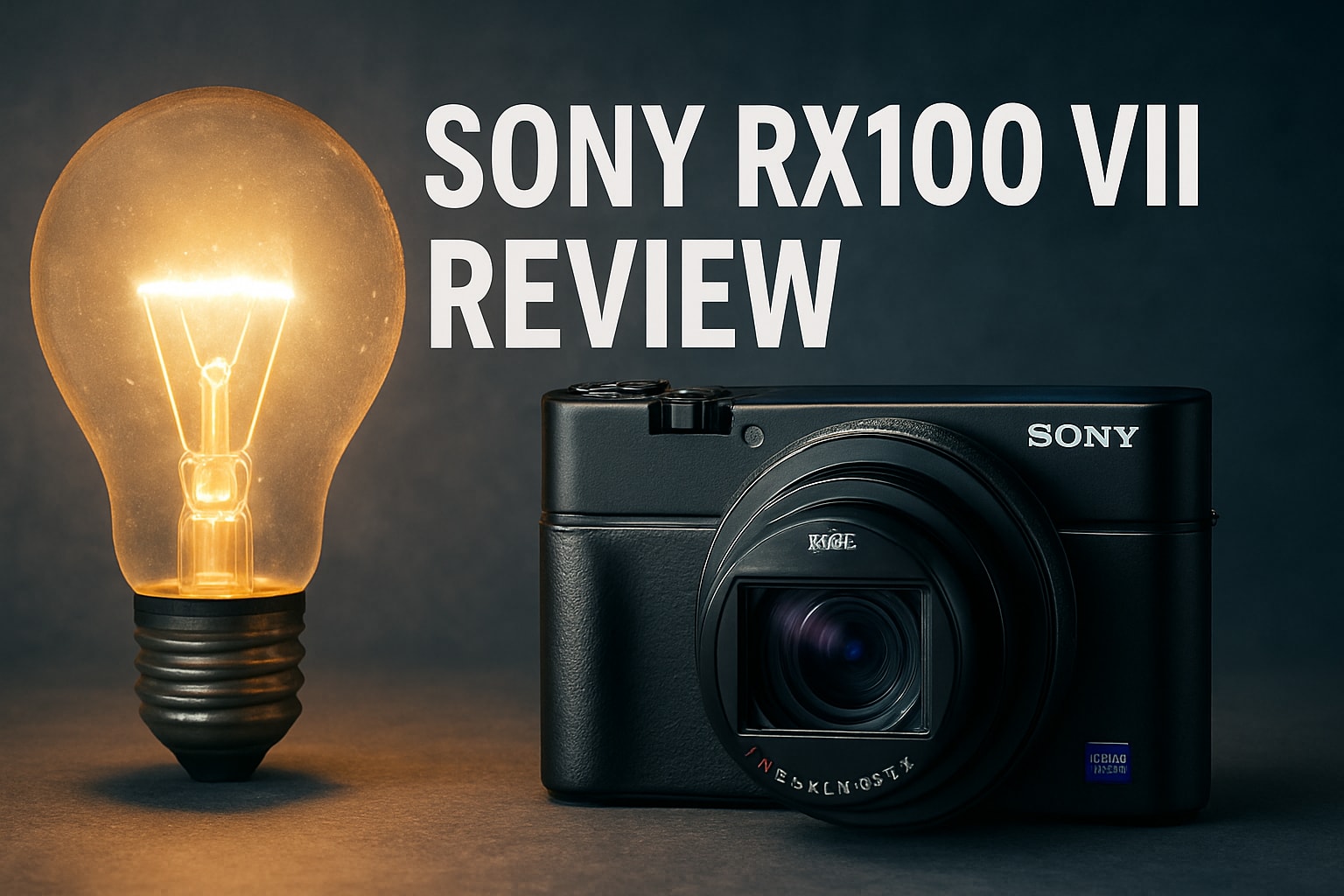
The RX100 VII is old enough now that it needs honest praise instead of automatic praise. What keeps it relevant is not hype. It is the combination of a 24-200mm equivalent zoom, strong autofocus, an EVF, and genuinely pocketable size. Very few cameras still do that job this well.
That makes it a safer recommendation than many fashionable fixed-lens compacts if you want one travel camera that handles family, city walks, casual wildlife, events, and quick video without asking you to change how you shoot. It is still one of the only compact cameras that really earns the word versatile while staying small.
The cost is the usual RX100 tax. It is expensive for a 1-inch compact, and if you are chasing the richest still-photo experience rather than broad utility, other models feel more rewarding. But broad utility is exactly why it remains here. The RX100 VII is still one of the most practical compact cameras you can buy in 2026.
If you are debating whether it is still worth buying now, the RX100 VII review goes deeper.
Best for: travelers who really mean pocketable and still want a useful zoom range.
5. Ricoh GR IIIx: best compact camera for street photography and everyday carry
A small, quiet, APS-C camera for photographers who value responsiveness and discretion more than zoom or video features.

The GR IIIx remains one of the clearest examples of why compact cameras still matter. It gives you APS-C image quality in a body that disappears. It starts quickly, stays unobtrusive, and keeps you in a very photography-first mindset. That combination is rare.
The 40mm-equivalent lens is also exactly why I prefer it over the usual generic “street camera” recommendations for many people. It is slightly tighter and easier to live with than 28mm for everyday human scenes, casual portraits, and ordinary walking-around photography. The camera knows what it is trying to do, and it does not dilute that purpose.
Its limits are obvious and easy to state. There is no zoom. Video is not the point. It is not the camera I would hand to someone who wants a family all-rounder or a travel zoom. It is the camera I would choose if the main goal is to carry a real camera daily and quietly make better photographs.
Best for: street photographers, minimalists, and anyone who wants serious image quality in the least conspicuous body possible.
6. Panasonic Lumix ZS300: best travel zoom compact if you still care about image quality
The reach-first travel pick for buyers who want more image-quality headroom than a tiny-sensor pocket zoom usually provides.

The ZS300 stays on the list for one reason: it is still a smarter travel-zoom idea than the usual small-sensor reach monsters. Panasonic pairs a 1-inch sensor with a 24-360mm equivalent zoom, which means the camera remains meaningfully more useful than a phone without collapsing into mush as quickly as cheaper travel zooms tend to do.
That lens range is also better judged than the headline-chasing options. It is long enough for sightseeing details, stage shots, zoo trips, hiking, and casual wildlife, but not so extreme that everything else gets sacrificed to the zoom number. For many travelers, that is the better balance.
The caveat is that it is not a fresh flagship. Autofocus, processing, and polish feel more legacy-compact than the newer premium models above. That said, its basic value proposition still works, and Panasonic still sells it directly. If you want the most rational zoom-first travel compact without dropping to the more compromised budget lane, the ZS300 is still a good buy.
Best for: travelers who want real reach but care enough about image quality to avoid the cheapest superzoom formula.
7. Panasonic Lumix ZS99: best value compact travel zoom
The practical family and vacation compact for buyers who mainly want a long zoom, USB-C charging, and a lower price.

The ZS99 is a much easier camera to recommend when the buyer is honest about what they want. It gives you a 30x optical zoom, a pocket-sized body, USB-C charging, 4K capture, and a price tier that stays below premium-compacts like the L10, X100VI, and RX100 VII.
That makes it a better fit for plenty of real buyers than the internet likes to admit. Family travel, cruise decks, tourist sightseeing, concerts where interchangeable-lens cameras are impractical, and general “I want more reach than my phone” use are all valid reasons to buy a compact camera. The ZS99 answers those needs cleanly.
I would not oversell it as a magic comeback of the point-and-shoot era. It is still a smaller-sensor travel zoom, and the image-quality tradeoffs remain real. But if you are choosing between a useful travel tool and a premium camera you will not use to its strengths, the ZS99 may be the smarter purchase.
Best for: travelers and families who want convenience and reach more than they want premium image character.
8. OM System Tough TG-7: best rugged compact camera
The compact to buy when water, sand, drops, kids, or rough travel matter more than maximum image quality.


The TG-7 earns its place because rugged compacts are one of the few compact categories where the phone argument still breaks down fast. Around water, sand, kids, snorkeling, wet weather, or rough hiking, most people either do not want to risk their phone or do not want to baby a premium compact.
\n
If water use is the deciding factor, our best snorkeling camera guide compares the TG-7 directly with GoPro, DJI, Kodak and Insta360 options.
The TG-7 solves a different problem from every other camera on this page. Its appeal is not pure image quality. Its appeal is that it is waterproof, durable, easy to pack, and surprisingly fun for close-up and outdoor shooting. That makes it a practical camera, not just a backup toy.
If your use case includes water more than cafés, docks more than city streets, or family abuse more than careful handling, the TG-7 is still one of the simplest compact-camera recommendations available.
Best for: outdoor travel, snorkeling, wet-weather trips, kids, and buyers who need toughness before they need prestige.
Other compact cameras I considered
Sony ZV-1 II: still a valid lightweight creator compact, especially if size matters more than all-round stills usability. I left it out of the main list because it now feels easier to outgrow than the PowerShot V1.
Canon G7 X Mark III: Canon gave this line a 30th-anniversary limited edition in spring 2026. But as a fresh recommendation, I would rather buy the G7 X Mark III only if I specifically wanted that older pocket-vlogger formula, because the V1 is the more forward-looking compact today.
Sony RX1R III: one of the most interesting new luxury compacts on the market, and a real reminder that the premium fixed-lens category is not dead. I left it out of the main recommendations because it is too expensive and too specialized to be the useful answer for most readers searching this topic.
Which compact camera should you actually buy?
| If this sounds like you | Buy this |
|---|---|
| I want the most complete premium compact, not the most fashionable one | Panasonic Lumix L10 |
| I want a fixed-lens enthusiast camera and I like the 35mm-equivalent way of shooting | Fujifilm X100VI |
| I mainly shoot hybrid travel content, vlogs, and social video | Canon PowerShot V1 |
| I want a true pocket camera that still covers most everyday travel needs | Sony RX100 VII |
| I want the best carry-everywhere compact for street photography | Ricoh GR IIIx |
| I want a travel zoom but do not want to sacrifice too much image quality | Panasonic Lumix ZS300 |
| I mostly want reach, convenience, and a lower entry price | Panasonic Lumix ZS99 |
| I need a compact camera for water, rough travel, or kids | OM System Tough TG-7 |
Final verdict
The best digital compact cameras in 2026 are better separated by purpose than ever before. That is good news if you shop honestly. The buyer who wants a premium all-round compact should not be pushed into a fixed-lens niche camera by hype. The buyer who wants a creator tool should not be pushed into an aging influencer favorite just because it used to dominate the category. And the buyer who mainly needs zoom reach should not be shamed into pretending a stylish fixed-lens compact solves the same job.
If I had to narrow the whole market to the four cameras that make the clearest modern case for themselves, I would center it on the Panasonic Lumix L10, Fujifilm X100VI, Canon PowerShot V1, and Sony RX100 VII. From there, the Ricoh GR IIIx, Panasonic ZS300, Panasonic ZS99, and OM System Tough TG-7 each win when their lane is your lane. That is the real way to buy this category now.