
View full specs
The Sony A7 IV review question changed once the A7 V arrived. This is no longer the newest all-rounder in Sony’s full-frame lineup, but that does not automatically make it obsolete. In 2026, the smarter question is whether the A7 IV has become the better-value hybrid camera for photographers who want strong stills, dependable autofocus, and serious video without paying launch-price money for the newest body.
I would not buy the A7 IV today for spec-sheet bragging rights. I would buy it because it still feels like a very practical working camera: 33MP files that are detailed but manageable, excellent subject tracking, mature E-mount lens support, and video features that remain more than enough for many hybrid jobs. If you want the small-body version of this idea, our Sony a7C II review is the natural comparison. If you want Sony’s newer general-purpose body, the A7 V is the model that now frames this buying decision.
Contents
- Sony A7 IV review verdict in 2026
- Who should buy the Sony A7 IV?
- Design, handling, and the things you notice after a full day
- Image quality: why 33MP still feels right
- Autofocus and subject tracking
- Video quality and hybrid workflow
- Battery, cards, lenses, and ownership costs
- Sony A7 IV vs A7 V, A7C II, and Canon/Nikon rivals
- Pros and cons
- Final verdict: should you buy the Sony A7 IV now?
- Related comparisons
- Frequently asked questions
- Key takeaways
Sony A7 IV review verdict in 2026
The short version: the Sony A7 IV is still worth buying if the price is meaningfully below the A7 V and you do not need 30 fps bursts, 4K 120p, or the newest stacked-sensor readout advantages. It remains a strong camera for portraits, weddings, travel, documentary work, and hybrid creators who shoot both stills and video for clients.
Where the A7 IV still makes sense is balance. The 33MP full-frame sensor gives noticeably more room to crop than a 24MP body, but it does not punish your storage and editing workflow the way a 61MP high-resolution camera can. The files are flexible, the autofocus is trustworthy, and the body has enough direct controls to feel serious without becoming oversized.
The catch is timing. The Sony A7 V has moved the line forward with faster shooting and stronger video options, so the A7 IV should now be judged as a value buy, not as the default newest recommendation. If the used, renewed, or discounted new price is attractive, the A7 IV remains one of the safest full-frame hybrid purchases in the Sony system.
Who should buy the Sony A7 IV?
The Sony A7 IV is best for photographers who need one camera to cover a lot of ground. It is comfortable shooting portraits in the morning, travel stills in the afternoon, and a short client video in the evening. That is the real appeal of the A7 IV: it rarely feels like the wrong camera unless your work is very specialized.
For a wedding or event photographer, 33MP is a useful sweet spot. You can crop, straighten, and deliver large files without filling cards at a frightening pace. For portrait photographers, the eye autofocus and E-mount lens ecosystem matter more than the headline resolution. For travel photographers, the body is not tiny, but it is still manageable with a compact prime or a lighter standard zoom.
I would avoid it if your work is mostly fast sports, serious wildlife bursts, or high-end video where 4K 120p and faster readout matter. The A7 IV can do action, but it is not an A9-class or A1-class body. It can do professional video, but it is not an FX camera. It is a hybrid camera in the best and most literal sense.
Design, handling, and the things you notice after a full day
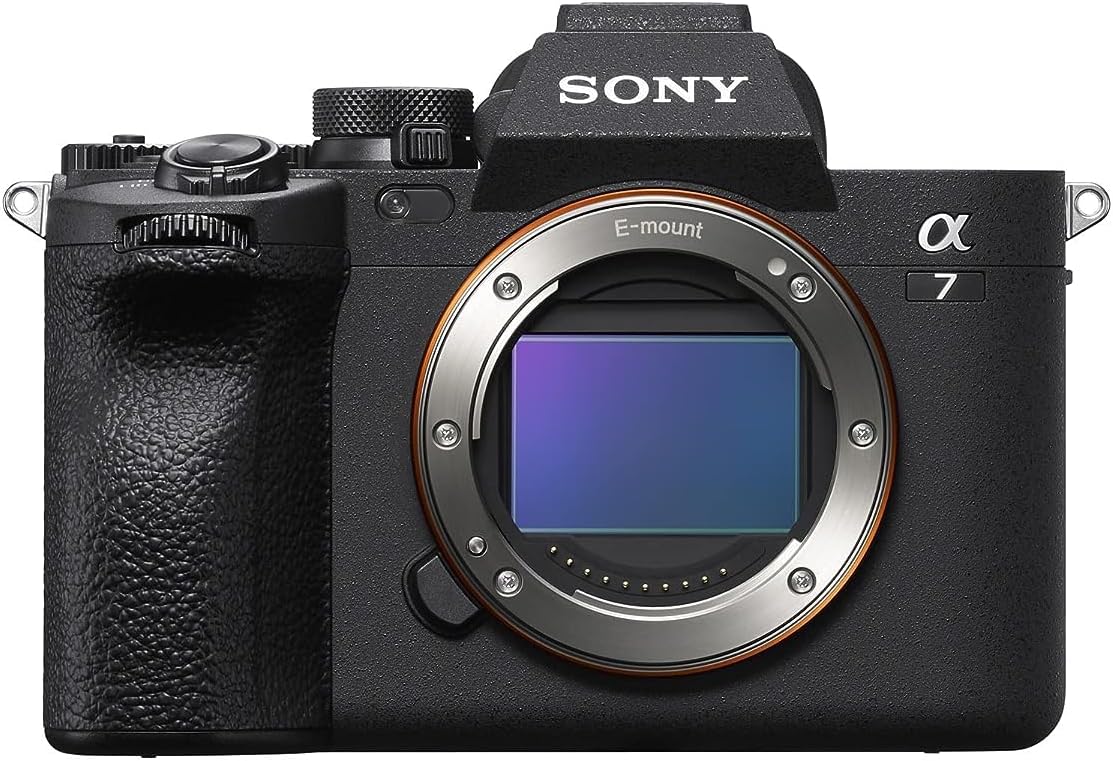
The A7 IV body is one of the reasons it has aged well. The grip is deeper and more secure than older Alpha bodies, the buttons are easier to work by feel, and the dedicated stills/video/S&Q switch is genuinely useful if you move between formats during a shoot. This is the kind of detail that sounds minor until you are working quickly.
The electronic viewfinder is not spectacular by 2026 standards, but it is good enough to judge focus and exposure with confidence. The fully articulating rear screen is more divisive. Video shooters and vertical-content creators will appreciate it; some stills photographers prefer a simple tilt screen for waist-level work. Personally, I would rather have the articulating screen on a hybrid camera because it expands what the body can do.
Sony’s newer menu system is also a major usability improvement compared with older Alpha cameras. It is still deep, and beginners can get lost, but the organization is far less hostile than the old Sony menus. Set up My Menu, assign the custom buttons, and the camera becomes much faster to operate.
Image quality: why 33MP still feels right
The A7 IV uses a 33MP full-frame Exmor R sensor, and that resolution is still one of its best decisions. It gives enough detail for commercial portraits, travel prints, and moderate cropping, but the files remain practical for normal laptops, SD cards, and backup drives.
Dynamic range is strong, especially at base ISO. You can lift shadows in a backlit portrait or recover a bright sky without the file immediately falling apart. Skin tones are also better than the older reputation Sony carried for years. I still prefer to shoot RAW, but the out-of-camera color is much easier to trust than it was on older Sony bodies.
Low-light performance is solid. ISO 3200 and 6400 are usable for event work, and the noise pattern is not ugly if you expose carefully. The A7 IV is not a dedicated low-light specialist, but it gives you the full-frame look and enough resolution to deliver clean files in most real-world situations.
Autofocus and subject tracking
Autofocus is one of the main reasons the A7 IV remains relevant. Human and animal eye AF are dependable, tracking is sticky, and the camera lets you concentrate more on timing and expression than on fighting the focus system. It is especially strong for portraits, pets, family work, documentary photography, and travel.
Bird and animal tracking are useful, though I would not pretend the A7 IV is the best Sony wildlife body in 2026. If birds in flight are your main subject, newer and faster cameras are a better fit. But for mixed work, the A7 IV’s autofocus is still a major strength, and it is a clear upgrade over the A7 III generation.
This is also where the Alpha naming matters. Whether someone searches for a Sony A7 IV review, Sony Alpha 7 IV review, or Sony α7 IV impressions, the practical question is the same: can the camera still keep up? For most people, yes.
Video quality and hybrid workflow
The A7 IV records 4K up to 30p from the full width of the sensor with excellent detail, and 4K 60p in Super 35/APS-C crop. Internal 10-bit 4:2:2 recording, S-Cinetone, S-Log3, and reliable video autofocus make it much more serious than older enthusiast mirrorless bodies.
The 4K 60p crop is the main limitation. If you shoot interiors, handheld wide-angle work, or gimbal video where every millimeter matters, that crop can be annoying. For interviews, talking-head clips, product video, and event coverage, it is often less of a problem. In some cases, the extra reach is useful.
Compared with the A7 V, the A7 IV is no longer the most future-proof hybrid choice. But if your delivery is YouTube, social, client reels, wedding films, or small commercial projects, it still has enough video depth to produce excellent results. It is a camera that can make money, not just a camera that looks good in a spec comparison.
Battery, cards, lenses, and ownership costs
The A7 IV uses Sony’s NP-FZ100 battery, which is a good thing. Battery life is strong for a mirrorless camera, and spares are easy to find. The dual card slots are practical too: one CFexpress Type A/SD slot and one SD UHS-II slot. Most photographers can run dual SD cards, while heavier video users may want CFexpress Type A for specific codecs and smoother buffer clearing.
The bigger cost is lenses. The A7 IV deserves good glass, but it does not demand only the most expensive G Master lenses. A Tamron 28-75mm f/2.8 G2, Sony 35mm f/1.8, Sigma 85mm f/1.4 DG DN, or Sony 20mm f/1.8 G can all make a lot of sense depending on your work. This is where Sony E-mount is a major advantage: there are mature first-party and third-party options at nearly every budget level.
Sony A7 IV vs A7 V, A7C II, and Canon/Nikon rivals
The A7 V is the obvious newer alternative. It is the better camera if you need faster shooting, stronger readout, and more advanced video. But it also costs more, and not everyone needs those upgrades. The A7 IV becomes compelling when the price gap is large enough to fund a lens, spare battery, or better storage.
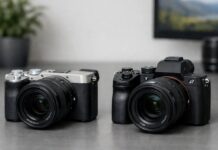
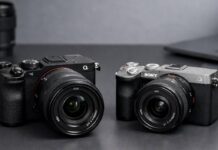
The A7C II is the better choice if you want full-frame image quality in a smaller travel body. You lose some handling comfort and card-slot confidence, but the portability gain is real. For many everyday photographers, that matters more than the A7 IV’s larger grip and more traditional control layout.
Against Canon and Nikon, the A7 IV still competes well because of Sony’s lens ecosystem and autofocus maturity. The Canon EOS R6 Mark II and Nikon Z6 III are excellent alternatives, especially if you prefer their handling or color. But the A7 IV remains a very safe buy if you are already leaning into Sony glass.
Pros and cons
- Pros: balanced 33MP files, excellent autofocus, strong 10-bit video, mature E-mount lens ecosystem, good battery life, comfortable grip, useful hybrid controls.
- Cons: 4K 60p crop, not ideal for high-speed sports, CFexpress Type A cards are expensive, no longer the newest A7 body, deep menus still require setup time.
Final verdict: should you buy the Sony A7 IV now?
Yes, if the price is right. The Sony A7 IV is no longer the obvious newest all-rounder, but it is still a highly capable full-frame hybrid camera. Its best role in 2026 is as a discounted or renewed body for photographers who want professional flexibility without paying for every new A7 V upgrade.
If you mainly shoot portraits, events, travel, family work, documentary stills, or mixed photo/video jobs, the A7 IV still feels dependable and modern. If you shoot fast action or want the most future-proof Sony hybrid body, look at the A7 V instead. The A7 IV wins when value, lens budget, and real-world balance matter more than owning the newest badge.
Related comparisons
Frequently asked questions
Is the Sony A7 IV still worth buying in 2026?
Yes, if it is priced well below the Sony A7 V. It remains excellent for portraits, events, travel, and hybrid photo/video work, but it should now be treated as a value buy rather than the newest Sony all-rounder.
Is the Sony A7 IV better than the Sony A7C II?
The A7 IV is better if you want a larger grip, stronger handling, and a more traditional working body. The A7C II is better if portability is your priority. Both can produce excellent full-frame files.
Does the Sony A7 IV shoot 4K 60p?
Yes, but 4K 60p uses a Super 35/APS-C crop. Full-width 4K is available up to 30p, which is usually the cleaner mode for wide-angle work.
What is the biggest weakness of the Sony A7 IV?
The biggest weakness is that newer bodies have moved ahead in speed and video. The A7 IV is still balanced and reliable, but it is not the best choice for high-speed sports or the most demanding video specs.
Key takeaways
- The Sony A7 IV is now a value-focused full-frame hybrid, not the newest Sony default.
- The 33MP sensor remains a practical sweet spot for stills, cropping, and manageable files.
- Autofocus and E-mount lens support are still major reasons to buy it.
- Choose the A7 V instead if you need faster bursts, newer video tools, or maximum future-proofing.
Photographers and hybrid creators who want one balanced full-frame body at a better 2026 price.
You need the newest Sony speed, 4K 120p, or a dedicated sports/video body.
Medium; powerful but menu setup matters.
Excellent E-mount lens ecosystem; A7 V is the newer body step.
4K 60p uses a Super 35/APS-C crop.
Yes, when priced clearly below the A7 V.
Last update on 2026-06-25 / Affiliate links / Images from Amazon Product Advertising API