
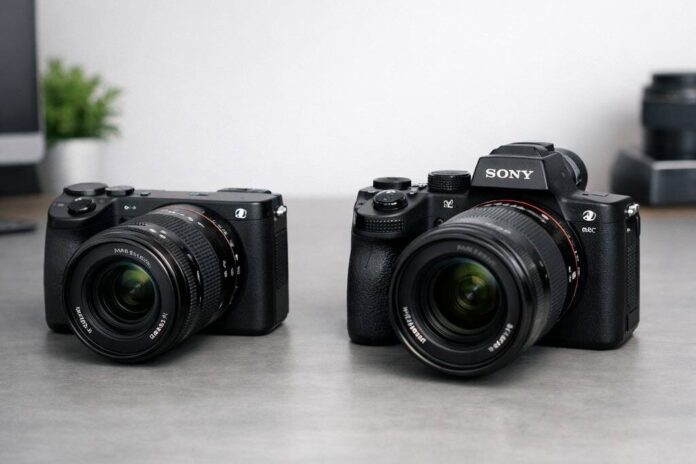
Choosing between the Sony a6700 vs a7 III is not as simple as APS-C versus full frame. I’ve used both types of bodies in real shooting situations, and the better pick really depends on how you shoot, what you shoot, and which lenses you want to build around. If you frame it as Sony a7 III vs a6700, the decision is unchanged: the a7 III keeps the full-frame low-light and depth-of-field advantage, while the a6700 gives you newer autofocus, stronger video, and a smaller lens path.
| Decision point | Sony a6700 | Sony a7 III |
|---|---|---|
| Sensor | 26MP APS-C BSI CMOS | 24MP full-frame BSI CMOS |
| Best strength | Newer autofocus, better video tools, smaller lens kits | Full-frame depth, low-light flexibility, dual-card body |
| Video | 4K 60p oversampled, 4K 120p with crop | 4K 24p full width, 4K 30p with crop |
| Cards | Single SD UHS-II slot | Dual SD slots, one UHS-II |
| Buy it if | You want a compact hybrid body for action, travel, and creator work | You want affordable full-frame image quality and stronger stills ergonomics |
What really separates the Sony a6700 and a7 III
APS-C vs full frame in everyday shooting
At first glance, you might think the biggest difference in the Sony a6700 vs a7 III debate is just sensor size. The a6700 uses an APS-C sensor, which is smaller than the full frame sensor found in the a7 III. In practice, this choice shapes not only image quality but also how you approach photography and which lenses make sense for you.
That’s why the decision often comes down to priorities rather than a simple winner: portability, reach, and smaller lenses favor the APS-C route, while full-frame benefits can matter more for low-light work and subject separation. If you want a closer look at how the crop-sensor body performs in practice, this Sony a6700 review adds helpful context.
The a7 III’s full frame sensor gives you a wider field of view for any given lens, and generally, better control over depth of field. If you love shooting portraits with creamy backgrounds or want the most flexibility in low light, full frame still has advantages. But with the a6700, you get a 1.5x crop factor, making telephoto lenses longer and bringing distant subjects closer. This is incredibly useful for sports, wildlife, and even travel, where a smaller, lighter setup matters.
Another often-overlooked aspect is the lens ecosystem. APS-C lenses can be smaller and more affordable, while full frame glass is typically bigger, heavier, and more expensive. If you plan to build a lightweight kit or travel a lot, this can be a deciding factor. That said, the a6700 can also use Sony’s full frame E-mount lenses, giving you cross-system flexibility if you upgrade later.
How age and generation affect the user experience
The a7 III was released in 2018, while the a6700 arrived much later, benefitting from several years of technological progress. This gap is more than just marketing. The a6700 brings a newer processor, a more advanced autofocus system, and a screen and menu system that feel much more modern in use. If you’re used to recent Sony bodies, the a7 III’s interface and controls might feel dated by comparison.
Features like real-time autofocus tracking, improved subject recognition, and a more intuitive touch interface are built into the a6700 from the ground up. In my experience, the a6700 feels faster and more responsive in day-to-day use, especially for fast-moving subjects or hybrid shooting (photo and video). The a7 III still holds up well for pure photography, but if you care about the newest user experience and computational features, the a6700 offers a noticeable step up.
Sony a6700 vs a7 III image quality and low-light performance
Dynamic range, detail, and high ISO results
Image quality is often the heart of any Sony camera comparison. In controlled situations, both the a6700 and a7 III are capable of producing excellent files, but there are nuanced differences shaped by sensor size and technology.
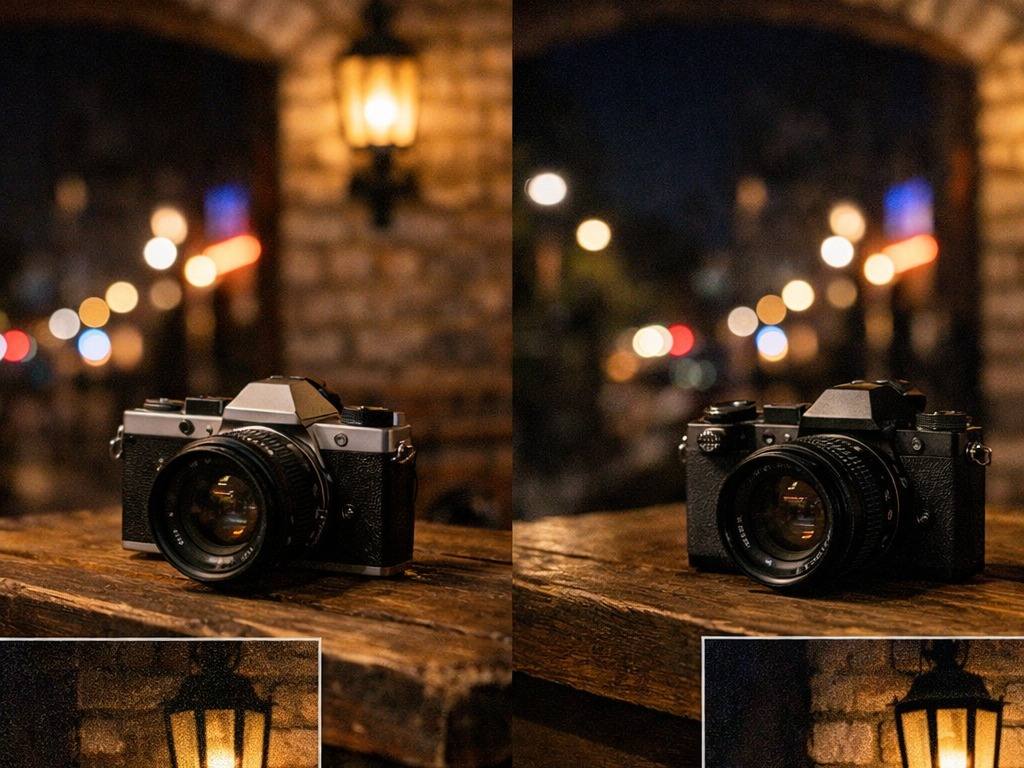
The a7 III’s full frame sensor still edges out the a6700 in pure dynamic range and high ISO noise performance. If you’re shooting in challenging lighting, such as events or indoor locations, you will see slightly cleaner files and more recoverable shadow detail from the a7 III. This advantage is most noticeable above ISO 3200, where the larger sensor gathers more light and preserves more subtle tones.
The a6700, however, is no slouch. Its newer 26-megapixel sensor delivers outstanding detail and color, and at lower to moderate ISO settings, the gap narrows considerably. For landscape work, travel, or daylight shooting, the a6700 holds its own and even surpasses the a7 III in resolving power thanks to its higher pixel count. The files are crisp, and noise is well controlled up to ISO 1600-3200.
Where the a6700 shines is in color science and JPEG engine improvements. Skin tones, especially in difficult lighting, look more natural straight out of camera. For photographers who shoot both RAW and JPEG, or those who want less time post-processing, the a6700’s files are easier to work with. Still, if shooting in pitch dark venues or you rely on pushing your files in post, the a7 III’s larger sensor gives you more breathing room.
Autofocus, speed, and real world responsiveness
Subject tracking for people, pets, and action
Autofocus performance is one of the areas where the generational leap between these two cameras is most obvious. The Sony a6700 uses Sony’s latest AI-driven autofocus system, borrowed from flagship bodies like the a7R V and a1. Real-time tracking, eye AF for humans, animals, and even birds, plus improved subject recognition, are all standard.
During action-heavy shoots, such as sports or fast-moving events, the a6700 locks onto subjects quickly and rarely lets go. I’ve found its hit rate for sharp eyes in unpredictable motion is noticeably higher than the a7 III, especially with erratic or off-center subjects. The a7 III, while still good, sometimes loses track in complex scenes or struggles more with pets and birds.
Shooting speed is also worth considering. The a6700 offers up to 11 frames per second with full autofocus, while the a7 III tops out at 10. In practice, both are fast enough for most users, but the a6700’s buffer and AF tracking keep it feeling more fluid in burst shooting. The newer processor in the a6700 means less lag when reviewing images or switching modes, which is a small but real quality-of-life improvement in the field.
Video features and hybrid shooting value
4K quality, frame rates, and creator-friendly tools
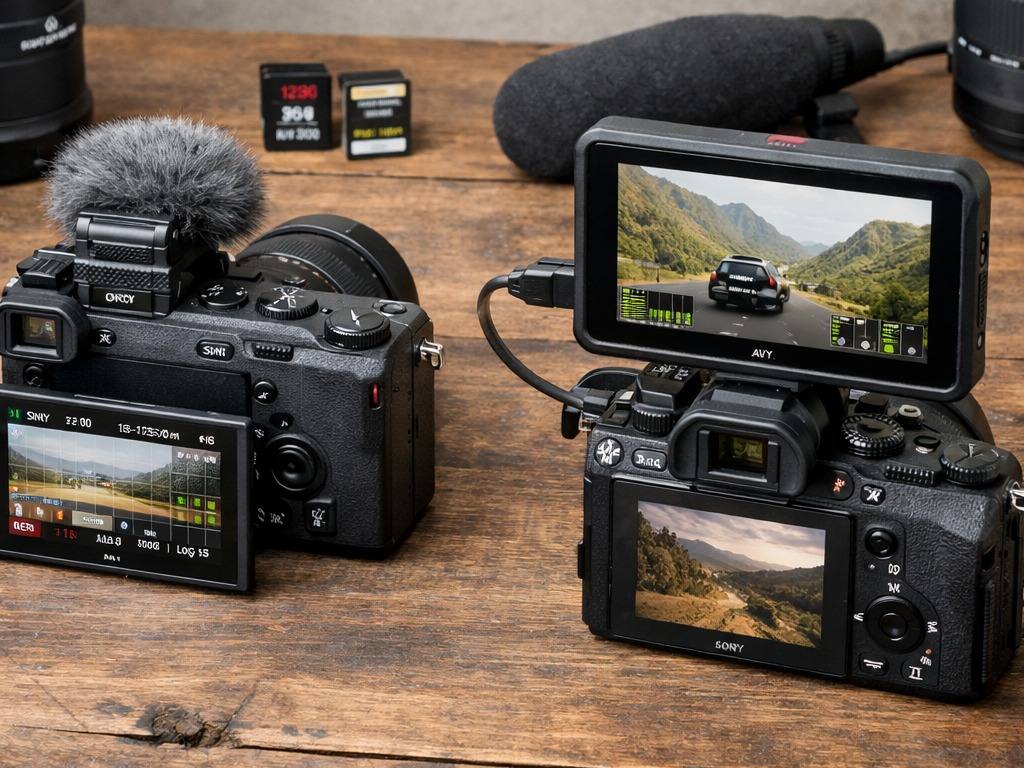
Video is where the Sony a6700 starts to pull away as the better choice for modern creators. The a6700 shoots oversampled 4K from its full sensor width up to 30p, and can record 4K60p with a small crop. It also supports advanced video profiles like S-Cinetone and 10-bit 4:2:2 internal recording, which gives you far more flexibility in grading and editing footage. For content creators, vloggers, or hybrid shooters, these features are very hard to ignore.
The a7 III, on the other hand, is limited to 8-bit 4K up to 30p, and lacks many of the latest video assist tools. It produces solid, clean video, but if you need high frame rates, richer color depth, or easy-to-edit files for post-production, the a6700 is simply more capable. The a6700 also provides better autofocus tracking in video, stickier eye AF, and less tendency to hunt or lose focus during movement.
Other details, like a fully articulating LCD, digital audio interface, and a more advanced menu for video settings, make the a6700 a true hybrid body. While the a7 III can serve as a backup for video, it feels dated for demanding creators. If your workflow blends stills and video, the a6700’s features translate to fewer compromises and a smoother creative process.
Size, handling, battery life, and travel use
Camera dimensions and ergonomics are often overlooked but matter just as much as sensor specs. The Sony a6700 is a clear winner if you’re looking for a compact, travel-friendly tool. Its APS-C sensor allows for a much slimmer body and smaller lenses, making it a top choice for anyone who wants to minimize weight without giving up versatility.
When I first grabbed the a6700, I was surprised by how easy it was to slip into a small bag, even with a zoom attached. For street shooters, travelers, or anyone who values portability, this camera makes it simple to always have your gear at hand. The grip is improved compared to older Sony APS-C models, and the custom buttons fall naturally under your fingers. Still, the controls are tighter and a bit less substantial than those on the a7 III, which might matter if you have large hands or shoot extensively with gloves.
By contrast, the Sony a7 III is a classic full-frame body. It’s not oversized compared to some DSLRs, but it’s noticeably chunkier than the a6700. You get a deeper grip, bigger dials, and a more substantial feel. This is reassuring with heavy lenses, especially for long shoots or paid gigs where handling fatigue can set in. I’ve used the a7 III for full wedding days, and the comfort over hours is a subtle but real advantage.
Battery life is another area where the a7 III shines. The full-frame body uses Sony’s NP-FZ100 battery, which is legendary for mirrorless standards. I routinely get 800-1000 shots per charge, even with heavy autofocus use and lots of chimping. The a6700 uses the smaller NP-FZ100 as well, improving on previous APS-C models, but the more compact body and smaller battery compartment mean you’ll likely see 500-700 shots per charge depending on your shooting style.
For travel camera Sony options, the a6700 is easier to carry, but if you need all-day shooting without recharging, the a7 III has a practical edge. Both cameras charge via USB-C, making it easy to top up with a power bank on the go. For hiking, urban exploration, or documentary work, the lighter weight and smaller lenses of the a6700 system are a genuine relief. If you shoot serious events or work in the field for long stretches, the robust feel and battery stamina of the a7 III may win out.
Lens choices and total system cost
Lens selection is where your decision between the Sony a6700 vs a7 III really comes into focus. Both cameras use Sony’s E-mount, but the a7 III is designed for full-frame FE lenses, while the a6700 is optimized for smaller, lighter APS-C glass. This not only affects your kit’s weight and balance, but also your long-term budget and creative options.
Sony’s full-frame lens lineup is now extensive, with top-tier G Master primes and zooms, excellent third-party options from Sigma and Tamron, and even a few budget choices. However, full-frame glass is usually bigger, heavier, and more expensive. For example, the Sony FE 24-70mm f/2.8 GM is a wonderful lens, but it’s both costly and substantial. Carrying three or four full-frame zooms plus the a7 III body takes up significant bag space and can weigh you down quickly.
On the APS-C side, Sony has finally invested in better native lenses over the past few years. The 16-55mm f/2.8 G is a standout, offering pro-level sharpness in a relatively small package. There are also lightweight primes like the 35mm f/1.8 and a surprisingly good 10-20mm power zoom, which is great for vlogging. Sigma’s DC DN primes in the 16mm, 30mm, and 56mm range are sharp, compact, and affordable, making them perfect for building a “light but powerful” kit.
One big advantage with the a6700 is that APS-C lenses generally cost less. You don’t have to spend as much to get a fast prime or a high-quality standard zoom. This matters for new photographers, students, and anyone who needs a versatile setup without breaking the bank. On the other hand, full-frame optics deliver that signature depth of field and image look that many pros and enthusiasts crave. If you plan to invest in top glass, know that your lens budget may exceed your camera body cost quickly with the a7 III.
Best lens paths for beginners and enthusiasts
- Sony a6700 lenses: Start with the 16-55mm f/2.8 G for everyday shooting, add the 11mm f/1.8 for vlogging or landscapes, and round it out with a Sigma 56mm f/1.4 for portraits. All of these are compact, sharp, and travel-ready.
- Sony a7 III lenses: The 28-70mm kit lens is serviceable but consider upgrading to the Tamron 28-75mm f/2.8 or Sony’s own 24-105mm f/4 G for better performance. Prime shooters will love the 85mm f/1.8 (a bargain for full frame) or the Zeiss 55mm f/1.8.
Think about your total system cost, not just the body. A full-frame kit with a few lenses can easily cost double or triple that of an APS-C setup. For many photographers, especially those shooting for fun or while traveling, the price-to-performance ratio of APS-C glass is tough to beat.
Who should buy the a6700 and who should buy the a7 III
So, which Sony camera to buy? It really comes down to your shooting style, priorities, and long-term plans.
The Sony a6700 is a fantastic choice if you:
- Travel often and need a lightweight, compact kit
- Shoot hybrid photo and video, especially for social media or YouTube
- Want the latest autofocus and subject tracking tech
- Are building a system on a limited budget
- Prefer discreet gear for street, documentary, or family photography
The Sony a7 III remains the best Sony camera for photography if you:
- Want the full-frame look with shallow depth of field and low-light strength
- Shoot events, weddings, or paid gigs where reliability and battery life matter
- Already own or plan to invest in professional-grade FE lenses
- Value robust build and more substantial ergonomics for long sessions
- Care about maximum dynamic range and image quality for large prints
Both cameras are incredibly capable. In my experience, the a6700 is ideal for those who value modern autofocus, compact size, and video features. The a7 III still delivers premium image quality and is a workhorse for demanding photographers. Your lens plans and shooting scenarios should guide your final choice.
Frequently asked questions
Is the Sony a6700 better than the a7 III for beginners?
For many beginners, the a6700 is more approachable. It’s lighter, more compact, and has an intuitive touchscreen interface. The autofocus is newer and very forgiving, which helps when learning. Plus, APS-C lenses are generally less expensive. However, if you dream of full-frame photography and can handle the extra size and cost, the a7 III is still a solid long-term investment.
Does the Sony a7 III still make sense in 2026?
Absolutely. Even with newer models out, the a7 III offers excellent image quality, reliable autofocus, and long battery life. It remains a favorite among pros and serious enthusiasts. As prices drop on the used market, it’s an even better value for those who want a full-frame system without paying for the absolute latest features.
Which camera is better for video, the Sony a6700 or a7 III?
The a6700 wins for video in most respects. It has newer codecs, higher frame rates, better subject tracking, and more video-centric features like a fully articulating screen and advanced stabilization. If video is a top priority, or you want a hybrid camera for both stills and video, the a6700 is the smarter pick.
Is full frame worth it over APS-C for most photographers?
For most people, APS-C is more than enough. The gap in image quality has narrowed, and APS-C offers real advantages in size, weight, and cost. Full frame still offers a unique look, better depth of field control, and slightly improved low-light performance, but it comes with higher costs and bulkier gear. Think about your actual needs, not just the specs.
Key takeaways
- The a6700 offers newer autofocus, strong video tools, and a compact, travel-friendly body.
- The a7 III still delivers excellent full-frame image quality, low-light performance, and outstanding battery life.
- Lens budget matters as much as the camera body, especially when comparing APS-C and full-frame systems.
- The best choice depends on whether you prioritize modern hybrid features or the look and flexibility of full frame.