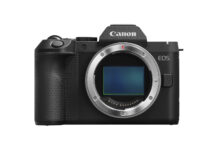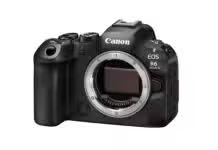

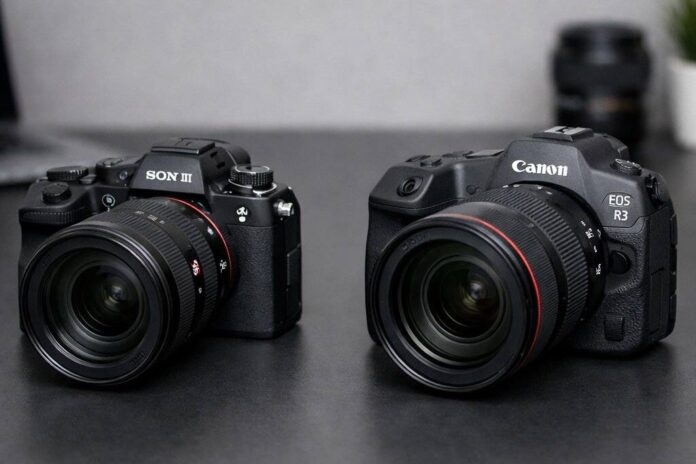
The Sony a9 III vs Canon EOS R3 decision is really a choice between two different ideas of a professional action camera. Sony gives you the first full-frame global shutter body, 120 fps bursts, and a compact modular design. Canon gives you an integrated-grip workhorse with superb handling, long battery stamina, Eye Control AF, and a deeply familiar pro workflow.
If I were shooting indoor sports under ugly LED lights, I would reach for the Sony a9 III. If I were carrying a big telephoto all day on a sideline or in the field, I would still be very tempted by the Canon EOS R3.
Quick Verdict
Choose the Sony a9 III if global shutter matters to your work. It removes rolling-shutter distortion, handles difficult flicker better, syncs flash at extreme shutter speeds with compatible Sony flashes, and shoots blackout-free bursts up to 120 fps. That is not just a spec-sheet trick. For certain sports, commercial action, and fast artificial-light work, it changes what you can attempt.
Choose the Canon EOS R3 if you want the more comfortable long-shooting body. The R3 is bigger, but that is part of the point. Its integrated grip, LP-E19 battery, excellent viewfinder, Canon color, and RF/EF lens workflow make it feel like a proper professional field camera.
| Feature | Sony a9 III | Canon EOS R3 |
|---|---|---|
| Sensor | 24.6MP full-frame global shutter CMOS | 24.1MP full-frame back-illuminated stacked CMOS |
| Top burst | Up to 120 fps with AF/AE | Up to 30 fps electronic, 12 fps mechanical |
| Viewfinder | 9.44M-dot OLED EVF | 5.76M-dot blackout-free OLED EVF |
| Cards | Dual CFexpress Type A / SD slots | 1 CFexpress Type B + 1 UHS-II SD slot |
| Body style | Compact body, optional vertical grip | Integrated vertical grip |
| Best reason to buy | Global shutter speed and flash freedom | Handling, battery life, and field comfort |
Sensor and Shutter Differences
The Sony a9 III is the more technically radical camera. Sony lists it as a 24.6MP full-frame global-shutter camera, and that global shutter is the feature that defines the body. Sony’s official Alpha Universe camera listing positions the a9 III around blackout-free 120 fps shooting, 4K 120p video, and its global-shutter full-frame sensor.
The Canon EOS R3 uses a 24.1MP full-frame back-illuminated stacked CMOS sensor. Canon’s own specs describe up to 30 fps electronic shooting with AF/AE tracking, 12 fps mechanical shooting, and a 24.1MP effective resolution. Canon’s official EOS R3 specifications also confirm its Eye Control AF, video modes, and pro-body design.
In normal shooting, both cameras deliver professional 24MP files. The difference is not resolution. The difference is what happens when the subject or lighting gets hostile. The a9 III can freeze fast movement without rolling-shutter distortion. The R3’s stacked sensor is fast enough for most action, but it is not a global shutter.
Image Quality and File Behavior
The Canon EOS R3 has the easier file-quality story. Its base ISO starts at 100, high ISO performance is strong, and Canon color remains one of the reasons many event and sports photographers stay in the system. Skin tones, mixed-light JPEGs, and quick delivery files are a real Canon strength.
The Sony a9 III starts at a higher native ISO because of the global shutter design. That is the trade. You gain impossible speed, flash sync freedom, and zero rolling shutter, but you do not buy the a9 III because it is a dynamic-range monster. You buy it because the files stay geometrically clean when other cameras can distort the moment.
For wildlife, editorial sports, and web delivery, both resolutions are enough. If you need heavy cropping every day, neither is as comfortable as a high-resolution body. If you need action reliability, both are more relevant than a slower 45MP or 61MP camera.
Autofocus for Sports and Wildlife
Both autofocus systems are excellent. The Sony a9 III uses Sony’s current AI-based subject recognition and high-density phase-detection system. It tracks people, animals, birds, vehicles, and fast erratic movement with the kind of confidence Sony has built its action reputation around.
The Canon EOS R3 uses Dual Pixel CMOS AF II with subject tracking for humans, animals, and vehicles. The special Canon advantage is Eye Control AF. When it works well for your eye and shooting style, selecting a subject by looking at it through the viewfinder feels fast and natural.
For birds in flight, field sports, motorsports, and court sports, I would not reduce this to one camera being simply better. Sony has the more extreme sensor pipeline. Canon has a very refined pro handling experience. The body that lets you react faster is the one that will produce more keepers.
Burst Shooting and Viewfinder Experience
The Sony a9 III wins the headline-speed contest. Up to 120 fps with AF/AE tracking is extraordinary. Most photographers will not need that all the time, but when you are photographing a bat on ball, a tennis serve, a goalmouth collision, or a bird takeoff, the extra frames can catch gestures that 20 or 30 fps may miss.
The Canon EOS R3 shoots up to 30 fps with its electronic shutter. That is already fast enough for most professional sports assignments. It also gives you a mechanical shutter option at 12 fps, which some photographers still like for specific lighting or workflow reasons.
The a9 III’s 9.44M-dot EVF is one of its strongest practical advantages. The R3’s 5.76M-dot viewfinder is also excellent, blackout-free, and very natural to follow. In use, Sony feels more futuristic; Canon feels more like a familiar pro camera translated into mirrorless form.
Handling, Battery Life, and Long Assignments
This is where the Canon EOS R3 fights back hard. The integrated vertical grip is not just about looks. It changes balance with big lenses, improves portrait-orientation shooting, and makes the camera feel secure when you are tired, cold, or working with gloves.
The Sony a9 III is smaller and lighter. That can be better for travel, remote events, and photographers who do not always want an integrated-grip body. Add Sony’s optional vertical grip and the handling becomes more comparable, but the cost and bulk rise.
Battery life favors Canon in the real world. The R3 uses the large LP-E19 battery. The a9 III uses Sony’s NP-FZ100, which is a good mirrorless battery, but the camera’s high-speed EVF and extreme burst modes can drain power quickly. For all-day sports, I would carry more Sony batteries than Canon batteries.
Cards, Workflow, and Reliability
The Sony a9 III uses two slots that accept CFexpress Type A or SD cards. That is convenient because both slots are matched. The downside is that CFexpress Type A cards are generally more expensive and not as fast as Type B.
The Canon EOS R3 uses one CFexpress Type B slot and one UHS-II SD slot. CFexpress Type B is fast and common in pro workflows, but the mixed-card setup means your backup or overflow strategy needs thought.
Both cameras support serious professional workflows: fast transfer, weather-resistant construction, custom buttons, FTP options, and pro-service ecosystems. If you already work in one brand’s software, menus, and lens rental network, that matters more than small spec wins.
Lens Ecosystem
Sony has the broader native mirrorless lens ecosystem. E-mount gives you Sony GM lenses plus strong Sigma, Tamron, and third-party options. That matters if you need more price points or rent unusual lenses. Our Sony a9 III lens guide is useful if you are building a sports or wildlife kit around the Sony body.
Canon’s RF system has excellent professional glass, and EF lenses adapt very well for many shooters. The limitation is cost and third-party choice. If you already own Canon super-telephoto lenses, the R3 is immediately appealing. If you are starting from zero and want the widest buying options, Sony has the advantage.
For wider system context, the Canon RF lens guide and our Sony FE lens guide are better places to compare glass than a body-only spec sheet.
Which One Should You Buy?
Buy the Sony a9 III if your work exposes the limits of normal shutters. Indoor sports, LED-lit arenas, high-speed flash work, action commercial shoots, and fast subjects that can distort under rolling shutter are exactly where this camera earns its price.
Buy the Canon EOS R3 if you value comfort, grip, battery stamina, Canon color, and a field-proven body. It is not as technologically shocking as the a9 III, but it is one of the most comfortable mirrorless action cameras ever made.
If I were already invested in Canon RF or EF super-telephoto lenses, I would not jump systems just because the a9 III exists. If I were starting fresh for high-speed sports and wanted the most future-facing shutter technology, I would lean Sony.
Frequently Asked Questions
Is the Sony a9 III better than the Canon EOS R3 for sports?
It is better for some sports, especially where global shutter, 120 fps bursts, or difficult artificial lighting matter. The Canon EOS R3 is still excellent for sports and may be better for long handheld assignments because of its grip and battery life.
Does the Canon EOS R3 still make sense after the Sony a9 III?
Yes. The R3 remains a serious professional action camera with excellent autofocus, handling, battery life, Canon color, and RF/EF lens support. The a9 III is more technically advanced, but not automatically the better camera for every working photographer.
Which camera is better for wildlife?
The answer depends on lens system and handling. The a9 III is superb for fast movement and blackout-free shooting. The EOS R3 is excellent with large telephoto lenses and long handheld sessions. Existing lens ownership should heavily influence the choice.
Which camera has better video features?
The Canon EOS R3 has stronger headline video specs, including 6K RAW and 4K 120p. The Sony a9 III is also capable, with 4K 120p and the benefit of global-shutter motion. For dedicated cinema work, neither replaces a cinema-first body.
Final Recommendation
The Sony a9 III is the specialist tool with the bigger technological breakthrough. The Canon EOS R3 is the integrated-grip workhorse that still feels incredibly right in the hand.
For pure speed and shutter freedom, choose Sony. For long-field comfort and Canon system continuity, choose the R3. Both are professional tools, but they solve different problems.