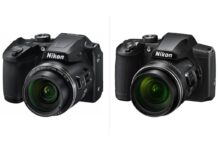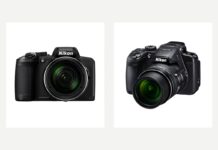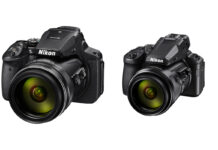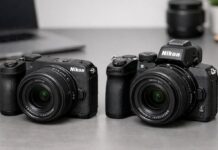

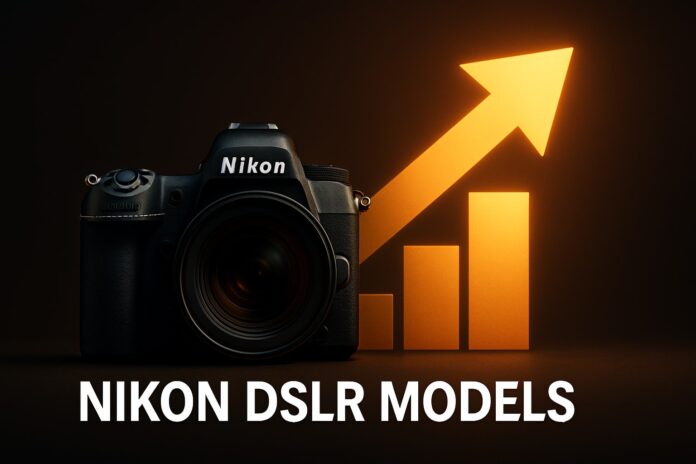
If you are trying to understand Nikon DSLR models in 2026, start with the practical reality: Nikon’s DSLR lineup is now a legacy system, not the center of the company’s camera strategy. That does not mean Nikon DSLRs are useless. It means you need to shop them with a clearer eye than you would have ten years ago.
The current new-camera shelf is small. Nikon USA still lists a handful of DSLR bodies, most notably the D7500, D780, D850, and D6. The broader used market is much larger, and that is where many buyers will find the better value: D3500, D5600, D750, D500, D610, D7200, D7500, D780, and D850 bodies still make sense for different photographers.
My advice is simple. Buy a Nikon DSLR because you want the optical viewfinder, battery life, F-mount lens value, rugged handling, or used-market pricing. Do not buy one because you think DSLRs are the future. Nikon mirrorless is where the new development is happening, but Nikon DSLRs can still be excellent tools if you choose the right model for the job.
Nikon DSLR models in 2026: the quick answer
| Model | Sensor | Best role today | How I would shop |
|---|---|---|---|
| Nikon D7500 | DX | Best current-ish crop DSLR for enthusiasts | New, used, or refurbished if the price is right. |
| Nikon D780 | FX | Best hybrid full-frame Nikon DSLR | Buy if you want DSLR handling with stronger live view and video. |
| Nikon D850 | FX | Best high-resolution Nikon DSLR | Still the prestige pick for landscape, studio, and serious stills. |
| Nikon D6 | FX | Pro sports and press DSLR | Only makes sense for a very specific professional buyer. |
| Nikon D500 | DX | Best used wildlife and action DX DSLR | Excellent if condition is good and shutter count is reasonable. |
| Nikon D750 | FX | Best used full-frame value | Strong used buy for portraits, events, and general photography. |
| Nikon D3500 | DX | Simplest beginner DSLR | Buy used only if bundled cleanly with a kit lens. |
| Nikon D5600 | DX | Better beginner DSLR with articulating screen | Good used choice for stills and learning photography. |
Current Nikon DSLR models still listed new
The Nikon DSLR cameras most relevant as new or retailer-stock buys are the D7500, D780, D850, and D6. Availability and pricing can move quickly because these are mature DSLR bodies, so I would always compare new, refurbished, and used pricing before buying.
The D7500 is the most realistic new Nikon DSLR for many buyers. It is a DX-format body with enthusiast controls, strong autofocus for the class, good battery life, and access to a huge F-mount lens ecosystem. If you want a Nikon DSLR for wildlife, sports, travel, or learning photography with more controls than an entry-level body, the Nikon D7500 review is the logical next read.
The D780 is the most modern full-frame Nikon DSLR in feel. It keeps the optical-viewfinder experience but borrows a lot of live-view usefulness from Nikon’s mirrorless thinking. I would look at it if you want one DSLR for weddings, events, portraits, travel, and general full-frame work, especially if you already own F-mount lenses.
The D850 is still the Nikon DSLR I respect most for pure still photography. It has high resolution, strong dynamic range, serious build quality, and a long professional track record. It is not cheap, but if you want one of the best DSLRs ever made for landscape, studio, product, architecture, or detailed stills work, read the Nikon D850 review before deciding.
The D6 is different. It is a professional sports and press camera with a built-in vertical grip, deep durability, and a price that makes no sense for most hobbyists. If you are asking whether you need a D6, you probably do not. For almost everyone outside professional sports and agency work, the D850, D780, D500, or a Nikon Z body will be the smarter buy.
Discontinued Nikon DSLR models that still make sense used
The used Nikon DSLR market is where the system becomes interesting. Some discontinued models are better values than the current new options, provided you inspect condition carefully.
The D3500 is still the cleanest beginner DSLR if you want a simple, light, inexpensive Nikon body. It is not fancy, but it teaches exposure, lenses, focus, and composition without burying a new photographer in menus. If you are shopping at the beginner end, compare it with the Nikon D3500 review and the broader best Nikon cameras for beginners guide.
The D5600 is the nicer beginner DSLR for people who want a vari-angle screen, a little more flexibility, and a body that still feels approachable. I would not overpay for one, but a clean kit can be a good way to learn photography with real controls and interchangeable lenses. The Nikon D5600 vs D7500 comparison shows exactly what the enthusiast body adds.
The D750 remains one of the best used full-frame Nikon values. It is older, but it still produces excellent files and is widely understood by working photographers. For portraits, events, family photography, and general full-frame stills, it is often more camera than a beginner expects.
The D500 is the crop DSLR I would look for if wildlife or action is the reason you want Nikon. It gives you the reach advantage of DX with a serious autofocus system and rugged handling. If a D500 is too expensive, the D7500 is the more affordable path into a similar idea.
The D610, D7200, and older D7000-series bodies can also work, but I would treat them as price-driven purchases. Buy them because the condition, shutter count, battery health, and lens bundle are right, not because they are the best answer on paper.
Best Nikon DSLR model by buyer type
- Best Nikon DSLR for beginners: D3500 if you want simple, D5600 if you want a better screen, D7500 if you want room to grow.
- Best Nikon DSLR for wildlife on a budget: D7500, or a used D500 if you can find a clean body.
- Best Nikon DSLR for landscapes: D850 if budget allows, D780 or D750 if you want lower cost full frame.
- Best Nikon DSLR for events and portraits: D780, D750, or D850 depending on budget and resolution needs.
- Best Nikon DSLR for students: D3500 or D5600 with an 18-55mm kit lens and one fast prime.
- Best Nikon DSLR for existing F-mount owners: D850 for maximum still-image quality, D780 for balance, D7500 or D500 for DX reach.
Nikon DSLR vs Nikon mirrorless in 2026
This is the decision that matters most. A Nikon DSLR can still be a smart buy, but mirrorless bodies are better aligned with Nikon’s future. If you want the newest autofocus, subject detection, video features, lens roadmap, and firmware development, a Nikon Z camera is the safer long-term direction.
A DSLR still makes sense when the economics are better. Used F-mount lenses are often excellent value, DSLR batteries last a long time, and many photographers still prefer an optical viewfinder for long shooting days. The question is not whether DSLRs are dead. The question is whether the specific Nikon DSLR deal in front of you solves your problem better than a Z-series alternative.
For a beginner with no lenses, I would usually compare the D3500, D5600, D7500, Z30, Z50 II, and Z fc before buying. For an experienced photographer with F-mount glass, I would compare the D780, D850, Z5 II, Z6 III, and the cost of an FTZ adapter.
How to inspect a used Nikon DSLR before buying
Used Nikon DSLR value depends more on condition than on the model name. Before buying, I would check the shutter count, sensor cleanliness, autofocus accuracy, battery health, card slot condition, command dials, rear screen, viewfinder clarity, hot shoe, and lens mount wear.
I also want to know why the seller is moving it on. A clean D7500 or D850 from a hobbyist is a different purchase from a heavily used event body. Cosmetic marks are not always a problem, but sticky buttons, impact damage, inconsistent autofocus, moisture history, or vague answers from the seller are red flags.
For bundles, price the lens separately. A cheap body with a poor lens is not always a good deal. A fair body with a useful Nikon 35mm, 50mm, 18-140mm, 70-300mm, or quality FX zoom can be much more valuable than it first appears.
Internal Nikon DSLR buying path
If you are still narrowing the decision, use these pages as the next step:
- Use the beginner Nikon guidance above if this is your first Nikon body.
- Beginner Nikon DSLR guide if you already know you want an optical-viewfinder DSLR.
- Consider the D7500 if you want an affordable enthusiast DSLR.
- Consider the D850 if you want Nikon’s most respected high-resolution DSLR.
- Best budget Nikon lenses if lens cost is part of the decision.
Nikon DSLR models FAQ
What Nikon DSLR models are still current?
Nikon’s DSLR shelf is now small, with bodies such as the D7500, D780, D850, and D6 still appearing in official or retailer channels. Availability can change, so I would verify current stock before treating any DSLR as a normal long-term new-camera product.
What is the best Nikon DSLR to buy in 2026?
For most enthusiasts, I would start with the D7500 for DX value, the D780 for balanced full-frame use, and the D850 for high-resolution still photography. The best choice depends on whether you need beginner simplicity, wildlife reach, full-frame image quality, or professional durability.
Are Nikon DSLR cameras discontinued?
Many Nikon DSLR models are discontinued, but that does not mean every Nikon DSLR is unavailable. The more important point is that Nikon’s new development energy is clearly in mirrorless cameras, while DSLRs are now mature legacy tools.
Which Nikon DSLR is best for beginners?
The D3500 is the simplest used beginner body, the D5600 is the more flexible beginner body, and the D7500 is the better choice if you want a Nikon DSLR you can grow into.
Should I buy a Nikon DSLR or a Nikon Z mirrorless camera?
Buy a Nikon DSLR if the optical viewfinder, battery life, F-mount lens value, and used price are the reasons you want it. Buy Nikon Z mirrorless if you want the newer autofocus, video features, lens roadmap, and long-term system direction.