
View full specs
In this Nikon D3500 review, I am looking at the camera from the point of view that actually matters in 2026: is this discontinued beginner DSLR still a smart used buy, or are you better off with a newer mirrorless camera?
Quick verdict: the Nikon D3500 is still one of the best cheap cameras for learning photography if you buy it used at the right price. Its 24.2MP APS-C sensor, excellent battery life, optical viewfinder, simple controls, and huge Nikon F-mount lens ecosystem make it a better teaching tool than many more complicated cameras. But it is not a good choice for video creators, action shooters, or anyone who expects modern autofocus, a flip screen, USB-C, Wi-Fi, or 4K video.
Is the Nikon D3500 still worth buying in 2026?
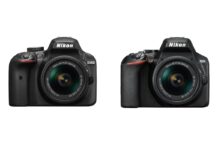
If you are choosing between Nikon’s two final entry bodies, our Nikon D3400 vs D3500 comparison shows exactly what the newer model changes and what stays the same.
Yes, but only for the right buyer and at the right price. Nikon announced the D3500 on August 30, 2018, and it reached U.S. stores in September 2018 as the replacement for the D3400. It is now a discontinued camera bought mainly on the used market.
That date is useful buying context, not a verdict on image quality. Nearly eight years later, the important question is whether a used example is priced for its condition, shutter count, and included lens. The 24.2MP sensor remains capable; the age shows more clearly in connectivity, video, and autofocus.
If you want to learn photography fundamentals, the D3500 still makes a lot of sense. You get a real optical viewfinder, physical exposure controls, interchangeable lenses, RAW files, and a sensor that is still capable of clean, detailed images. For portraits, family photos, travel, landscapes, school projects, product photos, and general everyday photography, the image quality is not the weak point.
The weak points are the things that changed most in the camera world after the D3500 arrived. Autofocus coverage is basic. Live view focusing is slow. Video is limited to Full HD. The rear screen is fixed and not touch-sensitive. Wireless transfer works through Nikon SnapBridge over Bluetooth, not proper Wi-Fi. If you are coming from a phone, the D3500 will feel better as a photo camera and worse as a connected device.
My buying rule is simple: the D3500 is attractive when the body and 18-55mm VR kit lens are meaningfully cheaper than a used Nikon D5600, Canon Rebel SL3, Canon Rebel T7, or entry mirrorless option. If the price gets too close to those cameras, the D3500 loses some of its appeal.
The reason I still respect the D3500 is that it does not pretend to be everything. It is not a hybrid content machine. It is not a compact travel vlogging camera. It is a still-photo tool that asks you to look through a viewfinder, choose a focus point, think about light, and make a picture. For some beginners, that older workflow is exactly the point.
Nikon D3500 kit: which version should you buy?
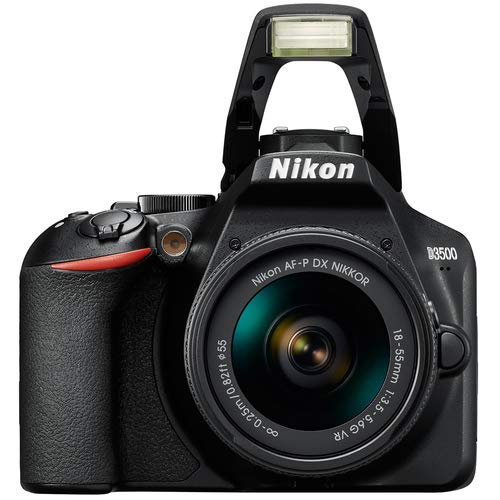
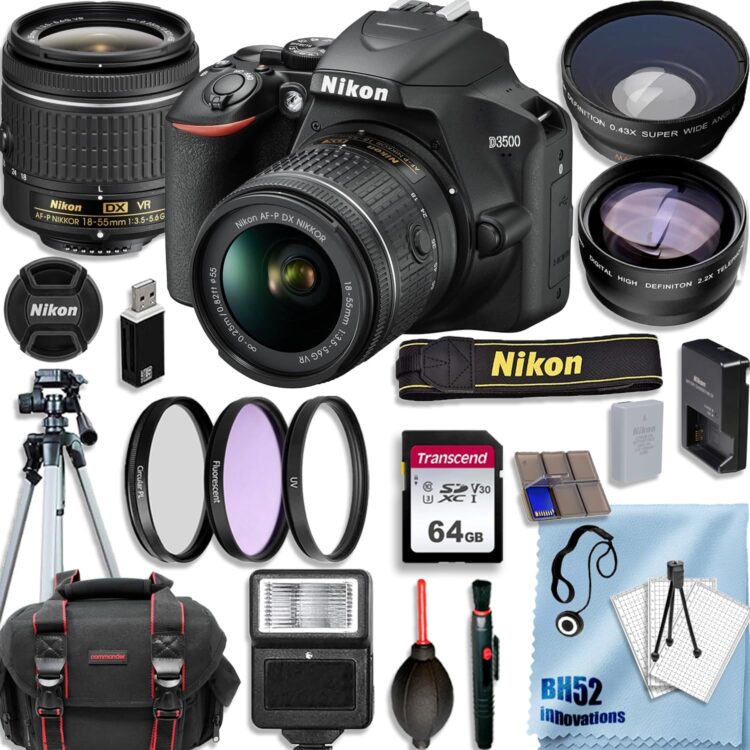
The Nikon D3500 kit below combines a renewed body with the AF-P DX 18-55mm f/3.5-5.6G VR lens, a 64GB memory card, and a larger accessory bundle. The camera and stabilized 18-55mm lens are the important parts: together they cover everyday photography, travel, family pictures, and the focal lengths a beginner needs while learning. Treat the memory card as a useful extra, but do not assign much value to generic filters, tripods, or other bundle fillers. Because the D3500 is discontinued, check the seller, renewed condition, included Nikon battery and charger, and return policy before deciding whether its kit price is better than a clean used camera-and-lens set.
Nikon D3500 specs that still matter
| Feature | Nikon D3500 | Why it matters in 2026 |
|---|---|---|
| Sensor | 24.2MP Nikon DX APS-C CMOS | Still plenty for prints, cropping, and serious beginner work |
| Processor | EXPEED 4 | Older, but JPEGs and RAW files remain very usable |
| Autofocus | 11-point phase-detect AF through the viewfinder | Fine for still subjects, limited for action |
| Continuous shooting | Up to 5 fps | Enough for casual action, not sports specialization |
| Video | Full HD 1080p up to 60p | Acceptable for casual clips, weak for creators |
| Screen | Fixed 3-inch LCD, not touch-sensitive | Simple but inconvenient for low angles and video |
| Connectivity | Bluetooth SnapBridge, no Wi-Fi | Phone transfer exists, but it is slower and less flexible than modern cameras |
| Battery | Approx. 1,550 shots per charge | A major advantage over cheap mirrorless cameras |
| Lens mount | Nikon F-mount DX | Huge used lens selection, but check autofocus compatibility |
Those specs explain the D3500’s personality. It is not a feature-packed camera. It is a lightweight stills DSLR with an unusually good sensor for the money and very little to distract a new photographer.
Image quality: the strongest reason to buy it
The Nikon D3500’s image quality is still the main reason it survives in buyer searches. The 24.2MP DX sensor gives you detailed files with good color and enough dynamic range for real editing. In daylight, the camera can produce images that look far more expensive than the body price suggests, especially if you use a better lens than the basic kit zoom.
With the 18-55mm AF-P VR kit lens, sharpness is perfectly good for family photos, travel, school work, landscapes, and beginner portraits. It will not give you the creamy background blur of a fast prime, but it is light, stabilized, and easy to use. For a first camera, that matters more than spec-sheet glamour.
Low-light performance is still reasonable if you understand the limits. ISO 100 to 1600 looks clean. ISO 3200 is usable for indoor family photos and casual event work. ISO 6400 can work if the moment matters more than fine detail. Above that, modern mirrorless cameras and newer full-frame bodies pull ahead. But for a beginner learning exposure, light direction, and lens choice, the D3500 gives you plenty to work with.
The camera also teaches an important lesson: the lens and the light matter. Put the Nikon 35mm f/1.8G DX on the D3500 and the camera feels much more capable indoors. Use the kit lens in a dark room and it will struggle. That is not a failure of the body as much as a realistic lesson in photography.
For JPEG shooters, Nikon’s colors are pleasant and natural without much work. Skin tones look believable, greens and blues are not cartoonish, and the files respond well to basic editing. For RAW shooters, the D3500 gives enough latitude to recover modest shadows and correct exposure mistakes. It is not a high-end landscape camera, but it is far better than its used price suggests.
Nikon D3500 sample photos
Tap any photo to open the full-resolution file. These six images were recorded with the Nikon D3500, and their embedded exposure data identifies the lens and settings used.






What the samples reveal
The landscape and flower show what the basic 18-55mm kit lens can do in good light. At ISO 100, the 24.2MP sensor records crisp detail, natural color, and enough resolution to crop. The portrait also shows why the inexpensive 35mm f/1.8 DX prime is such a useful upgrade. It gives cleaner subject separation than the kit zoom without making the camera cumbersome.
The bird and ski frames are a fairer picture of telephoto use. The D3500 can produce sharp wildlife and action files when there is enough light, the shutter speed is kept high, and the photographer places the focus point carefully. They do not erase the limitations of its 11-point autofocus system. The 30-second night exposure makes a different point: clean low-light results are possible at ISO 100, but only with a stable support and a subject that stays still.
Autofocus and speed: fine for learning, weak for action
The D3500 uses an 11-point autofocus system when you shoot through the optical viewfinder. The center point is the most dependable, and for beginners I would rather use single-point AF than let the camera choose from the full array. Focus, recompose, and shoot. It is old-school, but it works.
For portraits, still life, landscapes, travel scenes, pets sitting still, and family photos, the autofocus is good enough. It is not exciting, but it is predictable. The problem starts when subjects move quickly across the frame. Sports, birds, running children, and unpredictable indoor action expose the limits of the AF system and the modest 5 fps burst speed.
Live view autofocus is also slow compared with a modern mirrorless camera. If you like composing on the rear screen the way you would with a phone, the D3500 is not the best fit. This camera works best when you use the optical viewfinder and treat it like a traditional DSLR.
That said, basic autofocus can help a beginner learn discipline. You learn to anticipate movement, place the AF point deliberately, and pay attention to shutter speed. A modern subject-detection camera may give you more keepers, but it can also hide mistakes. The D3500 is less forgiving, but it teaches clearly.
Handling and beginner experience
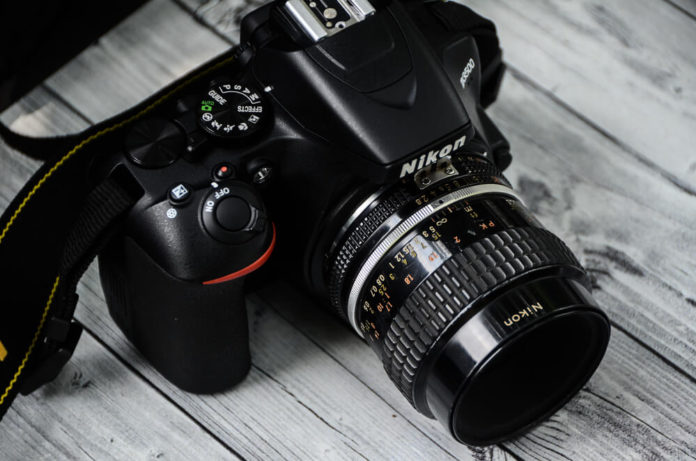
The D3500 is one of Nikon’s friendliest beginner bodies. It is small for a DSLR, the grip is comfortable, and the controls are not intimidating. There is a mode dial, a clear menu system, and Nikon’s Guide Mode for people who want the camera to explain settings in plain language.
This simplicity is a real advantage. Many modern cameras are better on paper but bury beginners under autofocus modes, video profiles, custom buttons, and menu pages. The D3500 keeps you focused on aperture, shutter speed, ISO, focus point, and composition. That is exactly what a first serious camera should do.
The trade-off is that the body is stripped down. There is no touchscreen. The rear LCD does not tilt. There is only one command dial. There is no weather sealing. Advanced photographers may find it limiting, but for new photographers those limits can actually make the learning process cleaner.
The optical viewfinder is also part of the appeal. You are not looking at a tiny video feed. You are seeing the scene through the lens, with no screen lag and no battery anxiety. For slow, intentional photography, that experience still feels good.
Does the Nikon D3500 have Wi-Fi?
No, the Nikon D3500 does not have built-in Wi-Fi. This is one of the most common points of confusion because the camera does support Nikon SnapBridge. SnapBridge on the D3500 uses Bluetooth for a low-power connection to your phone, allowing automatic image transfer, remote shooting support, clock synchronization, and location data from your smart device.
That is useful, but it is not the same experience as a modern Wi-Fi camera. Transfers are slower, full-resolution workflow is less convenient, and the app experience can feel dated. If you are searching “does Nikon D3500 have wifi,” the practical answer is no: it has Bluetooth SnapBridge, not Wi-Fi. If fast phone transfer is a priority, a newer mirrorless camera or a DSLR with better wireless features will be more pleasant.
For many D3500 owners, the simplest workflow is still an SD card reader. It is not glamorous, but it is reliable. For a cheap learning camera, I would not let the lack of Wi-Fi kill the deal unless you know you need quick social sharing after every shoot.
Video quality and vlogging limitations
The Nikon D3500 can shoot Full HD 1080p video up to 60p. In good light, the footage is fine for family clips, school projects, basic YouTube B-roll, or simple documentation. The colors are pleasant and the 24MP sensor gives the video a cleaner look than many old compact cameras.
But this is not a camera I would recommend for a serious creator in 2026. There is no 4K video, no microphone input, no headphone jack, no flip screen, and autofocus in video is not smooth enough for modern vlogging. The fixed rear screen alone makes self-filming awkward.
If video matters as much as photography, skip the D3500 and look at a mirrorless camera instead. The D3500 is best understood as a still-photo camera that can record casual video when needed.
Nikon D3500 price in 2026: what is a fair used deal?
The D3500 is only a strong buy if the used price is sensible. Prices move around, but I would think about value in tiers rather than chasing one exact number. For Nikon D3500 price 2026 searches, the important distinction is body-only price versus Nikon D3500 kit price with the 18-55mm VR lens, because the kit lens is what most beginners should start with.
| Used D3500 kit price | How I would judge it |
|---|---|
| Under $300 with 18-55mm VR lens | Strong deal if condition is clean and charger/battery are included |
| $300-$400 with kit lens | Fair beginner-camera price in good condition |
| $400-$500 with two lenses | Can be fair, but inspect the telephoto lens and accessories carefully |
| Over $500 | Usually too close to better used DSLRs or mirrorless options |
Do not overpay for huge accessory bundles. Many D3500 kits include low-quality tripods, filters, bags, or flash units that add little practical value. I would rather buy a clean body, the Nikon 18-55mm AF-P VR lens, a real memory card, and one good lens upgrade later.
Retailers like KEH, MPB, B&H Used, and Adorama Used are often worth paying slightly more for because grading and return windows reduce risk. Marketplace deals can be cheaper, but you need to inspect more carefully.
Used buying checklist for the Nikon D3500
Before buying a used Nikon D3500, check the basics carefully. Beginner DSLRs are often owned by people who are gentle with gear, but they can also sit in closets for years with batteries, dust, and kit lenses neglected.
- Shutter count: lower is better, but condition matters more than a single number for casual buyers.
- Sensor condition: ask for a plain-sky or white-wall test photo at a narrow aperture to reveal dust spots.
- Lens autofocus: test the 18-55mm AF-P lens at both wide and telephoto ends.
- Lens stabilization: make sure the VR version is included if that is what the listing promises.
- Battery and charger: original Nikon batteries are preferable; swollen third-party batteries are a red flag.
- Buttons and doors: check battery door, SD card door, mode dial, shutter button, and lens release.
- Viewfinder: look for haze, fungus, or heavy dust.
- Return policy: worth having, especially for online used purchases.
The D3500 is not fragile, but buying used always rewards patience. A clean kit from a reputable seller is usually better than the cheapest listing with vague photos.
Best lenses for the Nikon D3500
The right lens makes the D3500 feel like a much better camera. The body has no autofocus motor, so for autofocus you want Nikon AF-S or AF-P lenses, or compatible third-party lenses with built-in focus motors. Older screw-drive Nikon lenses can mount, but they will not autofocus on the D3500.
For most beginners, I would start with the AF-P DX 18-55mm VR kit lens. It is small, sharp enough, stabilized, and easy to carry. After that, the first serious upgrade should usually be the Nikon AF-S DX 35mm f/1.8G. If someone asks for the best lens for Nikon D3500 owners who are still learning, that 35mm prime is my first answer. It is affordable, bright, sharp, and ideal for learning composition, portraits, family photos, food, and low-light shooting.
If you want portraits, the Nikon AF-S 50mm f/1.8G is another excellent value, though it behaves like a short telephoto on the D3500’s DX sensor. For sports, wildlife, or school events, the AF-P DX 70-300mm VR is useful, but make sure you get the VR version if you plan to shoot handheld.
For broader Nikon lens buying advice, this budget Nikon lens guide is a useful next step once you know what you like to photograph.
Nikon D3500 vs Canon Rebel T7
The Canon Rebel T7 is the natural rival because it is also a cheap beginner DSLR. The Canon has built-in Wi-Fi, which makes phone transfer easier. The Nikon D3500 has better battery life, a very comfortable grip, and generally stronger value as a pure still-photo learning camera.
If you already own Canon EF or EF-S lenses, the Rebel T7 makes sense. If you are starting from nothing and care mainly about still photography, I slightly prefer the D3500 if the price is similar. For a deeper look at the Canon option, read the Canon Rebel T7 review.
Nikon D3500 vs D5600, D7500, and mirrorless alternatives
The Nikon D5600 is the camera many D3500 buyers should cross-shop. It adds a fully articulating touchscreen, better autofocus coverage, and a more flexible body while keeping the same general DSLR learning experience. If the used price gap is small, I would usually pick the D5600.
The Nikon D7500 is a more serious enthusiast DSLR. It is better for action, controls, weather resistance, and long-term growth, but it costs more and is less beginner-simple. The D3500 is the better first camera for someone who wants cheap, light, and uncomplicated. The D7500 is better for someone who already knows they enjoy photography and wants a stronger body.
Mirrorless alternatives give you better live view autofocus, better video, smaller bodies, and more modern connectivity. They also have worse battery life and often cost more once you include lenses. If you are deciding more broadly, this beginner camera guide can help you compare DSLR and mirrorless options without getting stuck on one brand.
Who should buy the Nikon D3500?
The D3500 is best for absolute beginners who want to learn photography with a proper camera, students who need an affordable photography class body, parents who want better family photos than a phone can comfortably deliver, and travelers who value battery life over video features.
It also works well for teenagers learning photography because the camera is light, affordable, and simple enough to encourage practice. You can hand someone a D3500 with the kit lens and Guide Mode and they can start making real progress quickly.
It is less suitable for wildlife, fast sports, serious video, vlogging, professional event work, or buyers who want seamless phone-first sharing. It can do a little of many things, but its real strength is learning still photography.
How I would set up the D3500 on day one
If I were handing the D3500 to a new photographer, I would keep the setup simple. Start with the 18-55mm VR lens, use single-point autofocus, shoot RAW plus JPEG, and spend most of the first week in Aperture Priority mode. That gives you control over depth of field without making every exposure decision at once.
I would also turn on the viewfinder grid if the user finds it helpful, practice exposure compensation, and learn how shutter speed affects motion blur. The goal is not to master every menu. The goal is to make the camera disappear enough that you start seeing light, backgrounds, and timing.
Once the kit lens feels familiar, add the 35mm f/1.8G DX. That one lens teaches more about aperture, subject separation, and indoor light than a bag full of cheap accessories.
What to buy with a Nikon D3500
A good D3500 starter setup does not need many accessories. I would prioritize practical items:
- AF-P DX 18-55mm VR: the basic kit lens and the easiest place to start.
- 64GB SD card: a normal reliable SDHC or SDXC card is enough.
- Extra EN-EL14a battery: not urgent because battery life is excellent, but useful for travel.
- SD card reader: more reliable than depending on Bluetooth transfer.
- Nikon 35mm f/1.8G DX: the first lens upgrade I would recommend for most owners.
I would not spend much on cheap filter kits, flimsy tripods, or giant accessory bundles. Put that money toward one good lens, a decent bag, or a photography course.
Common Nikon D3500 mistakes to avoid
The first mistake is buying the camera for video. It can record video, but it is not a creator camera. The second mistake is overpaying for a bundle because it includes many accessories. The third mistake is buying old Nikon lenses without checking whether they autofocus on the D3500.
Another common mistake is leaving the camera in Auto mode forever. Auto mode is fine on day one, but the D3500 becomes much more useful when you start using Aperture Priority, exposure compensation, single-point autofocus, and RAW files. This is a camera that rewards learning.
Frequently asked questions
When was the Nikon D3500 released?
Nikon announced the D3500 on August 30, 2018, and U.S. availability began in September 2018. It replaced the D3400. For a buyer today, its age matters mainly because condition, shutter count, the included lens, and price vary from one used example to another.
Is the Nikon D3500 a good camera in 2026?
Yes, if you want an affordable still-photo camera for learning photography. It is not modern, but the sensor, battery life, viewfinder, and lens options still make it a strong beginner choice at the right used price.
Does the Nikon D3500 have Wi-Fi?
No. The Nikon D3500 does not have built-in Wi-Fi. It uses Bluetooth SnapBridge for phone connection and image transfer, which is useful but slower and less flexible than modern Wi-Fi transfer.
Does the Nikon D3500 shoot 4K video?
No. The D3500 records Full HD 1080p video up to 60p. For 4K, better autofocus in video, and easier vlogging, choose a mirrorless camera instead.
What is a good Nikon D3500 used price in 2026?
A clean D3500 with the 18-55mm VR kit lens is most attractive under about $400. Above that, compare carefully against a used Nikon D5600, Canon Rebel SL3, Canon Rebel T7, or entry mirrorless camera.
Is the Nikon D3500 better than a phone?
For learning photography, using interchangeable lenses, shooting through a viewfinder, and creating natural background blur, yes. For convenience, instant sharing, computational night mode, and video, a good phone is easier.
What is the best lens for the Nikon D3500?
For most beginners, start with the 18-55mm VR kit lens. The best first upgrade is the Nikon AF-S DX 35mm f/1.8G because it is sharp, bright, affordable, and useful for everyday photography.
Can the Nikon D3500 use old Nikon lenses?
It can mount many Nikon F-mount lenses, but autofocus depends on the lens. For autofocus on the D3500, choose AF-S or AF-P lenses, or compatible third-party lenses with built-in motors.
Is the Nikon D3500 good for photography beginners?
Yes. It is one of the cleaner beginner cameras because it has Guide Mode, simple controls, strong battery life, and enough image quality that a new photographer can grow without immediately needing a new body.
Final verdict: should you buy the Nikon D3500?
The Nikon D3500 is not a modern hybrid camera, and pretending otherwise would be unfair. It lacks Wi-Fi, 4K video, a flip screen, a touchscreen, advanced autofocus, and the convenience that newer mirrorless cameras offer.
But as a cheap used stills camera, it remains genuinely useful. The D3500 is simple, light, comfortable, long-lasting, and capable of excellent photos. For a beginner who wants to learn exposure, lenses, composition, and real camera handling without spending much money, it still makes sense.
Buy it if you find a clean kit at a fair price and you mainly care about photography. Skip it if video, connectivity, action autofocus, or future-proof features matter more than low cost and simplicity.
Beginners who want a cheap, simple DSLR with excellent battery life and Nikon F-mount lens access.
You need 4K video, fast Live View AF, a flip screen, touchscreen controls, Wi-Fi, or compact mirrorless size.
Very low for stills; Guide Mode and simple controls make it one of the easiest DSLRs to learn on.
Nikon D5600/D7500 for DSLR growth, or Nikon Z50 II/Zfc if moving to mirrorless.
Full HD only, with weak Live View autofocus and no creator-friendly screen.
Yes for learning still photography; no if video or mirrorless autofocus matters.