
View full specs
In this Canon R7 review, the key question is not whether APS-C is still serious. The better question is whether Canon finally gave APS-C shooters a body fast enough for wildlife, sports, and demanding everyday photography. For the most part, the answer is yes.
Who the Canon R7 is really for
This Canon R7 review starts with the audience: photographers who want reach, speed, and modern autofocus without carrying a full-frame wildlife kit. It is not Canon’s cheapest APS-C mirrorless body, and it is not trying to be the simplest beginner camera. It is the serious crop-sensor option in the RF system.
Its 1.6x crop factor is the obvious attraction. A 400mm lens frames like a 640mm lens on full frame, which matters when you are photographing birds, field sports, air shows, distant wildlife, or your kid from the far side of a pitch. That reach does not magically create more lens resolution, but it does put more pixels on a distant subject with a smaller kit.
I would not buy the R7 just because it is APS-C. I would buy it because Canon combines that crop reach with a 32.5MP sensor, fast burst shooting, in-body stabilization, dual card slots, and Dual Pixel CMOS AF II. That is a strong mix for photographers who spend time outdoors and need the camera to react quickly.
If your priorities are more casual travel, family photography, and first-camera simplicity, the Canon R50 review is worth reading first. The R50 is friendlier and cheaper. Choose the R7 when action performance matters.
Canon R7 specs that matter
Canon’s official EOS R7 product page lists a 32.5MP APS-C CMOS sensor, Dual Pixel CMOS AF II, up to 15 fps mechanical shooting, up to 30 fps electronic shooting, 5-axis in-body stabilization, and serious 4K video options.
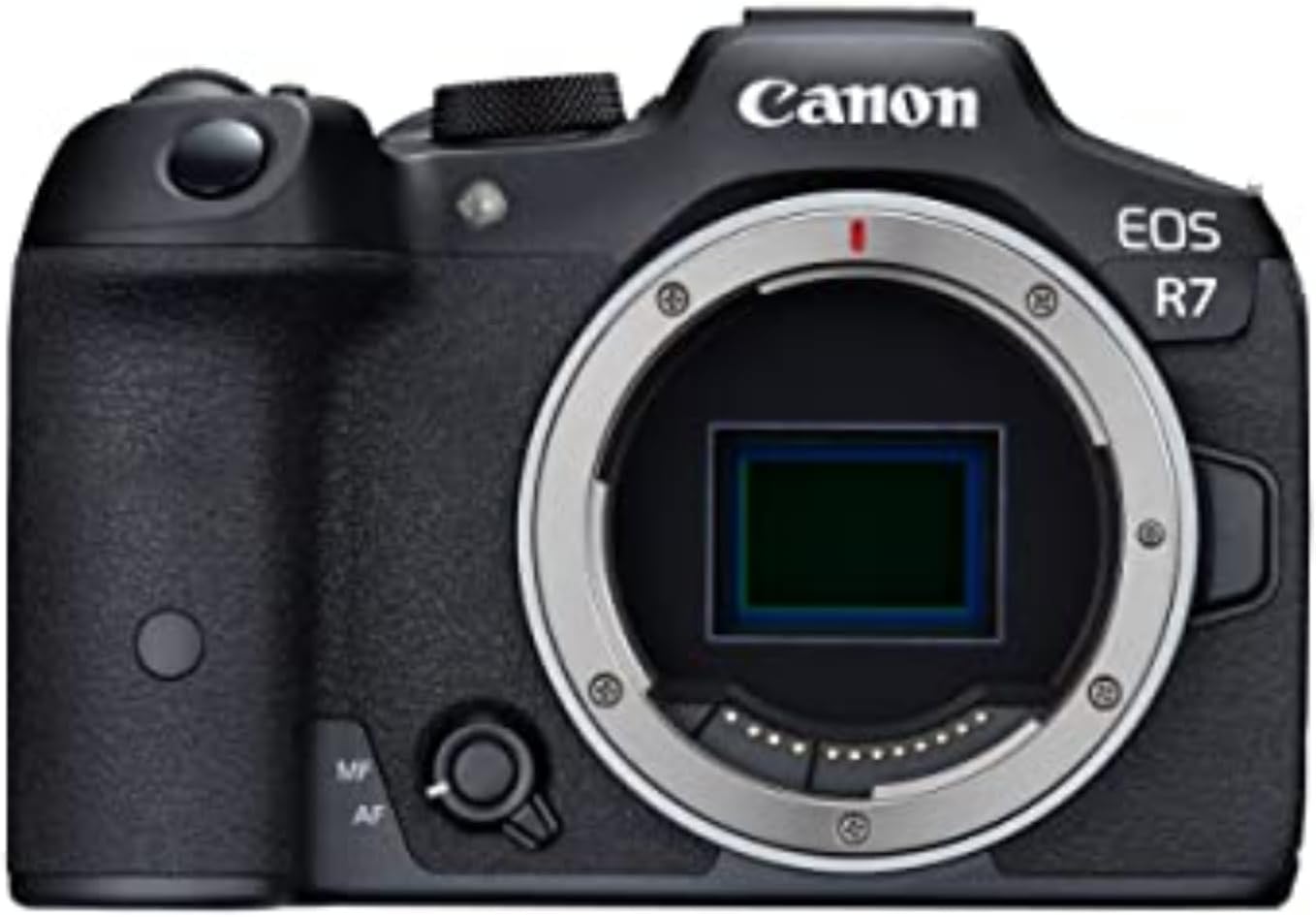
The practical spec sheet is strong. You get the RF/RF-S lens mount, DIGIC X processor, dual UHS-II SD card slots, LP-E6NH battery, a 2.36M-dot OLED EVF, a fully articulating touchscreen, weather-resistant construction, microphone and headphone ports, and USB-C charging support. For a sub-full-frame Canon body, that is a serious field kit.
Two limitations matter: sensor readout and lens ecosystem. The R7 is fast, but its electronic shutter can show rolling shutter with rapid movement. And while RF-S is improving, Canon’s APS-C RF lens lineup is still thinner than Fujifilm X or Sony E. Adapted EF glass helps, but native choices still matter.
Handling and controls
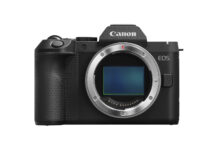
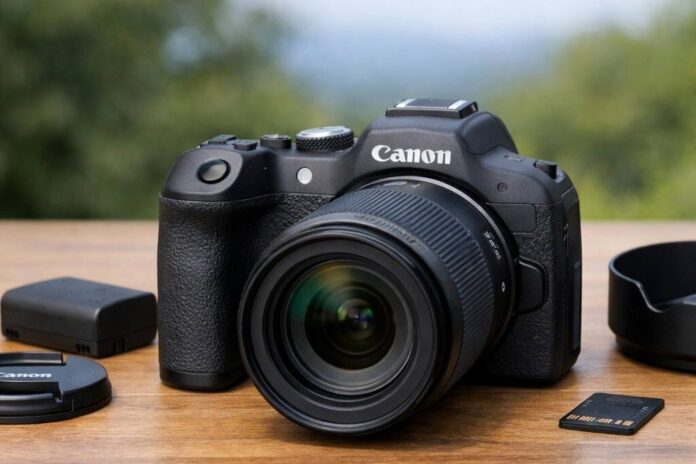
In the hand, the R7 feels more substantial than Canon’s entry APS-C bodies without becoming heavy. The grip is deep enough for telephoto work, and the body balances well with lenses like the RF 100-400mm. At around 612g with battery and card, it is light compared with full-frame action bodies but not toy-like.
Its controversial part is the rear control layout. Canon placed the rear dial around the joystick, and it can feel odd if your thumb is trained on older EOS bodies. I did not love it immediately. After a few days, it starts to make sense for autofocus point control and quick exposure changes, but I would still call it a learning curve rather than an instant win.
Everything else feels like Canon in a good way. The menus are clear, and the AF-ON button is where it should be. The touchscreen is responsive, and the articulating screen is useful for low-angle wildlife, video, and awkward tripod positions. Dual SD slots are a major advantage over lighter Canon bodies, especially if you shoot paid work or once-in-a-lifetime wildlife trips.
Autofocus and burst shooting
Autofocus is the reason the R7 feels more modern than older Canon DSLRs such as the 7D Mark II or 90D. Dual Pixel CMOS AF II can recognize people, animals, and vehicles. Its broad frame coverage makes subject tracking much easier than traditional DSLR AF point clusters.
For birds and wildlife, the R7 is genuinely impressive for the money. Eye detection is not magic, and busy branches can still confuse it, but the camera gives you more keepers than older crop DSLRs when subjects move unpredictably. The best results come when you learn the AF cases and choose sensible starting points. Do not expect the camera to solve every background problem by itself.
Burst performance is another strength. Canon rates the R7 at up to 15 fps with the mechanical shutter and up to 30 fps with the electronic shutter. For sports and wildlife, 15 fps mechanical is already plenty. I would use electronic shutter only when the subject and lighting make sense, because rolling shutter can bend fast motion or create odd shapes with quick pans.
Buffer depth is good enough for real field use, especially with fast UHS-II cards. It is not a pro flagship buffer, but the camera clears quickly enough if you shoot in controlled bursts rather than just holding the shutter down forever.
Image quality
For stills, this Canon R7 review is strongly positive in good light. The 32.5MP sensor is detailed and rewarding. For wildlife, that resolution gives you crop flexibility; for travel and landscape work, it gives you files that hold fine detail well. Canon color remains one of the R7’s easy strengths, especially for JPEG shooters who like pleasant skin tones and natural greens.
Low light is where you need realistic expectations. The R7 is very good for APS-C. It does not behave like a current full-frame camera at high ISO. ISO 1600 and 3200 are very usable. ISO 6400 can work with careful exposure and modern noise reduction. Above that, detail starts to suffer, especially if you need to crop heavily.
Dynamic range is solid, but I would not abuse the shadows on high-ISO wildlife files. Expose carefully, keep shutter speed under control, and use fast enough glass when the light drops. The R7 rewards disciplined shooting more than rescue-style editing.
Video and hybrid use
For video, the R7 is capable, but it is not a miniature cinema body. Canon gives you oversampled 4K Fine up to 30p, 4K 60p options, Full HD high frame rates, Canon Log 3, HDR PQ, headphone monitoring, and a fully articulating screen. For wildlife clips, creator work, and short-form video, that is a strong package.
The important video nuance is 4K60. The R7 can shoot 4K60, but the quality, crop, heat, and rolling-shutter tradeoffs depend on the mode you use. The best-looking oversampled 4K is the 30p Fine mode. For long interviews or demanding video days, I would not treat the R7 like a dedicated fan-cooled cinema camera.
In-body stabilization helps handheld video, especially with stabilized RF lenses. Digital stabilization can help further, but it adds crop and changes the field of view. For casual handheld clips it is useful; for careful work, I would still prefer a monopod, tripod, or gimbal.
Lens choices for the R7
Lens choice matters more on the R7 than on almost any other Canon APS-C body. The camera itself is fast and capable. The RF-S ecosystem, however, is still not as deep as it should be. For general use, the RF-S 18-150mm is the natural everyday/travel zoom. It keeps the kit small and gives useful range, but it is not a low-light or serious action lens.
For wildlife on a reasonable budget, the RF 100-400mm f/5.6-8 IS USM is the obvious match. It is light, sharp for the price, and turns into a very useful field lens on APS-C. The RF 600mm f/11 and RF 800mm f/11 can also be fun for bright-light wildlife, though their fixed apertures make them less flexible.
If you already own EF telephoto lenses, the EF-to-RF adapter makes the R7 much more attractive. Older EF 70-200mm, 100-400mm, 300mm, and 400mm lenses can give the R7 a serious wildlife/sports kit immediately. I would be more cautious if starting from zero and expecting a huge native RF-S lens range today. Our Canon RF-S lens guide is the natural next stop for building a sensible kit.
Canon R7 vs R10, R8, and 90D
Compared with the Canon R10, the R7 is the more serious action body. It makes sense for casual action and travel, but the R7 gives you the higher-resolution sensor, in-body stabilization, dual card slots, deeper body, and more serious buffer. If wildlife or sports is the point, I would stretch to the R7.
Against the Canon R8, the story changes. The R8 is full frame, so it is better for low light, shallow depth of field, portraits, and event work. It is also lighter than many people expect. But it lacks in-body stabilization and does not give you the same crop reach. For birds and field sports, the R7 is usually the more useful tool. For people, events, and general full-frame photography, the R8 is more appealing.
Compared with the Canon 90D, the R7 feels like the modern replacement in spirit. You lose the optical viewfinder, but you gain far better subject tracking, in-body stabilization, faster electronic shooting, better video tools, and RF mount compatibility. A 90D can still be a good used DSLR, but the R7 is the more capable action camera.
Final verdict
The Canon R7 is one of Canon’s most useful APS-C cameras because it has a clear purpose. That is the simple conclusion of this Canon R7 review. It is built for photographers who want reach, speed, autofocus, and a manageable field kit. Wildlife and sports shooters get the most from it, but it is also strong for travel, family action, and hybrid creators who want a camera that can keep up.
Its weak points are not mysterious. The RF-S lens system needs more depth, and high ISO performance cannot match full frame. Electronic shutter rolling shutter also means 30 fps is not perfect for every subject. But the core value is strong. If your priority is fast stills with extra reach, the R7 remains one of the smartest Canon bodies to buy.
Canon EOS R7 alternatives
The main alternatives to the Canon EOS R7 are Canon R10, Canon R8, Fujifilm X-T5, Fujifilm X-H2S, Sony a6700. Compare autofocus, stabilization, video limits, lens choice and current price before deciding which camera fits you best.
Frequently asked questions
Is the Canon R7 good for wildlife photography?
Yes. The Canon R7 is one of Canon’s best value wildlife cameras because it combines APS-C reach, 32.5MP resolution, fast burst shooting, animal subject detection, and in-body stabilization.
Is the Canon R7 good for sports?
Yes, especially for outdoor sports and field action. The 15 fps mechanical shutter, subject tracking, and crop-sensor reach make it a strong sports camera. For indoor sports in poor light, full frame may still be better.
Does the Canon R7 have in-body stabilization?
Yes. Yes. The Canon R7 has 5-axis in-body image stabilization, and it can work together with stabilized RF lenses for stronger correction.
Is the Canon R7 better than the Canon R10?
For wildlife, sports, and serious action, yes. The R7 has higher resolution, in-body stabilization, dual card slots, a stronger body, and better sustained shooting. The R10 is cheaper and easier for casual users.
What lenses should I use with the Canon R7?
The RF-S 18-150mm is the practical travel lens. For wildlife, the RF 100-400mm is the best value starting point. Adapted EF telephotos are also a smart option if you already own Canon DSLR glass.
Wildlife, birds, outdoor sports, travel action, and Canon shooters who want reach without full-frame weight.
You mainly shoot low-light events, want the deepest native APS-C lens ecosystem, or need a dedicated cinema body.
Medium; menus are friendly, but AF setup, burst discipline, and the rear dial layout take learning.
Canon R8 for full-frame image quality; Canon R6 Mark II or R5-series bodies for stronger full-frame performance.
Strong hybrid specs, but 4K modes involve heat/readout/crop tradeoffs and it is not fan-cooled.
Yes, especially for wildlife and sports photographers who can use the crop reach and fast AF.