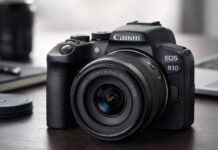

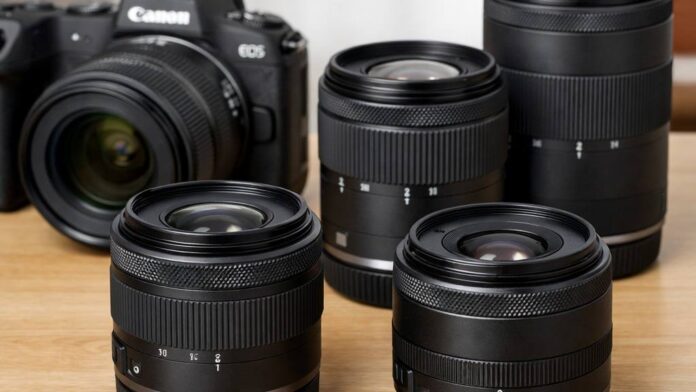
Choosing the best Canon RF-S lenses is easier when you match each lens to the way you actually shoot. From lightweight travel zooms to brighter primes for portraits and video, this guide breaks down the options I’d recommend for real-world Canon APS-C users.
What makes RF-S lenses different
How RF-S works on Canon APS-C cameras
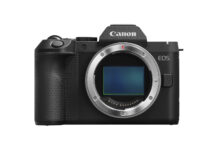
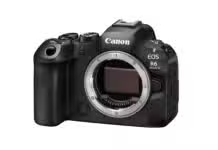
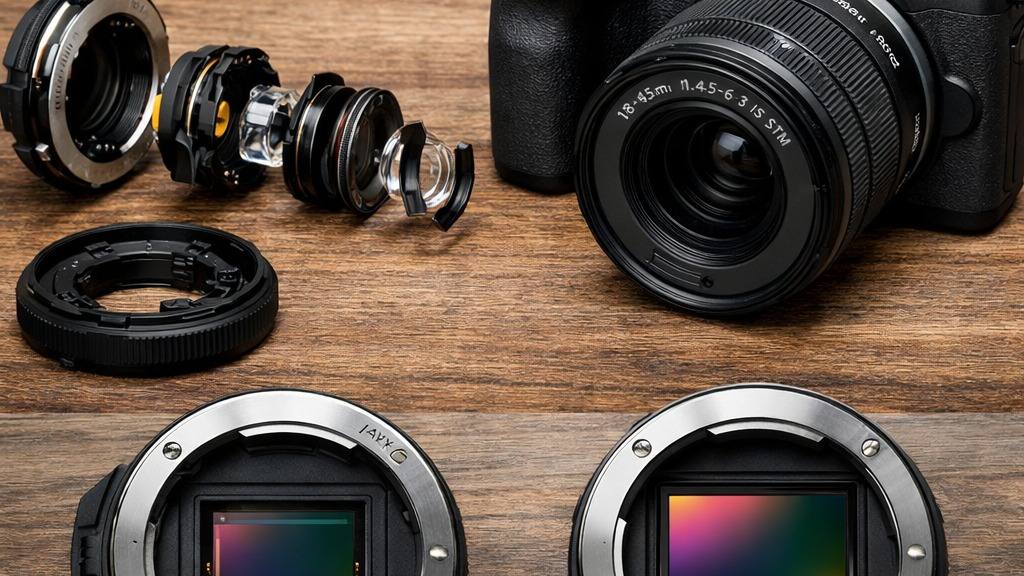
Canon RF-S lenses are designed specifically for Canon’s APS-C mirrorless cameras with the RF mount, such as the EOS R50, R100, and R10. The “S” in RF-S stands for “short back focus,” which means these lenses are optimized for the smaller APS-C sensor and the flange distance of the RF mount. The main advantage is size and weight. RF-S lenses are noticeably more compact and lighter than their full-frame RF counterparts. This makes them ideal for those who prioritize portability or want a more balanced setup for everyday shooting.
That also means it helps to look beyond RF-S alone, especially if you may later add full-frame glass or want to compare size and focal-length options across the wider system. Just remember that full-frame RF lenses are often larger, heavier, and more expensive than RF-S options.
That crop factor matters even more when you’re choosing a lens for travel, portraits, or handheld video, because the camera body shapes how each focal length feels in practice. If you’re building a compact APS-C setup, this Canon EOS R50 V review gives helpful context for how RF-S lenses fit into everyday shooting.
Additionally, the image circle of an RF-S lens only needs to cover the APS-C sensor, so these lenses can be made smaller and more affordable. If you use an RF-S lens on an APS-C body, you get the true stated focal length multiplied by the APS-C crop factor (1.6x). For instance, a 18mm RF-S lens behaves like a 29mm equivalent on a Canon APS-C camera. This is an important distinction for anyone transitioning from a full-frame system or comparing specs, as the field of view directly affects how you compose your images and which lens you should choose.
Compared to classic Canon APS-C EF-S lenses, the RF-S lineup offers improved autofocus and compatibility with the latest Canon camera bodies. In real-world use, I’ve found that RF-S lenses focus quickly and accurately, even in low light. For beginners and experienced shooters alike, this means less frustration and more keepers.
When an RF full-frame lens still makes sense
While RF-S lenses are a natural fit for Canon APS-C bodies, there are situations where a full-frame RF lens might still be the right choice. If you own both APS-C and full-frame Canon bodies, investing in RF lenses gives you flexibility to use one lens across both formats. The camera will automatically apply a crop when you mount an RF lens on an APS-C body, so you retain autofocus and image quality, but with a reduced field of view.
Full-frame RF lenses often provide faster apertures or unique focal lengths not available in the RF-S lineup. For example, if you want the softest backgrounds for portraits, or need ultra-wide or specialized macro options, an RF lens can deliver results that RF-S cannot match yet. However, these lenses are larger and heavier, which can make your APS-C camera feel unbalanced. I recommend mixing RF-S and RF lenses only if you have a clear need for a specific look or you plan to upgrade to a full-frame body in the future.
Best Canon RF-S lenses for everyday photography
Best standard zoom for most photographers
The RF-S 18-45mm f/4.5-6.3 IS STM is my top pick for most Canon APS-C users starting out. It covers a flexible zoom range from wide to short telephoto, equivalent to about 29-72mm in full-frame terms. This makes it perfect for everything from family snapshots to street shooting and casual travel photography. The lens is compact enough to keep on your camera at all times, so you never miss a shot.
Image stabilization is built in, helping to reduce blur from hand shake, especially for low-light scenes. Autofocus is quick and nearly silent, which is a bonus for video clips and discreet shooting. While the aperture range is not the brightest, the lens makes up for it with its portability and versatility. For those just getting started or anyone who values convenience, this is the everyday Canon lens I would recommend first.
Best compact lens for daily carry
If you want something even smaller, the RF 28mm f/2.8 STM deserves a look. While technically a full-frame RF lens, it works perfectly on Canon APS-C bodies, giving you an effective field of view of about 45mm. This focal length is ideal for street photography, environmental portraits, or just keeping your kit light and nimble.
The RF 28mm f/2.8 STM is tiny and weighs almost nothing, making it an excellent choice for those who dislike carrying bulky gear. The fast f/2.8 aperture lets in more light than most kit zooms and enables some subject separation for portraits or food photography. In my experience, this lens feels almost invisible on the camera, so you are more likely to bring your camera with you everywhere.
Best picks for travel and landscape shooting
Why a lightweight zoom is often the smartest travel choice
When packing for travel or heading out for a full day of landscape photography, weight and versatility matter more than anything. The RF-S 18-150mm f/3.5-6.3 IS STM stands out as the best Canon RF-S travel lens for most users. It offers a huge zoom range, equivalent to 29-240mm, covering everything from wide vistas to distant details. This means you can leave extra lenses at home and travel with just one compact zoom.
Image stabilization works well for handheld shooting, which is useful for both dim interiors and twilight landscapes. The lens remains relatively light and packs down small, so it fits easily in a shoulder bag or daypack. In my own travels, having a single lens that handles everything from city streets to mountain views means less gear to juggle and more time focusing on composition.
For those who want the lightest possible setup and don’t need a big zoom range, the RF-S 18-45mm is also a strong option. However, if I had to choose one lens for a trip where I might shoot everything from architecture to wildlife, the 18-150mm is my go-to RF-S landscape lens.
Best RF-S options for portraits and subject separation
How to get softer backgrounds on Canon APS-C
Portrait photographers often want the smoothest, most pleasing background blur possible. On Canon APS-C cameras, this requires a combination of the right focal length and a fast maximum aperture. Currently, RF-S lenses are slower than their premium full-frame RF siblings, but you can still achieve attractive background separation with the right technique and lens choice.
For classic head-and-shoulders portraits, the RF 50mm f/1.8 STM is an excellent choice. On APS-C, this lens acts like an 80mm equivalent, putting you in the ideal range for flattering portraits. The wide f/1.8 aperture allows for soft backgrounds, even in less-than-ideal lighting. While this lens is an RF full-frame design, it is affordable, sharp, and compact, making it a great addition to any APS-C kit focused on people photography.
If you want a true RF-S lens for portraits, the RF-S 18-150mm at the telephoto end (above 85mm equivalent) can also provide decent subject separation, especially when shooting wide open and placing your subject away from the background. For tighter budgets or those with limited space, this versatility is hard to beat, although you will not get the same creamy blur as a dedicated fast prime.
For even more background blur, keep an eye on new RF-S lens releases. As Canon expands the system, brighter RF-S primes dedicated to portraits are likely to arrive. Until then, mixing select RF lenses into your kit is the best way to maximize subject separation on Canon APS-C bodies.
Best lenses for video and vlogging
Video creators have different needs from still photographers. If you are looking for a Canon RF-S video lens or the best RF-S lens for vlogging, you will want to focus on features that help you create steady, sharp, and visually interesting footage. Let’s walk through what really matters for video and how the current Canon APS-C video lenses perform in real-world shooting.
Features that matter most for handheld video
When shooting video handheld, image stabilization (IS) is your best friend. Most Canon RF-S zooms include optical IS, which helps counteract hand shake and small jitters that can ruin smooth walking shots or simple pans. For solo creators, this is crucial – especially on bodies like the R50 or R100, which do not have in-body stabilization.
Another key factor is autofocus performance. Good Canon RF-S video lenses focus quietly and smoothly, without the distracting “rack” sound or jerky movement some older designs produce. Canon’s STM (stepping motor) lenses, such as the RF-S 18-45mm f/4.5-6.3 IS STM and RF-S 18-150mm f/3.5-6.3 IS STM, excel here. They are nearly silent and maintain focus transitions well for vlog talking-head shots or when you move around in the frame.
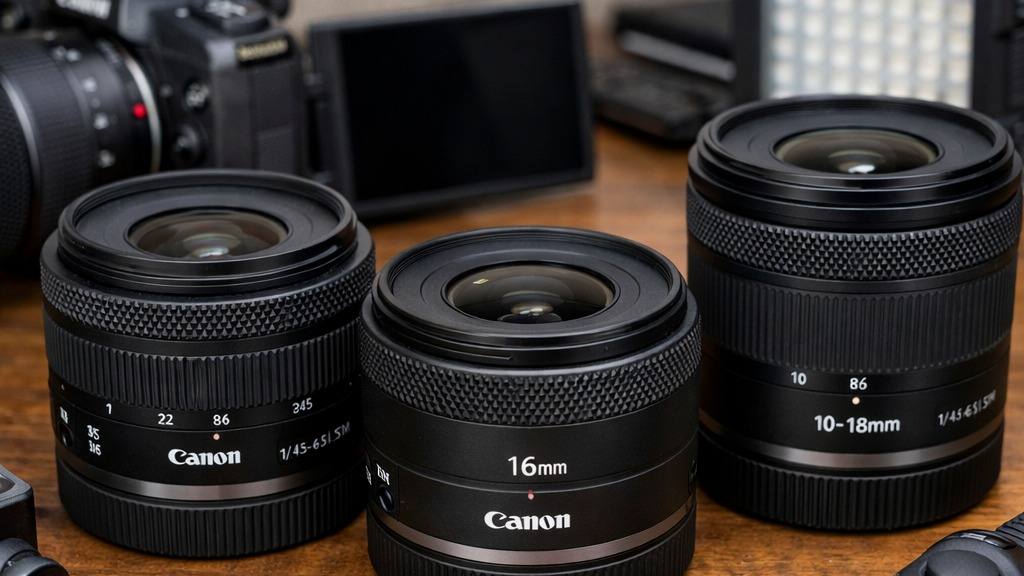
For vlogging, a wide field of view is essential so you can hold the camera at arm’s length and still include your face and some background. The 18mm end of the standard RF-S zooms is just wide enough for this on APS-C, though some creators may prefer a true wide prime. The RF-S 10-18mm f/4.5-6.3 IS STM is especially attractive for this purpose, giving you a dramatic ultra-wide view for room tours, travel stories, or group shots.
If you want a brighter look and more subject-background separation, consider the RF 16mm f/2.8 STM (not technically an RF-S lens, but fully compatible). Its bright aperture, compact size, and wide field make it a favorite for creative handheld video, even if it lacks optical IS. Pair it with digital or body-based stabilization for best results.
- Best all-around Canon RF-S video lens: RF-S 18-45mm f/4.5-6.3 IS STM (compact, stabilized, silent focus)
- Best RF-S lens for vlogging: RF-S 10-18mm f/4.5-6.3 IS STM (ultra-wide, stabilized, great for arm’s-length shots)
- Best bright prime for video: RF 16mm f/2.8 STM (wide, lightweight, great background blur, no IS)
One thing to keep in mind: if you shoot a lot of video in low light, consider a lens with a wider maximum aperture. While most RF-S zooms are “slow” (f/4.5 or higher), a fast prime like the RF 24mm f/1.8 Macro IS STM (full-frame, but works on APS-C) can make a big difference in image quality, even if it means a tighter field of view.
How to choose the right focal length for your style
Picking the best lens for Canon APS-C is not just about sharpness or price – it’s about matching focal length to how you like to see the world. RF-S focal lengths all multiply by 1.6x on Canon APS-C bodies, so a “standard” 50mm lens acts like an 80mm telephoto. Here’s how to choose Canon RF-S lens options that fit your creative style.
- Wide angle (10-18mm RF-S, 16mm RF): For landscapes, architecture, vlogging, and interiors. Wide lenses exaggerate space and let you include more context. Great for those who love dramatic perspectives or need to show their environment in travel and lifestyle content.
- Standard zoom (18-45mm, 18-150mm RF-S): Versatile for everyday shooting, family events, street photography, and informal portraits. The wide end can handle scenery, while the longer end is perfect for tighter framing or subject isolation. Many photographers start here and only branch out when they find their favorite look.
- Portrait and short telephoto (50mm, 85mm on RF): These lenses are ideal for classic portraits with subject-background separation. On APS-C, a 50mm lens behaves like an 80mm, giving pleasing compression and flattering facial features. The RF 50mm f/1.8 STM is a budget-friendly way to get into this look.
- Telephoto (55-210mm RF-S, 70-200mm RF): For wildlife, sports, or distant subjects. These lenses let you “reach out” and compress the scene, isolating subjects even in busy environments. The RF-S 55-210mm f/5-7.1 IS STM is a lightweight, travel-friendly option for Canon APS-C bodies.
Ask yourself what you shoot most. If you love storytelling with context, start wide. If you want to highlight people or details, a standard zoom or short telephoto is better. For many, a two-lens kit – one standard zoom and one prime – offers the best mix of flexibility and quality. This approach lets you experiment and learn your preferences before investing in specialized glass.
Should you buy RF-S now or build a mixed RF kit
Many new Canon APS-C shooters wonder if they should stick with the dedicated RF-S lineup or invest in full-frame RF glass for future camera upgrades. The answer depends on your budget, ambitions, and whether you value compactness or long-term flexibility.
The current RF-S lens range covers most everyday needs with small, lightweight, and affordable options. If you want a walkaround kit for travel, street, or family photos, RF-S zooms and primes are hard to beat for portability. They keep your APS-C camera light and balanced, and you won’t be paying for extra glass or image circle you won’t use. For most people starting out, this is the most practical approach. The Canon RF-S system is designed for simplicity and ease of use, especially for those who don’t plan to move up to full-frame soon.
However, if you already know you’ll eventually want a full-frame Canon R series body, consider building a “mixed” kit of both RF-S and full-frame RF lenses. All RF lenses work on APS-C cameras, though with a crop factor. Investing in a high-quality RF 24-105mm or an RF 50mm f/1.8 STM gives you glass you can use now and keep using after you upgrade. Just remember these lenses are often larger and heavier, and you may lose some of the compactness that makes APS-C appealing in the first place.
For most beginners and travel shooters, starting with one or two RF-S lenses is the best way to go. As you develop your style, you can always add a favorite RF lens or two, building a flexible RF and RF-S lens kit that fits both your current camera and your future plans. With more RF-S lenses on the horizon, and the rise of compact digital cameras in 2026, there are more choices than ever for building a kit that suits your needs.
Frequently asked questions
What is the best Canon RF-S lens for beginners?
The RF-S 18-45mm f/4.5-6.3 IS STM is the top pick for most beginners. It covers a useful focal range, has image stabilization, and is lightweight and affordable. It’s the default kit lens for many Canon APS-C bodies, making it a safe and practical starting point.
Can I use RF lenses on Canon APS-C cameras with an RF mount?
Yes, all full-frame RF lenses work on Canon APS-C RF-mount cameras. The lens will produce a cropped field of view (multiply the focal length by 1.6x), but you gain access to Canon’s growing range of RF glass. Just be aware that some RF lenses are bigger and heavier than their RF-S counterparts.
Which Canon RF-S lens is best for portraits?
For classic portraits with blurred backgrounds, the RF 50mm f/1.8 STM (full-frame) is excellent on APS-C. If you prefer a zoom, the RF-S 18-150mm f/3.5-6.3 IS STM at its longest setting also works well for candid portraits, though with less background blur.
Are Canon RF-S lenses good enough for video and vlogging?
Absolutely. Most RF-S lenses have fast, silent autofocus and optical stabilization, making them well-suited for video work. For vlogging, the RF-S 10-18mm and RF 16mm f/2.8 STM are both strong choices, depending on your need for width and brightness.
Key takeaways for choosing the best Canon RF-S lenses
- The best Canon RF-S lenses depend more on your shooting style than on specs alone.
- A compact standard zoom is the most practical starting point for most Canon APS-C users.
- Mixing RF-S and full-frame RF lenses can be a smart long-term strategy if you plan to upgrade bodies later.