

View full specs
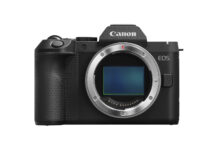
In this Canon R50 review, I’m looking at what really matters in daily shooting: handling, autofocus, image quality, video, and lens options. It’s a small camera with big beginner appeal, but the real question is whether it still feels satisfying once the honeymoon phase wears off.
Quick verdict: should you buy the Canon R50?
The short answer: the Canon R50 is one of the easiest beginner mirrorless cameras to recommend. It makes sense if you want better photos than a phone, reliable autofocus, a viewfinder, and simple 4K video. It is less convincing if you already know you want deep manual controls, in-body stabilization, weather sealing, or a large lens ecosystem.
| Best for | Beginners, family photos, travel, casual video, and creators who want a small camera that does not fight them. |
|---|---|
| Skip it if | You shoot demanding sports, wildlife, long handheld video, or want lots of low-cost third-party lenses. |
| Best starter kit | R50 with RF-S 18-45mm for the smallest setup, or the two-lens kit if you need reach. |
| First lens upgrade | RF 50mm f/1.8 STM for portraits and low light, or RF-S 55-210mm if you photograph kids’ sports, travel details, or animals outdoors. |
| Main dealbreaker | No in-body stabilization, plus a control layout that advanced users can outgrow. |
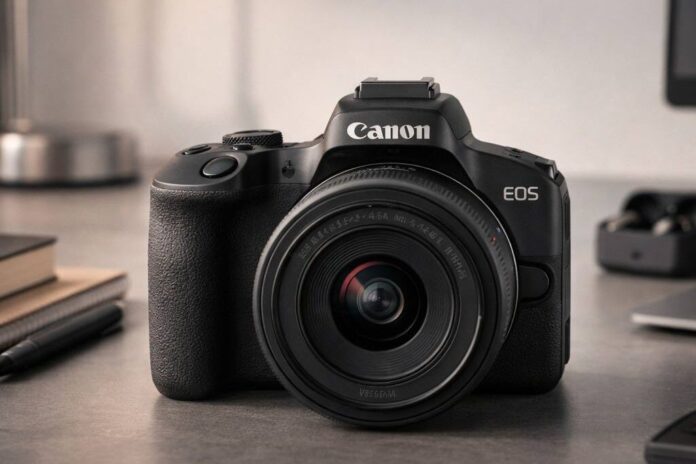
Canon’s official EOS R50 specifications confirm the core hardware. That includes a 24.2MP APS-C sensor, RF mount, Dual Pixel CMOS AF support, and adapted EF or EF-S lens compatibility. You can verify the current details in Canon’s EOS R50 specifications.
Who the Canon R50 is really for
Why it makes sense for beginners moving beyond a phone
The Canon R50 has a clear audience: people moving up from phone photography. It works best if you want better image quality without a steep learning curve. In my experience, it is one of the easiest mirrorless cameras to pick up and use with confidence. The touchscreen interface is friendly and familiar, especially if you are coming from a smartphone. Most important settings are just a tap or swipe away. You are not hunting through endless menus when you just want to take a photo.
The camera’s Guide Mode is a real advantage for beginners. It explains settings in plain language, and even suggests creative effects. For family moments, vacations, and casual vlogging, the automatic modes are dependable. They deliver sharp, colorful images without much fuss. I have watched first-time users grab the R50 and start shooting in minutes, which is not something I can say about many mirrorless cameras.
Another reason the R50 stands out for beginners is its compact size. It fits into a small bag and is light enough for all-day use. That makes you more likely to carry it and capture unexpected moments. The kit lens is better than most budget zooms, offering a versatile range without weighing you down. If your phone struggles in low light or cannot blur backgrounds naturally, the R50 is a big step up.
Where enthusiasts may outgrow it
While the Canon R50 is a fantastic entry-level choice, it does have limitations for experienced photographers. If you are used to full manual controls, twin dials, or custom buttons, the R50 can feel basic. The single control dial also slows manual changes. Adjusting aperture and shutter speed takes extra button presses, especially with fast subjects.
More experienced shooters may also miss features like weather sealing or a larger grip. The R50 is designed to be friendly and approachable. It skips some pro-focused features found on higher-end models like the Canon R10 or R7. If you regularly shoot sports, wildlife, or need deep customization, you will probably outgrow the R50 quickly.
That said, the R50 is a solid backup body or travel companion for enthusiasts who want something light and reliable. It does not get in the way of the shot, and it delivers consistent results. Still, the system limits and basic controls make its beginner focus obvious.
Design, handling, and everyday usability
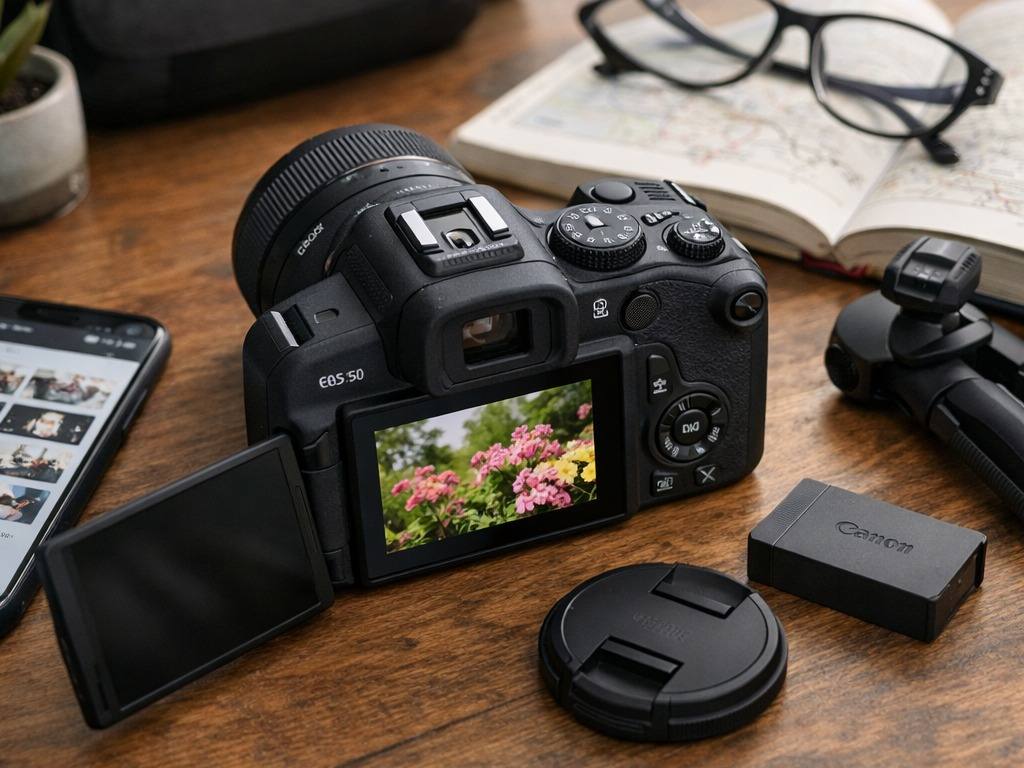
Canon’s approach with the R50 is all about simplicity and comfort. The grip is surprisingly deep for such a small camera, and even with larger hands, I found it stable and comfortable during long photo walks. The surface finish is smooth but not slippery, and the camera feels well-balanced with the kit lens or a small prime attached.
Control-wise, the R50 keeps things minimal. There’s a single main dial on top, a mode dial, and a few well-placed buttons. For beginners, this is a plus, as it keeps the interface simple and less intimidating. However, more experienced users may miss the quick-access buttons or an extra dial for separate aperture and shutter speed adjustments. The touchscreen fills in many gaps, letting you tap to focus, change settings, or even swipe through menus easily.
Canon’s menu system is one of the most intuitive in the industry. The My Menu feature lets you pin your favorite options for faster access, and the on-screen explanations are genuinely helpful. If you are moving up from a Canon Rebel DSLR or another Canon compact, the transition feels natural.
Viewfinder, screen, and portability in the field
The electronic viewfinder (EVF) on the Canon R50 is bright and clear, with enough resolution for accurate manual focusing and reviewing shots in daylight. It is not the largest in its class, but it gets the job done for most scenarios. The fully articulating touchscreen is a highlight for vloggers and families alike. You can flip it out for selfies, low-angle, or overhead shots, adding real versatility for travel and creative shooting.
Portability is where the R50 really shines. At under 400 grams with the kit lens, it is easy to carry all day without fatigue. I have used it for city walks, family outings, and even quick street photography sessions. It slips into a small shoulder bag or large jacket pocket, making it ideal for trips where space and weight matter.
Battery life is respectable for such a compact Canon mirrorless. I consistently get 300 to 350 shots per charge, depending on how much I use the screen and Wi-Fi features. For most day trips, a single battery is enough, but for travel, I recommend carrying a spare just in case.
Autofocus and shooting performance
Subject detection for people, pets, and casual action
Autofocus is often the weak point of beginner mirrorless cameras, but the Canon R50 surprises here. It inherits Canon’s latest Dual Pixel CMOS AF II system, which covers nearly the whole frame. In real-world use, the camera locks onto faces and eyes quickly, even when kids or pets are moving around. For travel and family photography, this is a huge advantage. You can trust the camera to find your subject and keep it sharp, even if you are not tracking them manually.
The subject detection modes are straightforward to use. You can set the camera to prioritize people or animals, and it does a great job recognizing and following them. In my tests, even energetic dogs and running children were tracked reliably, with a noticeable improvement over previous entry-level models.
Burst shooting reaches up to 12 fps with electronic first-curtain shutter, or up to 15 fps with the electronic shutter. That is more than enough for action at the park or capturing fleeting expressions. The buffer fills quickly if you shoot RAW bursts. For continuous sports or wildlife, a higher-end model is better. For casual action, the R50’s autofocus and burst rate are more than adequate. This Canon R50 review would not call it a sports body, but it is far more capable than most beginners expect.
Image quality for photos
Color, dynamic range, and low-light results
The 24.2-megapixel APS-C sensor in the Canon R50 delivers excellent image quality for its class. Canon colors are a big part of the appeal. Skin tones look natural, landscapes are vibrant, and JPEGs need very little editing. I have shot everything from sunny beaches to dimly lit family dinners, and the results are consistently pleasing.
Dynamic range is good for a beginner camera, allowing you to recover some highlights and shadows in RAW files. While it cannot match more expensive APS-C models, it is a solid improvement over older Canon compacts and entry-level DSLRs. The R50 handles backlit scenes and bright skies better than you might expect.
Low-light performance is another strength. Noise is well-controlled up to ISO 3200, and even higher ISOs are usable for social media or small prints. The kit lens is not bright, so a prime lens gives the best low-light results. Even with the standard zoom, handheld night shots are possible because the sensor and autofocus are effective.
For most travel, family, and everyday shooting, the Canon R50 photo quality is more than enough to justify upgrading from a phone. If you print large or crop aggressively, you may notice some limits. For sharing and personal albums, images are clean, colorful, and sharp.
Canon R50 review impressions so far: it delivers what most beginners and casual shooters need. It does that without overcomplicating the process. As compact digital cameras make a comeback in 2026, the R50 feels timely. Its balance of usability and image quality puts it ahead of many rivals. Next, I will cover video, lens choices, and key alternatives.
Video features and creator workflow
4K quality and rolling shutter
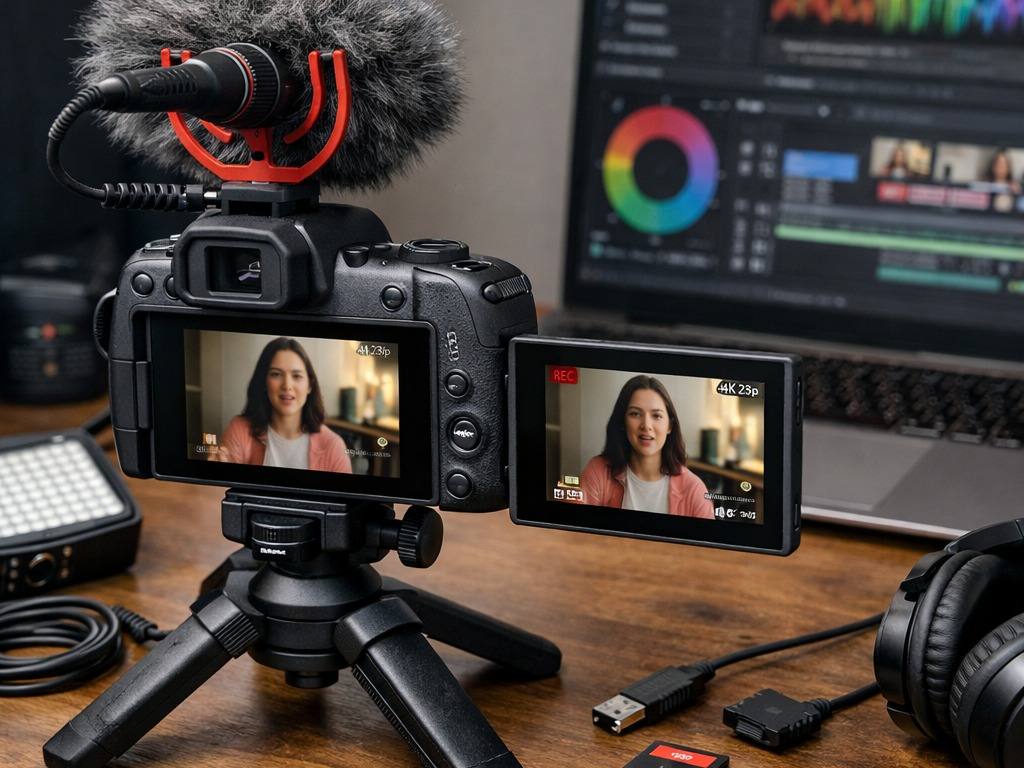
If you are considering the Canon R50 for video, its strengths and weaknesses are tied to its entry-level design. The camera records uncropped 4K video at up to 30p, which is a real step up from older Canon M-series bodies. For travel, family events, and vlogging, you keep the full field of view from your lens.
The 4K footage is crisp for the price. Colors are classic Canon: pleasing, warm, and not overly saturated. Skin tones look natural straight out of camera. Rolling shutter is present, but it is not extreme unless you pan quickly from side to side. For most casual users, it will not be a dealbreaker.
Video autofocus and stabilization limits
Autofocus in video mode is reliable, especially for face and eye detection. If you film kids, pets, or yourself for a vlog, the camera tracks subjects smoothly. In this Canon R50 review, video autofocus is one of the strongest reasons to choose it over many older beginner cameras.
The bigger limitation is stabilization. The R50 relies mainly on digital IS, which crops the image and corrects shake electronically. This helps for gentle handheld clips, but it is not the same as true in-body stabilization. If you shoot while walking, you will see some jitter. Pairing the R50 with an optically stabilized RF-S lens helps, but a small tripod or gimbal is still better for walk-and-talk footage.
Audio, webcam use, and quick sharing
Audio is mixed. The microphone input is valuable, because you can use a small shotgun or lav mic. There is no headphone jack, though, so you cannot monitor sound directly while recording. Casual creators may not care, but anyone filming interviews should take that seriously.
For workflow, the R50 offers vertical video support, clean HDMI out, and USB video class compatibility. Canon explains the deeper menu and connection behavior in the official EOS R50 advanced user guide. Built-in Wi-Fi and Bluetooth also make phone transfers simple for quick social sharing.
Overall, the R50’s video abilities are strong for its class and price. It is not a pro video camera, but it hits a practical sweet spot for YouTube, family movies, and social clips. If you want a small camera that delivers better video than your phone, the R50 is a solid choice.
Lens choices and system value
Best starter lenses for the R50
Lens selection is one of the most important factors when choosing a camera system. The Canon EOS R50 uses Canon’s RF mount, which includes full-frame RF lenses and crop-sensor RF-S lenses. That gives you flexibility, but it also creates a few limits for budget buyers.
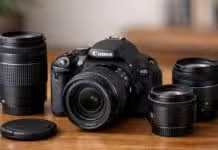
The RF-S 18-45mm f/4.5-6.3 IS STM kit lens is the smallest starter option. It covers family photos, travel, and everyday scenes without making the camera bulky. It is not bright, but it keeps the R50 portable and adds optical stabilization for steadier video.
For more reach, the RF-S 55-210mm f/5-7.1 IS STM is the sensible second lens. It pairs well with the R50 for outdoor sports, zoo trips, school events, and casual wildlife. It is not a low-light sports lens, but it gives beginners useful reach without much weight.
First prime lens upgrade
If you want better low-light performance or more background blur, start with the RF 50mm f/1.8 STM. Although it is designed for full-frame cameras, it works well on the R50. The angle of view feels close to an 80mm portrait lens, which is useful for people, pets, and detail shots.
Other good options include the RF 16mm f/2.8 STM for wide landscapes, architecture, and handheld vlogging. The RF 35mm f/1.8 IS Macro STM is better for close-ups, food, and street photography. Both are light enough to carry all day.
System limits to understand before buying
The main system downside is lens choice. RF-S and third-party autofocus options remain more limited than Sony E-mount or Fujifilm X-mount. That does not hurt most beginners, but it matters if you already know you want many affordable primes or fast zooms.
Adapters are available for Canon EF and EF-S DSLR lenses, but they add bulk. They are useful if you already own Canon DSLR glass. They are less ideal if your goal is the smallest possible travel setup.
In summary, the R50’s lens options cover most travel, family, and casual creative needs. Serious hobbyists should check current RF and RF-S releases before committing. As the system matures, the R50 becomes easier to recommend.
Canon R50 vs key alternatives
Fast comparison table
Choosing a beginner mirrorless camera in 2026 usually means comparing a few familiar names. The key rivals are the Canon R10, Sony ZV-E10, Nikon Z30, and Canon R50 V. The right answer depends on whether you care more about stills, video, controls, or lens choice.
| Camera | Choose it if… | Main drawback |
|---|---|---|
| Canon R50 | You want the easiest stills-first beginner camera with a viewfinder. | No IBIS and limited advanced controls. |
| Canon R10 | You want more speed, grip, and manual control. | Costs more and is less pocketable. |
| Sony ZV-E10 | You care most about creator video and lens variety. | No viewfinder and less beginner-friendly menus. |
| Nikon Z30 | You want a simple vlogging body with good ergonomics. | No viewfinder for traditional photography. |
| Canon R50 V | You prefer video-first handling and creator controls. | Less classic camera feel than the R50. |
Canon R50 vs Canon R10
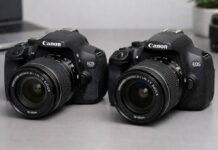
The R10 sits just above the R50 and is aimed at advanced beginners or hobbyists. It has a more robust body, stronger controls, and faster handling. Autofocus and photo quality are similar, so the R50 covers most casual needs. Choose the R10 if you shoot action often or want more room to grow.
Canon R50 vs Sony ZV-E10
The ZV-E10 is a direct competitor for beginner creators and vloggers. It offers a wide selection of affordable Sony E-mount lenses, strong autofocus, and better built-in audio features. The trade-off is that it lacks a viewfinder and feels more video-focused. If lens variety and vlogging matter most, Sony is hard to beat.
Canon R50 vs Nikon Z30
The Nikon Z30 is another beginner-friendly mirrorless camera, focused on content creators. It has compact Z-mount lenses, reliable video autofocus, and a flip-out screen. The missing viewfinder is the biggest issue. For stills, the R50 feels more like a traditional camera. For video-first use, the Z30 remains competitive.
Canon R50 vs Canon R50 V
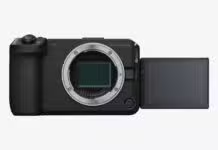
The R50 V matters because it targets creators more directly. If you want a classic beginner camera for photos and occasional video, the R50 is still the cleaner choice. If video controls, vertical workflow, and creator handling matter more, compare both carefully before buying.
In all these matchups, the Canon R50 stands out for ease of use, attractive JPEG colors, and compact design. If you want a “just works” experience with a viewfinder, it remains one of the safest beginner picks.
What I would buy
If I were buying the R50 as a first camera, I would choose the RF-S 18-45mm kit only if size mattered most. For travel and family use, the two-lens kit with the RF-S 55-210mm makes more sense because it adds useful reach. If portraits or low light are the priority, I would buy the basic kit. Then I would add the RF 50mm f/1.8 STM as soon as possible.
I would not build a serious sports or wildlife kit around the R50. It can handle casual action, but the body, buffer, grip, and lens options point clearly toward beginner and travel use.
Final verdict
This Canon R50 review lands on a simple verdict. The R50 is exactly what it claims to be: an accessible entry point to interchangeable lens photography and video. Its strengths are clear – ease of use, reliable autofocus, pleasing color, and a compact form factor. If your goal is to capture better family moments, travel stories, or begin your journey as a creator, the R50 is a safe recommendation.
Its limitations are just as clear. The lens ecosystem, while growing, still lags behind Sony’s and Nikon’s for breadth and budget options. In-body image stabilization is missing, and advanced video features are limited compared to more expensive cameras. However, for its intended audience, these are not dealbreakers.
Is the Canon R50 worth it? For beginners who want a camera that delivers quality results without complexity, the answer is yes. If you need a camera to grow with, consider the R10. If you need demanding creative features, it may also be worth exploring other systems.
The R50 is not the only choice, but it is one of the easiest to pick up and shoot with confidence. That is why this Canon R50 review rates it so highly for first-time mirrorless buyers. In a world where compact digital cameras are making a comeback, the Canon R50 feels right at home: simple, capable, and fun.
Frequently asked questions
Is the Canon R50 good for beginners?
Yes. The R50 is one of the easiest Canon mirrorless cameras for beginners moving up from phones. It has a helpful guided menu, reliable automatic modes, and an intuitive touchscreen. You can get strong images before learning every manual setting.
Does the Canon R50 shoot good 4K video?
Yes. The R50 captures sharp 4K up to 30p and its face detection is reliable for family video and casual creator work. The main limitation is the lack of in-body stabilization, so handheld walking footage benefits from a stabilized lens or small gimbal.
What lenses should I buy first for the Canon R50?
Start with the RF-S 18-45mm kit lens for daily use. Add the RF 50mm f/1.8 STM for portraits and low light, or the RF 16mm f/2.8 STM for wide shots and vlogging. For a broader path, see our guide to the best Canon RF-S lenses.
Is the Canon R50 better than the Canon R10?
The R50 is smaller, simpler, and usually better for beginners. The R10 gives you more manual control, faster handling, and more room to grow. If you mostly shoot family, travel, and casual video, the R50 is enough. If you want action and deeper controls, the R10 is the stronger body.
That beginner-friendly design is only part of the story. The next step is understanding how the R50 compares with the more creator-oriented version in the same family. If video features and a different shooting style matter, compare both bodies carefully. This Canon EOS R50 V review helps clarify which direction makes more sense.
Beginners, family photographers, travel shooters, and first creator kits that need simple Canon color and reliable autofocus.
You need weather sealing, in-body stabilization, dual card slots, or more direct controls for fast manual shooting.
Very low; the touchscreen, guided interface, and light body make it easy to learn.
Canon R10 or R7 for more speed and controls; Canon R8 or R6-series bodies for full-frame.
No IBIS and no advanced codecs, but 4K 30p quality is strong for casual creator work.
Yes, especially as a first RF-mount camera or compact family/travel kit.