
View full specs
This OM System OM-5 Mark II review reaches a simple conclusion: it is one of the best small, weather-rated travel cameras for photographers who value a light system over a new sensor or class-leading autofocus. Buy it for hiking, landscapes, close-up work, and handheld travel. Skip it for serious action, heavy cropping, or video production. Original OM-5 owners should upgrade only if the new grip, menu, CP button, and USB-C charging fix problems they actually have.
OM-5 Mark II review: the short verdict
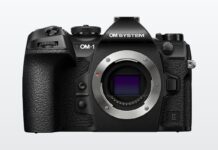
The OM-5 Mark II is a refined 20.4MP Micro Four Thirds camera, not a generational leap. At 418g with battery and card, it is easy to carry. Its IP53 rating, 5-axis stabilization, and compact lenses make a persuasive outdoor system. The trade is equally clear: the sensor, 2.36-million-dot viewfinder, 1.04-million-dot screen, and basic autofocus architecture are carried over from the OM-5.
- Best for: travel, hiking, landscapes, macro, city walks, and photographers who want a sealed kit without full-frame weight.
- Main compromise: no bird, animal, or vehicle subject detection; only face and eye detection for people.
- Upgrade advice: most OM-5 owners should keep their camera unless USB-C, the revised menu, or the larger grip has real value.
- Value point: the body is much more convincing near current promotions around $1,050 than at its $1,199.99 launch price.
What changed from the original OM-5?
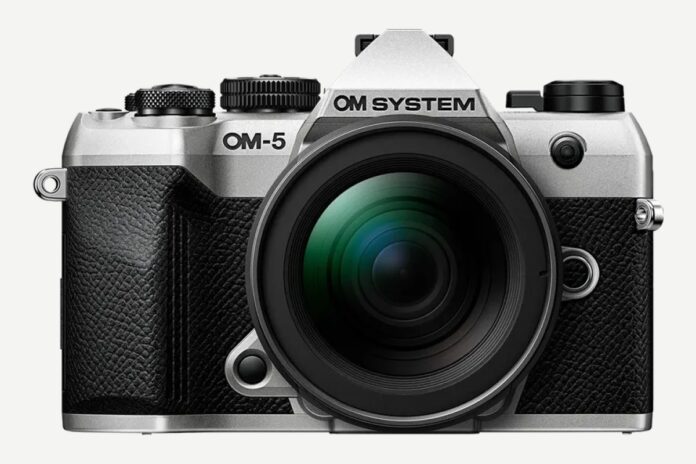
The most important changes are operational. The deeper front grip gives my fingers more purchase without turning the body into a brick. OM System also brought over its newer, color-coded menu structure. That is a meaningful improvement if you previously found the OM-5 menu slow to navigate.
A dedicated CP button now opens High Res Shot, Live ND, focus stacking, HDR, and multiple exposure. USB-C replaces Micro USB and lets you charge the BLS-50 battery from a power bank while the camera is off. Video gains OM-Cinema 1 and OM-Cinema 2 profiles, plus a red recording frame and tally lamp.
What did not change matters more to some buyers. Resolution remains 20.4MP, autofocus still uses 121 cross-type phase-detection points, and there is no modern subject-recognition system. The viewfinder and rear screen are unchanged. This is a better OM-5 to buy new, but not an automatic upgrade from one.
Handling and weather protection outdoors
A small body that still needs deliberate setup
The twin control dials are well placed, and the fully articulating screen works for low angles, vertical compositions, and pieces to camera. Large hands may still find the buttons small. With gloves, the neighboring CP and Record buttons also need a deliberate press.
The Super Control Panel keeps common settings close, while the revised menu reduces hunting for less familiar options. I would build a My Menu with card formatting, stabilization, High Res Shot, autofocus targets, and wireless transfer before a trip. The camera is capable enough that a little setup pays back quickly.
IP53 is useful, not waterproof
OM System gives the body an IP53 dust- and splash-resistance rating and rates operation to 14°F (-10°C). That protection applies as a system only with a compatible sealed lens. It does not cover open doors, damaged seals, or immersion. Salt spray still deserves a careful wipe-down.
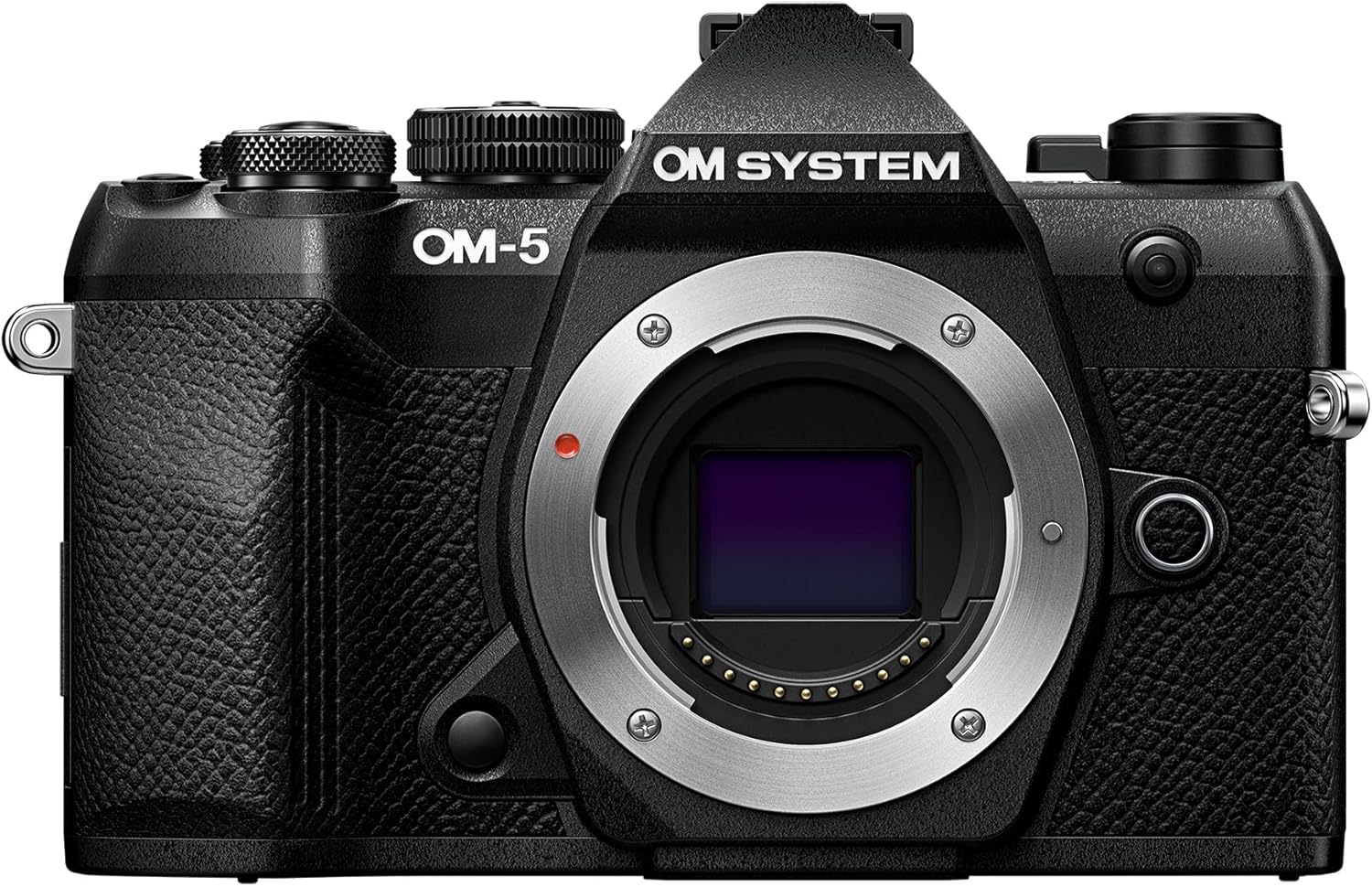
The body-only weight is 366g. Pair it with the sealed M.Zuiko 12-45mm F4 PRO and the camera retains its reason for existing: the lens covers a 24-90mm-equivalent range without overwhelming the grip. Our guide to the best Micro Four Thirds lenses explains smaller primes, sealed zooms, and stabilization caveats.
Image quality and stabilization
Good 20MP files, with limited cropping room
The 20.4MP Live MOS sensor produces detailed files at low and moderate ISO settings. Color and tonal transitions are attractive, and the native files are large enough for normal editorial work and substantial prints. The limit appears when a distant subject occupies a small part of the frame. A 20MP file leaves less recovery room than a 26MP or 33MP rival.
The standard sensitivity range tops out at ISO 6400, with expanded settings to ISO 25,600. High ISO is usable when exposure is sound, but aggressive shadow lifting removes fine texture sooner than on a good APS-C or full-frame body. A bright prime helps moving subjects; stabilization does not.
IBIS changes what you can leave at home
The 5-axis system is rated up to 6.5 stops under OM System’s test conditions, rising to 7.5 stops with a compatible Sync IS lens. For static subjects, that can mean a lower ISO in churches, forests, and blue-hour streets. Stabilization cannot freeze children, wildlife, or windblown foliage, so shutter speed still comes first when the subject moves.
Handheld High Res Shot produces a 50MP composite, while tripod High Res Shot reaches 80MP. Both work best with static detail. Water, leaves, people, and clouds can create artifacts between frames. Think of these modes as specialist tools, not a way to turn every photograph into a high-resolution file.
Autofocus and burst shooting
Single autofocus is quick and accurate in ordinary light. Face and eye detection help with people, while the 121-point phase-detection array covers everyday movement well. The important limitation is what the camera does not have: there are no dedicated subject modes for birds, animals, cars, trains, or aircraft.
That makes the OM-5 Mark II less dependable than current rivals when a bird crosses branches or a pet changes direction. Tracking can follow a clear, predictable subject, but it is not the same system found in the OM-1 Mark II. Use a controlled autofocus area and anticipate where the subject will enter the frame.
Burst specifications also need context. The camera can reach 30 fps electronically with focus and exposure locked. With continuous autofocus, the useful ceiling is 10 fps electronic or 6 fps mechanical. Those rates are enough for family action and brief outdoor sequences. Wildlife and sports specialists will get more from the deeper buffer and subject detection in our OM System OM-1 Mark II review.
Computational tools that genuinely reduce kit
The CP button is the Mark II’s most visible practical improvement. Live ND combines exposures to simulate up to four stops of neutral density, or ND16. It is useful for waterfalls and moving water when you did not pack a filter. Movement at frame edges can look unnatural, and four stops will not replace a strong physical ND filter in bright conditions.
Focus stacking can combine eight frames in camera with supported lenses. It is useful for flowers, fungi, and product details, though subject movement remains a problem. Live Composite adds only new light to a base exposure, making star trails and light painting easier to judge without repeatedly overexposing the foreground.
These features reward practice. Run a few tests before a trip, because each mode has different restrictions. Their real value is not novelty; it is leaving a tripod, filter, or long editing session behind when the scene cooperates.
Video is useful but still secondary
The OM-5 Mark II records UHD 4K up to 30p, Cinema 4K at 24p, and Full HD up to 120p. Stabilization is excellent for short handheld clips, and the microphone input is welcome. OM-Log400 and the two OM-Cinema profiles offer more control over the look.
All internal video is 8-bit. There is no headphone jack, the HDMI connector is Micro HDMI, and the single card slot prevents an in-camera backup. Autofocus also lacks the subject recognition that makes solo filming easier on newer hybrids. Rolling shutter can show during quick pans.
For travel diaries, family clips, and occasional documentary inserts, the camera is capable. For paid interviews, events, or heavy grading, card redundancy, 10-bit capture, monitoring, and stronger video autofocus matter more than its small body. Treat video as a useful extra, not the reason to buy.
Battery, cards, and the real kit cost
The BLS-50 battery is rated for about 310 shots. A day of burst shooting may yield more frames, while cold weather, video, wireless transfer, and image review reduce endurance. I would carry one genuine spare for city travel and two when a remote day cannot be repeated.
There is one SD/SDHC/SDXC slot, compatible with both UHS-I and UHS-II cards. OM System recommends Class 10 or better for video and a U3 card for 4K, Cinema 4K, or ALL-I recording. One fast UHS-II card improves responsiveness, but it does not provide backup.
Compare the body-only price with the 12-45mm F4 PRO kit rather than treating the cheapest kit lens as equivalent. That lens is compact, sharp, close-focusing, and sealed. A second small prime makes more sense for most travelers than a bag of overlapping zooms. Spare batteries, a fast card, and sealed glass are part of the purchase price.
OM-5 Mark II vs the best alternatives
Original OM-5: buy the older body if it is substantially cheaper and you can live with Micro USB, the old menu, smaller grip, and no CP button. Core image quality, autofocus, and stabilization are very close.
OM System OM-1 Mark II: choose it for wildlife, action, a deeper grip, dual cards, a larger battery, and far stronger subject detection. It costs and weighs more, but it solves the OM-5 Mark II’s biggest performance limits.
Panasonic Lumix G9 II: it shares the Micro Four Thirds mount and offers stronger hybrid features, subject detection, and 10-bit video. It is a much larger camera, so the compact-system argument weakens.
Nikon Z50 II: its APS-C sensor and modern subject detection are attractive for action and high ISO. It lacks in-body stabilization and does not offer the same published IP53 protection. Compare complete lens kits, especially if hiking weight is the reason you are shopping.
For a broader view across fixed-lens, APS-C, and full-frame options, our best travel camera guide starts with the kind of trip and the kit you will actually carry.
Final verdict: who should buy it?
The OM System OM-5 Mark II is easy to recommend to hikers, landscape photographers, macro shooters, and travelers who want a small interchangeable-lens system with credible weather protection. The grip, menu, USB-C port, and CP button improve daily use. Its stabilization and computational tools can genuinely reduce what goes in the bag.
It is harder to recommend to existing OM-5 owners, action specialists, and serious filmmakers. The same 20.4MP sensor, basic subject tracking, single card, small battery, and 8-bit video define the ceiling. Those are not hidden flaws; they are the price of this body being small and relatively affordable.
My buying line is straightforward. New to the system, buy the Mark II when it is near $1,050 or when the 12-45mm PRO kit is sensibly discounted. Already using an OM-5, keep it unless the revised controls and USB-C fix a recurring frustration. For fast wildlife, save for the OM-1 Mark II instead.
Frequently asked questions
Does the OM-5 Mark II have subject-detection autofocus?
It has face and eye detection for people, but no dedicated bird, animal, vehicle, train, or aircraft modes. The OM-1 Mark II is the stronger OM System choice for specialized subject detection.
What battery and memory card does it use?
It uses the OM System BLS-50 battery and one SD/SDHC/SDXC card. The slot supports UHS-I and UHS-II. Use a U3 card for 4K, Cinema 4K, and ALL-I recording.
Is the OM-5 Mark II waterproof?
No. It is rated IP53 for dust and splashes when paired with a compatible sealed lens, but it is not designed for immersion. Keep doors closed and protect it in sustained severe weather.
Travel, hiking, landscapes, macro, everyday photography, and outdoor shooters who prioritize a light sealed system and strong stabilization.
You need specialized subject-detection autofocus, dual-card backup, large cropping reserves, long battery life, or 10-bit video.
Medium; the revised menu is approachable, but autofocus areas, computational modes, card requirements, and lens sealing reward setup.
OM System OM-1 Mark II for wildlife, action, dual cards, and subject detection; larger-sensor rivals when high ISO and cropping latitude matter more than kit weight.
Steady 4K and useful profiles, but 8-bit capture, Micro HDMI, no headphone jack, one card slot, and basic subject tracking keep it stills-first.
Yes near $1,050 for a new outdoor and travel system; generally no as an upgrade from the original OM-5 unless the handling and USB-C changes matter.