
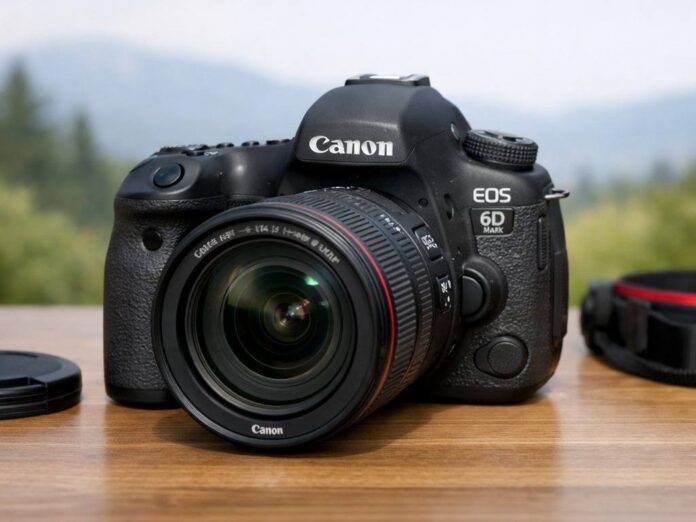
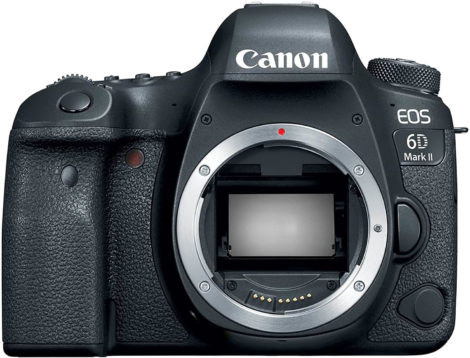
View full specs
This Canon 6D Mark II review looks past spec sheets and into how the camera actually performs in the field. From travel and portraits to everyday shooting, I’ll break down where it still shines, where it feels dated, and who should seriously consider it today.
Should you buy the Canon 6D Mark II in 2026?
If you want affordable full-frame stills and already like the Canon DSLR workflow, the 6D Mark II is still one of the easier used cameras to recommend. If you need stronger dynamic range, 4K video, or faster edge-to-edge subject tracking, it makes more sense to step up to a stronger DSLR or move to mirrorless.
- Best for: portrait, travel, family, and enthusiast photographers who want Canon color, long battery life, and inexpensive access to EF lenses.
- Skip if: you shoot fast action, need dual card slots, or want a smaller hybrid kit with modern video features.
- Fair used price in late June 2026: around $480 to $750 for a body-only camera in normal used condition, with especially clean low-shutter kits often pushing higher.
- One-lens starter kit: pair it with a used Canon EF 24-105mm f/4L IS USM if you want the most flexible single-lens setup.
Before buying, it is worth checking Canon’s official EOS 6D Mark II support page for the user manual, firmware notices, and accessory details.
Who the Canon 6D Mark II is really for
Best fit for enthusiasts moving into full frame
In my years of shooting with the Canon 6D Mark II, one thing stands out: this camera is made for photographers who are ready to leave crop sensors behind but do not want the complexity or expense of high-end professional bodies. If you are an enthusiast looking to get your first full frame DSLR, the 6D Mark II sits in a sweet spot. It bridges the gap between entry-level APS-C models and the bulkier, pricier 5D or 1D series. The control layout and menu system are both familiar and approachable, especially if you have used any recent Canon DSLR. You get the benefits of a larger sensor and shallow depth of field without an overwhelming learning curve.
If you are weighing the 6D Mark II against Canon’s more advanced full-frame options, it helps to see how the next step up changes the shooting experience in real use. This Canon 5D Mark IV review adds useful context for comparing handling, autofocus, and overall value.
For hobbyists who want to grow into creative portraiture, low light photography, or landscape work, the 6D Mark II offers a noticeable step up in image quality over Canon’s Rebel line. The camera’s 26-megapixel sensor gives you enough resolution for serious printing or cropping, but not so much that file sizes or workflow become a headache. If you already own EF or EF-S lenses, the transition is even easier. The 6D Mark II is not aimed at sports or wildlife specialists who need rapid autofocus and burst rates, but for most real world subjects, it is more than capable.
Where it suits travel, portraits, and everyday shooting
While newer mirrorless cameras grab headlines, the 6D Mark II still excels for travel, portraits, and everyday moments. Its weather-sealed body is lighter and more compact than most full frame DSLRs, making it a practical companion for long days, hikes, or urban exploration. I have carried it through city streets and on mountain trails with no worries about a sore shoulder or running out of battery. The built-in GPS and Wi-Fi simplify geotagging and quick sharing, features that traveling photographers and social media enthusiasts appreciate.
Portrait shooters will appreciate the full frame look: creamy backgrounds, rich skin tones, and excellent color straight out of the camera. The 6D Mark II’s autofocus, while not cutting-edge, is accurate for single-shot and live view work, especially with Canon’s Dual Pixel AF. This makes it easy to capture sharp, well-focused images of friends, family, or clients. For everyday shooting, the camera’s controls are straightforward, and the touchscreen makes quick adjustments or reviewing images feel natural. In short, the 6D Mark II is for anyone who wants reliable, high-quality images without the distractions of too many features or steep learning curves.
Design, handling, and day to day usability
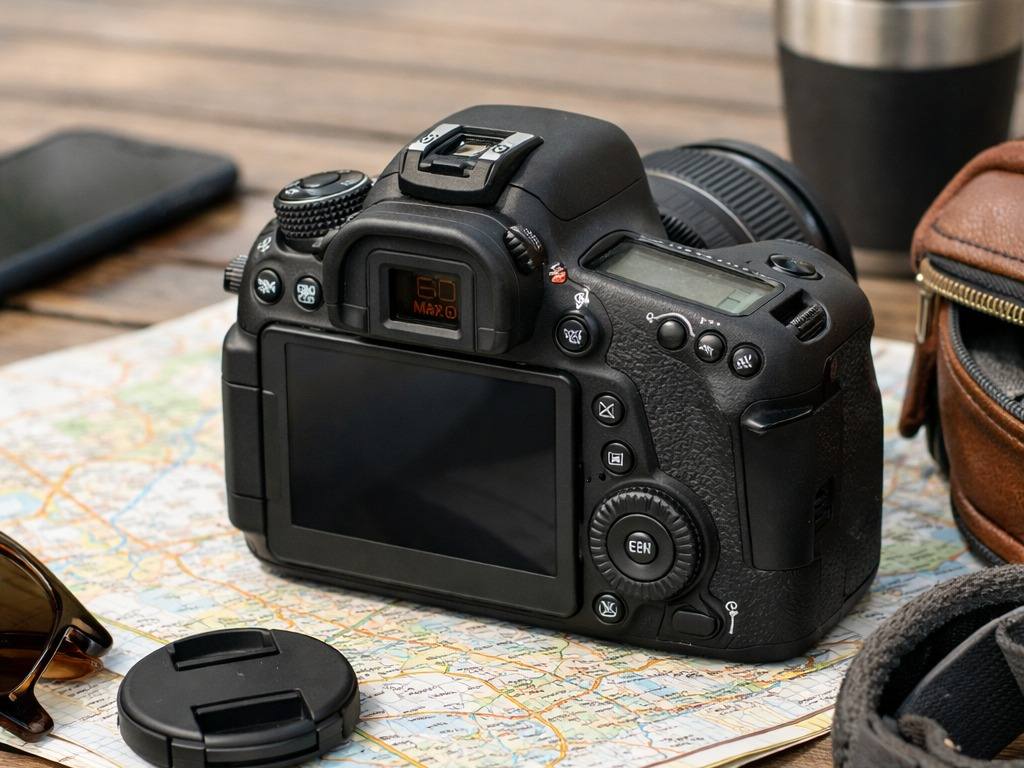
Canon has always excelled at making cameras that feel good in the hand, and the 6D Mark II is no exception. The grip is deep and secure, fitting comfortably even on long days with heavier lenses. I can shoot with one hand when needed, and the textured surface provides confidence in wet or dusty environments. The button layout is classic Canon: every important control falls under your fingers, with the main dial, rear dial, and joystick placed for quick changes to exposure or autofocus points. If you have used any Canon DSLR in the last decade, you will feel instantly at home.
The standout feature for usability is the vari angle touchscreen. This fully articulating display is a game changer for anyone who shoots at awkward angles, on a tripod, or in tight spaces. Framing low-angle landscapes or high-overhead shots is suddenly simple. The touchscreen is responsive for both focus point selection and menu navigation, which speeds up shooting compared to older models without touch support. I often find myself using touch to quickly check focus during playback or to magnify a specific part of the image, which is especially helpful for critical portrait work.
Weather sealing on the 6D Mark II is not quite at the level of Canon’s higher-end models, but it holds up well for real world use. I have shot in light rain, dusty markets, and cold mornings without worry. The camera feels robust without being heavy, and the battery grip, while optional, adds even more comfort for long sessions. Lastly, the on-screen interface is simple, making it easy to change key settings without digging through layers of menus – an advantage on busy shoots or when handing the camera to less experienced users.
Image quality in real shooting conditions
Color, dynamic range, and high ISO performance
Image quality is one of the main reasons photographers consider moving to full frame, and the 6D Mark II delivers results that continue to impress. Out of camera, colors are vibrant yet natural, with Canon’s well-known color science giving pleasing skin tones and lifelike greens and blues. JPEGs straight from the camera are usable for quick sharing or prints, and RAW files contain enough latitude for extensive post-processing. The 26-megapixel sensor strikes a balance between detail and manageable file sizes, which is helpful for both editing and storage.
Dynamic range is where the 6D Mark II shows its age compared with newer sensors. In high-contrast scenes, highlights can clip sooner than on the latest mirrorless bodies. However, with careful exposure and shooting in RAW, you can recover a surprising amount of detail from shadows and highlights. For travel and street photography, where lighting is unpredictable, this is usually enough. In low light, the camera holds up well up to ISO 3200 or even 6400, with noise that is easy to manage and detail that remains intact for most viewing sizes. If you routinely shoot in dark environments, you may notice grain at higher ISOs, but for most real world scenarios, the performance is competitive.
How the sensor holds up for portraits and landscapes
For portraits, the 6D Mark II’s sensor gives a pleasing depth of field and smooth tonal transitions. Skin tones are accurate with minimal need for correction, which is a major advantage for wedding, event, and lifestyle photographers. I have shot full-length portraits in open shade and tight headshots in golden hour light, and the files hold up well for editing. Even when pushing exposure or lifting shadows, the images retain a natural look, avoiding the plastic feel that can plague some sensors.
Landscapes also benefit from the sensor’s strengths. The 6D Mark II captures fine detail in foliage, rocks, and skies, and the color rendering brings out subtle shifts at sunrise or sunset. While the dynamic range is not on par with high-end bodies or the very latest mirrorless models, careful technique and bracketing can overcome most limitations. I have printed large panoramas and stitched images from this camera with excellent results, showing that for many real world uses, the sensor still holds its own.
Overall, the Canon 6D Mark II image quality remains a strong point for portrait, travel, and landscape photographers who value accurate color, reliable results, and the classic full frame look.
Autofocus and shooting performance
Viewfinder autofocus versus Dual Pixel live view AF
If you have experience with earlier Canon DSLRs, you will find the Canon 6D Mark II autofocus system both familiar and a bit of a mixed bag. When shooting through the optical viewfinder, the camera uses a 45-point all cross-type autofocus array. Compared to older 9-point systems, this is a real step up. The extra coverage, especially for off-center subjects, helps a lot for portraits and events. However, the AF points are still clustered toward the center, and for moving subjects near the edges, you may find yourself recomposing or relying on focus-and-reframe techniques.
Autofocus speed through the viewfinder is responsive and reliable in good light. In lower light, I find the 6D Mark II holds focus better than most entry-level DSLRs, but it does not match the stickiness of Canon’s higher-end models. For single shot and predictable movement, accuracy is excellent. I have photographed fast-paced family events and outdoor activities, and rarely does the camera miss focus if I stick to the center points.
The real standout is when you switch to live view. Here, Canon’s Dual Pixel AF comes into play. This technology brings fast, smooth, and decisive autofocus to the LCD, rivaling what you expect from mirrorless cameras. Touch-to-focus works beautifully for portraits, travel, and even macro shots where critical focus is a must. For still subjects and video, Dual Pixel AF is simply a joy to use. I have used live view for low-angle compositions and even casual street photography, and the focus transitions are both accurate and natural.
For continuous autofocus (AI Servo), the 6D Mark II is adequate for casual sports or kids running around, but it is not a specialist sports camera. The tracking works best when you keep your subject near the center and avoid complex backgrounds. In real-world use, I have managed to capture dogs in motion and fast-moving bikes, but if your main interest is action or wildlife, you may want to look at a 5D Mark IV or a newer mirrorless body.
When it comes to burst shooting, the Canon 6D Mark II offers up to 6.5 frames per second. This is fast enough for most everyday scenarios, including candid moments, basic sports, and wildlife at a hobbyist level. The buffer is decent for JPEGs, but with RAW files, you will fill it after about 18 shots. For me, this has only been an issue in rare cases, such as shooting long action sequences. Most often, you will not notice the buffer unless you are holding down the shutter for extended bursts.
Overall, the autofocus and burst performance of the Canon 6D Mark II provide a reliable and enjoyable shooting experience for portraits, travel, and day-to-day photography. The camera’s limitations are mainly felt when you push into the most demanding action genres. For most real-world uses, especially with Dual Pixel AF in live view, the system feels modern and responsive enough to keep up.
Video features and limitations you should know
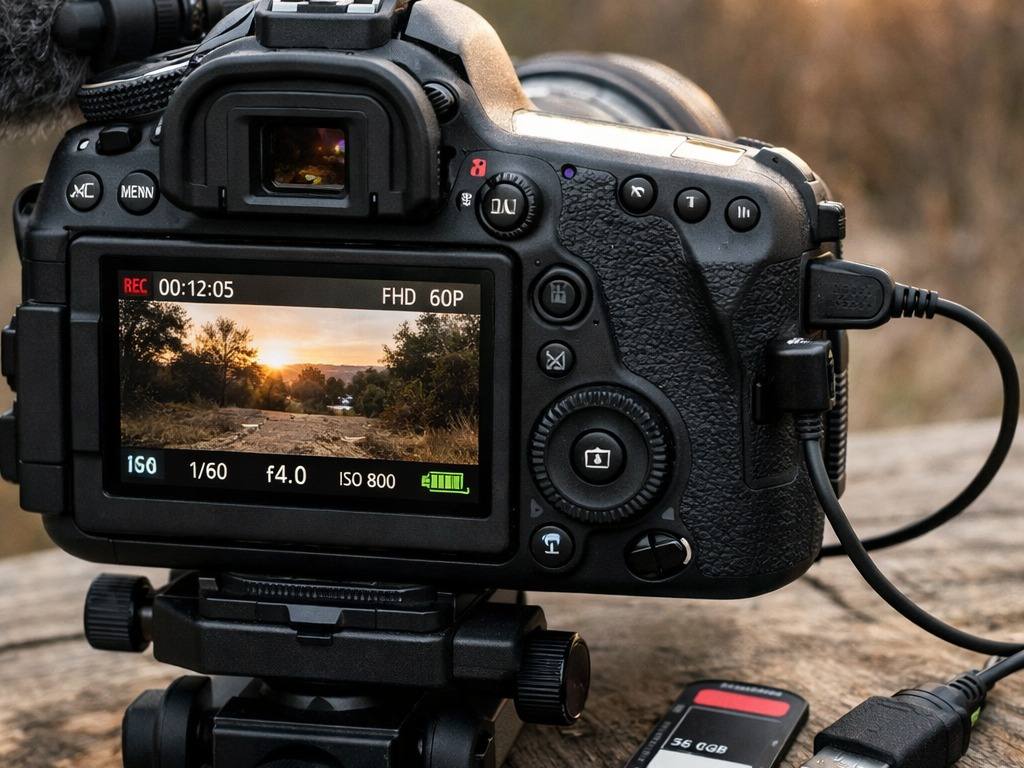
1080p quality, autofocus for video, and missing 4K
Turning to video, the Canon 6D Mark II has strengths and a few major caveats. Let’s start with the positives. The camera records in 1080p Full HD up to 60 frames per second, which is enough for most casual video projects and vlogging. Thanks to Canon’s color science, footage out of the camera looks pleasing and natural. Skin tones are accurate, and the files are easy to edit without needing heavy color grading.
The real highlight is autofocus during video. With Dual Pixel AF, the Canon 6D Mark II video mode locks and tracks focus as smoothly as many modern mirrorless cameras. In my hands-on use, I have filmed family interviews, travel vlogs, and product demos, and the camera keeps faces sharp with minimal hunting. Touch-to-focus on the vari-angle LCD is an excellent feature for run-and-gun shooters or solo creators. Focus transitions are smooth, and the camera rarely stumbles, even with moving subjects.
However, there are some clear limitations that you need to know. The most obvious is the lack of 4K video. In 2026, the Canon 6D Mark II no 4K output is a real downside if you need high-resolution footage. For most casual creators, 1080p is still usable, but if your workflow or clients demand 4K, this camera will not meet those needs.
Other video limitations include a lack of log profiles and limited control over bitrates. The built-in microphone is adequate for reference audio, but for serious work, you will want to use the microphone input and a good external mic. There is no headphone jack, which is a frustration for monitoring audio in the field. Rolling shutter is present in fast pans, but not worse than similar DSLRs from its era.
For hybrid shooters who prioritize photography and want solid, user-friendly video as a bonus, the Canon 6D Mark II video capability is more than enough. If you are aiming for professional video production or want to future-proof your setup, the missing 4K and advanced video controls are significant drawbacks.
Battery life, connectivity, and practical features
Wi Fi, Bluetooth, GPS, and field convenience
One of the enduring strengths of the Canon 6D Mark II is its excellent battery life. With a single LP-E6N battery, I routinely get 900 to 1200 shots per charge when using the optical viewfinder. Even with mixed live view and heavy menu use, 600-700 shots is typical. For travel, events, or long days out, you can leave the charger at home and still have confidence you will not run out of power. This is a big advantage over many mirrorless cameras, which often require extra batteries to get through a full day.
Connectivity is another area where the 6D Mark II keeps up with modern expectations. Built-in Wi Fi and Bluetooth make it easy to transfer images to your phone or tablet. The Canon Camera Connect app allows quick sharing for social media or remote shooting. I have often used the Wi Fi feature to send selects straight to my phone for instant sharing during travel or on location. The connection process is straightforward, and the pairing is reliable after the initial setup.
For geotagging, the built-in GPS is a surprisingly useful feature. If you are a travel photographer or simply want to organize photos by location, the 6D Mark II will embed GPS data into your images. I have used this extensively for documenting trips and keeping track of where specific photos were taken. Battery drain with GPS is noticeable if left on all day, but for most outings, it is a worthwhile trade-off for the convenience.
Other practical features include the vari-angle touchscreen, which remains rare on full frame DSLRs. This makes shooting at difficult angles and reviewing images much more user-friendly. The camera also supports UHS-I SD cards, which are widely available and affordable, though not the fastest standard in 2026. The single card slot is a limitation if you require instant backup, but for most hobbyists and enthusiasts, it is manageable with good card management practices.
In summary, the Canon 6D Mark II battery life, connectivity options, and practical shooting features still hold up well for real-world photography. These strengths make the camera a reliable daily companion, and they are a big part of why so many photographers continue to use it for travel, events, and everyday personal work.
Used Canon 6D Mark II buying checklist
The biggest reason to choose this camera now is used-market value, so condition matters more than spec-sheet comparisons. Before you pay, check these items carefully:
- Shutter count and body wear: cosmetic scuffs are normal, but be cautious if the shutter count is high and the grip rubber is lifting or shrinking.
- Vari-angle screen hinge and touchscreen: open and close the screen fully and make sure the hinge feels firm and the touchscreen responds across the whole panel.
- Card slot and battery door: test with a known-good SD card and confirm both doors latch cleanly without intermittent write errors.
- Sensor, mirror box, and hot shoe: inspect for heavy dust, corrosion, or impact damage that suggests rough professional use.
- Ports, Wi-Fi, and GPS: plug in a cable, connect to the app if possible, and confirm the wireless features still behave normally.
- Lens mount fit and autofocus consistency: mount a lens, check for play, and shoot a short series through both the viewfinder and live view.
If the asking price gets too close to stronger alternatives, compare it against this cheapest full-frame cameras guide and the older but still capable Canon 5D Mark II review before committing.
Lens pairing and system value on lensandshutter.com
Best lenses for portraits, travel, and general use
When considering the best lenses for Canon 6D Mark II, the real magic of this camera comes from its access to Canon’s mature EF lens lineup. Over decades, Canon EF lenses have earned a reputation for reliability, beautiful rendering, and breadth of choice. Whether you’re a portrait specialist, travel shooter, or want an all-around lens, there is an excellent option for every style.
For portraits, the Canon EF 85mm f/1.8 USM remains a classic. It is sharp wide open, quick to focus, and produces pleasing background blur. If you want even creamier bokeh and don’t mind the extra size or price, the EF 85mm f/1.4L IS USM is hard to beat. Either lens pairs beautifully with the 6D Mark II’s full frame sensor, giving you that shallow depth of field and subject isolation that crop sensors struggle to match.
Travel and street photographers might lean toward the EF 24-105mm f/4L IS II USM. This lens is a workhorse – weather-sealed, optically stable, and covers everything from wide landscapes to moderate telephoto portraits. For those who prefer prime lenses, the EF 35mm f/2 IS USM is lightweight, sharp, and stabilized, making it a discreet choice for travel and low light.
General use shooters who want a single lens solution often choose the EF 24-70mm f/2.8L II USM. The image quality is outstanding from edge to edge, and the fast aperture is perfect for dim indoor settings. If budget is a concern, the EF 50mm f/1.8 STM offers fantastic value and lets you shoot in low light while keeping your kit compact.
One of the biggest advantages of the Canon 6D Mark II system is the sheer availability and affordability of EF lenses on the used market. As many photographers move to mirrorless, you can often find pro-level glass for prices that were unthinkable a few years ago. This makes building a high-quality kit with the 6D Mark II more accessible than ever.
If you already own EF lenses, the value proposition is even stronger. You can upgrade your camera body and immediately take full advantage of those lenses. For a broader look at where this body sits in Canon’s used DSLR range, this Canon DSLR lineup guide is a useful companion.
Canon 6D Mark II vs newer alternatives
How it compares with EOS RP, 5D Mark IV, and used DSLR options
With the rapid shift toward mirrorless cameras, many photographers now compare the Canon 6D Mark II with models like the EOS RP, the 5D Mark IV, and other used full frame DSLRs. Each of these options has different strengths, so your best Canon full frame camera depends on your needs and priorities.
The EOS RP remains one of the most obvious mirrorless alternatives for buyers who want to stay in Canon’s ecosystem. It is smaller and lighter, with an electronic viewfinder and access to Canon’s RF lenses. It also gives you newer autofocus behavior in live view and video. However, the RP’s battery life is noticeably shorter, and its build quality feels less robust than the 6D Mark II. If you prefer an optical viewfinder and longer shooting sessions, the 6D Mark II still feels more comfortable and familiar in hand.
Comparing the Canon 6D Mark II vs 5D Mark IV is a bit different. The 5D Mark IV is more advanced in almost every way: higher resolution, noticeably better dynamic range, superior autofocus, dual card slots, and robust weather sealing. It is the choice for demanding professionals and those who shoot in challenging environments. The downside is price – the 5D Mark IV is still more expensive on the used market, and you may not need its extra capabilities for everyday photography.
Looking at used DSLR options, the original 6D is even more affordable but gives up the faster autofocus, newer sensor, and articulated screen of the Mark II. On the other hand, the Canon 5D Mark III is a workhorse with a more robust build and higher-end autofocus, but it lacks features like the touchscreen and Dual Pixel AF in live view.
Mirrorless cameras have clear advantages for video and continuous autofocus in live view. However, if you mostly shoot stills, value battery life, or already own EF lenses, the 6D Mark II remains a strong choice. Its combination of price, performance, and system compatibility is hard to beat for many real-world photographers. If you are still weighing DSLR value more broadly, this best DSLR cameras guide provides a wider reality check.
Pros, cons, and final verdict
Every camera is a mix of strengths and weaknesses, and the 6D Mark II is no exception. From my own experience and feedback from other users, here’s where it shines and where you’ll feel its age.
Pros:
- Excellent color and Canon’s signature skin tones
- Reliable, comfortable ergonomics with a deep grip and sensible controls
- Fully articulated touchscreen – rare among full frame DSLRs
- Long battery life for all-day shoots
- Fast and accurate Dual Pixel autofocus in live view
- Huge range of affordable, high-quality EF lenses
- Weather sealing for moderate outdoor use
- Very good value on the used market, especially for those with existing EF glass
Cons:
- Limited dynamic range compared with newer models – highlights clip easily in tricky lighting
- Viewfinder autofocus is less advanced than modern mirrorless or the 5D Mark IV
- No 4K video recording, only 1080p up to 60fps
- Single SD card slot – can be a concern for event or wedding photographers
- No in-body image stabilization, which is now common on new mirrorless cameras
- Bulky compared to the latest compact digital cameras and some mirrorless options
So, is Canon 6D Mark II worth it in 2026? For many real-world photographers, the answer is yes – especially those who shoot portraits, events, or travel and want a reliable, straightforward camera. If you already have EF lenses, the value is even better. The 6D Mark II delivers Canon’s classic color, familiar handling, and dependable performance at a price that is hard to match.
However, if you need the very best dynamic range, shoot a lot of video, or want the smallest, lightest kit, you may prefer a newer mirrorless model. For those who prioritize battery life, optical viewfinder experience, and total system cost, the 6D Mark II is still a smart and enjoyable choice.
Frequently asked questions
Is the Canon 6D Mark II still worth buying today?
Yes, the 6D Mark II remains a solid choice for enthusiasts and portrait photographers, especially if you already own EF lenses. It offers great color, good autofocus in live view, and excellent battery life. While it lacks some modern features, its overall value is strong.
Does the Canon 6D Mark II have good autofocus for portraits?
For portraits, the 6D Mark II performs very well. The viewfinder autofocus is fast and accurate for center subjects, and Dual Pixel AF in live view is excellent for eye focus and off-center compositions.
Is the Canon 6D Mark II good for video work?
The 6D Mark II shoots decent 1080p video with Canon’s pleasing color and reliable Dual Pixel autofocus. However, it does not offer 4K video or advanced video features found on newer mirrorless cameras. It is best for casual video rather than professional filmmaking.
What are the best lenses for the Canon 6D Mark II?
For portraits: EF 85mm f/1.8 USM or EF 85mm f/1.4L IS USM. For travel: EF 24-105mm f/4L IS II USM or EF 35mm f/2 IS USM. For general use: EF 24-70mm f/2.8L II USM or EF 50mm f/1.8 STM. These lenses balance quality, size, and price and are widely available.
Key takeaways for real world photographers
- The Canon 6D Mark II remains a friendly and capable full frame DSLR for portraits, travel, and everyday photography.
- Its strongest points are color, ergonomics, battery life, and Dual Pixel autofocus in live view.
- Its biggest compromises are limited dynamic range compared with newer bodies and the lack of 4K video.
- For photographers invested in EF lenses, it can still be a smart value on the used market.
Portrait, travel, lifestyle, and enthusiast full-frame shooters who want Canon color with a forgiving DSLR workflow.
You need strong dynamic range recovery, dual card slots, 4K video, or confident action autofocus across the frame.
Moderate; easier than older pro DSLRs, but still less intuitive than current mirrorless cameras for video and AF tracking.
Canon 5D Mark IV if you want a more complete DSLR, or EOS RP / R6 Mark II if you want the cleaner long-term mirrorless path.
Pleasant Canon color and strong live-view AF help, but no 4K and limited video depth make it a casual-video body, not a serious hybrid.
Yes if your priority is affordable full-frame stills, strong battery life, and EF lens value rather than modern hybrid features.