
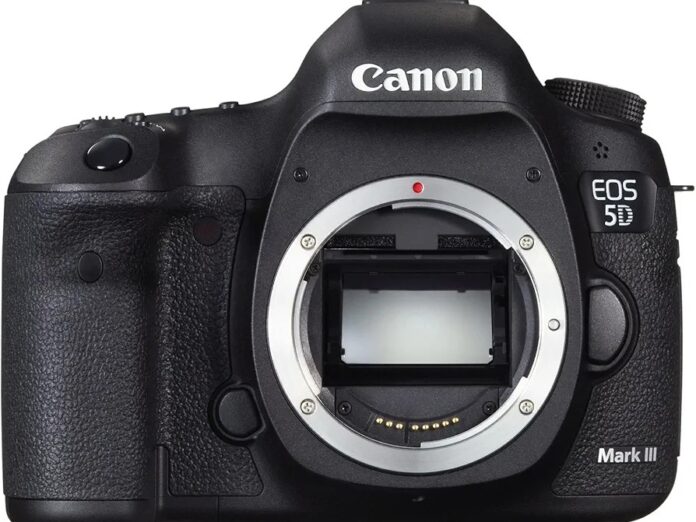

View full specs
If you are looking at the Canon 5D Mark II in 2026, you are not shopping for convenience. You are shopping for a certain kind of file, a certain kind of shooting rhythm, and a certain kind of DSLR confidence that many newer cameras no longer offer. This Canon 5D Mark II review is written from that angle: not nostalgia for nostalgia’s sake, but a practical look at whether this older full-frame body still earns a place in a real kit.
The short version is simple. The 5D Mark II is still worth buying used if your priority is image character, full-frame depth, solid ergonomics, and access to Canon EF lenses at sensible prices. It is not the right camera if you expect modern autofocus, carefree video, or the speed to cover sports and fast-moving events without friction.
Canon 5D Mark II review: is it still worth buying used?
Yes, but only for the right buyer. I would still recommend the Canon 5D Mark II to portrait photographers, landscape shooters, studio users, and experienced hobbyists who want a classic full-frame DSLR without spending much. It can also make sense as a second body for photographers who already own EF glass and understand exactly what they are gaining and giving up.
What keeps it relevant is not the spec sheet. On paper, it is easy to dismiss. The autofocus is old, the burst rate is modest, live view is sluggish, and the feature set is clearly from another era. What keeps the camera alive is the way it draws light, handles tonal transitions, and encourages deliberate shooting. If that sounds romantic, fine, but it is also practical. Good files are still good files.
If you mainly shoot people, travel scenes, architecture, products, or landscapes, the 5D Mark II still has something to offer. If you shoot kids running toward you in dim light, paid events where backup matters, or hybrid content where video needs to be easy, you should move on. That is the line.
For readers weighing the broader Canon full-frame path, it also helps to compare this older body with the later DSLR that refined the formula. This Canon 5D Mark IV review gives that next-step context, especially if you are deciding whether to save money or buy a more complete tool.
What the Canon 5D Mark II still gets very right
The files still have real full-frame appeal
The 21.1MP full-frame sensor is the main reason this camera still matters. You do not buy the 5D Mark II because it beats newer bodies on dynamic range charts. You buy it because the files have weight to them. Skin tones are usually easy to work with, transitions feel smooth rather than brittle, and the overall rendering has a calm, natural quality that still looks excellent in prints and edited galleries.
There is also enough resolution for serious work. Twenty-one megapixels is not a compromise for most portrait, editorial, web, and print use. You can crop moderately, print large, and still have files that do not feel thin. That matters more than headline megapixel counts if your photography lives in the real world rather than in spec comparisons.
The body feels like a tool, not a gadget
Pick up the 5D Mark II and you are reminded why so many photographers stayed loyal to this class of DSLR for so long. The grip is deep, the shutter has authority, the rear wheel is fast, and the top LCD still makes practical sense. Nothing about the camera is trying to charm you with novelty. It just gives you direct control and gets out of the way.
If you learned photography on older Canon bodies, this camera feels immediately legible. If you learned on phones or small mirrorless cameras, the 5D Mark II can feel almost refreshingly serious. You slow down. You check your exposure. You think a bit more before firing twelve frames of the same moment. For some photographers that feels restrictive. For others, it improves the hit rate.
Used EF lenses make the whole package stronger
The used Canon EF market is one of the strongest arguments for the 5D Mark II. There is so much excellent glass available now that building a capable full-frame kit can cost far less than many buyers expect. A clean 5D Mark II with an EF 50mm f/1.8, EF 85mm f/1.8, EF 24-105mm f/4L, or EF 17-40mm f/4L can still do meaningful work.
That is the real value story here. You are not just buying an old body. You are buying access to a mature, affordable system with decades of lenses, accessories, batteries, and user knowledge behind it.
Where the Canon 5D Mark II clearly shows its age
Autofocus is the biggest reality check
Let me be direct here: if autofocus convenience is high on your list, the Canon 5D Mark II is going to test your patience. The center point is the one you trust. The outer points are usable, but they are not where this camera feels confident, especially in lower light or with fast-moving subjects.
That means the classic 5D Mark II rhythm is still center-point focus, recompose, and shoot. If you are comfortable working that way, the camera can be very reliable. If you have been spoiled by modern face detect, subject tracking, or sticky eye AF, the 5D Mark II will feel ancient within ten minutes.
This does not make it a bad camera. It simply makes it a camera that demands more from the photographer. For portraits, still life, interiors, travel details, and landscape work, that trade-off can be perfectly acceptable. For action, weddings with chaotic dance floors, or active children indoors, it is a limitation you feel immediately.
Speed is adequate, not generous
The 3.9 fps burst rate tells you what kind of camera this is. It is not built for frantic coverage. Startup is quick, shutter response is solid, and the camera never feels lazy in basic operation, but it does not invite spray-and-pray shooting. The buffer is also fine rather than impressive, especially if you are shooting RAW in quick succession.
Personally, I do not think this is a dealbreaker for the kinds of photography the 5D Mark II still suits best. But if you are trying to convince yourself it can secretly double as a wildlife or sports body, stop there. It is better to respect what this camera is than to force it into roles it was never going to handle gracefully.
Live view, screen tech, and connectivity are old-school
The rear screen is usable, not enjoyable. In bright light it is not ideal for judging fine focus, and there is no touchscreen, no articulation, no wireless convenience, and no modern quality-of-life layer. The live view experience is another reminder that this body belongs to an earlier generation. You can use it, but you will not want to build a modern workflow around it.
If your shooting style depends on silent shooting, app control, quick phone transfer, or low-angle composition through a good articulated screen, the 5D Mark II is simply the wrong camera.
Image quality: why photographers still talk about this sensor
Color and tonal rendering still feel persuasive
The best thing I can say about Canon 5D Mark II image quality is that it rarely feels clinical. There is detail, but the files are not hard. There is color, but it usually does not feel overcooked. Portraits benefit from gentle transitions in skin, and landscapes can look rich without becoming garish. That is a big part of why so many photographers still feel attached to this camera years later.
You can call that color science, sensor character, or just familiarity. The name matters less than the outcome. If you edit carefully, the 5D Mark II produces files that still look serious and intentional.
Dynamic range is workable if you expose with care
The dynamic range is respectable, but this is not one of those newer sensors that lets you be careless and rescue everything later. The 5D Mark II rewards disciplined exposure. Protect highlights, shoot RAW, and you can pull a decent amount from shadows without the files falling apart. Push too hard and the age shows.
That is worth stating clearly because some modern reviews flatten the difference. Newer bodies are easier. The 5D Mark II is more forgiving than many people expect, but not so forgiving that lazy exposure disappears in post. If you already expose thoughtfully, this will not bother you. If you rely on heavy rescue work, it might.
High ISO performance is still respectable for this class
ISO 800 and 1600 still look very good. ISO 3200 is usable without apology for many kinds of work, especially black-and-white, documentary, and event images where atmosphere matters more than pixel-level cleanliness. Above that, you are leaning more on taste and tolerance, but the grain pattern often feels more pleasant than the smeared look you get from smaller sensors trying too hard to stay clean.
That is another reason older full-frame DSLRs still hold value. Even when they lose on paper, they can still win aesthetically. If you shoot in available light and like a little texture in your files, the 5D Mark II still has an argument.
How the Canon 5D Mark II feels in real use
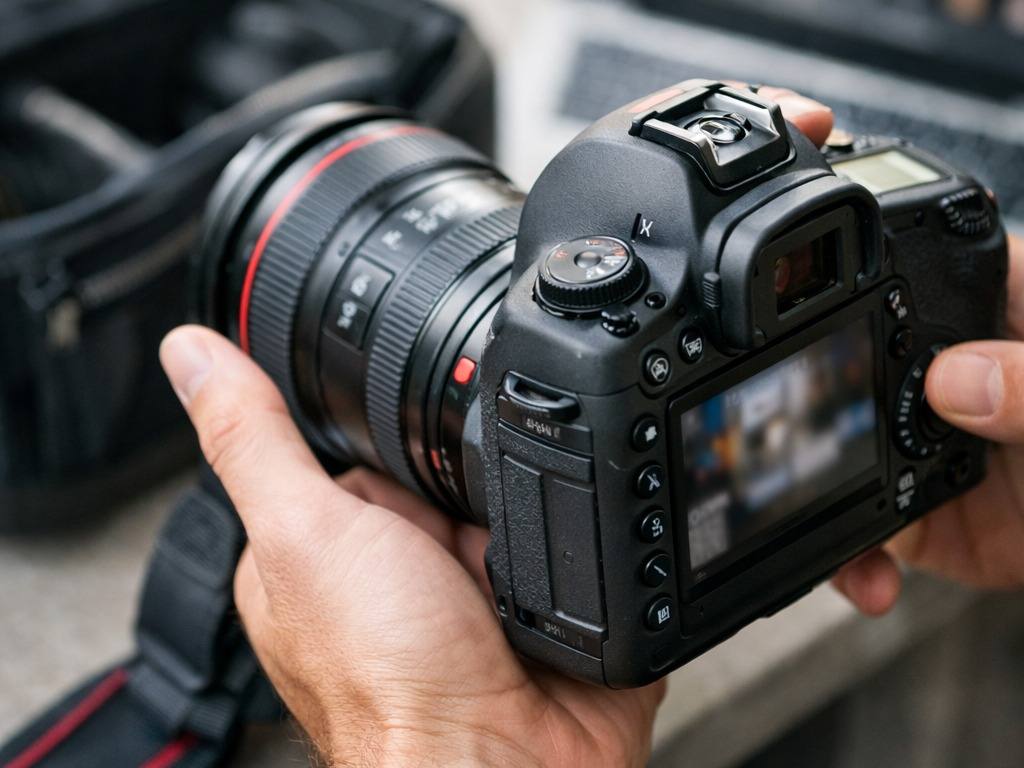
It encourages a slower, more intentional way of shooting
Some cameras make you feel like an operator. The 5D Mark II makes you feel like a photographer. That may sound self-important, but there is a concrete reason for it. The camera does not automate much of the decision-making for you. It asks you to choose your focus point carefully, think about timing, and stay engaged with exposure.
For some readers, that is exactly the appeal. If you want a camera that gets you back into a more deliberate relationship with the frame, the 5D Mark II can be strangely refreshing. If you want a body that vanishes through automation, this is not it.
Lens balance is one of its underrated strengths
Older pro-style Canon bodies tend to balance well with lenses that feel awkward on smaller mirrorless cameras. An EF 24-70mm, 70-200mm, or 135mm prime makes sense on this body. The camera has enough mass to feel stable, and the grip gives you something substantial to hold onto during longer sessions.
That matters in portrait sessions and event work. The 5D Mark II is not light, but it is comfortable in the way well-shaped DSLRs often are. There is a difference between heavy and tiring. This body is heavy. It is not automatically tiring.
Canon 5D Mark II for video: legendary, but be realistic
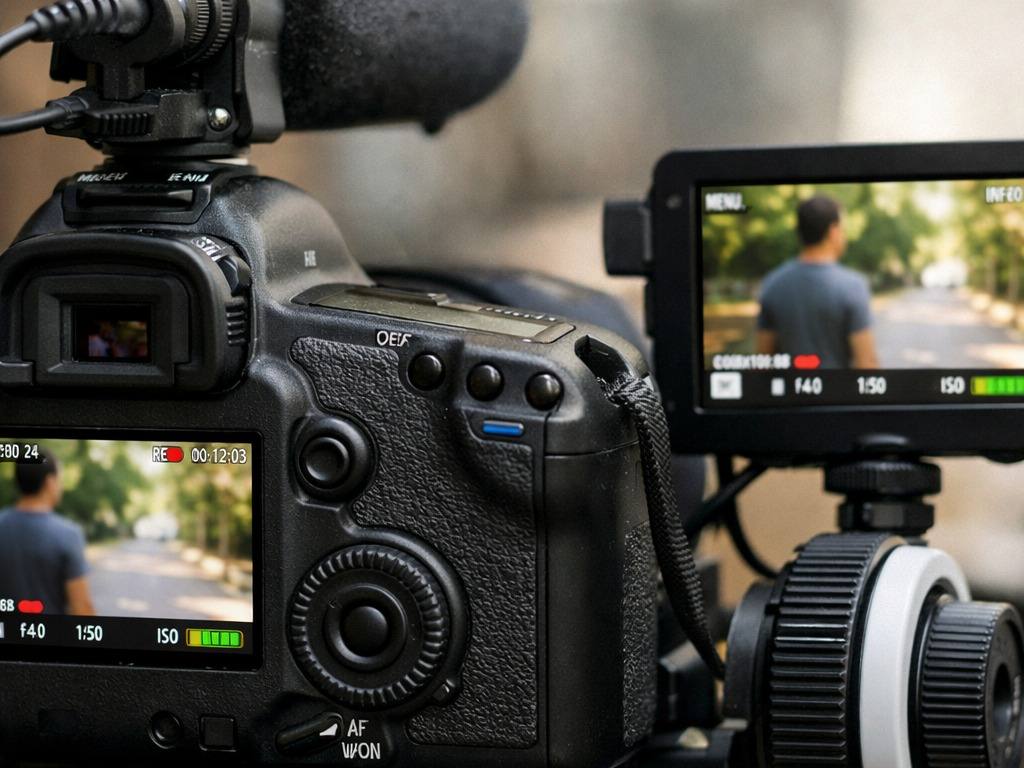
Why it became iconic
The 5D Mark II changed DSLR video because it made full-frame cinematic shallow depth of field accessible at a completely different price point. That part of the story is real. It was not hype. For a generation of filmmakers, wedding shooters, and hybrid creators, it opened a door.
Even now, the footage can still look lovely in the right hands. Canon color remains attractive, the full-frame look still has emotional weight, and there is a texture to the output that many people continue to like.
Why it is no longer an easy video recommendation
But historical importance is not the same thing as a current buying recommendation. The Canon 5D Mark II is no longer a comfortable video camera by modern standards. There is no continuous autofocus worth relying on, rolling shutter is visible, audio handling is limited, and the codec does not give you the flexibility people now expect. Later firmware gave the camera more practical frame-rate options, which helped, but it did not turn it into a modern hybrid body.
If you want to shoot controlled interviews, stylized B-roll, music videos, or personal projects where you are happy to pull focus manually and work around the camera, fine. If you want a casual, dependable video tool, there are much better answers now. You should not buy a 5D Mark II in 2026 mainly because of its video legend.
Best uses and best lens pairings
Portraits are still one of its sweet spots
Pair this camera with an EF 85mm f/1.8, EF 135mm f/2L, or even the humble EF 50mm f/1.8, and its strengths become obvious quickly. Skin tones are flattering, background separation feels natural, and the files respond well to careful portrait editing. If your work is about expression, light, and framing more than autofocus gymnastics, the 5D Mark II still makes a lot of sense.
Landscape and travel work suit it well
For landscape photography, the sensor still delivers enough detail for serious output, and the DSLR battery life remains genuinely useful on longer outings. An EF 17-40mm f/4L or EF 24-105mm f/4L turns the 5D Mark II into a very capable travel and landscape tool, especially if you value the optical viewfinder experience and do not need the lightest setup.
I would also add this: the 5D Mark II can still be a lovely travel camera for photographers who want to travel with intent rather than maximum convenience. That is not everybody. But if that sounds like you, the camera still has charm and utility.
Studio and product work are easy fits
In studio conditions, many of the camera’s weaknesses become irrelevant. Autofocus demands are lower, lighting is controlled, and the image quality is still absolutely good enough for portraits, products, and editorial setups. Tethering expectations are different today, of course, but as a straightforward stills machine in a controlled environment, the 5D Mark II remains credible.
What to check before buying a used Canon 5D Mark II
If you are shopping used, condition matters more than nostalgia. A clean, well-kept 5D Mark II is still interesting. A tired one with hidden problems is not a bargain. Here is what I would check before buying:
- Ask for the shutter count. Canon rated the shutter for roughly 150,000 actuations, so mileage matters.
- Check the CompactFlash card slot carefully. Bent pins or intermittent card errors are a real concern.
- Inspect the rear wheel, joystick, buttons, and top LCD. Older Canon bodies often reveal wear through controls first.
- Look for peeling rubber, loose doors, heavy brassing, and signs of impact around the hot shoe and lens mount.
- Confirm battery health and whether the charger is original. Cheap batteries can make an otherwise decent camera feel unreliable.
- Test the sensor for excessive dust, hot pixels, or signs of moisture damage.
If you want to double-check official documentation before handing over money, Canon still keeps the EOS 5D Mark II support page live with manuals, firmware, and reference material. For an older body, that is genuinely useful because it lets you confirm details instead of relying on vague seller descriptions.
One more thing: do not overpay because the body has a legendary name. The Canon 5D Mark II is a classic, but it is also old. Price discipline matters. If the seller is asking money that gets you close to a much newer Canon 5D Mark III, EOS RP, or other more capable used full-frame body, the romance fades quickly.
Canon 5D Mark II vs Canon 5D Mark III and EOS RP
Why many buyers should stretch to the 5D Mark III
If you are torn between the Canon 5D Mark II and 5D Mark III, the Mark III is the more complete working camera. Its autofocus is in another league, dual card slots make it safer for paid work, and overall usability feels much less compromised. If your budget can stretch comfortably, the 5D Mark III is usually the smarter buy.
The case for the 5D Mark II is price and simplicity. If you shoot slower subjects and can get the Mark II at a clearly lower cost, it still has value. If the prices are close, the Mark III wins on practicality almost every time.
Why mirrorless alternatives are easier but not always more satisfying
The EOS RP is easier to live with in several ways. You get modern autofocus, a vari-angle touchscreen, a smaller body, and a smoother experience for casual hybrid use. But easier does not automatically mean more satisfying. Some photographers still prefer the optical finder, battery life, grip shape, and shooting feel of an older DSLR.
This is where you need to be honest with yourself. If you want efficiency, buy the newer tool. If you want a lower-cost full-frame DSLR that still delivers a distinctive stills experience, the 5D Mark II can remain the more emotionally convincing choice.
Who should buy it and who should skip it
Buy it if you value image character over convenience
I would still recommend the Canon 5D Mark II to readers who want an affordable used full-frame DSLR for portraits, landscapes, studio work, and slower documentary shooting. It especially makes sense if you already own Canon EF lenses or want to build an EF kit on a budget without giving up the feel of a serious camera.
Skip it if you need speed, safety, or modern ease
Skip it if you shoot action, depend on fast autofocus, need dual card slots, or expect your camera to handle both stills and video with equal confidence. Skip it too if you know you prefer lighter gear, mobile connectivity, or automated subject tracking. You are not “less serious” for wanting those things. You are just being realistic about what helps you work.
And if you are buying your first interchangeable-lens camera mainly to learn photography, I would only point you toward the 5D Mark II if you actively want the DSLR experience. Otherwise, there are easier starting points.
Final verdict
The Canon 5D Mark II is no longer a universal recommendation, and that is exactly why it remains interesting. It has moved out of the broad mainstream and into a more specific role: a used full-frame DSLR for photographers who care deeply about still-image quality, tactile shooting, and the value of the Canon EF ecosystem.
If you buy one with clear eyes, it can still be a deeply satisfying camera. If you buy one hoping it will behave like a modern hybrid body, it will disappoint you. That is the real answer.
For me, the 5D Mark II still makes sense when I want a camera that rewards intention. It is not fast, not clever, and not current. But it can still make beautiful photographs, and sometimes that is the only argument that really lasts.
Frequently asked questions
Is the Canon 5D Mark II still worth buying in 2026?
Yes, for portraits, landscapes, studio work, and slower-paced photography where image quality and handling matter more than autofocus speed or modern features.
Is the Canon 5D Mark II good for beginners?
It can be, but only for beginners who deliberately want an older DSLR experience. It is not the easiest camera to learn on compared with newer mirrorless options.
Is the Canon 5D Mark II still good for video?
It can still produce attractive footage in controlled conditions, but it is no longer a practical first-choice video camera for most buyers.
What is the biggest downside of the Canon 5D Mark II today?
The autofocus system. It is reliable enough for deliberate shooting, but it feels limited very quickly if you are used to newer cameras.
Key takeaways
- The Canon 5D Mark II still delivers attractive full-frame files with strong color and natural rendering.
- It remains most useful for portraits, landscapes, studio work, and photographers who enjoy a slower, more deliberate shooting style.
- The autofocus, screen tech, and general convenience are clearly dated, so it is a poor fit for action, hybrid work, and buyers who expect modern ease.
- A good used sample can still be worthwhile, but only if the price is right and the condition is checked carefully.
Portrait, landscape, studio, and thoughtful documentary photographers who value file character over automation.
You need modern tracking AF, dual card slots, easy video, or a lightweight travel-friendly body.
Moderate to high; rewarding if you want a classic DSLR workflow, frustrating if you expect mirrorless convenience.
Canon 5D Mark III for a safer DSLR step up, or EOS RP / R6 Mark II if you want Canon mirrorless.
Historically important and still attractive in controlled work, but autofocus, codec flexibility, and rolling shutter are dated.
Yes at the right used price if stills are the priority and you specifically want the Canon EF DSLR experience.