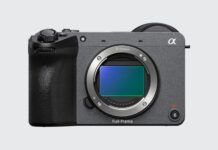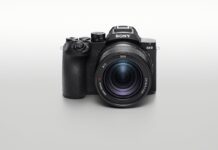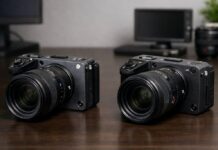

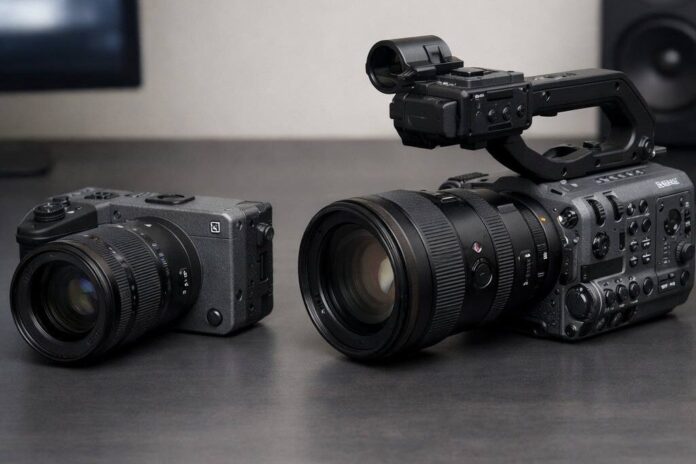
The Sony FX3 vs FX6 decision is not really about which camera has the prettier image. Both are full-frame Sony Cinema Line bodies with 10-bit 4:2:2 recording, S-Cinetone, S-Log3, strong autofocus, high-ISO performance, and the same Sony E-mount lens ecosystem. The real difference is how much production infrastructure you want built into the camera.
The FX3 is the smaller, faster-to-carry body for solo operators, travel work, gimbals, weddings, documentary coverage, and creators who need a cinema-first camera that still behaves like a compact mirrorless rig. The FX6 is the better production camera when built-in variable ND, SDI, proper audio layout, direct controls, and set workflow save you time every day.
Quick verdict
| Choose the Sony FX3 if… | Choose the Sony FX6 if… |
|---|---|
| You shoot mostly solo, handheld, travel, weddings, creator work, gimbal shots, or compact documentary setups. | You shoot interviews, commercials, documentary sets, corporate work, multicam, or jobs where speed and monitoring matter. |
| You want in-body stabilization, a smaller body, lower cost, and the option to strip the camera down. | You want built-in electronic variable ND, SDI, full-size XLR layout, and a camera that needs less rigging. |
| You are happy using HDMI, external ND, the included XLR handle, cages, and compact E-mount lenses. | You regularly work with crews, larger rigs, matte boxes, wireless video, timecode workflows, and changing light. |
My practical take: the FX3 is the better buy for many owner-operators because the money saved can go into lenses, audio, lights, media, and support. The FX6 earns its price when it reduces friction on paid production days. If built-in ND and SDI sound like conveniences, buy the FX3. If they sound like tools you would use every hour, the FX6 is the more serious choice.
Sony FX3 vs FX6 specs that actually matter
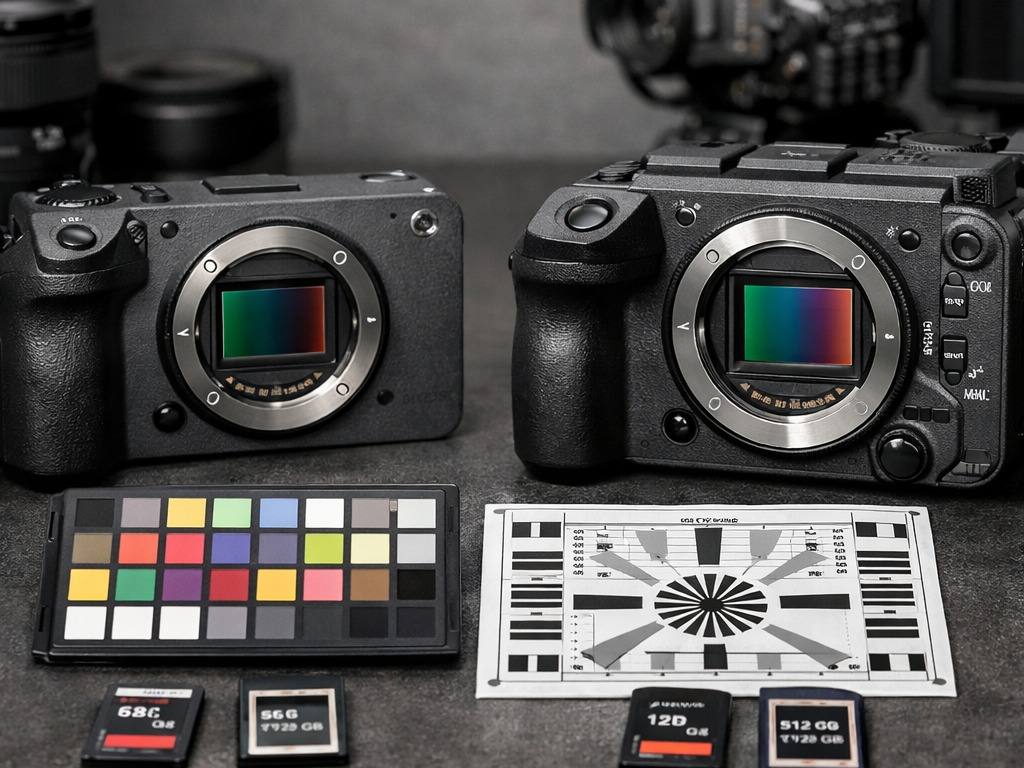
| Feature | Sony FX3 | Sony FX6 |
|---|---|---|
| Sensor | Full-frame Exmor R CMOS, approx. 10.3MP effective for movies | Full-frame CMOS, approx. 10.2MP effective for video |
| Lens mount | Sony E-mount | Sony E-mount |
| Internal recording | 4K up to 120p, 10-bit 4:2:2 options, XAVC S / HS / S-I | DCI 4K up to 60p, UHD 4K up to 120p, 10-bit 4:2:2 options, XAVC-I / L |
| Dynamic range claim | 15+ stops in S-Log3 | 15+ stops in S-Log3 |
| ND filters | No built-in ND | Built-in electronic variable ND |
| Stabilization | 5-axis sensor-shift IBIS with Active mode | No IBIS; use lens stabilization, support, or post/gyro workflow |
| Audio | 3.5mm input plus XLR inputs through the supplied XLR handle | Two full-size XLR inputs on the body/handle workflow, designed around production audio |
| Outputs | Full-size HDMI, timecode via Multi/Micro USB workflow | HDMI plus 12G-SDI / 6G-SDI / 3G-SDI BNC output |
| Media | Dual CFexpress Type A / SD slots | Dual CFexpress Type A / SD slots |
Sony’s own FX3 specifications and FX6 specifications make the pattern clear. These are not separated by a dramatic sensor gap. They are separated by body design and production tools.
Image quality: closer than the price gap suggests
If you expose well and use the same picture profile, the FX3 and FX6 can cut together very naturally. Both give you the familiar Sony Cinema Line look, strong full-frame low-light performance, S-Cinetone for quick turnaround work, and S-Log3 when you want a grading pipeline.
That is why I would be careful with the phrase “better image quality” in this comparison. The FX6 is not simply the camera that makes nicer pictures. It is the camera that makes it easier to keep making controlled pictures when the light, audio, monitoring, and crew demands are changing around you.
The FX3 is already good enough for serious commercial work, documentaries, wedding films, branded content, and compact cinema builds. If you are losing shots with the FX3, the problem is usually exposure control, rigging, audio, monitoring, lens choice, or lighting rather than the sensor itself.
Handling: compact body or production body
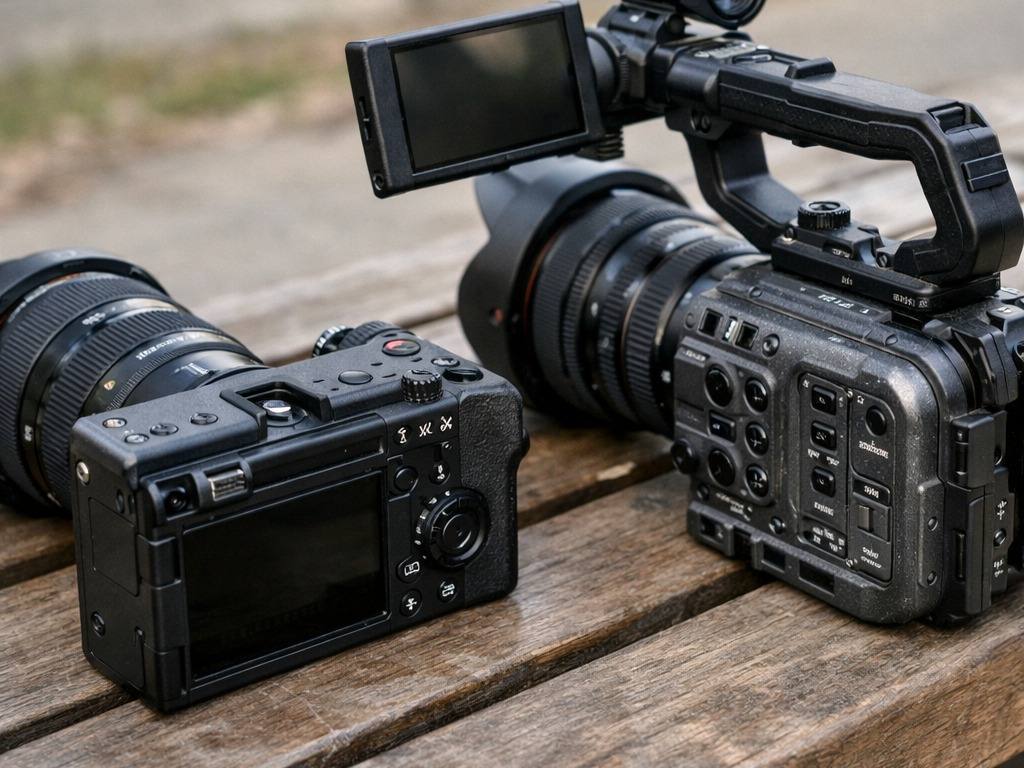
Where the FX3 feels better
The FX3 is the camera I would rather carry when the day is unpredictable. It is easier to pack, easier to mount on a gimbal, easier to use in a car, and easier to handhold in a crowded room. The body-only weight is far lower than the FX6, and the camera can stay small if you do not need the XLR handle.
This matters more than spec charts suggest. A small camera gets placed in corners, carried up stairs, taken on flights, mounted above a DJ booth, or used for a quick pickup shot without becoming a project. For solo documentary work or event coverage, that agility is a real creative advantage.
The FX3 also has 5-axis in-body stabilization. It will not replace a gimbal or shoulder rig, but it does make quick handheld shots easier, especially with stabilized Sony FE lenses. For lens choices, our best Sony FE lenses guide is the natural companion because both cameras share the same mount.
Where the FX6 feels better
The FX6 is less compact, but it is more immediately production-ready. The body gives you dedicated controls, a better layout for accessories, a more set-friendly monitor setup, SDI, proper audio handling, and the built-in electronic variable ND system. Once the camera is on sticks, a shoulder setup, or a small crew rig, the FX6 feels calmer and faster.
The biggest real-world difference is exposure speed. With the FX3, bright outdoor shooting usually means variable ND, matte box filters, step-up rings, or lens-by-lens filter management. With the FX6, you can keep aperture and shutter where you want them and ride the internal ND as the light changes. That is not a luxury on documentary interviews, exterior walk-and-talks, wedding ceremonies, or corporate jobs where you cannot pause the action.
Autofocus and stabilization
Both cameras offer reliable Sony autofocus for video, including face and eye detection. For interviews, gimbal work, and solo operation, the FX3 feels especially approachable because the touchscreen and compact body make focus control simple. It behaves like a cinema-focused mirrorless camera, which is exactly what many solo shooters want.
The FX6 autofocus is also strong, but the camera is built around a more traditional cinema workflow. It is comfortable when an operator is managing exposure, audio, and monitoring from the body, or when a crew is involved. If you rely heavily on autofocus while moving fast by yourself, the FX3 is easier to live with. If autofocus is one part of a larger production setup, the FX6 integrates better.
Stabilization is the clearer split. The FX3 has IBIS and Active mode. The FX6 does not have in-body stabilization. For handheld work with small lenses, that gives the FX3 a practical edge. For tripod, shoulder, slider, vehicle, or supported work, the FX6’s lack of IBIS matters much less.
Audio, monitoring, and set workflow
The FX3 includes a useful XLR handle, and for many solo shooters that is enough. You get proper XLR inputs when the handle is attached, and you can remove it when you want the smallest possible camera. That modularity is part of the FX3’s appeal.
The downside is that the FX3’s best audio setup depends on an accessory. On a gimbal, in tight rigs, or with a stripped body, the XLR handle can be inconvenient. The FX6 is built more naturally around professional audio. Its XLR layout, physical controls, and production body make it easier to manage microphones, wireless receivers, and level changes under pressure.
Monitoring and output are also major FX6 advantages. SDI is more robust than HDMI for professional sets, long cable runs, wireless video systems, and client monitors. The FX3’s full-size HDMI is much better than a micro-HDMI port, but it is still not the same production connector as SDI.
Lens pairing and rigging
Because both cameras use Sony E-mount, lens choice does not decide the comparison by itself. The difference is how each camera handles the lens once it is mounted.
The FX3 is excellent with compact zooms and primes: Sony 20-70mm f/4 G, 24-70mm f/2.8 GM II, 16-35mm f/2.8 GM II, 35mm f/1.4 GM, 50mm f/1.4 GM, or small Sigma and Tamron options. Keep the lens reasonable and the FX3 remains nimble.
The FX6 is happier when the rig grows. Matte box, follow focus, wireless video, V-mount or larger power solutions, heavier zooms, and cinema-style support all make more sense on the FX6 body. You can build the FX3 into a serious rig, but by the time you add ND, audio, monitoring, cages, plates, and power, part of the FX3’s original advantage starts to disappear.
Price and value
The FX3 usually makes more financial sense for owner-operators. The price difference between the FX3 and FX6 can pay for a lens, audio kit, tripod, lighting, media, batteries, or a gimbal. For many filmmakers, that produces better work than buying the larger camera body.
The FX6 makes sense when its workflow advantages are earning money. Built-in ND can save shots. SDI can simplify monitoring. The body layout can speed up a crew. The audio setup can reduce awkward workarounds. If those advantages reduce friction on paid jobs, the FX6 becomes a value tool rather than just the more expensive camera.
Which one should you buy?
Buy the Sony FX3 if…
- You shoot mostly solo or with a very small crew.
- You need a compact camera for travel, weddings, documentary, gimbal, YouTube, or creator work.
- You value IBIS and a smaller body more than built-in ND and SDI.
- You want the same full-frame Sony Cinema Line look while spending more of the budget on lenses and support gear.
- You already like the smaller-body logic described in our Sony FX3 review.
Buy the Sony FX6 if…
- You regularly shoot interviews, commercial work, corporate video, documentary sets, or multicam productions.
- You need built-in electronic variable ND every day.
- You use SDI monitoring, wireless video, timecode, external recorders, or crewed audio workflows.
- You want a camera that is closer to production-ready without building a mirrorless body into a cinema rig.
- You work in situations where speed, reliability, and fewer accessories matter more than packing size.
If I were buying for a solo documentary, travel, wedding, or compact commercial kit, I would choose the FX3 and put the savings into glass, audio, and lighting. If I were buying for interviews, client-facing production days, and work where exposure changes constantly, I would rather have the FX6. The FX3 is the more flexible owner-operator camera; the FX6 is the more efficient production camera.
Frequently asked questions
Is the Sony FX6 worth the extra money over the FX3?
Yes, if you use its production features regularly: built-in variable ND, SDI, stronger audio layout, direct controls, and a more set-ready body. If those are occasional conveniences, the FX3 is usually the better value.
Does the Sony FX3 have the same image quality as the FX6?
For most practical work, the image quality is very close. Both cameras share the same broad full-frame Cinema Line look, strong low-light performance, S-Cinetone, S-Log3, and 10-bit 4:2:2 recording options. The FX6 advantage is more about workflow than a dramatic image-quality jump.
Which camera is better for weddings?
The FX3 is usually the better wedding camera because it is smaller, lighter, stabilized, easier on a gimbal, and less intrusive. The FX6 can be excellent for ceremonies and controlled multicam work, but it is not as convenient for all-day solo coverage.
Which camera is better for interviews?
The FX6 is usually better for interviews because built-in variable ND, SDI monitoring, audio controls, and production ergonomics make the setup cleaner. The FX3 can absolutely shoot interviews, but it often needs more accessories to feel as efficient.
Can the FX3 and FX6 be used together?
Yes. They are a very strong pairing. Use the FX6 as the main interview, tripod, or production camera, and use the FX3 for gimbal, handheld, car, tight-space, or secondary angles. Matching is straightforward if you control profiles, exposure, white balance, and lenses.