
View full specs
This Nikon D3400 review is really a used-camera review now. The D3400 is no longer the obvious new-camera choice, but it can still be a smart beginner DSLR if the price is right, the kit lens is clean, and you understand exactly what you are giving up.
I still like the D3400 for one reason: it teaches photography without getting in the way. You get a 24.2MP APS-C sensor, an optical viewfinder, long battery life, simple controls, and access to Nikon F-mount lenses. You do not get modern mirrorless autofocus, 4K video, a touchscreen, or fast phone-style connectivity. That tradeoff is the whole story.
Who the Nikon D3400 is really for
The Nikon D3400 is for beginners who want to learn real camera fundamentals on a tight budget. If you want to understand aperture, shutter speed, ISO, lenses, depth of field, and viewfinder shooting, it is still a good teacher. It is less convincing if you mainly want video, fast wireless sharing, or autofocus that follows eyes across the frame.
The best buyer is someone who finds a clean D3400 kit at a fair used price and wants a simple stills camera. Families, students, hobbyists, and travelers can all use it well. If you want a newer version of the same idea, our Nikon D3500 review is the obvious comparison. If you want a more capable Nikon DSLR with a better screen and more controls, the Nikon D5600 review is worth reading too.
I would not buy the D3400 at an inflated price. Once the kit gets too close to modern used mirrorless money, the argument weakens. The D3400 makes sense because it is cheap, dependable, and educational. Remove the cheap part and the recommendation changes quickly.
Design, controls, and beginner handling
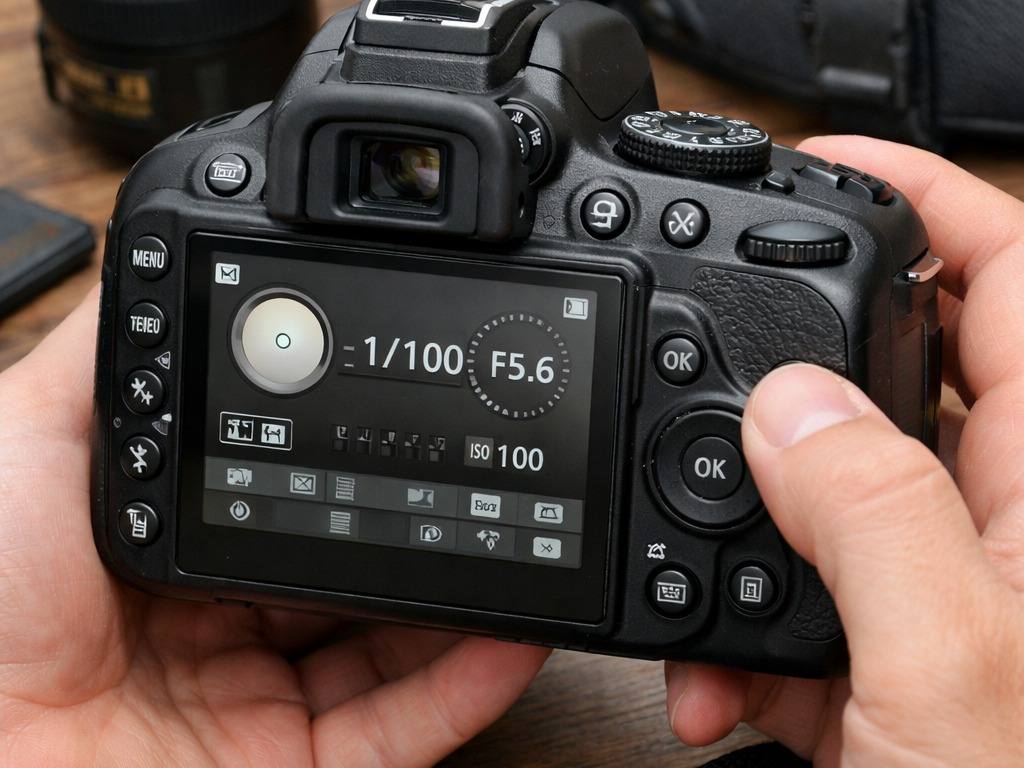
The D3400 is small for a DSLR, but it still feels like a proper camera. The grip is comfortable, the mode dial is clear, and the controls are not intimidating. That matters for beginners. Too many buttons can slow learning because the camera feels like a puzzle before it feels like a tool.
The optical viewfinder is one of the reasons to choose it over a phone or compact camera. You see the scene directly, with no screen lag or battery drain. You also learn to hold the camera to your eye, stabilize your stance, and pay attention to framing in a way that phone shooting often does not encourage.
The rear screen is fixed and not touch-sensitive. That feels old now. For ground-level shots, selfies, vlogging, or quick touch focus, newer cameras are much easier. For classic still photography, though, the fixed screen is not a dealbreaker.
The 18-55mm kit lens and lens compatibility
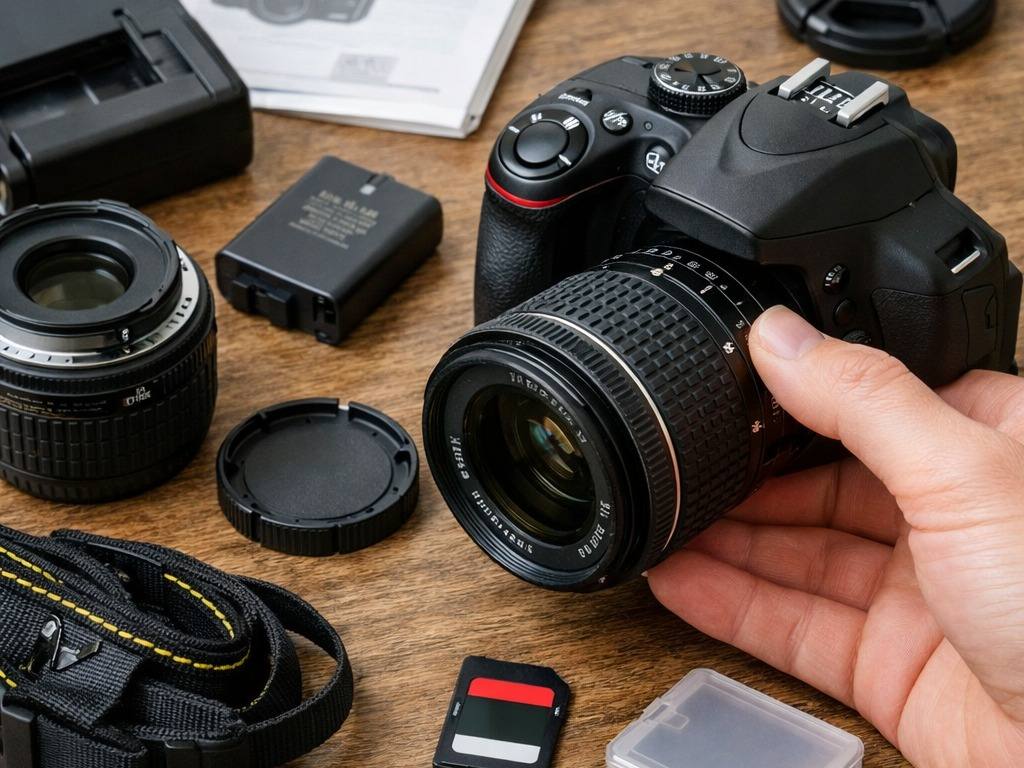
Most D3400 kits come with an AF-P DX 18-55mm lens. The VR version is the one I would prefer because stabilization helps beginners get sharper handheld photos. The lens is light, quiet, and good enough for travel, family, landscapes, and basic portraits.
The retractable lens design can confuse first-time users. If the lens is locked in its storage position, the camera will not be ready to shoot. Rotate the zoom ring to extend it before taking pictures. After a day or two, this becomes automatic.
The bigger lens issue is autofocus compatibility. The D3400 does not have an internal focus motor. That means it autofocuses with Nikon AF-S and AF-P lenses, plus compatible third-party lenses with built-in motors. Older screw-drive AF-D lenses will mount, meter in many cases, and work manually, but they will not autofocus. This is one of the most important used-buying details.
If you buy one extra lens, I would start with the Nikon 35mm f/1.8G DX. It is cheap, sharp, bright, and perfect for learning depth of field. For a beginner, that lens teaches more than most camera upgrades.
My practical D3400 setup for beginners
If I were setting up a D3400 for a new photographer, I would keep it simple. Use JPEG Fine at first, Auto ISO with a sensible ceiling, single-point AF for learning, and aperture priority once full Auto starts feeling limiting. The camera is easy, but it becomes much better when the user learns to choose the focus point instead of letting the camera guess.
The lens choice matters even more. The AF-P 18-55mm VR kit lens is one of the reasons the D3400 feels nicer than older beginner DSLRs. Add the AF-S DX 35mm f/1.8G later and the camera becomes a much better portrait, indoor, and learning tool.
Autofocus and shooting speed
The D3400 uses an 11-point viewfinder autofocus system with one cross-type point in the center. That sounds basic because it is basic. In good light, it focuses quickly enough for portraits, travel, family photos, and casual action. For sports, fast pets, or birds in flight, it is not the camera I would choose.
The best way to use the D3400 is to keep expectations realistic. Use the center focus point when you need reliability. Focus, recompose carefully, and shoot. This old-school method still works, and learning it makes you a better photographer.
Live view autofocus is slower because the camera uses contrast detection on the sensor. It is accurate for static subjects, food, tripod work, and casual portraits, but it feels sluggish next to modern mirrorless cameras. Use the optical viewfinder when timing matters.
The 5 fps burst rate is fine for casual use. It is enough for kids running, simple sports moments, and travel action. It is not enough to make the D3400 an action specialist.
Image quality and low-light performance
The D3400’s 24.2MP DX-format CMOS sensor is still the camera’s biggest strength, and Nikon’s official D3400 manual is useful if you want the exact control and setup details. In good light, the files look clean, detailed, and far better than most phones once you learn exposure and lens choice. Nikon removed the optical low-pass filter, which helps the sensor deliver crisp detail.
RAW files have enough flexibility for serious learning. You can recover shadows, correct white balance, and experiment with editing without the files falling apart immediately. JPEG color is pleasant too, especially for family and travel photos.
Low-light performance is good for an older APS-C DSLR, but the kit lens limits you. At f/3.5-5.6, it is not especially bright indoors. A 35mm f/1.8 lens changes the camera dramatically because it lets in much more light and gives you real background blur.
I would happily use ISO 1600 and 3200 on the D3400. ISO 6400 is usable with good exposure. ISO 12,800 and 25,600 are emergency settings rather than places I would live.
Battery life, cards, and reliability
Battery life is one of the D3400’s practical advantages. Nikon rates it around 1200 shots per charge with the EN-EL14a battery, which is excellent compared with most mirrorless cameras. In normal beginner use, one battery can last a long day.
The camera uses SD, SDHC, and SDXC cards. A basic reliable UHS-I card is enough. You do not need expensive high-speed cards unless you are shooting many bursts, and even then the camera itself is the limiting factor.
There is no weather sealing. Treat the D3400 like an electronic device, not a rugged field body. Light drizzle under a jacket is one thing. Rain, dust, beach sand, and rough bags are another.
SnapBridge and connectivity
SnapBridge is useful, but it is not modern Wi-Fi convenience. The D3400 uses Bluetooth Low Energy for image transfer, mainly for small JPEG sharing. It is fine for sending phone-sized photos to friends or social apps. It is not a fast way to move a full shoot.
This is where newer cameras feel much easier. If fast phone transfer is important to you, the D3400 may frustrate you. I would treat SnapBridge as a small convenience, not a reason to buy the camera.
Video limitations
The D3400 records Full HD video up to 60p. It can produce pleasant clips in good light, but it is not a video-first camera. There is no 4K, no microphone input, no headphone jack, no articulating screen, and live view autofocus is slow.
For occasional family clips, it is fine. For YouTube, vlogging, interviews, or serious hybrid work, buy something newer. Even entry-level mirrorless cameras are much more comfortable for video.
Nikon D3400 vs D3500 and D5600
For the complete two-camera buying decision, see our Nikon D3400 vs D3500 comparison.
The D3500 is the cleaner beginner DSLR if prices are close. It has a better grip, slightly improved battery life, and a more refined body. If the D3400 is much cheaper, it still makes sense. If they cost nearly the same, I would buy the D3500.
The D5600 is the better choice for someone who wants to grow. Its articulating touchscreen, stronger autofocus system, and more flexible handling make it more enjoyable once you move beyond the basics. It usually costs more, but it is the more complete DSLR.
The D3400 wins when simplicity and price matter most. It is not the best Nikon DSLR. It is the cheapest Nikon DSLR I would still consider for serious learning if the condition is good.
Buying a Nikon D3400 used
Condition matters more than tiny price differences. Check that the sensor is clean, the lens focuses smoothly, the retractable lens mechanism works, the battery holds a charge, and the card slot reads correctly. Look for signs of drops around the mount, hot shoe, and battery door.
I would be cautious with very cheap bundles full of no-name accessories. A clean body, an AF-P 18-55mm VR lens, a Nikon battery, charger, and a normal SD card are better than a messy kit with weak extras.
For pricing, the D3400 is attractive only when it stays clearly below newer options. If a seller prices it near a D3500, D5600, or used mirrorless kit, negotiate or walk away.
Where the D3400 is weaker than the praise suggests
The D3400’s sensor is excellent for the money, but the body is intentionally basic. The autofocus system is simple, the rear screen is fixed and not touch-sensitive, the menu system is trimmed down, and there is no 4K video. SnapBridge is useful in theory, but I would not buy the camera for wireless convenience.
This is why price matters so much. At a low used price, the D3400 is a wonderful beginner stills camera. If sellers ask too much, the lack of modern conveniences becomes harder to ignore. A newer mirrorless camera will be easier for video, phone transfer, live view shooting, and subject tracking.
Final verdict
My Nikon D3400 review verdict is simple: it is still a good beginner DSLR at the right used price. It produces excellent still images, teaches photography well, and keeps the shooting experience refreshingly direct.
Its age is obvious. The autofocus is basic, live view is slow, video is limited, the screen is fixed, and SnapBridge feels dated. But none of those flaws ruin it as a stills-learning camera.
Buy it if you want a cheap, dependable Nikon DSLR for learning photography. Skip it if you want modern video, fast sharing, advanced autofocus, or a camera you will not outgrow quickly.
Nikon D3400 alternatives
The main alternatives to the Nikon D3400 are Nikon D3500, Nikon D5600, Canon Rebel T7, Canon Rebel T5i, used Sony a6000-series bodies. Compare autofocus, stabilization, video limits, lens choice and current price before deciding which camera fits you best.
Frequently asked questions
Is the Nikon D3400 still good for beginners?
Yes, if the price is low and you mainly want to learn still photography. It is simple, reliable, and produces very good image quality for the money.
Is the Nikon D3400 better than the Nikon D3500?
No. The D3500 is the refined successor and is usually the better buy if prices are close. The D3400 only wins when it is meaningfully cheaper.
Does the Nikon D3400 shoot 4K video?
No. It records Full HD video up to 60p. It is fine for casual clips but not ideal for serious video work.
What lenses autofocus on the Nikon D3400?
Nikon AF-S and AF-P lenses autofocus on the D3400. Older screw-drive AF-D lenses do not autofocus because the D3400 has no internal focus motor.
What memory card does the Nikon D3400 use?
It uses SD, SDHC, and SDXC cards. A reliable UHS-I SD card is enough for normal still photography.
Beginners, students, families, and budget shooters who want to learn still photography with a simple DSLR.
You need 4K video, fast phone transfer, modern eye AF, touchscreen controls, or weather sealing.
Low; Guide Mode and simple controls help, but lens compatibility and SnapBridge expectations need explanation.
Nikon D3500 or D5600 for DSLR users, or Nikon Z50 II/Z5 II for a modern mirrorless path.
Full HD is fine for casual clips, but lack of 4K, mic input, and fast live-view AF limits serious video.
Yes at a low used price for stills learning; no if it costs close to newer DSLR or mirrorless options.