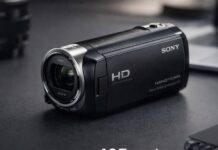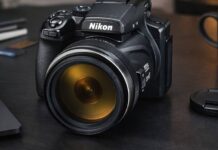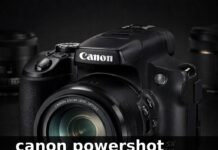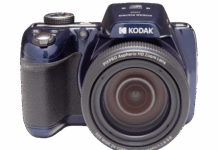

Short answer: the highest optical zoom camera I would start with in 2026 is the Nikon Coolpix P1100. It gives you a 125x optical zoom, which is a 24-3000mm equivalent range. The older Nikon P1000 reaches the same 125x number, but I would only buy it if the price is clearly better than a P1100. Below those two, the real long-reach choices are the Kodak AZ901, Nikon P950, Canon SX70 HS, Kodak AZ653, Panasonic FZ80D, Kodak AZ528, and Canon SX740 HS.
This page is deliberately narrower than our broader best zoom cameras guide. That guide weighs image quality, handling, sensor size, and value. This one answers a different question: which cameras give the longest real optical reach, and which of those are still sensible to buy?

Highest optical zoom cameras ranked
If all you care about is the biggest zoom number, the ranking is simple. Nikon owns the top of the still-camera market with 125x. The buying decision is less simple, because weight, autofocus, stabilization, availability, and price matter more once you actually try to shoot at 2000mm or 3000mm equivalent.
| Rank | Camera | Optical zoom | 35mm equivalent reach | Best reason to buy | Main caution |
|---|---|---|---|---|---|
| 1 | Nikon Coolpix P1100 | 125x | 24-3000mm | Longest current mainstream optical zoom | Large body, small sensor, needs patience at full reach |
| 2 | Nikon Coolpix P1000 | 125x | 24-3000mm | Same extreme reach if the price is right | Older model, used pricing can be irrational |
| 3 | Kodak Pixpro AZ901 | 90x | 22-1980mm | Highest non-Nikon optical zoom worth considering | Older Kodak, availability and condition matter |
| 4 | Nikon Coolpix P950 | 83x | 24-2000mm | More livable Nikon superzoom body | Still a small-sensor camera, not a fast action tool |
| 5 | Canon PowerShot SX70 HS | 65x | 21-1365mm | Strong Canon handling and useful wide end | Often overpriced when new or scarce |
| 6 | Kodak Pixpro AZ653 | 65x | 24-1560mm | Current Kodak long zoom with RAW and USB-C | No 4K video, not a serious low-light camera |
| 7 | Panasonic Lumix FZ80D | 60x | 20-1200mm | Best current budget bridge-camera value | Less reach than the Nikon and Kodak extremes |
| 8 | Kodak Pixpro AZ528 | 52x | 24-1248mm | Cheap long-zoom entry point | Basic EVF-free shooting experience |
| 9 | Canon PowerShot SX740 HS | 40x | 24-960mm | Pocketable travel zoom | Not an extreme-zoom bridge camera |
How I would choose one
At these focal lengths, the spec sheet can fool you. A 3000mm equivalent camera is not automatically the best camera for every distant subject. Heat haze, soft light, shutter speed, autofocus lag, and your ability to hold the frame steady all become part of the image. I rank these cameras by real buying usefulness, not just by zoom bragging rights.
- Buy 125x if your whole reason for owning the camera is extreme distance, moon shots, distant wildlife, aircraft, or subjects you cannot physically approach.
- Buy 83x to 90x if you want huge reach but do not want the full size and awkwardness of the 125x Nikon bodies.
- Buy 60x to 65x if you want a practical bridge camera for daylight travel, casual wildlife, sports from the stands, and family use.
- Buy 40x pocket zoom only if the camera has to fit in a jacket pocket. It is long for a compact, but not long compared with a bridge superzoom.
Nikon Coolpix P1100: the current longest-reach pick
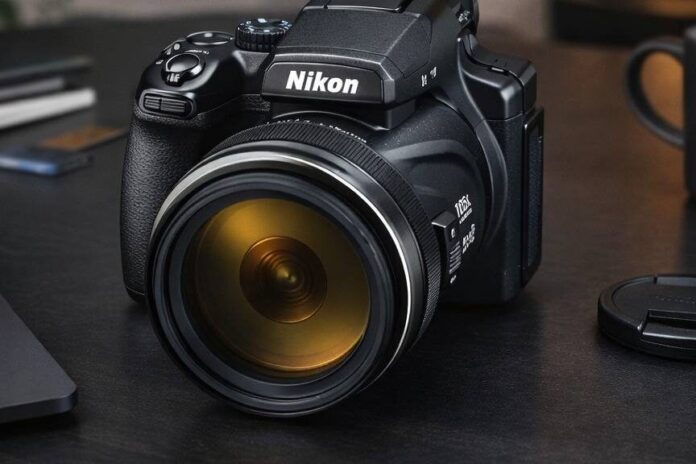
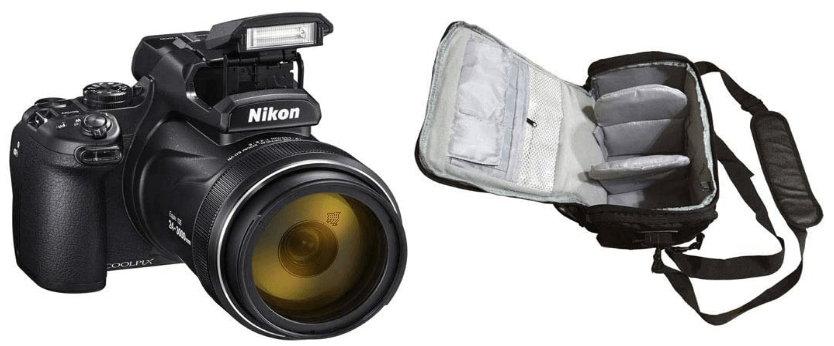
The Nikon Coolpix P1100 is the clean answer to the question, “what camera has the highest optical zoom?” It reaches 125x optically, covering 24-3000mm equivalent. That gives you absurd framing power from one fixed lens. For moon shots, perched birds, distant mountain details, boats, aircraft, and hard-to-reach subjects, nothing else here matches it.
The catch is that 3000mm equivalent punishes sloppy technique. I would not buy the P1100 expecting effortless sharp frames at full zoom while walking around casually. It rewards bracing, a steady stance, fast enough shutter speeds, and sometimes a tripod or monopod. It is also still a small-sensor camera, so it does best in daylight.
Read our full Nikon P1100 review if you want the handling and image-quality tradeoffs in more detail.
Nikon Coolpix P1000: same 125x reach, older buying math
The Nikon P1000 remains important because it has the same headline reach as the P1100: 125x optical zoom and a 24-3000mm equivalent lens. If you find one clean, complete, and meaningfully cheaper than a P1100, it can still make sense.
I would not overpay for it. Used P1000 listings often trade on the reputation of the 3000mm zoom. Once the price creeps too close to the P1100, I would rather buy the newer body. The P1000 is best treated as a price opportunity, not the default recommendation.
If you are choosing between the two Nikon extremes, use our Nikon P1100 vs P1000 comparison before you pay a premium for the older camera.
Kodak Pixpro AZ901: the longest non-Nikon option
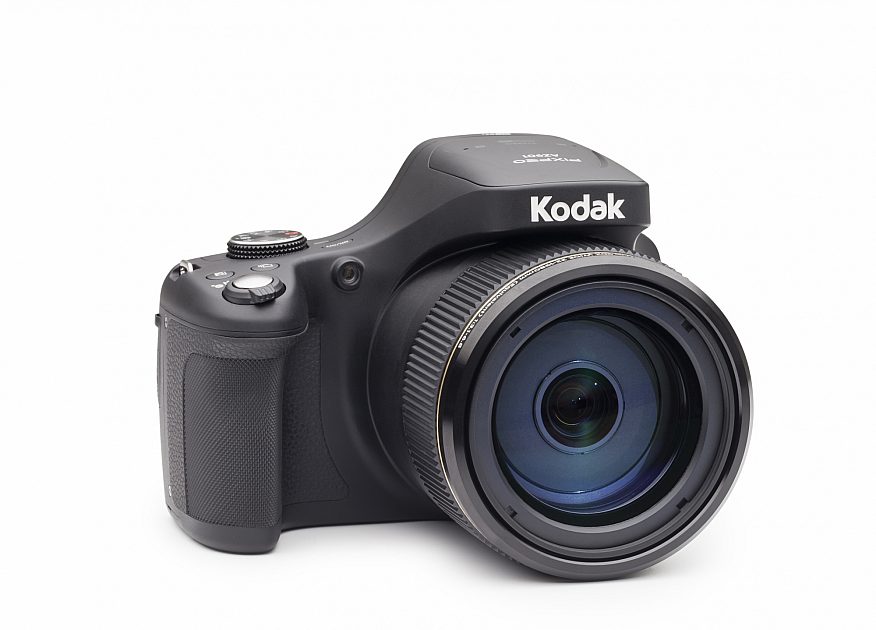
The Kodak Pixpro AZ901 is the highest-zoom alternative I would mention after the Nikon 125x cameras. Its 90x optical zoom gives a 22-1980mm equivalent range, which is already far beyond normal travel cameras and most bridge cameras.
The AZ901 is interesting because it does not only chase the zoom number. It also has a wide 22mm equivalent starting point, RAW support, an EVF, and an articulated screen. On paper, that makes it a better serious-superzoom candidate than many cheap Kodak models.
The buying risk is age and availability. I would inspect current listings carefully. A clean AZ901 at the right price is a fun extreme-zoom buy. A tired copy at inflated money is not.
See our Kodak AZ901 review for the model-specific verdict.
Nikon Coolpix P950: the better Nikon compromise
The Nikon P950 gives you 83x optical zoom, or 24-2000mm equivalent. That is still a massive amount of reach. It gives up the final 1000mm equivalent of the P1100 and P1000, but it is easier to live with and often feels like the better camera for people who want reach without turning every outing into an extreme-telephoto exercise.
This is the Nikon I would look at if you photograph birds, moon details, distant landscapes, or travel subjects but know you will rarely need 3000mm. The P950 still needs good light and steady hands, but it is not as single-minded as the 125x bodies.
Our Nikon P950 review covers why it can be more enjoyable than the spec sheet suggests.

Canon PowerShot SX70 HS: best Canon long zoom
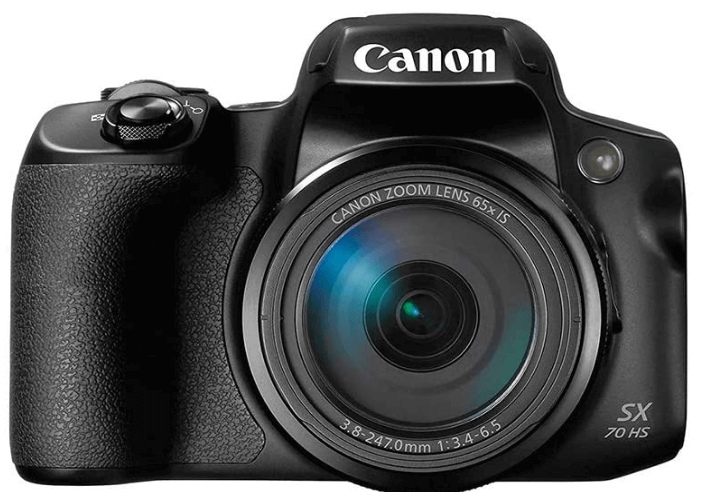
The Canon PowerShot SX70 HS is not the highest zoom camera here, but its 65x range is still very useful. The 21-1365mm equivalent lens starts wider than most rivals, which matters for travel and landscapes. At the long end, it reaches far enough for daylight wildlife, sports from a distance, and moon shots without the size of a Nikon P1100.
I like the SX70 HS when the price is sane. I dislike it when scarce inventory pushes it into territory where a buyer should be looking at the Nikon P1100, Panasonic FZ80D, or a used mirrorless kit instead. It is a strong camera, but not at any price.
Use our Canon SX70 HS review if you are deciding whether its used price makes sense.
Kodak Pixpro AZ653: current 65x Kodak value
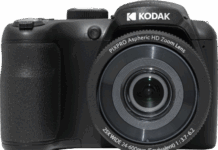
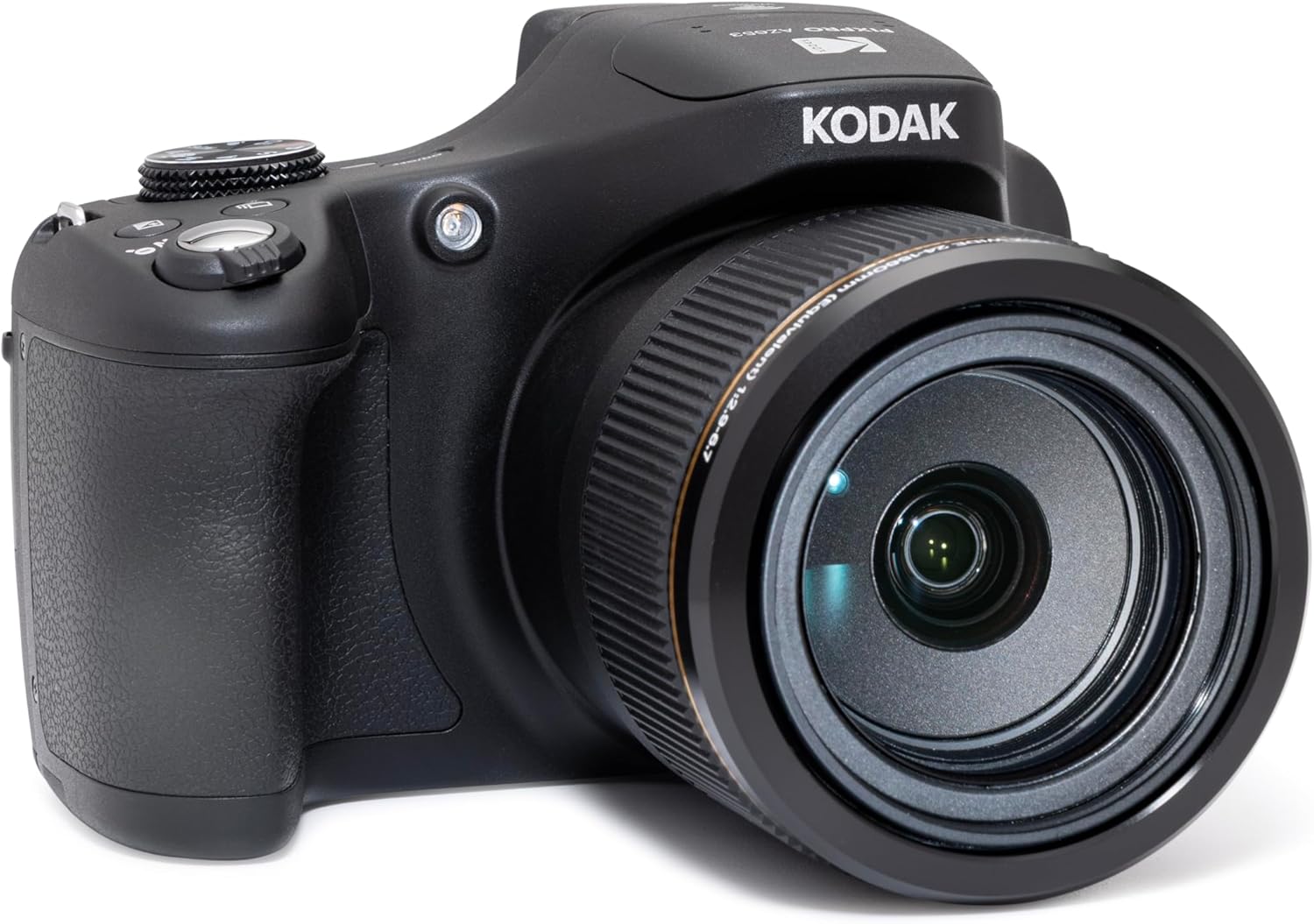
The Kodak Pixpro AZ653 is the newer Kodak option I would watch most closely. It has a 65x optical zoom, a 24-1560mm equivalent range, RAW support, optical stabilization, Wi-Fi, and USB-C. That makes it more interesting than a bare-bones cheap zoom camera.
The reason it does not outrank the Canon SX70 HS is simple: the Kodak is still a small-sensor bridge camera with 1080p video, not 4K, and its real value depends heavily on price. If it is much cheaper than the Canon or Nikon options, it makes sense. If it is priced too close to stronger cameras, I would hesitate.
Read our Kodak AZ653 review before treating it as a serious wildlife camera.
Panasonic Lumix FZ80D: the sensible budget pick
The Panasonic Lumix FZ80D gives you 60x optical zoom, covering 20-1200mm equivalent. That is not the biggest number here, but it is enough for most people who say they want a camera with a lot of zoom. The 20mm wide end is also genuinely useful, especially for travel and landscapes.
This is the camera I would consider when the goal is value, not maximum reach. It gives you a current, easy-to-buy bridge camera with 4K features and a real viewfinder. For many beginners, that is a better purchase than chasing a fragile used 90x or 125x listing.
Our Panasonic FZ80/FZ80D review explains where the updated D version helps and where the old small-sensor limits remain.

Kodak Pixpro AZ528: cheap reach, clear limits
The Kodak Pixpro AZ528 gives a 52x optical zoom and a 24-1248mm equivalent range. It is not trying to beat the Nikon P1100 or P1000. Its appeal is lower price and simple long-zoom shooting.
I would treat the AZ528 as an entry-level outlier. It can be fun for daylight travel, family sports, casual wildlife, and learning how longer focal lengths behave. It is not the camera I would buy for serious bird photography or demanding image quality. The missing viewfinder is the big practical compromise, because framing at long zoom on a rear screen can be irritating in bright light.
See our Kodak AZ528 review if you are comparing the cheaper Kodak bridge bodies.

Canon PowerShot SX740 HS: pocket zoom outlier
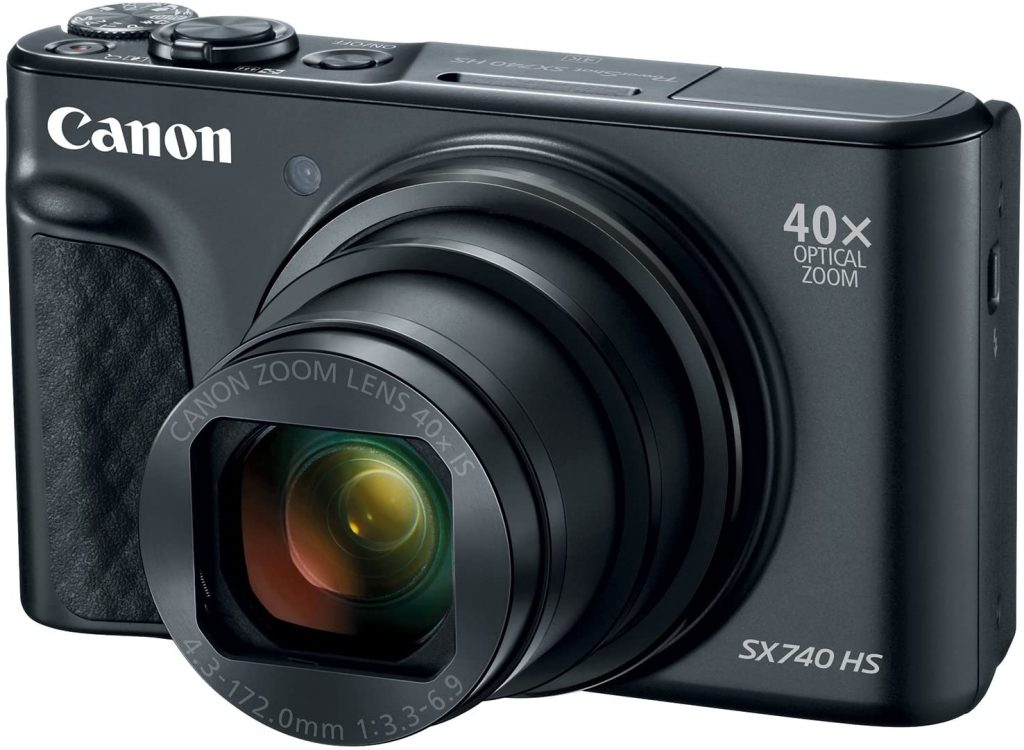
The Canon PowerShot SX740 HS does not belong near the top if we are ranking by pure zoom reach. It has a 40x optical zoom, or 24-960mm equivalent. That is much shorter than the bridge cameras above.
It still deserves a place because it answers a different version of the search. Some people want the highest zoom they can carry in a pocket. For that buyer, the SX740 HS makes more sense than a bulky P1100. You give up the extreme 1200mm to 3000mm range, but you get a small travel camera that can actually come with you.
Our Canon SX740 HS review covers whether its current pricing is still rational.
How much zoom do you actually need?
Most buyers overestimate the zoom number they need and underestimate how hard long zoom is to use well. A 125x camera sounds unbeatable until the air is shimmering, the subject is moving, and the frame jitters at the long end. The right amount of zoom depends on what you shoot.
| Zoom class | Typical reach | Best fit | My take |
|---|---|---|---|
| 40x pocket zoom | About 960mm | Travel, family, city details, bright daylight | Best when size matters more than maximum reach |
| 52x to 60x bridge | About 1200mm | Beginner wildlife, sports from seats, vacations | The value sweet spot for many buyers |
| 65x bridge | About 1365mm to 1560mm | Birding, moon shots, distant landscapes | Serious reach without the full Nikon bulk |
| 83x to 90x superzoom | About 1980mm to 2000mm | Long-distance subjects and hobby wildlife | Big reach with fewer compromises than 125x |
| 125x extreme zoom | 3000mm | Maximum distance, moon, aircraft, far wildlife | Buy only if extreme reach is the point |
Why the Sony RX10 IV is not ranked here
The Sony RX10 IV is one of the best fixed-lens zoom cameras ever made, but it is not a highest-zoom camera. Its 25x lens reaches 600mm equivalent, which is short next to a P1100, P1000, P950, SX70 HS, or FZ80D. It wins on sensor size, autofocus, lens quality, and action shooting. It loses badly on pure reach.
That distinction matters. If you want the best image quality from a fixed-lens zoom camera, the RX10 IV belongs in the conversation. If you searched for the camera with the highest optical zoom, it is the wrong answer. That is why we handle it in the broader zoom guide, not as a top pick on this page.
Watch out for fake zoom numbers
Do not confuse optical zoom with digital zoom. Optical zoom uses the lens. Digital zoom crops or enlarges the image. When listings advertise 150x, 250x, or 1000x, check whether the number is optical zoom, dynamic zoom, digital zoom, or some security-camera/video-camera marketing claim.
For still-photo buyers, I would anchor the decision around the real optical range. In this class, 125x is already extreme. A clean 125x optical still camera from Nikon is more meaningful than a vague 1000x digital zoom listing from an unknown brand.
My buying recommendation
If I had to make the decision quickly, I would use this order:
- Maximum reach: Nikon P1100.
- Same 125x reach at a used-price discount: Nikon P1000.
- Huge reach without the biggest Nikon body: Nikon P950 or Kodak AZ901.
- Balanced Canon long zoom: Canon SX70 HS, but only at a fair price.
- Current budget bridge camera: Panasonic FZ80D.
- Cheaper Kodak long zoom: Kodak AZ653 or AZ528, depending on price and whether you want RAW and a viewfinder.
- Pocket travel zoom: Canon SX740 HS.
The mistake is buying the biggest number without asking how you will actually shoot. The P1100 is the king of reach. The FZ80D may be the better buy for a beginner. The SX740 HS may be the camera that actually leaves the house. The right answer is not always the longest lens.
FAQ
What camera has the highest optical zoom in 2026?
The Nikon Coolpix P1100 is the current mainstream still camera to start with. It has a 125x optical zoom covering 24-3000mm equivalent. The older Nikon P1000 reaches the same 125x range, but the P1100 is the cleaner current recommendation.
Is the Nikon P1100 better than the Nikon P1000?
For most buyers, yes, because it is the newer version of Nikon’s 125x superzoom idea. The P1000 can still make sense when it is meaningfully cheaper, clean, and complete. If the prices are close, I would choose the P1100.
Is 125x optical zoom useful or just a gimmick?
It is useful when you genuinely need extreme distance and can shoot in good light with steady technique. It becomes frustrating if you expect phone-like ease at 3000mm equivalent. The zoom is real, but it asks more from the photographer.
What is the best cheaper high-zoom camera?
The Panasonic Lumix FZ80D is the safest current budget pick for many buyers because it gives 60x optical zoom, a 20-1200mm equivalent lens, a viewfinder, and 4K features. Kodak options can be cheaper or longer, but value depends heavily on the exact listing.
Is optical zoom better than digital zoom?
Yes. Optical zoom uses the lens to magnify the scene before the image is captured. Digital zoom crops or enlarges the image afterward. For serious buying decisions, compare optical zoom and equivalent focal length, not digital zoom claims.