
View full specs
The Kodak PixPro AZ901 review is more interesting than its spec sheet suggests. After looking at what this long-zoom bridge camera does well and where it struggles, I can see exactly who it suits and who should keep shopping.
Some buyers search for the same model as Kodak AZ901, especially when looking for used listings or replacement accessories. For manufacturer specs and downloads, see the official Kodak PIXPRO AZ901 product page.
What the Kodak PixPro AZ901 is and who it is for
Where the AZ901 fits in the bridge camera market
The Kodak PixPro AZ901 is a classic example of a superzoom bridge camera, positioned between compact point-and-shoots and more advanced interchangeable lens cameras. With its massive 90x optical zoom lens, it stands out for reach, targeting users who want a single camera that can handle everything from sweeping landscapes to extreme close-ups of distant subjects.
If the AZ901’s appeal comes down to how much zoom you really need, it helps to compare it with nearby models in the same family. The Kodak Pixpro AZ528 review gives useful context on a more moderate superzoom, while the lower-cost Kodak Pixpro AZ255 review shows what the lower end of Kodak’s AZ line offers.
In the current camera landscape, where smartphones dominate casual photography and mirrorless cameras appeal to enthusiasts, the AZ901 carves out a unique niche. It is aimed at travelers, parents, birdwatchers, and anyone who wants enormous zoom power without the bulk and complexity of carrying extra lenses. The “bridge” in bridge camera refers to its role as a stepping stone between simple compacts and more advanced systems.
From my perspective as a photographer, the AZ901 is for people who want to photograph wildlife at the park, take pictures of the moon, or document their travels without worrying about lens swaps. It is not designed for pro-level results or for those who demand top performance in low light. Instead, it prioritizes convenience, optical reach, and straightforward operation.
The Kodak brand may spark nostalgia, but the AZ901 is a modern product. It is not trying to compete with high-end mirrorless cameras. Instead, it is best for casual shooters who want more than their phones can offer, especially when it comes to zooming in on distant action. This makes it a practical choice for families, hobbyists, and anyone curious about photography who does not want the complexity or expense of a DSLR or mirrorless kit.
Design, handling, and everyday usability
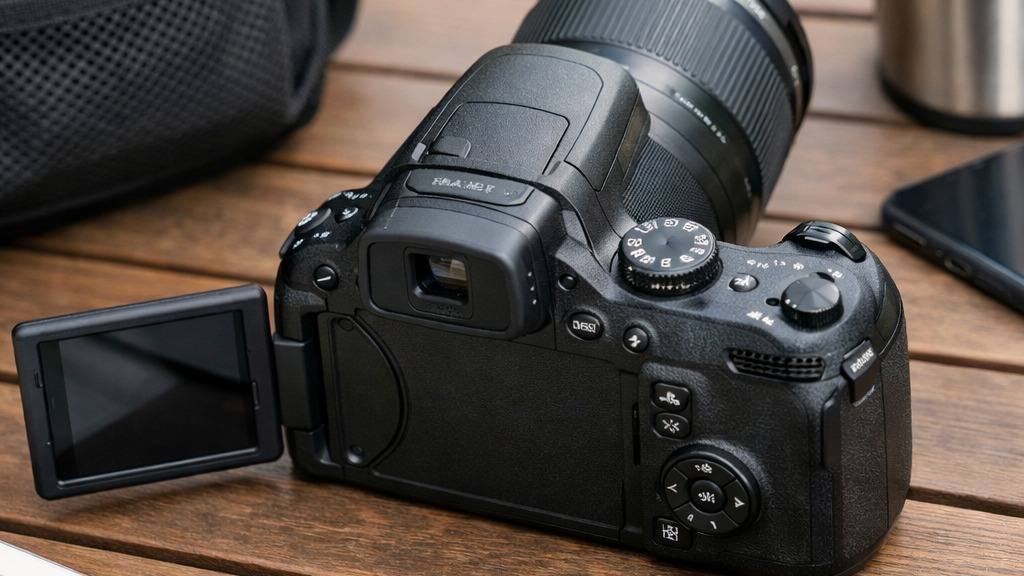
How the grip, controls, and EVF feel in real use
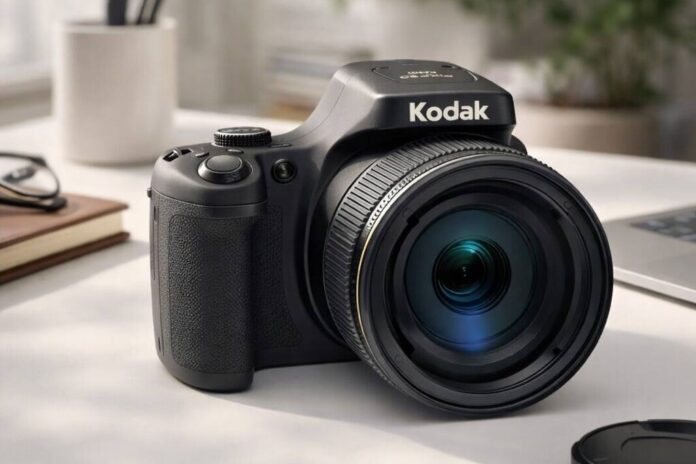
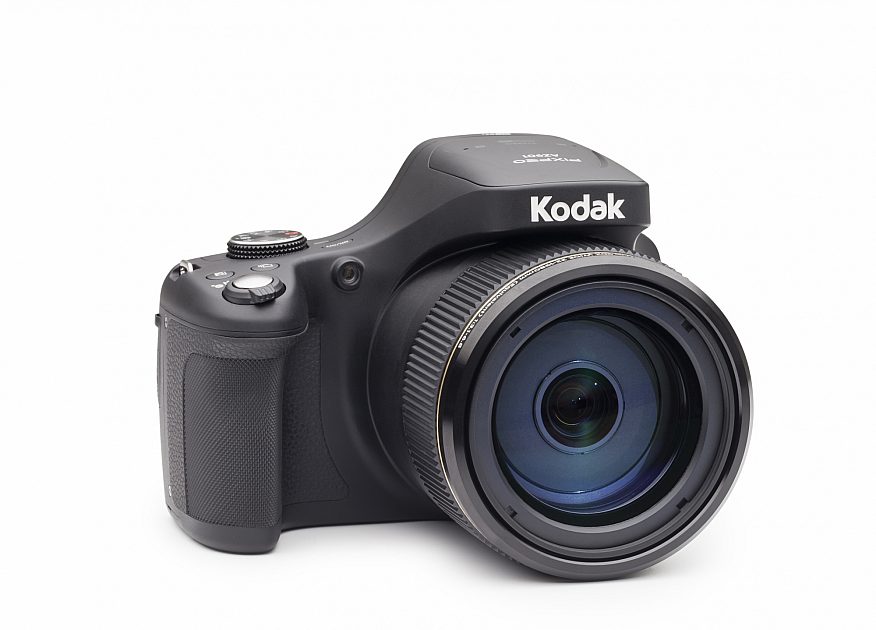
The AZ901 has a design that is instantly recognizable as a bridge camera. It is larger than a compact, but still much lighter and less intimidating than a typical DSLR. The prominent rubberized grip is a standout feature. In my hands, it feels secure and comfortable, even when shooting at full zoom. The camera’s weight is well balanced, which is important for stability, especially when extending the lens to its maximum.
The control layout is straightforward. Most major functions have dedicated buttons or dials, which makes it easy to adjust settings without diving through menus. The zoom lever on the shutter button is responsive and allows for precise control. On the back, a fully articulating LCD screen flips out for easy shooting at odd angles. This is useful for shooting above crowds or getting low to the ground. The electronic viewfinder (EVF) is basic but gets the job done when bright sunlight makes the rear screen hard to see.
Everyday usability is one of the AZ901’s strengths. The menu system is simple, if a bit dated. For most users, the auto and scene modes are enough, but manual controls are available for those who want to experiment. The camera starts up quickly and responds well to button presses. However, the EVF resolution is low compared to newer models, so critical focusing can be a challenge in tricky conditions.
Carrying the AZ901 around for a day is not as taxing as lugging a DSLR and telephoto lens, but it is heavier than most compacts or smartphones. It fits easily in a small backpack and is ready to shoot at a moment’s notice. In the hand, the camera feels solid, not flimsy. The tactile feedback from the dials and buttons is reassuring. While the build is mostly plastic, it does not feel cheap.
From my own experience using the AZ901 for street photography and casual outings, the straightforward ergonomics mean you can focus on the subject without getting bogged down in technicalities. This is a camera designed to be fun and approachable, which is exactly what beginner and intermediate photographers need.
Zoom range and lens performance in the field
What the 90x zoom is like for wildlife, travel, and moon shots
The standout feature of the Kodak PixPro AZ901 is its 90x optical zoom lens, which covers an incredible 22-1980mm equivalent focal length. This kind of reach is almost unheard of outside of specialized super-telephoto lenses, which are bulky, expensive, and far less portable. In the field, the ability to zoom from a true wide angle all the way to extreme telephoto is both fun and practical.
For wildlife and bird photography, the AZ901’s zoom allows you to capture distant animals without disturbing them. I have used it to photograph birds perched at the top of tall trees and squirrels across the yard. The lens extends smoothly, though at full telephoto any slight handshake is magnified. Using a tripod or bracing against a solid surface helps, but the built-in optical image stabilization does a fair job for handheld shots in good light.
Travelers can use the AZ901 to shoot wide scenic vistas, then zoom in on distant buildings or details without moving. On family outings, it is possible to grab candid moments from across a playground or sports field. The lens’s versatility means you rarely miss a shot because you are “too far away.”
One of the most fun uses is for moon photography. The AZ901’s extreme zoom makes it easy to fill the frame with the moon’s surface, even catching craters and details that are impossible with a phone camera. The camera’s “moon” scene mode helps optimize settings for this kind of shot.
Of course, there are trade-offs. While the zoom range is impressive, image sharpness drops off slightly at the extreme telephoto end. Focusing can become slower and less precise the more you zoom in, especially in lower light. However, for most casual and even some enthusiast users, the ability to reach so far outweighs the minor loss in sharpness. The versatility of the AZ901 lens is genuinely impressive for the price and size.
Image quality from wide angle to full telephoto
How the sensor holds up in good light and low light
Image quality is often the biggest question with superzoom cameras, and the Kodak PixPro AZ901 is no exception. The camera uses a 1/2.3-inch sensor, similar in size to those found in most compact cameras. In good light, the AZ901 produces vibrant and detailed photos, especially at the wide and mid-zoom ranges. Colors are generally accurate and pleasing, with decent dynamic range for a camera in this class.
At full telephoto, images remain usable, but sharpness and contrast drop slightly. This is common with extreme zoom lenses. Fine detail can look a bit smudged, especially if you crop in or print large. For sharing online or making standard-size prints, the results are more than adequate. I have been able to capture distant wildlife and moon shots that look great on social media and in family photo books.
Low light is where the AZ901 struggles. The small sensor means noise becomes visible at higher ISO settings, and detail drops off quickly as light fades. Indoors or at dusk, photos can look soft and grainy. Using the built-in flash helps for close subjects, but does not reach far. If you stick to daytime shooting, you will be happier with the results.
Compared to a modern smartphone, the AZ901 still wins for zoom reach and optical quality at long focal lengths, but loses in low light and overall image processing. Smartphones have more advanced computational photography, but simply cannot match the AZ901’s optical zoom. For users who care most about reach and shooting in good daylight, the AZ901 is a strong performer.
Autofocus, stabilization, and shooting speed
As someone who has spent years shooting with everything from entry-level compacts to pro-level DSLRs, I approached the Kodak PixPro AZ901 autofocus with realistic expectations. This camera was never designed to compete with mirrorless or DSLR systems. Instead, it aims to help casual photographers get more keepers, especially when zoomed in on faraway subjects. But how does it really perform?
The AZ901 uses a contrast-detect autofocus system, which is standard for its class. In good light, focus is reasonably fast and generally accurate. For wide-angle shots of landscapes or group photos, the camera locks focus quickly enough that you rarely miss a moment. However, when you extend the lens into the super-telephoto range, focus speed drops noticeably. If you are trying to capture small birds at the far end of the 90x zoom, be prepared for some hunting, especially if the subject moves or the light is low.
Face detection works well for snapshots, and the camera offers several autofocus area modes. For straightforward subjects, like a perched heron or a child on a playground, the AZ901 usually delivers a sharp shot. Tracking fast action, though, is another story. The autofocus struggles with moving subjects, especially at long focal lengths. Expect a higher miss rate for sports, dogs running, or active wildlife.
Stabilization is the AZ901’s secret weapon at high zoom. The optical image stabilization (OIS) system helps counteract hand shake when you are fully extended. In practice, I found I could shoot handheld at about 1980mm equivalent and still get sharp photos, as long as I used a steady stance and good technique. The system is not as advanced as the latest mirrorless cameras, but it makes a huge difference. Without it, most high-zoom shots would be blurry.
For low light or at maximum zoom, I suggest using a support, like a monopod or the camera’s built-in electronic viewfinder, to brace yourself. The stabilization does not work miracles, but it extends the AZ901’s usability far beyond what you would expect for such a small and light camera.
Burst shooting on the AZ901 is another area where expectations need to be managed. The camera can shoot up to 5 frames per second, but only for a very short burst before the buffer fills. For casual action sequences, like a friend jumping into a pool or a bird taking off, you can grab a few frames. However, the buffer clears slowly, so you will need to wait several seconds before you can shoot another burst. Continuous autofocus during burst mode is also limited, so only the first frame is reliably sharp if the subject is moving toward or away from you.
To sum up, the AZ901’s autofocus and stabilization are effective for most daylight scenes and for subjects that are not moving too quickly. The burst shooting is serviceable for occasional action, but it is not designed for sports or fast wildlife. If you are patient and willing to work within these limits, you can get impressive results, especially at extreme zoom settings.
Video features, battery life, and connectivity
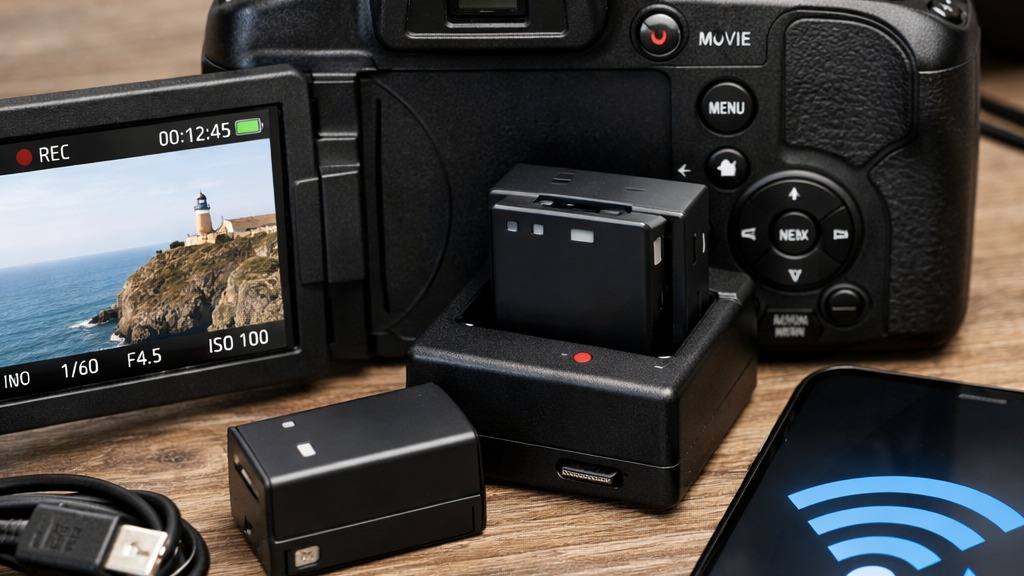
What to expect for casual video and day-long shooting
The video capabilities of the Kodak PixPro AZ901 are solid for its target audience, but not spectacular by current standards. It records Full HD (1920×1080) video at up to 30 frames per second. There is no 4K option, which may disappoint some users, but for sharing on social media or casual family movies, the quality is more than adequate. At wide angles, video footage is crisp and colors are pleasant. However, at full zoom, video becomes much softer, and focus can hunt if the lighting or subject contrast is poor.
The stabilization system is active during video recording, which is very helpful when shooting handheld at high magnification. Walking while filming, or panning at maximum zoom, will still introduce some wobble, but for stationary shots, the footage is surprisingly stable. The built-in microphone records clear audio for everyday use, but wind noise is a problem outdoors, and there is no option for an external microphone.
Battery life is a strong point for the AZ901. It uses the LB-070 rechargeable Li-ion battery, and on a full charge I easily captured more than 300 stills with frequent zooming and some short video clips. For an all-day outing or travel day, one battery is usually enough if you avoid long video sessions. Serious shooters or travelers may want a spare battery, as recharging is done in-camera via USB and takes a couple of hours.
Connectivity is basic but useful. The AZ901 features built-in Wi-Fi, which lets you send photos wirelessly to your smartphone or tablet using the Kodak app. The process is straightforward, though not as fast as the latest Bluetooth-equipped cameras. Wi-Fi is a handy feature for quick sharing to social media or backing up important shots on the go. There is also an HDMI port for playback on a TV and a micro-USB port for charging and data transfer.
Overall, the AZ901’s video, battery, and connectivity features are designed for convenience, not professional production. For family events, travel, or casual vlogging, the camera does the job. If you need advanced video specs or robust wireless file management, you will likely find the AZ901 limiting.
Buying note: because the AZ901 is older and less commonly available than current AZ-series models, condition and price matter. I would avoid paying a premium just for the 90x number if a newer bridge camera or a clean used Panasonic/Sony superzoom is close in price.
Pros, cons, and the final verdict
Inside the Kodak lineup, the AZ901 is the reach-first choice. If you want a newer and easier-to-find alternative, compare it with our Kodak PixPro camera guide and the budget Kodak PixPro AZ425 review.
Who should buy the AZ901 and who should skip it
After spending serious time with the AZ901, I can confidently highlight where it shines and where it falls short. Here are the main pros and cons from a photographer’s perspective:
- Pros:
- Massive 90x optical zoom covers everything from wide landscapes to distant wildlife, making it extremely versatile.
- All-in-one design, with no need to carry or swap lenses, is ideal for travel, families, and anyone who values simplicity.
- Optical image stabilization works well, especially for handheld telephoto shooting.
- Good battery life, easily lasting a full day of casual shooting.
- Wi-Fi connectivity for easy sharing to mobile devices.
- Lightweight and compact for a camera with such a powerful lens.
- Cons:
- Autofocus is slow at long zoom and struggles with moving subjects.
- Image quality drops noticeably at the extreme end of the zoom and in low light.
- Burst shooting is limited by a small buffer and slow write speeds.
- No 4K video or external microphone input.
- Handling and controls are basic compared to higher-end cameras.
- Not suitable for fast action, serious wildlife, or sports photography.
Is the Kodak PixPro AZ901 worth it? For the right user, absolutely. If you want a camera that lets you zoom from a wide street scene to a distant bird without carrying a bag full of lenses, the AZ901 makes a lot of sense. It is especially appealing if you are upgrading from a smartphone and want more reach, or if you simply enjoy the creative possibilities that a huge zoom provides. For travel, casual wildlife, and moon shots, it is a fun tool.
However, if you demand fast autofocus, high burst rates, or top-tier image quality in all conditions, you will hit the AZ901’s limitations quickly. Photographers used to mirrorless or DSLR performance may find it frustrating. It is not a replacement for a dedicated action or low-light camera.
With compact digital cameras making a comeback in 2026, the AZ901 stands out for its reach and convenience. It remains a practical choice for those who want an affordable, all-in-one solution for daylight photography and occasional video. For many enthusiasts and beginners, the AZ901 will deliver exactly what is promised – and sometimes a little more.
Kodak PixPro AZ901 alternatives
The main alternatives to the Kodak PixPro AZ901 are Kodak PixPro AZ528, Nikon P-series superzooms, Panasonic FZ bridge cameras, Canon SX-series superzooms. Compare autofocus, stabilization, video limits, lens choice and current price before deciding which camera fits you best.
Frequently asked questions
Is the Kodak PixPro AZ901 good for bird and wildlife photography?
It can work for casual bird and wildlife photography because the 90x zoom gives it unusual reach. The limitation is speed: autofocus, stabilization, and image quality are best in bright light and with slower subjects.
Does the Kodak PixPro AZ901 take sharp photos at full zoom?
It can take usable photos at the long end, but full zoom is demanding. Heat shimmer, camera shake, subject movement, and small-sensor softness all become more visible near the 1980mm equivalent end.
Is the Kodak PixPro AZ901 better than using smartphone digital zoom?
For distant subjects, yes. A true optical zoom is the AZ901’s main advantage over a phone. For low light, portraits, and quick everyday images, a modern phone can still be cleaner and faster.
Who should buy the Kodak PixPro AZ901 today?
It suits travelers, moon shooters, casual wildlife watchers, and beginners who want huge reach in one camera. It is not ideal for serious action, indoor sports, or anyone expecting mirrorless-camera speed.
Key takeaways
- The Kodak PixPro AZ901 stands out mainly for its huge zoom range and all-in-one convenience.
- It makes the most sense for casual shooters who want reach without changing lenses.
- Image quality and autofocus are usable in good light, but they are not on the level of modern mirrorless cameras.
- For travel, backyard wildlife, and occasional moon shots, the AZ901 can still be a fun and practical tool.
Casual wildlife, moon photos, travel details, and buyers who specifically want extreme optical reach
You need fast autofocus, strong low-light image quality, modern video, or reliable new availability
Medium because the zoom range demands steady technique
Nikon P-series or Panasonic FZ-series superzooms for stronger performance
1080p only and not a modern video-focused camera
Only if priced fairly and bought for the 90x zoom, not as a general-purpose camera