

View full specs
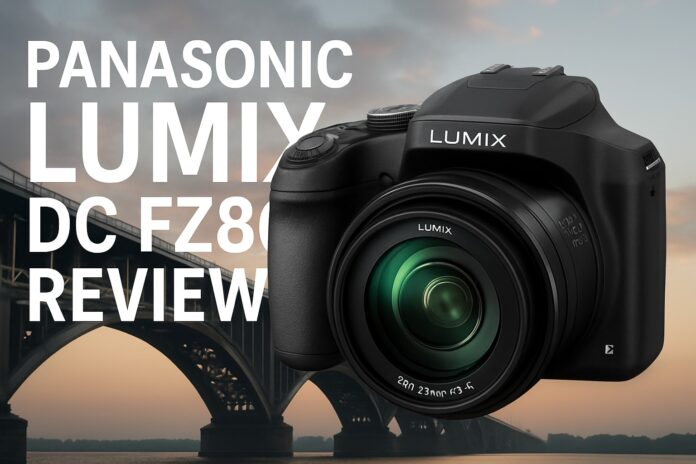
The Panasonic Lumix FZ80/FZ80D is the kind of bridge camera that still makes sense because it does one thing a phone cannot do honestly: reach 1200mm equivalent optically. In this Panasonic Lumix FZ80/FZ80D review, I am treating it as a practical long-zoom camera for travel, wildlife, family outings, and anyone who wants a single camera instead of an interchangeable-lens kit.
The naming needs a little care. The original Panasonic FZ80 arrived in 2017. The FZ80D is the later refresh, known as the FZ82D in some markets. The core concept is the same: an 18.1MP small-sensor bridge camera with a 60x zoom lens. The FZ80D mainly modernizes the experience with a sharper OLED viewfinder, higher-resolution rear screen, and USB-C charging. It does not turn the camera into a new sensor generation.
Quick verdict
The Panasonic Lumix FZ80D is worth buying if your priority is daylight zoom reach at a sane price. It is a strong camera for casual wildlife, zoo trips, airshows, travel details, moon shots, family sports in good light, and learning basic exposure without changing lenses.
It is not the right camera if you expect clean indoor photos, fast subject tracking like a modern mirrorless body, shallow depth of field, or premium video. This is a small-sensor superzoom. The lens range is the reason to buy it; the sensor is the reason to keep your expectations realistic.
Key specs that matter
| Feature | Panasonic FZ80 / FZ80D |
|---|---|
| Sensor | 18.1MP 1/2.3-inch MOS |
| Lens | 60x optical zoom, 20-1200mm equivalent, f/2.8-5.9 |
| Stabilization | Optical image stabilization |
| Viewfinder | FZ80D: 0.39-inch OLED LVF, approx. 2.36m dots |
| Screen | FZ80D: 3.0-inch fixed touchscreen, approx. 1.84m dots |
| Video | 4K/30p, Full HD, 4K Photo |
| Battery | Panasonic DMW-BMB9 |
| Charging | FZ80D uses USB-C in-camera charging |
| Memory card | SD/SDHC/SDXC; use UHS-I U3 for 4K |
| Weather sealing | No |
FZ80 vs FZ80D: what actually changed?
The FZ80D is not a dramatic reinvention. Panasonic kept the same basic sensor and 20-1200mm equivalent lens formula, then updated the parts you look through and interact with. The viewfinder is much better on the FZ80D, the rear screen is sharper, and USB-C charging is a welcome modern convenience.
That matters more than it sounds. With a 60x zoom, you spend a lot of time trying to hold framing steady at long focal lengths. A clearer viewfinder makes the camera less frustrating, especially in bright sun. The improved screen also helps when reviewing focus and composition in the field.
What did not change is just as important. The FZ80D still uses a small 1/2.3-inch sensor. If you already own an FZ80 and are happy with it, the FZ80D is not an image-quality revolution. If you are buying fresh, I would prefer the FZ80D for the better handling experience, but only if the price does not jump too far beyond the used FZ80.
Who should buy it?
The FZ80/FZ80D is for the photographer who wants reach without lens anxiety. I would recommend it to someone photographing birds in a park, family sports from the sidelines, travel scenes from viewpoints, animals at a zoo, boats from shore, distant architecture, or moon photos for fun.
It is also a good learning camera for people who want a real grip, mode dial, viewfinder, and manual exposure modes without stepping into a lens system. You get P/A/S/M modes, scene modes, 4K Photo, and enough physical control to learn the basics.
I would not recommend it to someone who mainly photographs indoors, events, restaurants, concerts, or fast-moving wildlife in bad light. The long zoom gets attention, but light is still light. At the telephoto end you are at f/5.9 on a small sensor, and the camera needs decent conditions.
The 60x zoom experience
The lens is the whole story. A 20-1200mm equivalent range is wild in everyday use. At 20mm, the FZ80D is wider than many compact zooms, which helps with landscapes, interiors, and travel scenes. At 1200mm, you can frame distant subjects that would be impossible with a phone or basic compact.
The price of that range is technique. At full zoom, small movements become huge. Optical stabilization helps, but it does not cancel poor shutter speed, shaky hands, heat shimmer, or a subject moving unpredictably. The best results come when you treat the long end with respect: brace yourself, use the viewfinder, raise shutter speed, and shoot bursts.
Panasonic’s Zoom Compose Assist is one of the most practical long-zoom features here. When you lose a subject at full telephoto, the camera can temporarily zoom out so you can find it again, then return to your framing. For birds and sports, that feature is not a gimmick. It solves a real superzoom problem.
Image quality
In bright light, the FZ80/FZ80D can produce enjoyable images with impressive framing flexibility. The files are best when you avoid heavy cropping, keep ISO low, and do not expect large-sensor smoothness. For travel albums, family use, online sharing, and casual prints, the results can be very satisfying.
The camera struggles when light falls. The small sensor produces noise sooner than a larger-sensor compact, DSLR, or mirrorless camera. The long end of the lens also narrows to f/5.9, which pushes ISO higher unless the light is strong. A modern phone may beat it indoors because computational photography is doing so much behind the scenes.
That does not make the Panasonic pointless. It means the FZ80D is a daylight reach camera first. Use it where zoom matters, not where sensor size matters.
Handling and viewfinder
The bridge-camera shape is one of the reasons the FZ80D still works. It looks and handles like a small DSLR, with a deep grip, mode dial, zoom lever, rear dial, and viewfinder. For people coming from phones, that physical shooting posture can be refreshing. You hold it to your eye, stabilize your body, and think more deliberately about framing.
The FZ80D’s upgraded OLED viewfinder is one of the strongest reasons to choose it over the older FZ80 if prices are close. Long zoom cameras depend heavily on viewfinder usability. A poor EVF makes 1200mm framing feel like work. A clearer EVF makes it much easier to stay with a subject.
The rear screen is fixed, which is a limitation for low-angle shooting, vlogging, and awkward tripod angles. I would have liked a tilting screen here. Panasonic gave the FZ80D a sharper screen, but not a more flexible one.
Autofocus and action
The autofocus is fine for casual use, but this is not a modern subject-recognition camera. It uses contrast-detect autofocus, and it works best when the subject has clear contrast and the light is good. For perched birds, zoo animals, landscapes, travel, and slower family action, it is usable. For erratic birds in flight or fast sports, expect misses.
My advice is to shoot bursts, use the viewfinder, keep shutter speed high, and avoid asking the camera to track subjects in poor light at the far end of the zoom. The camera can get good action shots, but it rewards patience rather than blind spray-and-pray shooting.
Video and 4K Photo
4K/30p video is useful, especially for travel and family clips. It is not a creator camera in the modern sense because there is no external mic input and the autofocus is not as confident as newer mirrorless cameras. Still, for short outdoor clips and documenting trips, it is good enough.
Panasonic’s 4K Photo mode is more interesting than many buyers realize. It records a 4K burst and lets you extract an 8MP still. For unpredictable movement, pets, kids, and birds taking off, that can be genuinely helpful. The files are not the same as full-resolution stills, but they can capture moments you would otherwise miss.
Battery, memory cards, and setup
The FZ80D uses the Panasonic DMW-BMB9 battery. Panasonic’s advanced FZ80D owner’s manual specifies in-camera charging and notes that the FZ80D charges through USB-C using an appropriate USB cable and adapter. That is a useful upgrade over older Micro USB habits, especially for travel.
Use a reliable SD/SDHC/SDXC card. If you plan to shoot 4K video or 4K Photo, use a UHS-I U3 card from a reputable brand. A weak card can cause recording frustration, and this is not the place to save a few dollars.
For long days, carry a spare battery. Superzoom shooting drains power faster when you use the EVF, review images often, zoom constantly, or shoot 4K clips. A spare battery is more useful than most bundle accessories.
FZ80D vs Canon SX70 HS and Kodak AZ528
The Canon PowerShot SX70 HS is the more polished rival if you want a stronger all-around bridge camera and do not mind paying more. It has a 65x zoom and a more refined feel, though price often pushes it out of the strict budget conversation.
The Kodak Pixpro AZ528 is the cheaper long-zoom alternative. It can make sense in a strict under-$400 context, but the Panasonic FZ80D feels like the more complete photographic tool when its price is reasonable. That is why the FZ80D sits as a near-miss in the best cameras under $400 guide rather than a guaranteed main pick.
If your priority is pure reach and you can handle a larger body, also compare the FZ80D with our best zoom cameras guide. If travel size matters more, the Panasonic Lumix ZS70 / TZ90 review is the more relevant pocket-zoom Panasonic alternative.
Pros and cons
Pros
- Huge 60x optical zoom, 20-1200mm equivalent.
- Very wide 20mm starting point is useful for travel and landscapes.
- FZ80D refresh improves the EVF, rear screen, and charging port.
- Bridge-style grip and controls feel more photographic than a phone.
- 4K Photo can capture moments that are hard to time manually.
- Strong value when discounted or bought at the right price.
Cons
- Small sensor limits low-light performance and dynamic range.
- Autofocus is not ideal for fast, erratic action.
- Fixed rear screen is less flexible than a tilt or vari-angle display.
- No weather sealing.
- No external microphone input for serious video work.
- FZ80D is a handling refresh, not a major image-quality upgrade over the FZ80.
Final verdict
The Panasonic Lumix FZ80/FZ80D is still a good camera when the buyer understands the bargain. You are not buying large-sensor image quality. You are buying reach, convenience, and the ability to photograph subjects that a phone cannot frame optically.
I would choose the FZ80D over the older FZ80 if the price gap is modest, mainly because the improved viewfinder, sharper screen, and USB-C charging make day-to-day use nicer. I would choose a used FZ80 if the price is much lower and image quality is the main concern, because the sensor and lens concept remain so similar.
For travel and casual wildlife in good light, the FZ80D remains one of the more practical bridge-camera options. Just keep its limits in mind: use it where the 60x zoom matters, and do not expect it to behave like a modern mirrorless camera in poor light.
Panasonic Lumix DC-FZ80 / DC-FZ80D alternatives
The main alternatives to the Panasonic Lumix DC-FZ80 / DC-FZ80D are Canon SX70 HS, Kodak AZ528, Nikon P950, Panasonic FZ300. Compare autofocus, stabilization, video limits, lens choice and current price before deciding which camera fits you best.
Frequently asked questions
Is the Panasonic FZ80D better than the FZ80?
Yes for usability, mainly because the FZ80D has a better viewfinder, sharper rear screen, and USB-C charging. It is not a major image-quality upgrade because the basic sensor and lens concept remain similar.
Is the Panasonic FZ80D good for wildlife?
It is good for casual wildlife in bright conditions. The 60x zoom is very useful, but autofocus and low-light performance are not on the level of a modern mirrorless camera with a dedicated telephoto lens.
Does the Panasonic FZ80D shoot 4K video?
Yes. It records 4K/30p video and also supports Panasonic’s 4K Photo features for extracting stills from 4K sequences.
What battery does the Panasonic FZ80D use?
The FZ80D uses the Panasonic DMW-BMB9 battery.
What memory card should I use with the Panasonic FZ80D?
Use a reliable SD/SDHC/SDXC card. For 4K video and 4K Photo, use a UHS-I U3 card.
Is the Panasonic FZ80D worth buying in 2026?
Yes if you want an affordable all-in-one superzoom for daylight travel, wildlife, and family use. No if your main needs are low-light quality, fast autofocus tracking, or premium video.
Daylight wildlife, travel, family sports, moon shots, and long-zoom convenience.
You need low-light quality, fast tracking AF, weather sealing, or interchangeable lenses.
Low; long telephoto technique still takes practice.
Move to Canon SX70 HS for a more polished bridge camera or to mirrorless for image quality.
4K is useful, but no mic input and contrast AF limit serious video work.
Yes when priced correctly, especially if zoom reach matters more than sensor size.