
If you are comparing Canon PowerShot cameras in 2026, start with the practical split: the Canon PowerShot V1 is the modern creator compact, the PowerShot G7 X Mark III is the premium pocket camera people still chase, the SX740 HS is the best pocket travel zoom, the SX70 HS is the long-zoom bridge option, the SX620 HS is the value travel zoom, and the ELPH 360 HS is the simplest small pocket camera.
This Canon PowerShot comparison is built for buyers, not collectors. Many older PowerShot models still appear in search results, used listings, and refurbished inventory, but only a handful still make sense to compare before spending money. The table below gives you the fast answer, then the model notes explain where each camera wins and where it falls short.
Canon PowerShot comparison chart: quick recommendations
| Model | Best for | Main strength | Main compromise | Best buying route |
|---|---|---|---|---|
| Canon PowerShot V1 | Creators, travel video, hybrid use | Large 1.4-type sensor, wide lens, modern autofocus and video tools | Short zoom range compared with SX models | New, refurbished, or discounted kit |
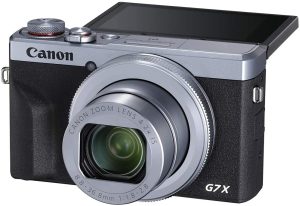
| Canon PowerShot G7 X Mark III | Premium pocket photos and vlogging | 1-inch sensor and bright 24-100mm equivalent lens | Expensive, sometimes hard to find, limited zoom | New limited edition if available, otherwise renewed or used at a fair price |
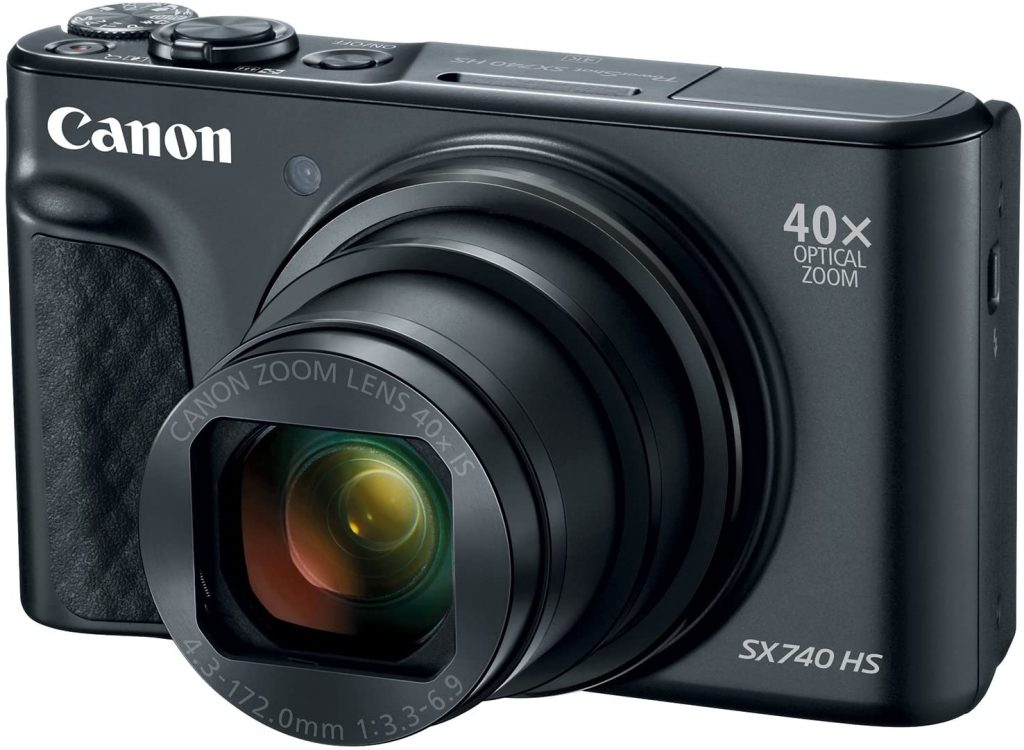
| Canon PowerShot SX740 HS | Travel, sightseeing, daylight family use | 40x optical zoom in a pocketable body | Small sensor struggles indoors and at night | New, renewed, or used |
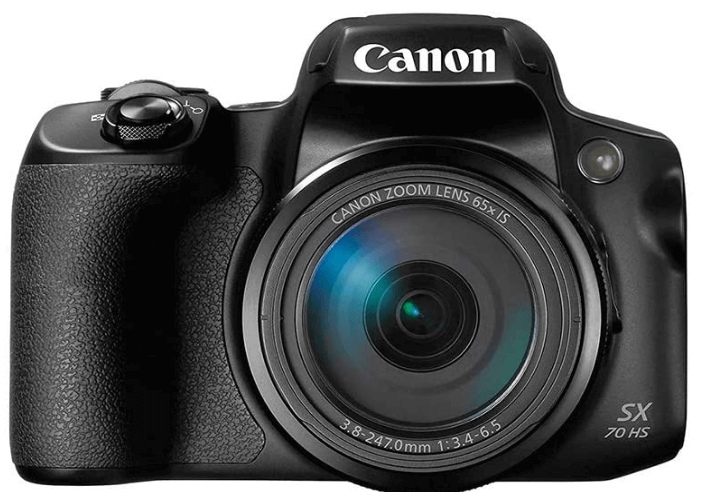
| Canon PowerShot SX70 HS | Wildlife, birds, distant subjects | 65x zoom and bridge-camera handling | Not pocketable; still a small-sensor camera | New if discounted, otherwise used |
| Canon PowerShot SX620 HS | Budget travel zoom | 25x optical zoom in a compact body | No 4K and older performance | Used or renewed |
| Canon PowerShot ELPH 360 HS | Simple pocket snapshots | Small, easy, affordable, 12x optical zoom | Basic controls and 1080p video only | Used or renewed |
Which Canon PowerShot should you buy?
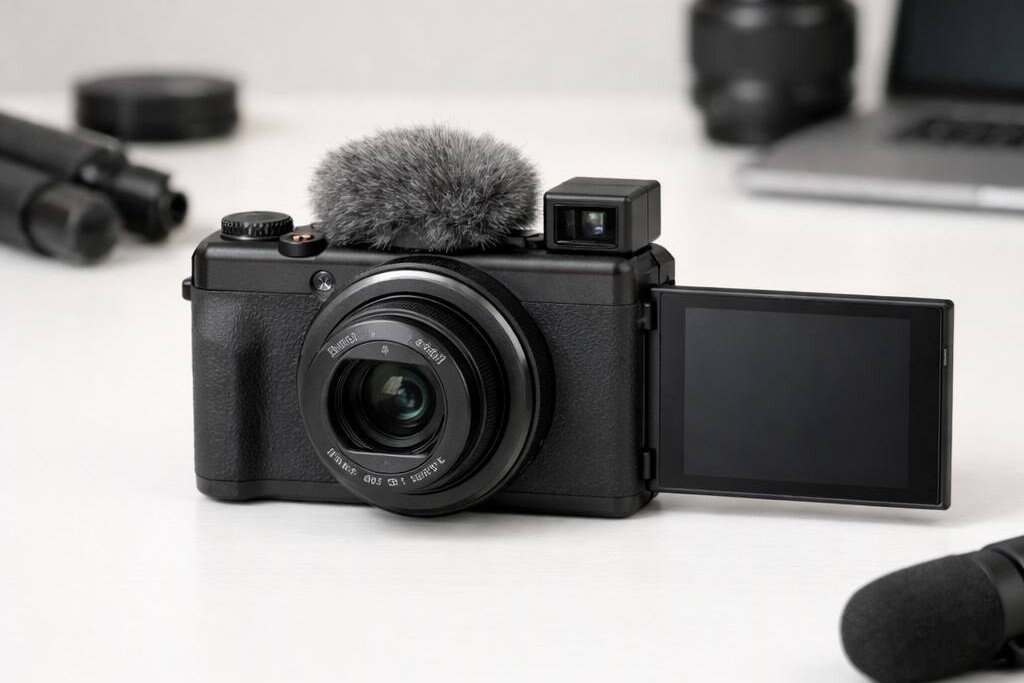
For most people, the decision is simpler than the spec sheets make it look. Buy the PowerShot V1 if video, creator features, autofocus, and a wide lens matter most. Buy the G7 X Mark III if you want premium stills and pocket size, especially for people, food, travel details, and everyday carry. Buy the SX740 HS if your priority is zoom reach in a jacket-pocket camera. Buy the SX70 HS if you need far more reach and do not mind carrying a bridge camera.
The red flag is price. Some older Canon PowerShot cameras now sell for inflated prices because compact digital cameras are fashionable again. A PowerShot can still be the right buy, but only if the price matches the model’s age and limitations. If the G7 X Mark III costs close to a modern mirrorless kit, or if an older ELPH costs more than it should, step back and compare alternatives.
Canon PowerShot lineup in 2026: confirmed models, useful older picks and rumors
Current-model check: Canon’s 2026 product catalog and anniversary announcement confirm the PowerShot G7 X Mark III Graphite Kit as a current limited-edition release, not a used-only model. Availability remains limited and price-sensitive.
The PowerShot line is in a comeback phase, not a simple legacy phase. The confirmed side is clear: the PowerShot V1 is Canon’s modern creator compact, and the PowerShot ELPH 360 HS A brings a viral pocket-camera format back into new retail channels. The less certain side is what comes next. Canon Rumors has reported that Canon could have additional PowerShot models planned for 2026, but those should be treated as rumors until Canon announces them.
For buyers, that means separating confirmed current products from still-useful discontinued models. The V1 is the most modern PowerShot. The ELPH 360 HS A is a refreshed simple compact. Canon also released a 30th Anniversary G7 X Mark III Graphite Kit in April 2026, so the G7 X Mark III is not merely a used-market model. The SX740 HS, SX70 HS, and SX620 HS are older but still relevant when the price is sensible. The wrong move is paying collector-level prices for an old compact just because PowerShot demand has come back.
Canon PowerShot models list for 2026 buyers
| Group | Models | Buying status | Best use |
|---|---|---|---|
| Confirmed modern PowerShot | PowerShot V1 | Current creator-focused model | Video, travel clips, hybrid shooting, social-first content |
| Refreshed pocket compact | PowerShot ELPH 360 HS A / IXUS 285 HS A | New retail refresh of a simple compact design | Casual snapshots, small-camera nostalgia, easy carry |
| Still worth comparing | G7 X Mark III, SX740 HS, SX70 HS, SX620 HS | G7 X Mark III Anniversary stock may be new; compare the others as new-old-stock, renewed, or used | Premium pocket photos, travel zoom, bridge zoom, budget compact reach |
| Used-only / niche | G7 X Mark II, SX540 HS, SX530 HS, older ELPH models | Consider only if cheap and in good condition | Backup cameras, casual daylight use, specific nostalgia buys |
| Usually skip | Very old A-series, SD/IXUS-era models, overpriced discontinued listings | Avoid unless the price is very low | Collectors or casual experimentation, not best-value buying |
That is why this guide does not try to list every PowerShot ever made. Search data shows demand around Canon PowerShot models, Canon PowerShot comparison, Canon PowerShot comparison chart, Canon PowerShot lineup, and best Canon PowerShot camera. The useful answer is a current buying map: what is genuinely current, what is still worth buying, and what should only be considered at a discount.
Canon PowerShot V1: best current PowerShot for creators
The PowerShot V1 is the most important model to include in a 2026 Canon PowerShot comparison because it shows where Canon’s compact-camera strategy has moved. It is not a traditional long-zoom pocket camera. It is a compact hybrid camera for people who shoot video, travel clips, talking-head content, casual stills, and social-first work.
The V1’s biggest advantage is its sensor and video toolset. The large 1.4-type sensor gives it more imaging potential than small-sensor SX and ELPH cameras, while the wide built-in zoom is better suited to handheld video and self-recording than the long telephoto ranges of the SX line. Canon also gives it modern autofocus and creator-focused features that older PowerShots simply do not have.
The trade-off is obvious: zoom reach. If you want to photograph distant landmarks, wildlife, or stage performers from the back of a room, the V1 is not the best PowerShot. For that, look at the SX740 HS or SX70 HS. But if you want the most modern Canon PowerShot for video-first everyday use, the V1 should be at the top of the list.

The G7 X Mark III remains the classic premium PowerShot recommendation. It has a 1-inch sensor, a bright 24-100mm equivalent f/1.8-2.8 lens, RAW support, 4K video, and a pocketable body. Compared with the SX740 HS, it gives up a huge amount of zoom, but it gains noticeably better image quality and low-light flexibility.
This is the model I would choose for restaurants, portraits, everyday travel details, family moments, and creator work where a bright lens matters more than reach. Independent comparisons also tend to frame the G7 X Mark III as the stronger image-quality camera versus the SX740 HS, largely because of its bigger sensor, RAW capability, faster lens, and stronger video feature set.
The problem is availability and price. Canon released the PowerShot G7 X Mark III Graphite Kit as a 30th Anniversary limited edition in April 2026, but limited supply and social-media demand can still push listings far above sensible value. Compare official new stock, renewed listings, and used copies rather than assuming it is discontinued. If the price approaches a capable mirrorless kit, the V1 or a small mirrorless camera may make more sense.
Canon PowerShot SX740 HS: best pocket travel zoom
The SX740 HS is the PowerShot I would recommend first to travelers who want reach in the smallest practical body. Its 40x optical zoom covers a huge range for sightseeing, family trips, school events, casual wildlife, and distant details that a phone cannot capture cleanly.
The SX740 HS is not a low-light specialist. The 1/2.3-inch sensor is small, so indoor image quality falls behind the G7 X Mark III and V1. It also does not give you the same premium controls or RAW flexibility. But for daylight travel, the SX740 HS is still one of the clearest PowerShot choices because it solves a real problem: getting far-away subjects without carrying a big camera.
If you are deciding between the SX620 HS and SX740 HS, the SX620 vs SX740 comparison is the natural next read. The short version: buy the SX740 HS if you can afford it and want 4K plus more zoom; buy the SX620 HS only when price is the priority.
Canon PowerShot SX70 HS: best long-zoom bridge PowerShot
The SX70 HS is for a different buyer than the pocket PowerShots. It looks and handles more like a small bridge camera, and its 65x zoom is the reason to buy it. If you photograph birds in the garden, animals at a distance, kids playing sports, or landscapes where reach matters, the SX70 HS makes more sense than the SX740 HS.
The cost is portability. This is not a jeans-pocket camera, and it still uses a small sensor. Do not buy it expecting mirrorless image quality in low light. Buy it because you want huge optical reach, an electronic viewfinder, and a more stable shooting stance than the smaller SX models provide.
Canon PowerShot SX620 HS: best budget travel zoom
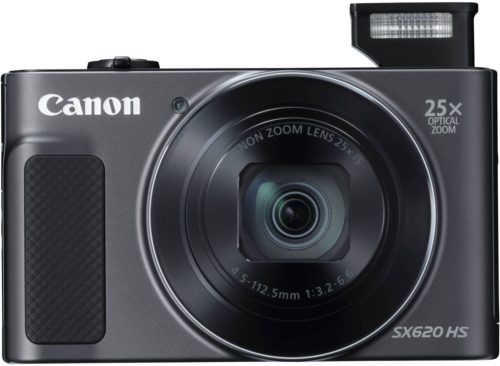
The SX620 HS is an older but still practical budget option. Its 25x optical zoom is enough for travel, family days, and basic sightseeing, and the body is small enough to bring almost anywhere. It makes the most sense when the SX740 HS is too expensive or when you simply want a cheap Canon compact with meaningful zoom.
The limitations are age-related. There is no 4K video, performance is modest, and phone cameras have improved dramatically since the SX620 HS launched. Still, a real optical zoom is something phones often cannot match, and that is why the SX620 HS remains relevant for budget buyers.
Canon PowerShot ELPH 360 HS A: best simple pocket camera
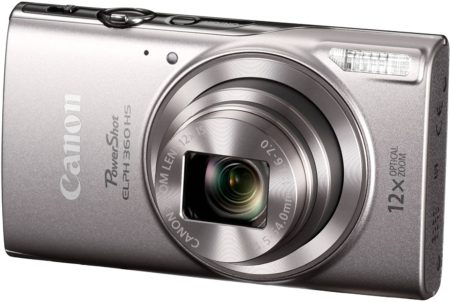
The ELPH 360 HS A is the easiest PowerShot to understand. It is small, simple, and designed for casual snapshots. It is not a serious enthusiast camera, but that is part of the appeal. Some buyers do not want menus, lens decisions, or a creator-oriented camera. They want a small Canon that turns on quickly and takes a photo.
The important nuance is that the HS A is a refresh of a familiar older compact formula, not a modern high-end redesign. Choose it for family events, kids, older relatives, simple travel, and everyday use where pocket size matters more than advanced controls. Avoid it if you care about 4K video, RAW files, fast action, or low-light quality. If you want the simplest Canon PowerShot, it still has a role. If you want better image quality, move up to the G7 X Mark III or V1.
PowerShot G series vs SX series vs ELPH series
| Series | Typical sensor | Typical zoom | Best reason to buy | Who should avoid it |
|---|---|---|---|---|
| G series | 1-inch class | Shorter, brighter zoom | Better image quality and more creative control | Buyers who need long telephoto reach |
| SX series | 1/2.3-inch class | Long travel or bridge zoom | Optical reach in a compact or bridge body | Low-light shooters and RAW-first photographers |
| ELPH series | 1/2.3-inch class | Short-to-moderate pocket zoom | Simplicity, size, and low used prices | Creators, enthusiasts, and video-first buyers |
| V series | 1-inch / 1.4-type class | Wide creator-focused zoom | Modern video, creator tools, autofocus, and portability | Buyers who mainly need long zoom |
This is where many buyers make the wrong choice. The best Canon PowerShot is not automatically the newest or the most expensive. The best one is the model that matches the job. A G7 X Mark III is better than an SX740 HS for indoor quality, but the SX740 HS is better for distant travel shots. The V1 is more modern than both for video, but it cannot replace a superzoom. The ELPH 360 HS is weaker on specs, but easier and cheaper for casual snapshots.
What features actually matter in a Canon PowerShot?
Sensor size
Sensor size is the biggest image-quality divider. The V1 and G7 X Mark III have a major advantage over the SX and ELPH models because their sensors are larger. That usually means cleaner files, better low-light quality, more editing flexibility, and more subject separation. The SX and ELPH models win on zoom and price, not pure image quality.
Optical zoom
Optical zoom is the reason to buy an SX model. The SX740 HS gives you a 40x range in a pocketable body, while the SX70 HS goes much farther with its 65x bridge-camera lens. Do not confuse this with digital zoom. Optical zoom changes the lens reach; digital zoom just crops and degrades the image.
Video features
If video matters, put the V1 first and the G7 X Mark III second. The SX740 HS and SX70 HS can shoot 4K, but they are not as creator-focused. The SX620 HS and ELPH 360 HS are 1080p cameras and should be treated as casual still-photo options, not modern video tools.
Controls and RAW support
If you want manual control, RAW files, and a camera that rewards more involved shooting, prioritize the V1 or G7 X Mark III. If you want a simple auto-mode camera, the ELPH 360 HS and SX620 HS are easier. If you want reach and framing control through a viewfinder, the SX70 HS is the more comfortable choice.
When a Canon PowerShot is not the best choice
A PowerShot is not the right answer for everyone. If you need interchangeable lenses, serious low-light performance, high-speed sports autofocus, or professional video controls, a mirrorless camera will usually be better. If you only take casual wide-angle snapshots in good light, a modern phone may be enough.
PowerShot cameras are strongest when they solve a specific problem: real optical zoom, pocketable camera handling, simple dedicated shooting, or compact creator video. If none of those matter to you, do not buy one just because compact cameras are popular again.
Buying tips for Canon PowerShot cameras in 2026
- Check the release date. Many PowerShot models are older than their current prices suggest.
- Compare used and renewed pricing. Some models are good buys only below a certain price.
- Inspect batteries and chargers. Older compacts are often sold with tired batteries or missing accessories.
- Watch for inflated G7 X prices. The G7 X Mark III is excellent, but not at any price.
- Do not overpay for nostalgia. The ELPH and SX models are useful, but they are still small-sensor compact cameras.
- Buy the V1 for modern creator features. If you want the newest Canon compact direction, the V1 is the model to study first.
Final verdict: the best Canon PowerShot for most buyers
The best Canon PowerShot for most buyers depends on the job. For modern creator work, choose the PowerShot V1. For premium pocket image quality, choose the G7 X Mark III if the price is fair. For travel zoom, choose the SX740 HS. For maximum reach, choose the SX70 HS. For budget zoom, choose the SX620 HS. For the simplest pocket camera, choose the ELPH 360 HS.
If you only remember one thing from this Canon PowerShot cameras comparison, make it this: do not buy by model name alone. Buy by use case. The right PowerShot is the one whose lens, sensor, controls, and price match the way you actually shoot.
Frequently asked questions
What is the best Canon PowerShot camera in 2026?
The best current Canon PowerShot for creators is the PowerShot V1. The best premium pocket model is the G7 X Mark III, the best pocket travel zoom is the SX740 HS, and the best long-zoom bridge option is the SX70 HS.
Which Canon PowerShot has the best zoom?
The SX70 HS has the most reach in this comparison with a 65x optical zoom. The SX740 HS is the better choice if you want strong zoom in a much smaller pocketable camera.
Is the Canon PowerShot G7 X Mark III better than the SX740 HS?
For image quality, low light, RAW files, and creator use, yes. For long-distance travel zoom, no. The G7 X Mark III has the better sensor and brighter lens, while the SX740 HS has far more optical reach.
Are Canon PowerShot cameras still worth buying?
Yes, when the model solves a specific problem. They are worth buying for optical zoom, pocketable dedicated shooting, simple handling, or creator-focused compact video. They are not always worth inflated used prices.
Should I buy a Canon PowerShot or a mirrorless camera?
Buy a PowerShot if you want a fixed-lens compact camera with less gear to manage. Buy a mirrorless camera if you want interchangeable lenses, stronger low-light performance, faster action autofocus, and a long-term upgrade path.