
View full specs
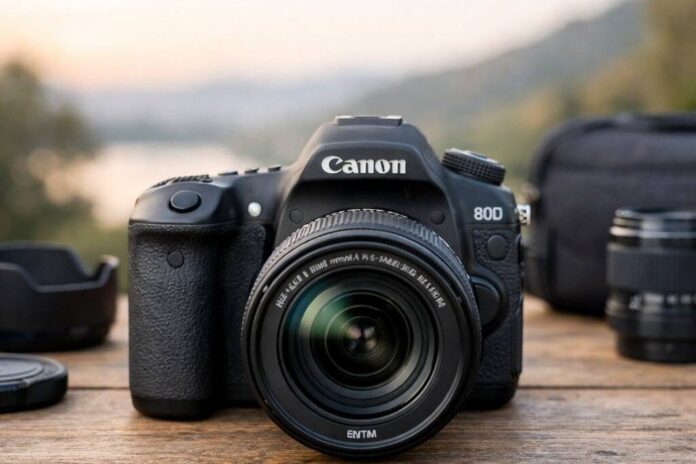
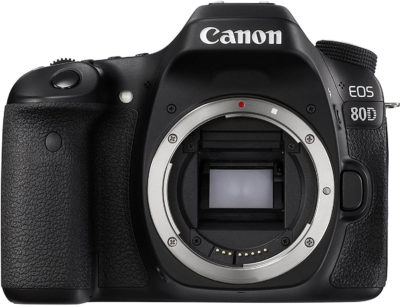
This Canon 80D review is for photographers who want a capable DSLR without pretending it is newer than it is. The EOS 80D is an older camera now, but it still has a useful combination of 24.2MP APS-C image quality, strong DSLR handling, 45-point autofocus, Dual Pixel CMOS AF in live view, a fully articulating touchscreen, and excellent battery life. If the price is right, it remains a very sensible used Canon body for beginners moving up, family photographers, students, and EF/EF-S lens owners.
The key is expectations. The Canon 80D does not shoot 4K video, does not have modern subject-recognition autofocus, and is not part of Canon’s future RF mirrorless system. Canon’s official EOS 80D specifications make those limits clear. What the camera does offer is a mature DSLR experience that still works well for portraits, travel, everyday photography, school events, casual sports, and 1080p video.
Canon 80D at a glance
- 24.2MP APS-C CMOS sensor
- Canon EF/EF-S lens mount
- DIGIC 6 processor
- 45-point all cross-type viewfinder autofocus system
- Dual Pixel CMOS AF in live view and video
- Up to 7 fps continuous shooting
- 3.0-inch vari-angle touchscreen, approx. 1.04M dots
- Full HD video up to 60p; no 4K
- Microphone input and headphone jack
- Single SD/SDHC/SDXC card slot, UHS-I compatible
- LP-E6N battery, rated around 960 shots with the optical viewfinder
Who the Canon 80D is really for
The Canon 80D makes the most sense for someone stepping up from a basic Rebel, an older Canon DSLR, or a phone-and-compact-camera setup. It gives you proper controls, a top LCD, a bright optical viewfinder, better autofocus than entry-level bodies, and enough image quality to learn serious photography without paying mirrorless prices.
I would consider it for portraits, travel, family work, school events, basic sports, YouTube-style 1080p video, and photography classes. It is also a good fit if you already own EF or EF-S lenses. That lens compatibility is the main reason an older DSLR like this can still be a smart buy: you can build a useful kit from affordable used lenses instead of starting fresh with RF gear.
If you want a smaller, newer, easier Canon body, the Canon R50 review is the better comparison point. If you want the strongest late-generation Canon APS-C DSLR, our Canon 90D review explains the more powerful upgrade. The 80D sits between those ideas: older than mirrorless, less advanced than the 90D, but often cheaper and still very usable.
Design, handling, and everyday use
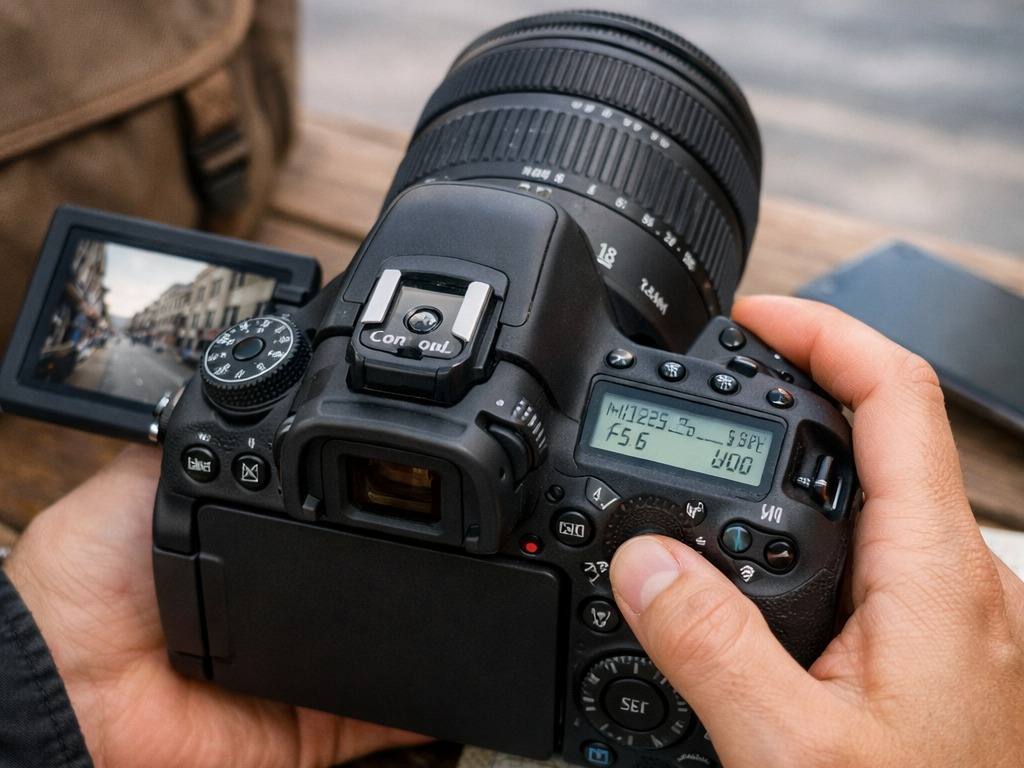
The 80D feels like a real enthusiast camera. The grip is deep, the body balances well with EF-S zooms and smaller EF lenses, and the controls are much more satisfying than a basic beginner DSLR. The top LCD, rear control dial, dedicated buttons, and clear menu system make it easier to change settings without digging through screens.
The optical viewfinder is a major part of the appeal. Some photographers prefer an EVF because it previews exposure and white balance. Others still like the direct, lag-free feel of a DSLR finder. On the 80D, that viewfinder works well for learning timing, following movement, and shooting all day without burning through batteries.
The fully articulating touchscreen is one of the camera’s most useful features. It flips forward for self-recording, rotates for low angles, and makes touch focus in live view feel natural. This is why the 80D became popular with early YouTube creators and still works well for simple video setups.
Image quality from the 24.2MP APS-C sensor
The 24.2MP APS-C sensor is still strong for normal photography. In good light, files are detailed, Canon color is pleasant, and JPEGs are easy to like straight from the camera. For portraits, family photos, travel, and web publishing, the 80D produces images that hold up much better than its age might suggest.
RAW files offer useful flexibility, especially compared with older Canon APS-C bodies. You can recover some shadow detail, manage highlights, and make careful edits without the files falling apart quickly. It is not a modern full-frame sensor, and it will not match newer mirrorless bodies in difficult light, but it is more than enough for the type of buyer who should be looking at this camera.
Low light is acceptable if you stay realistic. ISO 1600 is comfortable, and ISO 3200 can work with good exposure and careful noise reduction. Beyond that, the smaller sensor starts to show its limits. A fast lens helps far more than chasing settings. Pair the 80D with an EF 50mm f/1.8 STM, EF-S 24mm f/2.8 STM, or EF-S 17-55mm f/2.8 IS USM, and the camera becomes much more capable indoors.
Autofocus and live view performance
The 45-point all cross-type viewfinder AF system is one of the 80D’s biggest upgrades over entry-level Canon DSLRs. It covers more of the frame, gives you more useful AF point choices, and tracks moderate movement well. For kids, pets, school sports, portraits, and casual action, it is still a dependable system.
It is not modern subject detection. The camera does not recognize birds, vehicles, or eyes across the frame like newer mirrorless bodies. You need to choose AF areas, keep the subject under the points, and understand how DSLR autofocus behaves. That is not a flaw if you enjoy learning technique, but it is a reason not to overpay.
Dual Pixel CMOS AF is the feature that keeps the 80D feeling surprisingly current in live view. Tap the screen, and focus is smooth and confident. For tripod work, self-recording, product shots, casual video, and low-angle stills, live view focus is one of the camera’s best qualities.
Video and creator value
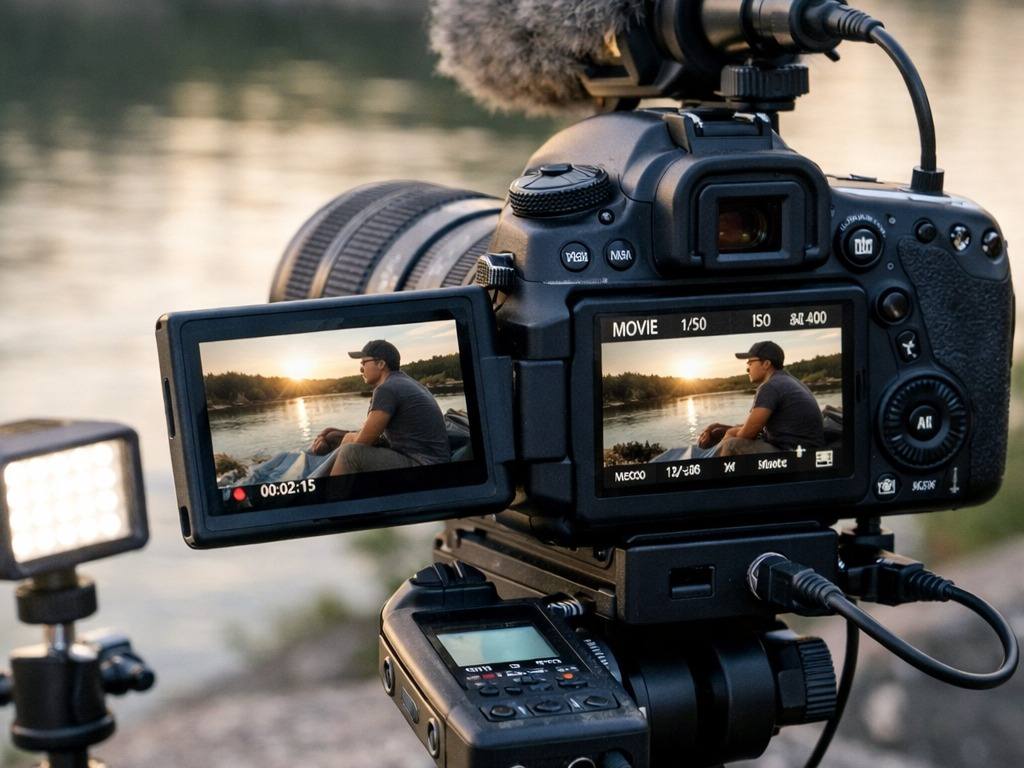
The Canon 80D is still useful for video, but only if 1080p is enough. It records Full HD up to 60p, has a flip screen, includes a microphone input, and even gives you a headphone jack for monitoring audio. That combination is why it became a creator favorite before affordable mirrorless video bodies took over.
Dual Pixel AF is the real video strength. It makes talking-head clips, product demonstrations, family videos, and simple YouTube work easier than many older DSLRs. The footage has Canon color, skin tones look good, and the camera is simple to operate.
The limits are just as clear. There is no 4K, no log profile, no in-body stabilization, and no modern tracking system. If you are building a video-first kit in 2026, a mirrorless body is the smarter choice. But if you need clean 1080p, reliable autofocus, and good audio options on a low budget, the 80D remains useful.
Lenses, battery life, and system value
The EF and EF-S lens ecosystem is the strongest argument for the 80D. The used market is full of affordable lenses, and many of them fit this camera directly. That lets you put more money into glass instead of spending everything on a newer body.
For general use, the EF-S 18-135mm IS USM is a practical travel and family lens. The EF-S 17-55mm f/2.8 IS USM is the higher-quality everyday zoom if you want better low-light ability. The EF-S 24mm f/2.8 STM is tiny and excellent for street, travel, and casual video. The EF 50mm f/1.8 STM is the obvious budget portrait lens, while the EF 85mm f/1.8 gives a tighter portrait look.
Battery life is a real DSLR advantage. The LP-E6N battery lasts far longer than most small mirrorless batteries when you use the optical viewfinder. For travel, classes, and family outings, that reduces friction. You still want a spare battery, but the 80D is not a camera that makes you watch the battery meter all day.
Canon 80D vs Canon 90D and mirrorless
The Canon 90D is the better DSLR if you can afford it. It gives you more resolution, faster shooting, better video specs, and a later-generation sensor. The 80D wins only when price matters or when you find a clean body for much less money.
Compared with Canon mirrorless bodies, the 80D feels larger and older. Cameras like the R50 and R10 offer newer autofocus, smaller bodies, and a clearer upgrade path into RF lenses. The 80D still fights back with battery life, direct EF/EF-S compatibility, optical viewfinder handling, and lower used-system cost.
That is the buying decision in one sentence: choose the 80D because the total DSLR kit is affordable and enjoyable, not because it is more advanced than Canon’s newer mirrorless bodies.
Canon 80D pros and cons
What it still does well
- Good 24.2MP APS-C image quality for portraits, travel, and everyday work
- Excellent Dual Pixel AF for live view and 1080p video
- 45-point all cross-type viewfinder AF system
- Fully articulating touchscreen
- Microphone input and headphone jack
- Strong battery life with LP-E6N batteries
- Direct compatibility with Canon EF and EF-S lenses
- Good used value when priced below the 90D and newer mirrorless bodies
Where it feels dated
- No 4K video
- No in-body image stabilization
- No modern eye, animal, or vehicle subject tracking
- Single SD card slot only
- Bulkier than many mirrorless alternatives
- EF-S is no longer Canon’s future system
Should you buy the Canon 80D now?
You should buy the Canon 80D if you want a low-cost enthusiast DSLR, already own Canon EF or EF-S lenses, or want a learning camera with good controls and strong battery life. It is especially sensible for students, families, hobbyists, and creators who are happy with 1080p video.
You should skip it if the price is close to a Canon 90D, Canon R50, Canon R10, or another newer mirrorless body. The 80D is still good, but it has to win on value. At the right price, it remains one of Canon’s most likable used DSLRs.
Canon EOS 80D alternatives
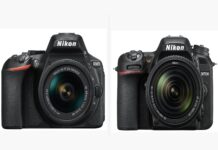
The main alternatives to the Canon EOS 80D are Canon EOS 90D, Canon EOS R50, Canon EOS R10, Nikon D7500. Compare autofocus, stabilization, video limits, lens choice and current price before deciding which camera fits you best.
Frequently asked questions
Is the Canon 80D still worth buying?
Yes, if you want an affordable enthusiast DSLR with good controls, strong battery life, Dual Pixel AF, and access to Canon EF/EF-S lenses. It is less attractive if you need 4K video or modern mirrorless autofocus.
Does the Canon 80D shoot 4K video?
No. The Canon 80D records Full HD 1080p video up to 60p, but it does not shoot 4K. Its strength is reliable 1080p video with good autofocus and audio options.
Is the Canon 80D good for beginners?
Yes. It is a good step-up camera for beginners who want more controls than a Rebel-style body. It is large enough to handle well, but not so complicated that it becomes frustrating.
What battery does the Canon 80D use?
The Canon 80D uses the LP-E6N battery. Battery life is one of its strengths, especially when shooting through the optical viewfinder.
What memory card does the Canon 80D use?
The Canon 80D uses a single SD, SDHC, or SDXC card slot with UHS-I support. Use a reliable SD card from a known brand, especially for video or burst shooting.
Beginners moving up, Canon EF/EF-S lens owners, students, families, and 1080p creators on a budget.
You need 4K video, modern subject tracking, compact size, or Canon RF system growth.
Moderate; it is friendly for learning but larger and more serious than entry-level bodies.
Canon EOS 90D for a stronger DSLR, or Canon R50/R10 for mirrorless autofocus and RF system growth.
Excellent 1080p autofocus and audio options, but no 4K and no modern video tools.
Yes at the right used price, especially with good EF/EF-S lenses.