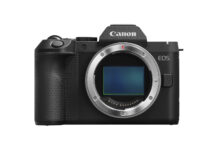

View full specs
The Canon EOS 90D was announced in August 2019 and reached US stores in September 2019. It remains one of the most capable APS-C DSLRs you can buy used, but only at the right price. This Canon 90D review focuses on the 2026 buying decision: when its 32.5MP sensor, 10 fps burst, optical viewfinder and direct EF/EF-S lens compatibility justify choosing it over a cheaper 80D or a newer R10 or R7.
Quick verdict: Buy the 90D if you already own good Canon DSLR lenses, prefer an optical viewfinder, or want long battery life and dense resolution for wildlife. Around $600 body-only is compelling in the current US used market. Near or above $700, compare the total cost carefully with refurbished or used Canon mirrorless options. If you are starting without lenses, the EOS R10 is usually the smarter long-term system.
Canon’s official EOS 90D announcement confirms its original $1,199 body-only price and September 2019 availability. The specification still holds up for still photography: 45 cross-type AF points through the viewfinder, Dual Pixel CMOS AF in live view, uncropped 4K and up to 10 fps shooting. The question is no longer whether the 90D is a good DSLR. It is whether the price and lenses make it a better buy for you than mirrorless.
Canon 90D at a glance
- Announced August 28, 2019; US availability began in September 2019
- Original US price: $1,199 body-only
- 32.5MP APS-C CMOS sensor
- Canon EF/EF-S lens mount
- DIGIC 8 processor
- 45-point all cross-type viewfinder autofocus system
- Dual Pixel CMOS AF in live view and video
- Up to 10 fps continuous shooting through the optical viewfinder
- 3.0-inch vari-angle touchscreen
- Uncropped 4K up to 30p and Full HD up to 120p
- Single SD card slot with UHS-II support
- LP-E6N battery, rated around 1,300 shots with the optical viewfinder
Canon 90D release date and successor
Canon announced the EOS 90D on August 28, 2019 and scheduled US availability for mid-September. That distinction explains why some references list August 2019 while others list September 2019 as the release date.
There was no Canon 90D Mark II and no direct DSLR successor. The 90D effectively closed Canon’s enthusiast APS-C DSLR line. The EOS R7 is the closest performance-oriented RF replacement, while the R10 and R50 are less expensive mirrorless alternatives for buyers who do not need the 90D’s optical viewfinder or battery endurance.
Who the Canon 90D is really for
The Canon 90D makes the most sense for photographers who already like DSLR handling or already own Canon EF and EF-S lenses. If you have an older Rebel, EOS 70D, EOS 80D, or a bag of EF-S zooms, the 90D is one of the cleanest upgrades left before moving to mirrorless. You keep the optical viewfinder, the familiar controls, the long battery life, and the lens compatibility, but gain more resolution, faster shooting, better live view autofocus, and better video than many older Canon DSLRs.
I would look hardest at the 90D for wildlife, field sports, aircraft, school events, travel, and general enthusiast photography. The 1.6x crop factor gives long lenses more apparent reach, which is useful when birds, animals, or players are far away. The 32.5MP sensor also leaves more room to crop than older 20MP or 24MP Canon APS-C bodies.
It is not the best fit for everyone. If you want the smallest Canon camera, a modern creator body, silent shooting, in-body stabilization, or the most advanced subject tracking, a mirrorless body is a better direction. The Canon R50 review is the more relevant read for casual travel, family, and creator use. The 90D is better when you specifically want a DSLR that still feels serious.
Design, handling, and viewfinder experience
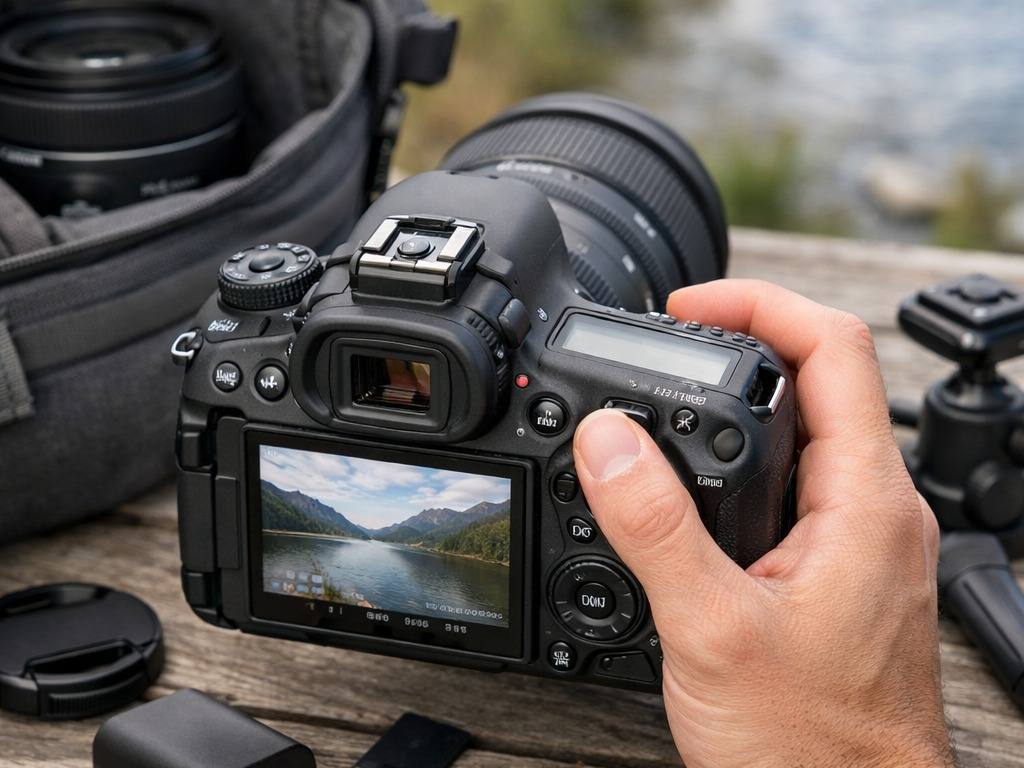
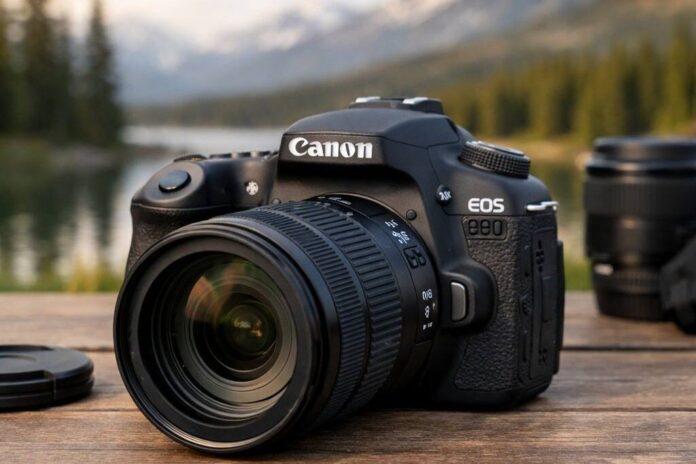
Handling is one of the reasons the Canon 90D still has fans. The grip is deeper and more secure than many small mirrorless bodies, especially with longer lenses. The top LCD, rear control dial, AF joystick, dedicated buttons, and optical viewfinder all make the camera feel like a proper photographic tool rather than a compact body trying to do everything through the screen.
The optical viewfinder is the dividing line. Some photographers will not want to go back after using a modern EVF with exposure preview and live histograms. Others still prefer the direct, lag-free view of a DSLR when following action. For birds in flight, field sports, or fast-moving kids, that direct view can feel more natural, even if the autofocus logic is older than what Canon now offers in RF mirrorless bodies.
The body is solid without being a true pro brick. Canon described the 90D as having dust and moisture resistance, but I would still treat it as an enthusiast body, not a camera to abuse like an EOS-1D series. It is fine for normal outdoor work, light rain caution, and travel use. It is not a waterproof camera, and the lens you mount matters just as much as the body.
Image quality from the 32.5MP APS-C sensor
The 32.5MP APS-C sensor is the main reason to choose the Canon 90D over older Canon DSLRs. It gives you more detail, more cropping room, and more flexibility for wildlife and travel than the 24MP generation. At base ISO and in good light, files are crisp and detailed, with familiar Canon color that is easy to process for portraits, landscapes, and everyday work.
The trade-off is pixel density. The 90D rewards good technique and good lenses. A soft kit zoom, sloppy shutter speed, or missed focus will show more clearly than on a lower-resolution body. For wildlife and distant subjects, I would rather have the pixels, but I would also be careful about lens quality. This is not a camera where every old budget zoom will make the sensor look its best.
High ISO performance is good for an APS-C DSLR, but it is not magic. ISO 100 to 1600 is the comfort zone. ISO 3200 is usable with sensible noise reduction. ISO 6400 can work for documentary or web use, but if you regularly shoot dark gyms, weddings, or indoor events, a full-frame body still gives you more headroom. The 90D is at its best in decent light, outdoors, and anywhere the crop sensor reach becomes an advantage.
Autofocus for still photography
Through the viewfinder, the Canon 90D uses a 45-point all cross-type autofocus system. It is fast, familiar, and dependable for a DSLR, especially when you keep subjects within the AF coverage area. For field sports, pets, birds, and action, it is a major step up from entry-level Rebels and a comfortable continuation for EOS 80D users.
The limitation is coverage and intelligence. A modern mirrorless camera can track eyes, animals, vehicles, and subjects across much more of the frame. The 90D can track action well, but it expects more from the photographer. You still need to choose AF areas carefully, keep the subject under the active points, and understand when to use single-point, zone, or expanded area behavior.
In live view, Dual Pixel CMOS AF gives the 90D a second personality. Touch focus is smooth, face detection is useful, and focus accuracy is excellent for still subjects, portraits, and video. It makes the camera feel almost mirrorless when you use the rear screen, though the DSLR body shape still makes viewfinder shooting the more natural mode for action.
Speed, buffer, and wildlife use
The Canon 90D can shoot up to 10 fps through the optical viewfinder, which remains quick enough for most enthusiast wildlife and sports work. It is not a modern stacked-sensor mirrorless camera, but it can absolutely capture decisive moments if you know your subject and time your bursts well.
For wildlife, the combination of 10 fps, APS-C crop, 32.5MP resolution, and EF telephoto compatibility is the appeal. A used 90D with a Canon EF 100-400mm, 70-300mm IS II, Sigma 150-600mm, or Tamron 150-600mm can still be a practical birding and wildlife setup. The camera is not doing the same subject-recognition work as an EOS R7, but the raw photographic value is still there.
Use a fast SD card and be realistic about bursts. The 90D is quick, but the buffer is not endless, especially if you shoot RAW. Short, deliberate bursts work better than holding the shutter down and hoping the camera clears forever. That habit also makes you a better action photographer.
Video: useful, but not the main reason to buy it
The Canon 90D was important because it finally gave Canon DSLR users uncropped 4K recording. For casual video, family clips, educational work, YouTube pieces, and behind-the-scenes footage, the 90D can still produce good results. Dual Pixel AF is smooth, the vari-angle screen is practical, and the microphone input is useful.
But this is not the camera I would buy primarily for video in 2026. There is no Canon Log, no headphone jack, no in-body stabilization, and the video files do not have the flexibility of newer hybrid mirrorless bodies. Full HD 120p is useful for slow motion, but autofocus limitations and softer output make it more of a bonus than a professional feature.
If video is half your work, go mirrorless. If video is something you need occasionally from a stills-first DSLR, the 90D is capable enough and much better than older Canon DSLRs. That distinction matters.
Lenses and system value
The Canon 90D’s biggest value argument is the EF and EF-S lens ecosystem. Canon is no longer building the DSLR future around EF-S, but the used market is full of lenses that still work beautifully. That is why the 90D can make sense even when mirrorless bodies look more modern.
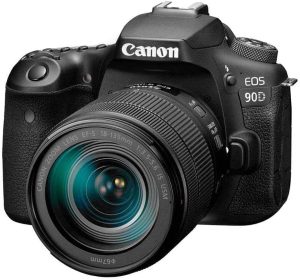
For general shooting, the EF-S 18-135mm IS USM is one of the best practical pairings. It gives you a useful range, fast Nano USM autofocus, and a balanced travel setup. For low light and portraits, the EF 50mm f/1.8 STM is cheap and effective. For a normal-field prime on APS-C, the Sigma 30mm f/1.4 DC HSM Art is a stronger match than many older budget options.
Wildlife shooters should think carefully about lens budget before buying the body. The EF 100-400mm L lenses, Canon 70-300mm IS II, Sigma 150-600mm, and Tamron 150-600mm are the kinds of lenses that make the 90D’s crop reach valuable. If you only plan to use a soft superzoom, the sensor will not show what it can really do.
Canon 90D vs 80D, R10, R50 and R7
The most useful comparison is not a laboratory contest. It is what each body gives you for the total price of the camera and lenses you will actually use.
| Camera | Main advantage | Main compromise | Best buying case |
|---|---|---|---|
| Canon 80D | Much cheaper entry into a mature EF/EF-S system | 24.2MP, 7 fps and no 4K | Choose it when it costs roughly half as much as a 90D and still photography matters most |
| Canon 90D | 32.5MP, 10 fps, optical finder and exceptional battery life | Older subject tracking, no IBIS and a discontinued DSLR mount | Best for existing EF/EF-S owners and photographers committed to DSLR handling |
| Canon R10 | Smarter subject detection, faster bursts and an RF upgrade path | No IBIS, smaller battery and less substantial handling | Best new-system value for most buyers starting without Canon DSLR lenses |
| Canon R7 | 32.5MP, IBIS, advanced autofocus, dual cards and faster shooting | Higher body and system cost | Best upgrade for wildlife and action photographers who can afford the move |
The R50 is the lighter, simpler alternative for travel, family photography and creator use. It ranks below the 90D for battery life, direct controls and balance with large telephotos, but its autofocus is far easier for a beginner. Read our Canon R50 review if portability matters more than DSLR handling.
The 90D wins when you already own the lenses, value the optical viewfinder, and can buy the body at a genuine used-market discount. The R10 or R7 wins when you are building from scratch and want Canon’s future lens system.
Canon 90D pros and cons
What the 90D still does well
- Excellent DSLR handling with a deep grip, top LCD, and direct controls
- High-resolution 32.5MP APS-C sensor with good cropping flexibility
- 10 fps shooting for wildlife, sports, and action
- Strong battery life compared with most mirrorless bodies
- Useful Dual Pixel AF in live view and video
- Huge used EF and EF-S lens ecosystem
- Uncropped 4K video, which was rare for Canon DSLRs
Where the 90D feels dated
- No in-body image stabilization
- Viewfinder autofocus coverage is limited compared with mirrorless
- No advanced animal, vehicle, or eye-tracking system through the optical finder
- No headphone jack or Canon Log for serious video workflows
- Single SD card slot only
- EF-S is no longer Canon’s future system
What is a fair used Canon 90D price?
At this August 2026 update, US used-market tracking places a Canon 90D body around $600, with current examples spanning roughly $500 to $700. Dealer-graded bodies with a warranty can cost more. Treat that range as a snapshot, not a permanent price: condition, shutter count, included batteries and seller protection all matter.
My buying thresholds are simple:
- Under $550 body-only: strong value if fully functional and not heavily worn.
- Around $600: fair for a clean body with an original charger and sensible shutter count.
- Around $700: acceptable only for excellent condition, low use, useful extras or a dealer warranty.
- Above $700 body-only: compare an R10 and the price gap to an R7 before buying.
The EF-S 18-135mm IS USM is the kit lens I would choose for travel and general photography. A combined used price around $800 to $900 can make sense if both items are clean. Do not pay a large premium for the basic 18-55mm kit lens. You can check the current 90D used-market range before comparing it with the available Amazon kit above.
Used Canon 90D inspection checklist
The cheapest body is not the best value if it needs a shutter, card-slot repair or sensor cleaning. Before the return window closes, check:
- The shutter count when the seller can provide it, plus heavy grip, dial and hot-shoe wear that may reveal professional use.
- Autofocus through both the optical viewfinder and live view. Test a static target and a moving subject.
- The sensor at a narrow aperture against a bright, plain surface for dust, scratches or oil marks.
- The vari-angle screen hinge, touchscreen, joystick, command dials, pop-up flash and every port.
- RAW bursts to a fast SD card. Confirm the card slot writes reliably and the buffer clears normally.
- The battery, Canon charger, body cap and any bundled lens. Check zoom action, stabilization, autofocus and signs of haze or fungus.
For a private sale, the discount should compensate for the lack of warranty and easy returns. If the private price is close to a reputable used dealer, buy the protection instead.
Should you buy the Canon 90D now?
Buy the Canon 90D if you already own useful EF or EF-S lenses, prefer an optical viewfinder, and can find a sound body around $600. It remains especially convincing for wildlife, field sports and long shooting days where resolution, reach, handling and battery life matter more than automated subject recognition.
Skip it if you are starting from zero, paying close to mirrorless money, or expect one camera to carry you deep into Canon’s RF future. In those cases, buy an R10 or save for an R7. The 90D is no longer the default enthusiast choice, but at the right used price it is still one of Canon’s best-value photography tools.
Canon EOS 90D alternatives
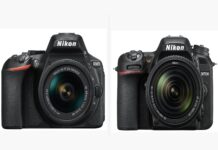
The main alternatives to the Canon EOS 90D are Canon EOS R7, Canon EOS 80D, Nikon D7500, Nikon D500. Compare autofocus, stabilization, video limits, lens choice and current price before deciding which camera fits you best.
Frequently asked questions
When was the Canon 90D released?
Canon announced the EOS 90D on August 28, 2019, with US availability scheduled for mid-September 2019. This is why its release date is variously listed as August or September 2019.
What replaced the Canon 90D?
Canon did not release a 90D Mark II or direct DSLR successor. The EOS R7 is the closest performance-oriented APS-C replacement in Canon’s RF mirrorless system, while the R10 is the more affordable alternative.
How much should a used Canon 90D cost?
Around $600 body-only is a sensible US target as of August 2026. Roughly $500 to $700 can be fair depending on condition, shutter count, accessories and warranty. Above that range, compare the total cost with a used or refurbished R10 or R7.
Is the Canon 90D still worth buying?
Yes, the Canon 90D is still worth buying for photographers who want DSLR handling, long battery life, strong APS-C resolution, and direct EF/EF-S lens compatibility. It is less appealing if you want the newest autofocus tracking or a future-facing mirrorless system.
Is the Canon 90D good for wildlife photography?
Yes. The 32.5MP APS-C sensor, 10 fps shooting, and access to EF telephoto lenses make it a strong used-market wildlife camera. Newer mirrorless bodies track subjects better, but the 90D still offers serious value with the right lens.
Does the Canon 90D shoot 4K video?
Yes. The Canon 90D records uncropped 4K video up to 30p and Full HD up to 120p. It is useful for casual and hybrid video, but it lacks features like Canon Log, a headphone jack, and in-body stabilization.
What battery does the Canon 90D use?
The Canon 90D uses the LP-E6N battery. It is rated around 1,300 shots when using the optical viewfinder, which is one of its practical advantages over many mirrorless cameras.
What memory card does the Canon 90D use?
The Canon 90D uses a single SD, SDHC, or SDXC card slot with UHS-II support. For RAW bursts and 4K video, use a fast, reputable SD card rather than the cheapest card available.
Canon DSLR users, wildlife enthusiasts, sports shooters, and EF/EF-S lens owners who want one last strong APS-C DSLR.
You want the newest subject tracking, in-body stabilization, compact size, or a future-facing RF system.
Moderate; controls are serious but the DSLR layout is clear once learned.
Canon EOS R7 if you want mirrorless subject tracking and RF system growth.
Useful uncropped 4K, but no Canon Log, no headphone jack, and no IBIS.
Yes around $600 body-only, especially if you already own useful EF or EF-S lenses.