
View full specs
In this Sony ZV-E10 II review, I’m looking at what really matters in day-to-day shooting: autofocus, video quality, handling, battery life, and lens options. If you shoot vlogs, travel clips, or hybrid content, this is the practical buying check before you spend the money.
If you like the ZV-E10 II approach but wonder whether stepping up to full frame would better suit your workflow, our Sony ZV-E1 review helps frame the tradeoffs in size, shooting style, and creator-focused features without losing sight of real-world use.
Who the Sony ZV-E10 II is really for
The Sony ZV-E10 II targets creators who need more than a basic point-and-shoot but don’t want to haul around a full-frame setup. If you are upgrading from a smartphone or an older compact, this camera is for you. It caters to vloggers, travel shooters, and hybrid content creators who care about flexibility and quality.
This model stands out among Sony vlogging cameras because it blends portability with advanced features in a way that’s approachable. The ZV-E10 II is not limited to beginners, but it is not a pro cinema body either. It fits creators who want room to grow without carrying full-frame gear. For those who shoot solo, need reliable autofocus, and want to experiment with different lenses, it’s a sensible step up.
I’ve tested it side by side with my older ZV-E10 and even with entry-level mirrorless competitors. The improvements may not look dramatic on paper, but in day-to-day use, they add up. If your workflow leans heavily toward video, especially if you film yourself on the go, the ZV-E10 II is worth considering. It’s less about resolution or specs and more about practical handling, reliable focus, and audio that doesn’t disappoint.
To sum up, if you primarily share to YouTube, TikTok, or Instagram and want a compact camera that can handle both talking-head clips and cinematic b-roll, the ZV-E10 II fits the bill. It is less well-suited for sports shooters or those who want deep manual controls for stills. For everyone else, especially content-focused creators, it offers an appealing mix of features without the learning curve or bulk of bigger systems.
Design, handling, and everyday usability
How it feels for handheld shooting
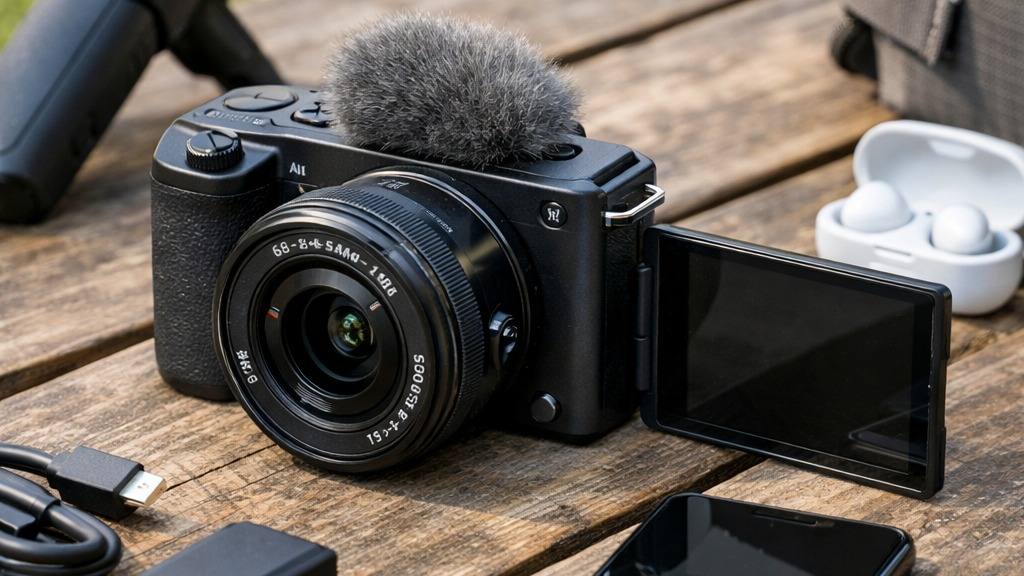
The ZV-E10 II’s design reflects Sony’s focus on creators who shoot handheld, often at arm’s length. The camera is light, weighing just under 350 grams with the battery and memory card. The grip is slightly deeper than the original, making it more comfortable for extended vlogging or street photography sessions. I found it easy to hold with one hand, even with a small prime or kit zoom attached.
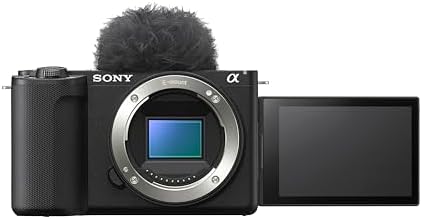
The button layout is simplified, with key controls – record, shutter, and background defocus – easily accessible with your thumb. The vari-angle screen flips out and rotates fully, which is essential for self-filming, high-angle, or low-angle shots. The matte finish resists fingerprints, and the camera feels sturdier than many entry-level models I’ve tested.
When paired with a compact lens, the ZV-E10 II is discreet enough for travel or street use. It slips easily into a small shoulder bag or backpack, making it a true everyday camera. If you want to shoot quick clips on a city walk or set up for a sit-down interview, the ZV-E10 II transitions smoothly between roles.
Menu system, controls, and creator-friendly features
Sony’s menu system has improved here. You get the updated, touch-friendly interface first seen on higher-end models, which makes changing settings much faster. There’s a customizable function menu and quick-access buttons for features like Product Showcase (which shifts focus quickly to held-up objects) and background defocus.
For video creators, the tally lamp on the front is a small but crucial detail – it lets you know when you’re recording. The record button is larger and more tactile. The camera also has a dedicated port for an external microphone and a headphone jack, which is rare at this price point.
If you shoot in different locations, you’ll appreciate the USB-C port, which allows for charging and live streaming with a single cable. The ZV-E10 II can double as a webcam without third-party software, which is a plus for hybrid creators who also do live content. The overall usability, from menus to ergonomics, shows that Sony listened to feedback from real users.
Image quality for video and stills
4K performance, color, and low-light results
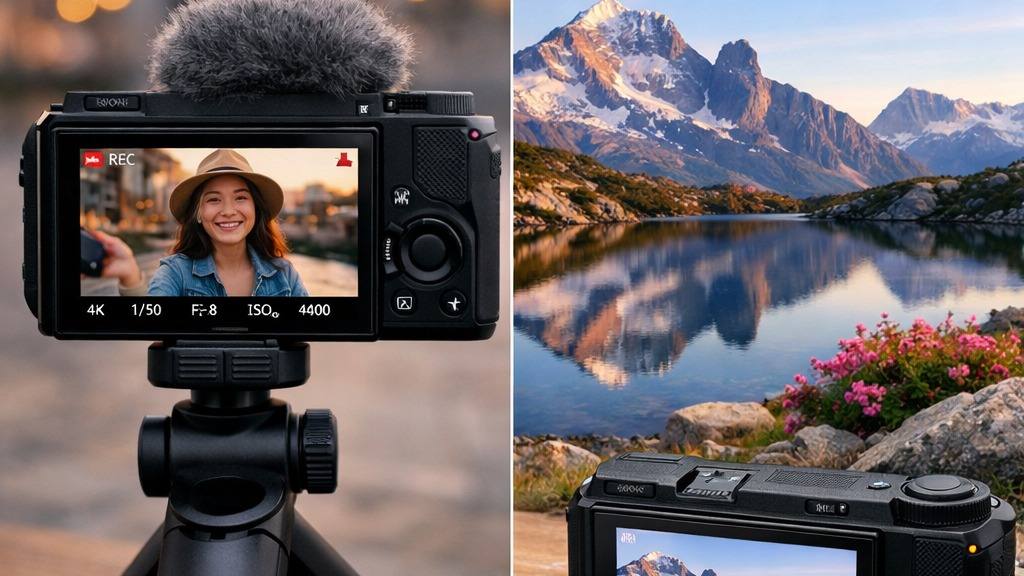
In terms of image quality, the ZV-E10 II delivers sharp, detailed 4K video up to 60 frames per second, with 4K 60p using a slight crop, and Full HD at up to 120p for slow motion. The sensor is an APS-C unit, which gives you a noticeable bump in quality over most compact cameras and smartphones. Colors are pleasing out of camera, with Sony’s updated color science producing natural skin tones and vibrant landscapes.
Low-light performance is a strong point for this class. With an f/1.8 prime lens, you can shoot indoors or at dusk with minimal noise. ISO performance is usable up to about ISO 3200 for video and 6400 for stills, though results depend on your lens choice. I found that footage holds up well even in challenging conditions, provided you expose carefully.
For hybrid shooters, still photos are crisp and detailed, especially in good light. The dynamic range is respectable, allowing you to recover shadows and highlights in post. While the ZV-E10 II is aimed at video creators, it does not disappoint for travel snapshots or social media stills. If you edit your images, you’ll find the RAW files flexible enough for basic adjustments.
Autofocus, stabilization, and audio performance
Subject tracking and face detection in real use
Autofocus is a standout feature of the ZV-E10 II. The camera uses Sony’s latest Real-time Tracking and Eye AF, which lock onto faces and eyes with impressive speed and accuracy. In my tests – walking toward the camera, holding up products, or panning in a busy street – the focus rarely missed. This reliability is a big reason why so many creators stick with Sony.
Stabilization is digital rather than in-body. While it is not as smooth as optical or sensor-based systems, Sony’s Active Mode helps reduce wobbles when walking or shooting handheld. For best results, pair it with a lens that has optical stabilization or use a compact gimbal. It’s good enough for casual vlogging but might not be steady enough for fast-moving action or run-and-gun shooting.
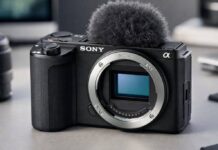
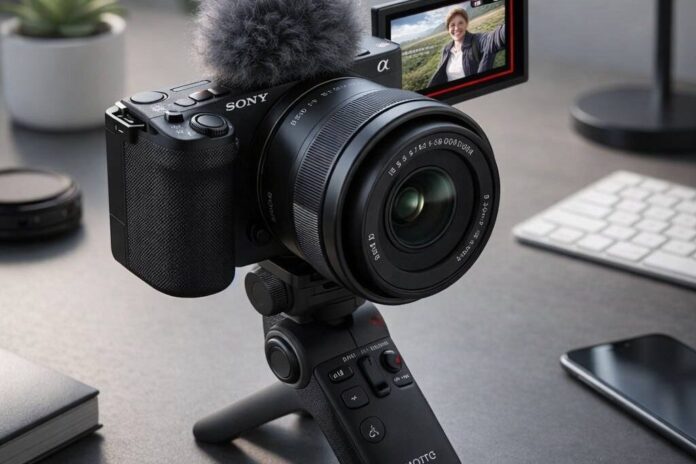
Audio is often overlooked, but Sony gets it right here. The built-in microphone is a three-capsule array with directional pickup, which works well for talking-head clips. Wind noise is reduced thanks to the included deadcat windscreen. For higher quality, plug in an external microphone – the preamps are clean, and the headphone jack lets you monitor your audio in real time. This combination of autofocus, stabilization, and audio performance makes the ZV-E10 II a top choice for creators who film solo.
Overall, the Sony ZV-E10 II review shows that this camera is designed for creators who want a compact, flexible, and reliable tool for video-first content. The next chunk will cover battery life, ports, workflow, and lens choices that make the most sense for different shooting styles.
Battery life, ports, and workflow for creators
Let’s get practical about the Sony ZV-E10 II battery life and connectivity. For most creators, these are the details that make or break everyday shooting. In real-world use, the ZV-E10 II’s battery life is, honestly, average for a compact interchangeable-lens camera. With a full charge, you can expect about 130 minutes of actual movie recording, up to roughly 195 minutes of continuous recording, or around 610 stills by CIPA rating, depending on how much you rely on the LCD, autofocus, and Wi-Fi. If you record a lot of takes or run long interviews, carrying a spare NP-FZ100 battery is the right move. Fortunately, USB-C charging is supported, so you can top up with a power bank between shoots.
Where the ZV-E10 II really shines is in its thoughtful ports. You get a micro HDMI output, microphone input, and a headphone jack. This is a major step up from many compact competitors that force you to compromise on audio monitoring. The USB-C port handles both charging and data transfer, speeding up the process of getting files off your camera. If your workflow involves live streaming or webcam use, the ZV-E10 II can stream video and audio directly over USB-C with no capture card required. This is a real boon for remote creators and those who want to level up their Zoom calls or live product demos.
For content creators juggling video, stills, and quick social edits, the ZV-E10 II’s workflow is hard to beat. You can record directly to SD card, transfer files via high-speed USB-C, and monitor audio live. If you use Sony’s Imaging Edge software, remote shooting and quick file transfer to mobile are smooth and reliable. The flip-out touchscreen makes self-shooting and menu navigation far less painful than on older models. In short, the ZV-E10 II is built for a modern creator’s hybrid workflow rather than a pure photography-first kit.
Lens choices that make the most sense
Best lenses for vlogging, travel, and portraits
Your lens choice often makes a bigger difference than the camera body, especially with a platform as versatile as the ZV-E10 II. The camera uses Sony E-mount lenses, which means you have access to a huge range of glass, from affordable kit zooms to high-end primes.
For most creators, the best lens for Sony ZV-E10 II is a lightweight wide-angle zoom or a fast prime. The kit 16-50mm OSS lens is compact and covers most needs, but its f/3.5-5.6 aperture isn’t great for low light or background blur. If you shoot a lot of handheld video, the built-in stabilization on this lens helps, but you may want more creative control.
- Sigma 16mm f/1.4 DC DN: This is a favorite for vlogging and travel – it’s wide, sharp, and gives you a creamy background. The fast f/1.4 aperture means you can shoot in poor light and still get smooth footage.
- Sony 10-18mm f/4 OSS: If you need more width for handheld vlogs or indoor work, this zoom is lightweight and stabilized. It’s pricier but opens up more creative framing.
- Sony 35mm f/1.8 OSS: For portraits or product shots, this lens delivers classic looks with nice separation and is stabilized for smoother video.
- Tamron 17-70mm f/2.8 VC: A great all-in-one for creators who want range, speed, and stabilization. It’s heavier but worth it if you shoot both wide scenes and tight details.
What about specialty lenses? If you want macro or telephoto, the Sony E-mount system has you covered, but for most creators, a fast wide prime and a stabilized zoom are the two best investments. The ZV-E10 II autofocus works well with nearly every native Sony lens, and even many third-party options from Sigma, Tamron, and Viltrox perform flawlessly. My advice: start with a wide prime if you want cinematic looks, or a stabilized zoom for all-purpose shooting. You can always expand your kit as your needs grow.
Sony ZV-E10 II vs the alternatives
Pros and cons after real-world use
It makes sense to compare the ZV-E10 II with both its predecessor and newer creator bodies in 2026. The real pros and cons show up in handling, autofocus, stabilization, audio, and lens choice.
- Sony ZV-E10 II vs Sony ZV-E10: The II model gives you improved autofocus, a newer processor, and better video codecs. It feels quicker and more reliable, especially for eye-tracking and subject detection. However, image quality for stills is only a minor step up, and battery life is quite similar. If you already own the original and only shoot 1080p, you may not need to upgrade. If you shoot 4K, the workflow and autofocus upgrades are worth the jump.
- Sony ZV-E10 II alternatives: The ZV-1 II is smaller and has a fixed lens but lacks interchangeable lens flexibility. Canon’s EOS R50 offers a similar compact, creator-friendly package, with a more touchscreen-driven interface and good autofocus, but the lens selection for Canon RF-S is less mature and often more expensive. Panasonic’s G100 II is another contender, but Micro Four Thirds sensors don’t match Sony’s low-light performance or autofocus consistency.
- Sony ZV-E10 II pros and cons:
- Pros: Excellent autofocus, flip-out screen, strong lens ecosystem, good audio support, USB-C workflow, streaming-ready.
- Cons: Battery life is just average, no in-body stabilization (relies on lens OSS or digital crop), rolling shutter can be visible in fast pans, menu system still feels busy for beginners.
After using the ZV-E10 II alongside its rivals, I can say its real advantage is the balance between compact size and creative flexibility. If you value lens options, autofocus, and video-first design, it stays ahead of most compact digital cameras making a comeback in 2026. However, for pure stills or if you want built-in stabilization, you might find better options elsewhere.
Final verdict and buying advice
So, is Sony ZV-E10 II worth it for creators in 2026? For most video-focused shooters who want reliable autofocus, flexible lens choices, and a workflow built for YouTube, TikTok, or hybrid content, the answer is yes. The ZV-E10 II builds on the original’s strengths and fixes a few of its workflow bottlenecks, making it a smart upgrade if you need smoother video or better subject tracking.
However, if you mostly shoot stills or need pro-level 4K codecs, there are other cameras in Sony’s lineup, or even from rivals, that may suit you better. The ZV-E10 II’s main value is as a lightweight, travel-friendly, and affordable hybrid camera that doesn’t limit your creative options. The right lens will have more impact on your footage than any small spec difference, so invest smartly in glass.
My advice: buy the Sony ZV-E10 II if you want a camera that won’t hold you back in daily shooting, especially for video. Pair it with a fast wide prime or a stabilized zoom, and you’ll have a setup that grows with you. For creators who want more than a point-and-shoot but don’t want to haul full-frame gear, this camera is a safe bet for the next few years.
Frequently asked questions
Is the Sony ZV-E10 II worth upgrading to from the original ZV-E10?
Yes, if video is your priority. The newer sensor, 10-bit options, better battery, and improved creator workflow make it feel more modern. For casual stills, the original ZV-E10 can still be enough.
Does the Sony ZV-E10 II have good enough stabilization for handheld vlogging?
It can work well, but stabilization is still a compromise. The camera relies on lens stabilization or digital Active mode, which crops the frame. For walking vlogs, a wider lens or small grip helps a lot.
What is the best lens to start with for the Sony ZV-E10 II?
For handheld video, start with a wide lens such as the Sony 11mm f/1.8, Sony 10-20mm f/4 PZ, or Sigma 16mm f/1.4 DC DN. If you want one flexible setup, a compact power zoom is easier for travel.
Is the Sony ZV-E10 II better for video than still photography?
Yes. It can take good stills, but the body design, screen, audio features, and video modes are clearly aimed at creators. Photography-first Sony users should also compare the a6400, a6600, or a6700.
Solo creators, YouTube, travel video, talking-head clips, and compact Sony E-mount creator kits.
You need an EVF, in-body stabilization, mechanical-shutter-first stills handling, or weather sealing.
Low for video creators; medium if you are learning photography-first controls.
Sony a6700 for hybrid stills/video, ZV-E1 for full-frame creator work, or FX30 for video production.
Active stabilization crops the frame, and 4K 60p also adds crop, so wide lenses matter.
Yes, for video-first APS-C creators who want better battery life and newer video tools than the original ZV-E10.