
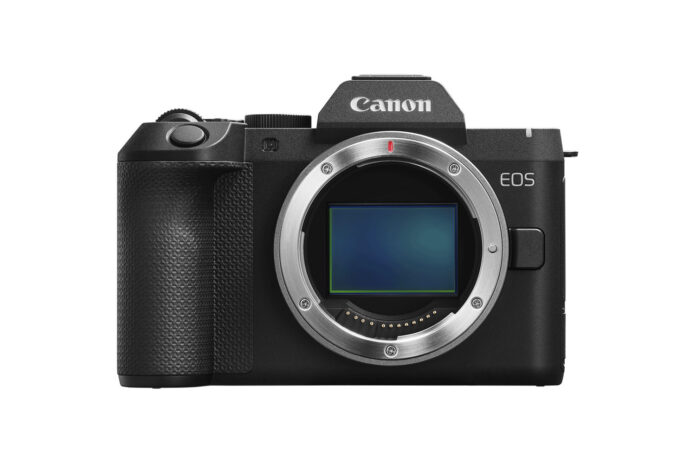
View full specs
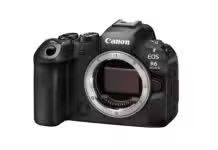
The Canon EOS R8 Mark II makes the original R8’s most irritating omission disappear: small RF primes finally get in-body stabilization. Add an autofocus joystick and this becomes a more convincing photographer’s camera. But I would not trade an R8 for it just to get better-looking files. The reason to upgrade is how you make the picture, not another leap in resolution.
Updated September 21, 2026. This is our launch review and buying assessment, not a hands-on field test. US deliveries are expected in late October.
Canon EOS R8 Mark II: the short version
My pick for: an RF photographer who wants a reasonably small full-frame body for travel, portraits and handheld work with compact primes. My hesitation: the small battery and single card slot remain. Neither problem goes away because the camera now has IBIS.
Canon announced it on September 15. The US launch prices are $1,899 body-only and $2,099 with the RF 24-50mm f/4.5-6.3 IS STM. Those are announced retail prices, not a verified Amazon offer. A new name on the box is not a reason to pay a marketplace premium.
The strongest improvements are stabilization, direct AF-point control and a less awkward pre-capture workflow. The weak points are endurance, card redundancy and a viewfinder that has not moved forward. That is a sensible upgrade for some photographers, not an automatic recommendation for everyone.
IBIS is the upgrade that matters
Put an unstabilized RF 28mm f/2.8 or 50mm f/1.8 on the camera and the appeal is obvious. You keep the small lens without giving up stabilization. For interiors, an evening street scene or a quiet portrait, that matters more to me than another few megapixels.
Canon rates coordinated body-and-lens stabilization at up to 7.5 stops with compatible lenses. Do not read that as a promise for every lens, shutter speed or photographer. Nor does it turn a moving subject into a stationary one.
My starting point for people walking would still be around 1/250 second, faster for erratic movement. I would lower the shutter speed for a stationary building, then check fine detail before trusting it for the next frame. IBIS buys flexibility; subject movement still sets the limit.
The original article’s point still stands: compact RF primes change the buying argument. If most of your work uses an optically stabilized zoom at fast shutter speeds, the Mark II’s biggest addition may be less valuable to you.
Image quality: spend on the photograph, not the model number
This remains a 24.2MP full-frame camera. There is no confirmed 32.5MP upgrade hiding behind the earlier rumors. I would not replace a working R8 expecting a dramatic increase in fine detail.
What I would look for is a better proportion of usable handheld frames. A sharp lower-ISO exposure of a static subject can be more useful than a higher-resolution file softened by movement. That is an argument for stabilization, not evidence that we have measured a new image-quality advantage.
Heavy cropping is still the limitation. A 1.6x crop leaves roughly 9.5MP from a 24.2MP image. That matters if you are moving from an APS-C Canon and expecting the same reach from the same lens. Full frame gives you a wider view; it does not put more pixels on a distant subject automatically.
For portraits and general travel, I would usually spend the remaining budget on the right focal length and aperture before chasing a higher pixel count. For distant wildlife, I would price the longer lens before buying the body.
Handling: the joystick matters more than the retro debate
I care far more about placing the focus point without taking my eye from the finder than about which old Canon inspired the angular body. The new joystick is a meaningful addition. Automatic subject detection is useful, but sometimes you need to tell the camera exactly where to start.
The Mark II weighs approximately 546g with battery and card, versus 461g for the original. That is an 85g increase. I would accept that for IBIS, but it is worth remembering if the original R8’s unusually low weight was its main attraction.
The SD slot now has a side door, separate from the battery. That is welcome for tripod use. It remains one slot, however. Easier access and a second copy of your files are very different benefits.
The optional EG-E2 is an extension grip, not a battery grip. I would try the camera with my heaviest regular lens before adding it. Buying a compact body and immediately enlarging it deserves a quick comparison with an R6-series body.
Canon describes dust-and-drip resistance around key controls and compartments. That is not waterproofing. I would still use a rain cover in sustained bad weather and consider the lens’s protection as well.
Autofocus and bursts: what 40 fps does not tell you
Register People Priority is potentially more useful than the headline burst rate for family and event photographers. You can register the person you want prioritized instead of asking detection to choose between several faces. I would still check focus when people cross in front of one another.
The speed distinction is important: up to 40 fps uses the electronic shutter; electronic first-curtain shooting tops out at 6 fps. This is not a 40 fps mechanical-shutter camera.
For stage lighting, flash or fast lateral movement, I would test the shutter mode before an important sequence. Electronic shutter can introduce banding or distort moving objects. More frames of the same problem are not better coverage. Electronic first-curtain has its own caveat: very fast shutter speeds with fast lenses can affect out-of-focus highlights.
The pre-capture change is genuinely welcome. It can retain up to 20 frames before the full press, with ordinary RAW, C-RAW, HEIF or JPEG output. The original R8 used a separate RAW Burst workflow. At 40 fps, those 20 frames represent half a second, useful for a fleeting gesture rather than a substitute for anticipating it.
DPReview’s early testing reported around 78 RAW+JPEG frames at the maximum burst rate. That is approximately two seconds, not unlimited shooting. I would work in short sequences and keep an eye on buffer recovery.
Battery and cards: budget for the unglamorous parts
The LP-E17 is still here. Canon’s ratings distinguish display modes: approximately 220 viewfinder shots in Power saving, or 150 in Smooth. Screen shooting is rated at 340 and 270 respectively. These are standardized endurance figures, not a guarantee that the camera stops at that frame count.
My practical response would be a spare battery before an extension grip. Long periods of framing, reviewing and recording video make battery planning more important than the number of photographs on the card. USB charging is supported with a compatible power supply, but I would check the exact charger before relying on it away from home.
There is one UHS-II SD slot. For paid work that needs an immediate second copy, I would choose another body. Rotating cards reduces how much work sits on one card; it does not provide simultaneous backup.
For a hybrid kit, I would choose a reputable UHS-II V60 card rather than buy on capacity alone. Canon’s recording table specifies V60 for its 250 Mbps 4K60 XF-AVC S 10-bit 4:2:2 mode. Some lighter modes need less. The official recording requirements are worth checking against the format you actually intend to use.
Video: a strong travel feature, not a promise of unlimited takes
Full-width 4K up to 60p, oversampled from 6K, is the central attraction. A wide lens stays wide before optional digital stabilization. That is useful in small rooms and for travel footage where backing up is not an option.
Canon Log 3 and 10-bit recording give you a grading workflow, but I would not use Log merely because it is available. If you need quick delivery and will not expose and grade it carefully, a simpler profile can be the better choice.
IBIS helps handheld framing. It is not a replacement for careful movement or a gimbal, and digital stabilization crops the view. Decide how wide you need the finished shot before choosing the lens.
I would not buy this on an assumed uninterrupted 4K60 recording time. We have not tested heat limits, sustained recording or USB-powered endurance. For interviews or ceremonies, those are purchase requirements to verify, not details to discover on the day.
Canon R8 Mark II vs EOS R8
| Difference | EOS R8 | EOS R8 Mark II |
|---|---|---|
| Resolution | 24.2MP | 24.2MP |
| In-body stabilization | No | Yes |
| AF joystick | No | Yes |
| Maximum burst | 40 fps electronic; 6 fps EFCS | 40 fps electronic; 6 fps EFCS |
| Pre-capture | Separate RAW Burst mode | RAW, C-RAW, HEIF or JPEG |
| Card access | Battery compartment | Separate side door |
| Card slots / battery | One UHS-II SD / LP-E17 | One UHS-II SD / LP-E17 |
| Weight with battery and card | 461g | 546g |
The original R8 is not suddenly obsolete. The question is price. A meaningful discount can make it the better purchase even though the Mark II is the more complete camera. Our Canon EOS R8 review covers the older model in detail.
Should you buy the R8 now or wait?
Already own an R8? Keep it unless the missing stabilization or AF control is costing you pictures. I would not pay the upgrade cost for the same resolution and essentially the same headline burst speed.
Buying your first RF full-frame body? Decide on the lens first. The 24-50mm kit is a compact daylight starting point, but its modest maximum aperture is not my first choice for available-light portraits. A small prime may suit that work better, provided you are comfortable giving up zoom flexibility.
Coming from a Rebel or an RF-S body? Check your lenses before spending. EF lenses need the appropriate EF-EOS R adapter. EF-S and RF-S lenses use a crop, so carrying an APS-C kit lens over does not give you full-frame coverage. Include that replacement lens in the total.
Need a camera immediately? The Mark II’s announced US shipping window is late October. A preorder is not a camera you can take on next week’s trip. Confirm delivery before selling your current body.
Alternatives: the two comparisons I would make before ordering
Canon R6 Mark II: compare an actual available offer with the R8 II, not two launch prices. Its dual card slots, larger battery and full mechanical shutter answer different needs. If the total cost is close and you photograph paid events, I would favor the R6 II. Our R6 Mark II review explains that buying decision.
Nikon Z5 II: this deserves a serious look if you do not already own RF lenses. Its two card slots and higher-resolution viewfinder are useful stills-photography advantages. The R8 II has a counterargument for hybrid work: full-width 4K60 rather than the Nikon’s cropped 4K60. Read our Nikon Z5 II review, then compare the cost and size of the lenses you would actually carry.
I would not switch an established lens system for a slightly nicer specification table. Starting from nothing is a different decision from replacing one Canon body.
Check the current Canon EOS R8 price
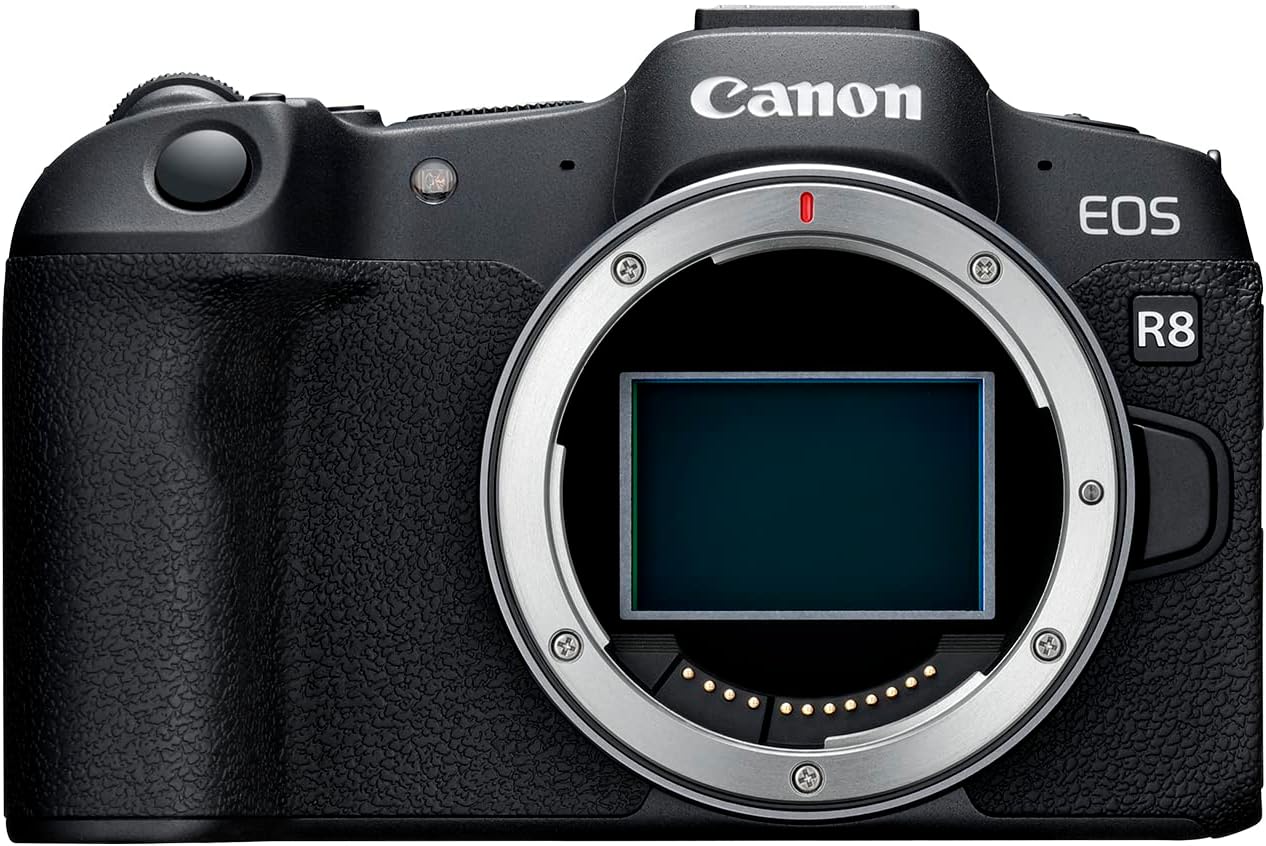
The Amazon option below is the original EOS R8, not the Mark II. It is here as the lower-cost alternative. Check the seller, body-versus-kit contents and delivered price. We have not verified an exact Amazon US listing for the R8 Mark II as of September 21.
Frequently asked questions
When is the Canon EOS R8 Mark II release date?
Canon announced it on September 15, 2026, with US availability expected in late October. The announced US prices are $1,899 body-only and $2,099 with the RF 24-50mm kit lens. Retail delivery dates can vary.
Does the R8 Mark II have dual card slots?
No. It has one UHS-II-compatible SD slot, now accessed through a side door. It cannot save an in-camera backup to a second card.
Is the current Canon R8 still worth buying?
Yes, when the saving is substantial and you do not need IBIS or an autofocus joystick. It also remains lighter. An existing R8 owner should identify a specific shooting limitation before paying to upgrade.
Can the R8 Mark II use my existing Canon lenses?
RF lenses mount directly. Compatible EF and EF-S lenses need an EF-EOS R adapter. RF-S and EF-S lenses use cropped coverage. EF-M lenses are not compatible with the RF mount.
Travel, portraits and RF prime-lens users who want IBIS in a relatively small body.
You need dual-card backup, long battery endurance or a full mechanical shutter.
Budget for a suitable RF lens and spare LP-E17, not just the body.
Keep an existing R8 unless stabilization or AF-point control solves a specific problem.
Single card slot and small battery; sustained 4K60 recording remains untested here.
A promising choice for RF users. Compare the complete kit cost with the R6 II before preordering.