


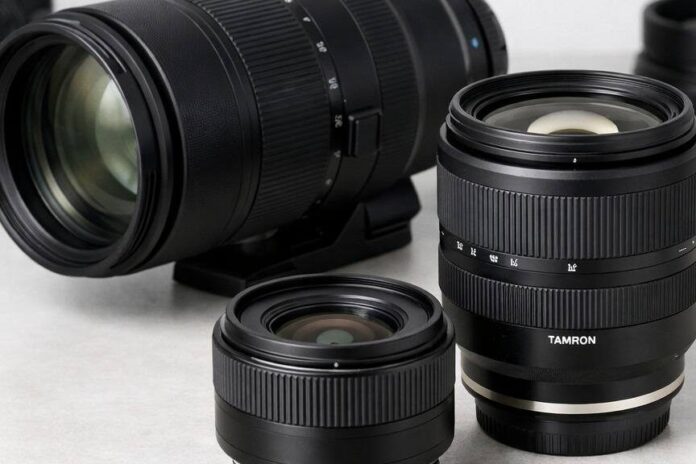
The best Tamron lenses are no longer just cheaper substitutes for first-party glass. For most full-frame Sony E or Nikon Z photographers, the 28-75mm f/2.8 Di III VXD G2 is the safest first buy. Sony travel shooters should consider the newer 25-200mm f/2.8-5.6 G2. APS-C owners get the most useful everyday range from the 17-70mm f/2.8 VC. The catch is mount support: the Sony range is much deeper than the Nikon, Fujifilm, or Canon selection.
| Best for | Pick | Current mounts | Main compromise |
|---|---|---|---|
| First full-frame zoom | 28-75mm f/2.8 G2 | Sony E, Nikon Z | Starts at 28mm; no VC |
| Full-frame travel | 25-200mm f/2.8-5.6 G2 | Sony E | No VC; variable aperture |
| Wide-angle work | 16-30mm f/2.8 G2 | Sony E, Nikon Z | No VC |
| Portable portraits | 35-100mm f/2.8 | Sony E, Nikon Z | Not wide in tight rooms |
| Events | 35-150mm f/2-2.8 | Sony E, Nikon Z | About 2.6 lb |
| Fast telephoto | 70-180mm f/2.8 VC G2 | Sony E, Nikon Z | Stops short of 200mm |
| Outdoor reach | 50-400mm f/4.5-6.3 VC | Sony E, Nikon Z | Slow for indoor sports |
| True macro | 90mm f/2.8 Macro VXD | Sony E, Nikon Z | No VC |
| APS-C everyday | 17-70mm f/2.8 VC | Sony E, Nikon Z, Fujifilm X, Canon RF | Bigger than a kit zoom |
| APS-C travel | 18-300mm f/3.5-6.3 VC | Sony E, Nikon Z, Fujifilm X, Canon RF | Convenience over speed |
Check the mount and sensor format first
Most Tamron crop-format zooms use the Di III-A label, but naming alone is not enough; the X-mount 150-500mm is one exception. Do not rely on the focal length or product photo alone. The same lens name may come in several mounts, and an APS-C design is not a sensible purchase for a full-frame kit.
- Sony E: the broadest choice, including full-frame and APS-C lenses.
- Nikon Z: full-frame zooms, the 90mm macro, and APS-C zooms.
- Fujifilm X: APS-C options, including the X version of the 150-500mm.
- Canon RF: only the APS-C 11-20mm, 17-70mm, and 18-300mm at present. There is no full-frame Tamron RF lens.
Tamron’s official lens directory is the cleanest final check. Select your mount, then match the model code on the box. That extra minute prevents the costliest mistake in this category.
Best overall: Tamron 28-75mm f/2.8 G2
The 28-75mm f/2.8 G2 is the lens I would recommend first to a full-frame Sony or Nikon owner. It is bright enough for events and indoor family work. It is also small enough to remain an everyday lens. The Sony version weighs 540g, uses a 67mm filter, and focuses to 0.18m at 28mm.
Its advantage is practical balance. You get a constant f/2.8 zoom without turning a compact body into a front-heavy rig. Its VXD motor is also a real update over the original RXD version. Buy the G2 unless the older model is dramatically cheaper.
The compromise is 28mm. A 24-70mm captures a visibly wider frame in small rooms and tight outdoor positions. The Tamron also lacks optical stabilization. If 24mm matters every week, compare native options before saving money here. Sony owners can weigh it against alternatives in our Sony FE lens guide.
Best Tamron lenses for travel, portraits, and events
25-200mm G2 for Sony travel
The 25-200mm f/2.8-5.6 G2 is the better one-lens travel buy than the older 28-200mm. Going from 28mm to 25mm helps with interiors and city scenes. The lens keeps 200mm for compressed landscapes and details, yet weighs only 575g.
This is a Sony E lens. It has no VC, and the aperture slows as you zoom. A stabilized body helps with static subjects, but it cannot freeze a moving person at dusk. Pick the 28-75mm instead when restaurants, evening streets, or people dominate a trip.
35-100mm or 35-150mm for people
For portraits and relaxed travel, the 35-100mm f/2.8 is the rational choice. It covers environmental portraits through head-and-shoulders framing in a 565g Sony-mount body. The 35mm end also works for small groups when you can step back.
The 35-150mm f/2-2.8 is the event specialist. It can replace a standard zoom and much of a 70-200mm. In return, it weighs 1,165g, uses 82mm filters, and has no VC. Buy it to reduce lens changes, not bag weight.
Best wide-angle and telephoto options
16-30mm f/2.8 G2 is the wide zoom to buy now
The 16-30mm f/2.8 G2 is the sweet spot for landscapes, architecture, interiors, and gimbals. It weighs 440g in Sony mount, zooms internally, and uses the same 67mm filters as the 28-75mm G2. Nikon Z is also supported.
Tamron has announced a wider 12-20mm f/2.8, but it is not shipping yet. Sony sales begin July 30, 2026; Nikon sales begin August 27. It also uses rear sheet filters instead of screw-in filters. The official 12-20mm specifications suit architecture and night skies, but 16-30mm is the safer general-purpose range.
70-180mm f/2.8 G2 for portraits and events
The second-generation 70-180mm adds VC and improves close focus. It remains lighter than many 70-200mm f/2.8 lenses at 855g in Sony mount. That difference matters during a long portrait session.
You lose the final 20mm, a tripod collar, and some first-party integration. Sports photographers who live at the long end should compare native 70-200mm lenses. Portrait photographers who value mobility get the better bargain from the Tamron.
50-400mm VC for flexible outdoor reach
The 50-400mm VC is my Tamron pick for wildlife trips, airshows, field sports, and compressed landscapes. Its 50mm wide end helps when a subject comes close. It also reaches 1:2 magnification at 50mm. Sony and Nikon versions are available.
At 1,155g in Sony mount, it is light only by super-telephoto standards. The f/6.3 long end also needs daylight or higher ISO. Choose the 150-500mm when distant birds are the priority. Choose a native telephoto when teleconverters or maximum burst performance matter most.
Best Tamron choices for APS-C
17-70mm f/2.8 VC is the best kit upgrade
The 17-70mm f/2.8 VC is the strongest all-purpose Tamron lens for APS-C. On Sony, Nikon, or Fujifilm it frames like roughly 25.5-105mm on full frame. Canon gives about a 27-112mm equivalent view. That range covers travel, portraits, family photography, and video.
VC helps on bodies without strong in-body stabilization. The trade-off is size: this is not a tiny collapsing kit zoom. Sony owners can compare smaller choices in our Sony APS-C lens guide.
18-300mm VC offers maximum range
The 18-300mm covers a 27-450mm-equivalent view on 1.5x crop bodies. On Canon APS-C, it is about 29-480mm equivalent. It suits vacations, hikes, and daylight outings when avoiding lens changes is the main goal.
It is not the fix for indoor sports or strong background blur. The aperture reaches f/6.3, and a superzoom cannot match a specialist lens everywhere. Buy it for coverage. Buy the 17-70mm when low light and people matter more.
The true macro pick and buying traps
The 90mm f/2.8 Di III Macro VXD is the correct Tamron choice for true macro. Unlike close-focusing zooms, it reaches 1:1 reproduction. Its 12-blade diaphragm also makes it a useful short portrait lens. Sony E and Nikon Z versions are available.
There is no VC. At life size, a tripod, flash, rail, or careful support often improves consistency more than stabilization. The 90mm also leaves better working distance for insects and lighting than a wide half-macro lens.
Pause before checkout
- Generation matters: the original 70-180mm lacks VC; the G2 has it. The old 28-75mm uses RXD; the G2 uses VXD.
- Moisture resistance is not waterproofing: use a cover in serious weather.
- Filter sharing varies: many lenses use 67mm filters, but the 35-150mm uses 82mm.
- Firmware is ownership work: Lens Utility support and update methods differ by model and mount.
- US warranty status matters: Tamron Americas warns that gray-market lenses do not qualify for its US warranty or repair service.
When another lens is smarter
Tamron is not always the value winner. A native 24-120mm f/4 may be better than a 28-75mm when daylight range matters more than f/2.8. A Sigma 18-50mm f/2.8 makes more sense on APS-C when minimal size is the goal. Native telephotos are safer when branded teleconverters and every high-speed feature are essential.
Canon full-frame users should skip this list for now because current Tamron RF lenses are APS-C designs. Fujifilm owners also have fewer Tamron choices than Sony owners. Compare Fujinon and Sigma before building around one brand.
Primes remain better when you need f/1.4 or f/1.8, very shallow depth of field, or a tiny street kit. Tamron is strongest in zooms. Do not buy one merely because it covers more numbers.
Verdict: which Tamron lens should you buy?
Start with the 28-75mm f/2.8 G2 if you own a full-frame Sony or Nikon and do not need something wider or longer. It offers the best balance of speed, size, autofocus, and cost. For Sony travel, the 25-200mm G2 is more flexible. On APS-C, the 17-70mm f/2.8 VC changes everyday shooting most clearly.
Specialists should buy for the constraint that costs pictures. The 16-30mm solves cramped spaces. The 70-180mm provides fast telephoto reach without typical 70-200mm weight. The 50-400mm makes outdoor subjects easier to find. The 90mm is the only pick here with true 1:1 macro.
Tamron’s appeal in 2026 is not universal superiority. It is unusually practical focal ranges. Pick the range that removes a real problem, then verify the mount and generation before paying.
Frequently asked questions
Do Tamron lenses support Eye AF?
Current Sony E and Nikon Z models generally support the core autofocus functions Tamron lists, including Eye AF on compatible bodies. Support varies by camera and firmware. Check the exact body-and-lens combination.
Are Tamron lenses weather sealed?
Many current models use moisture-resistant construction and a fluorine-coated front element. That helps with light spray, but it is not a waterproof rating. Use protection in sustained rain, blowing sand, or salt spray.
Can a full-frame Tamron lens work on APS-C?
Yes, when the mount matches. Crop factor changes the field of view, so a 28-75mm frames like roughly 42-113mm on a 1.5x body. It works, but may be larger and less wide than an APS-C lens.