
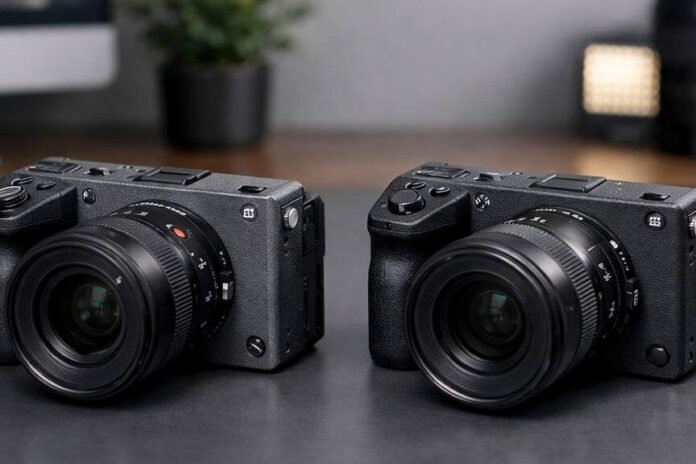
Quick verdict: choose the Sony FX3 if you need full-frame low-light performance, shallower depth of field, and a compact Cinema Line body for professional jobs. Choose the Sony FX30 if you want most of the same Cinema Line workflow at a much lower system cost, especially for indie filmmaking, YouTube, travel, education, and controlled-light shoots.
The Sony FX3 vs FX30 comparison is not really about which camera is more professional. Both are serious video tools. The question is whether your work justifies the FX3’s full-frame sensor and higher price, or whether the FX30’s Super 35 sensor, smaller lens kit, and lower cost make more sense.
Sony FX3 vs FX30: the short answer
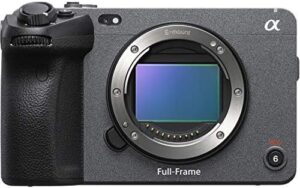
The Sony FX3 is the better camera in low light and the better choice if you want the full-frame look. It gives you a 12MP-class full-frame sensor, excellent high ISO performance, strong dynamic range, 4K up to 120p, 10-bit recording, active cooling, full-size HDMI, and a body designed for solo operators.
The Sony FX30 is the value monster. It uses a 26MP APS-C / Super 35 sensor, records 4K up to 120p, includes the same broad Cinema Line philosophy, and can be built into a professional rig for far less money. For many creators, the image is good enough that lights, lenses, audio, and location matter more than paying for the FX3.
For single-camera context, read the Sony FX3 review and the Sony FX30 review. If you search the inverted wording, FX30 vs FX3, the buying question is the same: lower-cost Super 35 system or full-frame low-light body. Lens choices matter a lot here: the best Sony FE lenses guide fits the FX3, while the best Sony E APS-C lenses guide is more relevant to the FX30.
For official baseline specs, Sony lists the FX3 specifications and FX30 specifications in its support documentation.
| Feature | Sony FX3 | Sony FX30 |
|---|---|---|
| Best for | Pro solo work, weddings, documentary, low light | Indie film, YouTube, education, travel, budget cinema kits |
| Sensor | Full-frame CMOS, 12MP-class stills | APS-C / Super 35 CMOS, 26MP stills |
| Video | 4K up to 120p, 10-bit 4:2:2 | 4K up to 120p, 10-bit 4:2:2 |
| Low light | Major advantage, especially at high ISO | Good, but needs more light or faster lenses |
| Depth of field | Easier shallow full-frame look | Super 35 look with more depth of field |
| Lens cost | Higher with full-frame FE glass | Lower with APS-C E-mount lenses |
| Cooling | Active fan cooling | Active fan cooling |
| XLR audio handle | Included with standard FX3 kit | Available depending on FX30 kit/version |
| Best buy | When paid work demands full frame | When total kit value matters most |
Who should buy the Sony FX3?
Buy the FX3 if your footage often depends on available light. Wedding receptions, concerts, documentary interiors, night exteriors, and fast-moving event work are exactly where the full-frame sensor earns its cost. The FX3 gives you cleaner shadows, more forgiving high ISO files, and easier subject separation with the same aperture.
It is also the better choice if you already own full-frame Sony FE lenses. A 24-70mm f/2.8, 35mm f/1.4, 50mm f/1.4, or 85mm prime feels natural on the FX3, and the field of view behaves the way full-frame shooters expect.
The FX3 is not just a video-shaped a7S III. Its body gives you mounting points, tally lights, active cooling, a full-size HDMI port, and Cinema Line ergonomics that make it easier to rig for real jobs. If you are billing clients and need the camera to disappear into the workflow, that matters.
Who should buy the Sony FX30?
Buy the FX30 if your goal is to build the strongest complete video kit for the money. The body costs much less than the FX3, APS-C lenses are generally smaller and cheaper, and the saved budget can go into lighting, audio, support, travel, or a second camera.
The FX30 is especially good for creators who work in controlled light. Talking heads, product videos, short films, YouTube sets, educational video, travel filmmaking, and indie productions can all look excellent from the FX30. Super 35 is not a compromise in cinema terms; it is a classic format.
The main tradeoff is low light and wide-angle lens behavior. Because of the APS-C crop, getting truly wide shots is harder, and matching the FX3’s shallow full-frame look requires faster or longer lenses.
Sensor size and image character
The FX3’s full-frame sensor gives a wider field of view with the same lens, cleaner high ISO performance, and shallower depth of field. If you shoot interviews in dim rooms, weddings with practical lights, or music videos at night, the FX3 gives you more margin.
The FX30’s APS-C / Super 35 sensor changes the feel. A 24mm lens behaves more like a 36mm equivalent field of view, which can be useful for reach but less convenient for tight spaces. The image can still look cinematic, but you need to plan lenses more carefully.
The FX30 also gives you a real still-photo resolution advantage on paper, but neither camera should be bought primarily as a stills body. These are video-first tools.
Video features, codecs, and overheating
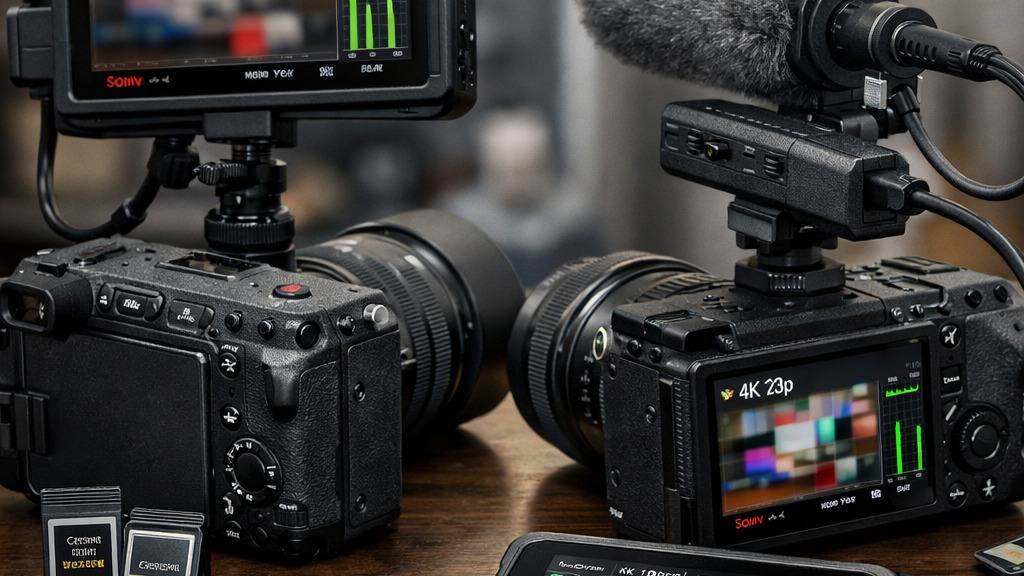
Both cameras offer the features most serious creators need: 4K up to 120p, 10-bit 4:2:2 internal recording, S-Log3, HLG, full-size HDMI, USB-C power options, in-body stabilization, and active cooling.
The FX3 still has the cleaner high-ISO image and more forgiving full-frame sensor. The FX30 can look excellent, but its best results come when you expose carefully and give the sensor enough light.
For long-form recording, both bodies are much safer than ordinary hybrid cameras because they include active cooling. That is one of the biggest reasons to buy either over a regular mirrorless body for video work.
Handling, autofocus, and audio workflow
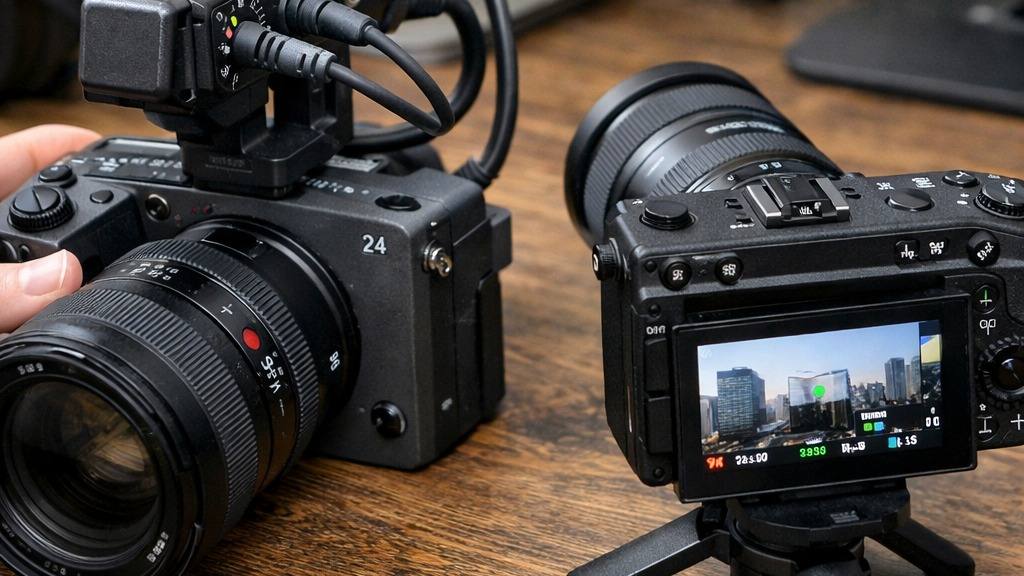
The FX3 and FX30 feel closely related in the hand. Both are compact, rig-friendly Cinema Line cameras with useful buttons, tally lights, full-size HDMI, and a body shape that works well on cages, gimbals, and handheld rigs.
Autofocus is strong on both. The FX3 has an advantage in darker scenes because the full-frame sensor gives the AF system a cleaner signal. The FX30 is still very reliable for interviews, talking heads, gimbal work, and controlled sets.
Audio depends partly on the kit you buy. The FX3 is commonly bundled with Sony’s XLR handle. The FX30 can also be bought with an XLR handle kit, but some versions are body-only. If professional audio input matters, check the exact kit before buying.
Lens cost may decide this comparison
The FX3 makes the most sense when you are ready to invest in full-frame FE lenses. Those lenses can be beautiful, but a proper set gets expensive quickly. Full-frame zooms and fast primes also add weight.
The FX30 is easier to build around on a budget. APS-C lenses such as compact wide primes, fast normal primes, and smaller zooms keep the whole kit lighter and cheaper. For travel creators and students, that can matter more than full-frame bragging rights.
If you already own FE lenses, the FX3 is the clean fit. If you are starting from scratch, the FX30 may let you build a more complete production kit.
Which one would I buy?
If I were shooting paid weddings, events, documentary work, or low-light commercial projects, I would choose the FX3. It gives more room for mistakes when the light is ugly, and that is worth money.
If I were building an indie film, YouTube, travel, or educational kit with a fixed budget, I would choose the FX30 and spend the difference on lenses, lights, audio, and support. For many creators, that produces a better final video than buying the more expensive body alone.
Frequently asked questions
Is the Sony FX3 worth it over the FX30?
Yes, if you need full-frame low-light performance, shallower depth of field, and the confidence of a professional full-frame cinema body. If you work mostly in controlled light, the FX30 is often the better value.
Can the Sony FX30 look as good as the FX3?
In good light, yes, it can get very close for many projects. The FX3 pulls ahead in low light, wide-angle flexibility, and full-frame subject separation.
Is the FX30 good enough for professional work?
Yes. The FX30 has serious codecs, active cooling, strong autofocus, and a cinema-focused body. The question is not whether it is professional enough, but whether its APS-C sensor fits your shooting conditions.
Which camera is better for weddings?
The FX3 is the safer wedding camera because receptions and ceremonies often happen in poor light. The FX30 can work, but it needs faster lenses and more careful exposure.