
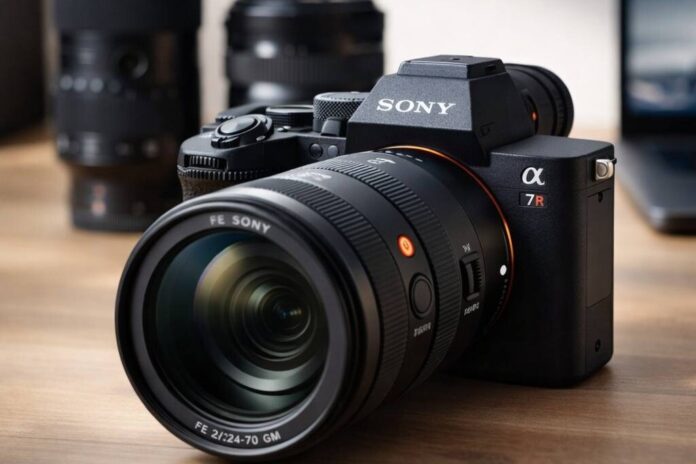
Choosing the best lenses for Sony A7RV is not just about sharpness. With a 61MP sensor, this camera rewards great glass and quickly exposes weak optics. I’ll walk through the lenses I’d actually pair with it for portraits, travel, landscapes, wildlife, and everyday shooting.
For camera-body context, read the Sony a7R V review. For the broader system, the best Sony FE lenses guide helps place these high-resolution picks in the wider lineup.
My starting shortlist for the a7R V
I would decide what the lens needs to do before spending G Master money. For events and interiors, 24mm at the wide end matters. For travel and portraits, a lighter 28mm-starting zoom may be the better compromise.
| Lens | Choose it for | Tradeoff | Amazon US |
|---|---|---|---|
| Sony FE 24-70mm f/2.8 GM II | One premium zoom for events, interiors and portraits | 695g; a substantial lens even on this body | Check price |
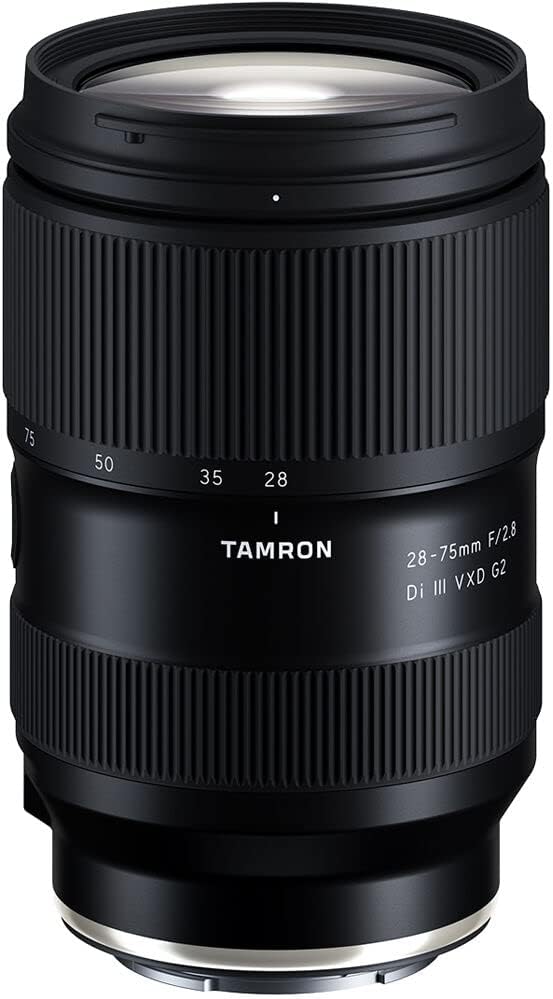
| Tamron 28-75mm f/2.8 Di III VXD G2, Sony E | A lighter f/2.8 kit with money left for another lens | 540g; 28mm is noticeably tighter than 24mm indoors | Check price |
| Sony FE 85mm f/1.4 GM II | A dedicated portrait kit rather than a do-everything zoom | 642g; a fixed focal length that needs working distance | Compare the GM II with a discounted original GM |
These are full-frame E-mount lenses, not APS-C lenses. None has optical stabilization; the a7R V supplies in-body stabilization. That helps with camera shake, not a moving face or a child who refuses to sit still.
What makes a lens a great match for the Sony A7RV
Why 61MP changes your lens choices
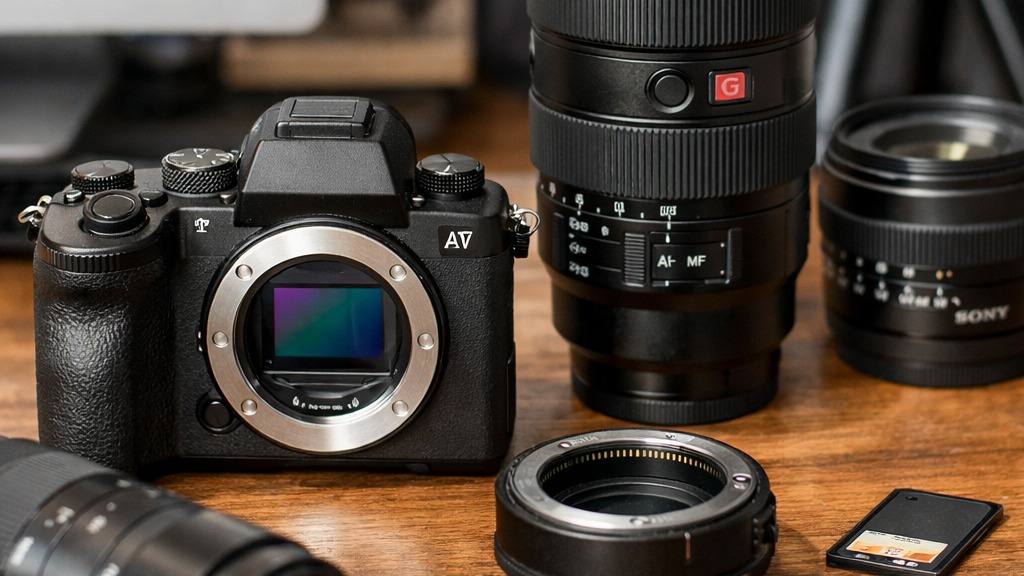
If you’ve used a lower resolution camera, upgrading to the Sony A7RV’s 61MP sensor is a major leap. This resolution does more than let you crop aggressively; it ruthlessly reveals lens flaws. Corners that used to look fine at 24MP can turn soft or show color fringing. Even minor focusing errors become visible. Because of this, not every lens that performed well on an older Sony full-frame body will satisfy you here.
Before narrowing down specific focal lengths, it helps to understand how the body itself behaves in real use, especially with autofocus, stabilization, and high-resolution handling. That broader context can make lens choices much easier, and this Sony A7R V review adds useful perspective before you commit to a kit.
Lens compatibility with the Sony A7RV is about more than just mounting. You want lenses with optical formulas that resolve fine detail across the frame, especially wide open. Some older or budget lenses will look noticeably “mushy” or show chromatic aberration at the pixel level. Autofocus precision also matters more, since micro-focus errors can spoil that extra detail you paid for.
What I look for beyond pure sharpness
Sharpness is critical, but it is not the only deciding factor. I pay close attention to how a lens renders out-of-focus areas (bokeh) and how it handles light sources in the frame. For portraits, smooth subject separation and natural skin tones are at least as important as raw resolution. For landscapes or travel, edge-to-edge clarity and low distortion become more vital.
Build quality, weather sealing, and autofocus speed also play a role. The A7RV is a professional-grade body, so lightweight kit lenses often feel out of place and can slow down your shooting. I also value lens control rings and customizable buttons for quick handling in the field. In short, the best lenses for the Sony A7RV combine optical excellence, fast and accurate focus, and robust construction.
Best all around lenses for most Sony A7RV owners
My favorite standard zoom options
A standard zoom is the first lens most A7RV owners reach for, and for good reason. It covers everything from wide landscapes to portraits and street scenes. My pick for the best standard zoom for Sony A7RV is the Sony FE 24-70mm f/2.8 GM II. This lens is sharp enough to match the sensor’s resolution at all focal lengths, and its autofocus is quick and silent. The weather sealing and improved ergonomics make it a true workhorse.
If you prefer something lighter or less expensive, the Tamron 28-75mm f/2.8 G2 is a fantastic choice. It doesn’t quite match the Sony GM in edge performance, but it is excellent in the center and very portable. Either of these will handle family events, travel, and even casual portraits with confidence.

If the wider view is not worth the extra cost and weight for your work, compare the Sony-E version of the Tamron G2:
The primes I’d choose for everyday shooting
If you like to travel light or shoot with available light indoors, a fast prime is a joy on the A7RV. The Sony FE 35mm f/1.4 GM stands out as the best prime lens for Sony A7RV in the “walkaround” category. It’s tack sharp, even at f/1.4, and produces creamy bokeh for environmental portraits or food shots. The autofocus is reliable for both stills and video.
For something a little wider, the Sigma 24mm f/1.4 DG DN Art is a strong contender. It’s ideal for street, travel, and environmental portraits, with great sharpness and minimal distortion. If you want the classic portrait look in a prime, the Sony FE 50mm f/1.2 GM is stunning, though it’s a big investment. Any of these primes will deliver images that make the most of 61MP, letting you crop or print large without hesitation.
Best lenses for portraits and subject separation
For a new premium purchase, I would now compare the Sony FE 85mm f/1.4 GM II first. It is a different lens from the original 85mm GM discussed below: smaller, lighter at 642g, and equipped with Sony’s newer XD linear motors. The original remains worth considering at a meaningful discount; its rendering does not suddenly stop being attractive because a successor exists. Check which generation the listing actually offers.
Portrait shooters demand more than just technical sharpness. They want lenses that flatter their subjects, isolate faces from busy backgrounds, and deliver pleasing color and contrast. For the Sony A7RV, the original Sony FE 85mm f/1.4 GM remains a portrait option worth considering when its price makes sense beside the GM II. It produces exceptional subject separation and buttery bokeh, even when shooting wide open. Skin tones come out natural and lifelike, and the lens is sharp from edge to edge.
Another top option for Sony FE portrait lenses is the Sigma 85mm f/1.4 DG DN Art. It’s lighter than Sony’s GM, offers comparable sharpness, and has a slightly cooler rendering, which some photographers prefer for fashion or studio work. If you want to go even longer for dramatic compression and background blur, the Sony FE 135mm f/1.8 GM is almost legendary. It’s razor-sharp, with a unique ability to make subjects pop against complex backgrounds.
A fast 50mm can double as a portrait lens, especially for environmental or half-body shots. The Sony FE 50mm f/1.2 GM and Sigma 50mm f/1.4 DG DN Art both excel here. If budget is a concern, the Sony FE 85mm f/1.8 is compact, affordable, and still offers lovely separation.
Best lenses for landscape, architecture, and travel
Wide angle picks for detail rich scenes
Landscapes, cityscapes, and travel demand lenses that resolve fine detail throughout the frame. For the A7RV, the best wide angle lens is the Sony FE 16-35mm f/2.8 GM II. It’s sharp corner to corner, has minimal distortion, and handles flare well. This lens is built to keep up with the sensor, making it perfect for high-res prints or deep crops.
For those who shoot mostly stopped down or want something lighter, the Sony FE 20mm f/1.8 G and Sigma 14-24mm f/2.8 DG DN Art are great alternatives. Both are extremely sharp and control coma and vignetting well, which is useful for astrophotography or interior work. The 20mm G lens is also weather sealed and compact, so it is ideal for hiking or urban exploration.
Travel shooters benefit from flexibility and portability. The Sony FE 24-105mm f/4 G OSS is a favorite travel lens for Sony A7RV users, as it covers wide to medium telephoto and has built-in stabilization. It is not as fast as the f/2.8 zooms, but it is sharp and lightweight, making it easy to carry all day. If you want to minimize lens changes and still capture everything from sweeping vistas to tight architectural details, this is a lens to consider.
Best lenses for wildlife, sports, and action
When you want to capture wildlife, fast-moving sports, or any kind of action, the best lenses for Sony A7RV are those that combine fast autofocus, long reach, and high optical quality. The 61MP sensor shows every flaw, so your telephoto lens needs to be sharp across the frame and able to keep up with rapid subjects.
For wildlife and sports, autofocus speed and tracking are critical. The A7RV body has industry-leading autofocus, but only if the lens can keep up. I have found that some third-party telephotos lag just a bit behind the best Sony glass for tracking birds in flight or athletes in motion. Still, there are excellent options from Sigma and Tamron if you balance your expectations.
The best telephoto lens for Sony A7RV in my experience is the Sony FE 200-600mm f/5.6-6.3 G OSS. This lens offers a versatile zoom range, strong sharpness even at the long end, and outstanding autofocus reliability. It is heavy, but with a camera like the A7RV, it delivers results that really impress. If you want more light, the FE 100-400mm f/4.5-5.6 GM OSS is a bit lighter, with a faster maximum aperture and even better optical performance, though it is more expensive.
- Sony FE 200-600mm f/5.6-6.3 G OSS: The best choice for birding, safaris, and distant subjects. Excellent sharpness, great stabilization, and surprisingly good bokeh for the price.
- Sony FE 100-400mm f/4.5-5.6 GM OSS: Slightly less reach, but higher-end glass and lighter weight. The autofocus is as fast as it gets on Sony bodies.
- Sigma 150-600mm f/5-6.3 DG DN OS Sports: This is the best wildlife lens for Sony A7RV from a third party right now. Sharpness is very good, and autofocus is close to native Sony performance. Build quality is excellent for the price, but it is big and heavy.
- Tamron 150-500mm f/5-6.7 Di III VC VXD: A more compact, affordable super-telephoto. Autofocus is surprisingly quick, and image quality is solid, especially at the short end. Some softness at 500mm, but still a great value for sports and large animals.
- Sony FE 70-200mm f/2.8 GM OSS II: For indoor sports, stage action, or events, this lens is hard to beat. The constant f/2.8 aperture is a lifesaver in low light, and the lens is significantly lighter than the original version. Sharpness is excellent across the frame, even wide open.
For those who want a smaller kit, the Sony FE 70-300mm f/4.5-5.6 G OSS is a good travel-friendly option. It’s not as sharp at the long end as the pro telephotos, but it’s light, versatile, and works well for larger subjects or sideline sports where you can get a bit closer.
If you shoot action in low light, consider a fast prime like the Sony FE 135mm f/1.8 GM. While it lacks zoom, it combines incredible sharpness, creamy bokeh, and rapid autofocus – perfect for indoor arenas or creative field sports shots.
In summary, if your priority is ultimate reach and reliability, go with Sony’s own telephoto zooms. If you need value or a super-telephoto on a budget, Sigma and Tamron’s offerings are nearly as good and much more affordable. Your A7RV can resolve the fine feather detail on a distant bird or freeze a sprinter’s stride, but only if your lens is up to the task.
How to choose between Sony, Sigma, Tamron, and Samyang
The lens ecosystem for Sony A7RV is one of the most diverse in the camera world. Sony’s own lenses are the default, but Sigma, Tamron, and Samyang all offer strong alternatives. So, how do you decide which brand is right for your needs?
Sony lenses are the best match for the Sony A7RV in terms of autofocus speed, compatibility, and consistency. Their G Master (GM) and G series lenses are designed to extract every bit of detail from the 61MP sensor. Autofocus is fast and silent, and you get full support for every AF mode the camera offers. The trade-off is price – Sony glass is usually the most expensive.
Sigma lenses for Sony A7RV have matured rapidly. The Art series primes and Sports zooms are sharp, reliable, and often match or beat Sony’s own lenses in certain focal lengths. Sigma’s autofocus is nearly as fast as Sony’s in most situations, and build quality is excellent. Sigma lenses are a great value, especially for wide-angle and telephoto zooms. However, some older designs may have minor compatibility quirks or slower tracking in complex action scenes.
Tamron lenses for Sony A7RV are known for being lightweight, affordable, and practical. Tamron has focused on zooms with unique focal lengths (like 28-75mm f/2.8 or 70-180mm f/2.8), often at half the price of Sony’s equivalents. Autofocus is quick, and optical quality is strong for the price. Tamron’s lenses are a smart choice if you want to cover a range of focal lengths without breaking the bank. However, Tamron rarely matches the absolute edge-to-edge sharpness of the best Sony or Sigma glass.
Samyang lenses for Sony A7RV (also branded as Rokinon in some regions) appeal to budget-minded shooters and those who like compact primes. Autofocus is decent, and image quality can surprise you for the price. Build quality is simpler, and sample variation is higher. I would only recommend Samyang for casual or travel use, or if you want a lightweight kit. For critical work or demanding action, stick with Sony, Sigma, or Tamron.
- For autofocus and reliability: Sony first, then Sigma or Tamron.
- For value: Tamron and Sigma are hard to beat.
- For lightweight or specialty primes: Samyang offers unique options, but check reviews for sharpness wide open.
- For future-proofing: Sony GM glass will hold its value and work best with future camera bodies.
Remember, the 61MP sensor will show the difference between a good and a great lens, especially in the corners. If you rely on eye autofocus or shoot fast action, stick with lenses known for strong AF performance on Sony bodies.
My practical buying advice before you invest
Choosing which lens to buy for Sony A7RV can feel overwhelming because the options are so good – and so expensive. Here’s my honest advice from years of shooting and testing with this camera system.
When it makes sense to spend more on glass
The biggest improvements in image quality and creative control come from your lens, not the camera body. If you shoot professionally or sell prints, invest in the best lens you can afford for your main subject. A sharp prime or pro zoom will last for years, and you’ll notice the difference every time you review your images on a 4K screen or make a large print.
However, you do not need to buy the most expensive lens for every situation. If you shoot mostly for web or social media, many of the best value lenses for Sony A7RV from Sigma or Tamron will give you 90% of the performance at half the price. For travel or family photos, lightweight and affordable lenses are often better than carrying heavy pro glass.
- Spend more on glass if you shoot in challenging light, need fast autofocus, or rely on the highest resolution for prints.
- Save money if you mostly view images on screens or need a compact kit for travel.
- Mix and match: pair a top prime with a value zoom, or vice versa, depending on what you shoot most.
Before you invest, rent or borrow a lens if possible. See how it handles in your real shooting conditions. The best lens for one photographer may be overkill for another.
Finally, remember that the best lenses for Sony A7RV are those that inspire you to shoot more. No lens is perfect, but the right one will make you want to get out and create. Focus on your subjects and shooting style, and let that guide your investment.
Frequently asked questions
Do you need premium lenses to get the most from the Sony A7RV?
Not always. Premium lenses reveal the sensor’s full potential, especially for large prints or detailed crops. However, many third-party and mid-range Sony lenses perform very well for most uses, especially if you do not crop heavily or print very large.
What is the best first lens to buy for the Sony A7RV?
A standard zoom like the Sony 24-105mm f/4 G OSS or the Tamron 28-75mm f/2.8 G2 is ideal for most users. They cover a wide focal range, are sharp enough for the sensor, and handle both everyday and travel shooting well.
Are third party lenses sharp enough for the Sony A7RV sensor?
Yes, if you choose carefully. Sigma’s Art and Sports lines and Tamron’s newer zooms are very sharp, even on 61MP. Samyang lenses are more variable, but some of their primes are surprisingly good for the price. Always check detailed reviews and sample images before buying.
Which focal lengths are most useful on the Sony A7RV?
For most photographers: 24mm, 35mm, and 85mm primes, plus a 24-105mm or 70-200mm zoom, cover a huge range. Wildlife and sports shooters will want 400mm or longer. For landscapes, 16-35mm is a great choice.
If you invest in two or three high-quality lenses in these ranges, you will cover 95% of real-world subjects with the Sony A7RV.
Last update on 2026-07-04 / Affiliate links / Images from Amazon Product Advertising API