
View full specs
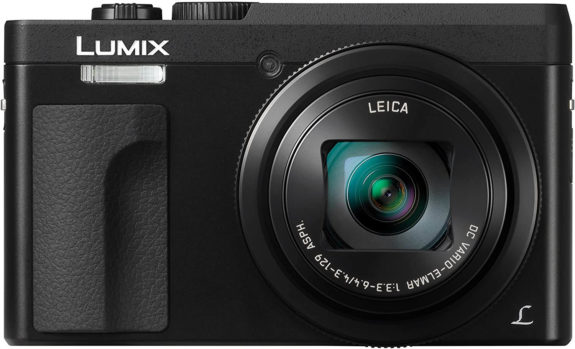
The Panasonic Lumix ZS70, also sold as the Lumix TZ90 outside North America, is one of those compact travel cameras that makes more sense when you stop judging it like a modern phone and start judging it like a pocketable 30x optical zoom camera. In this Panasonic Lumix ZS70 / TZ90 review, I am looking at it as a small travel tool: useful reach, a built-in viewfinder, a flip-up screen, raw capture, 4K video, and enough manual control to keep a photographer interested.
The important buying context is age. The Panasonic DC-ZS70 was announced in 2017. That means it is not a fresh premium compact, and it should not be priced like one. At the right used or renewed price, though, it still has a clear job: give you real optical zoom in a jacket-pocket body.
Panasonic Lumix ZS70 / TZ90 quick verdict
The Panasonic Lumix ZS70 / TZ90 is worth considering if you want a travel compact with a 24-720mm equivalent lens, an electronic viewfinder, a tilting selfie screen, 4K video, and raw shooting in a body that stays genuinely small. I would buy it for daylight travel, city walks, family trips, casual video clips, and situations where phone zoom simply falls apart.
I would not buy it for low-light image quality, fast action, clean high-ISO files, or serious video work. The 1/2.3-inch sensor is the limiting factor. The lens gives you reach, not magic. Used with that expectation, the Panasonic ZS70 is still a satisfying little camera; pushed beyond it, it shows its age quickly.
Key specs that matter
| Feature | Panasonic ZS70 / TZ90 |
|---|---|
| Sensor | 20.3MP 1/2.3-inch MOS |
| Lens | 30x Leica DC Vario-Elmar, 24-720mm equivalent, f/3.3-6.4 |
| Viewfinder | 0.2-inch electronic viewfinder, approx. 1.17m dots |
| Screen | 3.0-inch tilting touchscreen, approx. 1.04m dots |
| Video | 4K/30p and Full HD |
| Stabilization | Optical stabilization; 5-axis Hybrid O.I.S. for video use |
| Battery | Panasonic DMW-BLG10PP |
| Memory card | SD/SDHC/SDXC, UHS-I U3 recommended for 4K |
| Weight | About 322g with battery and card |
ZS70, TZ90, and DC-ZS70 naming
The naming is simple once you know the regional split. Panasonic ZS70 is the North American name. Panasonic TZ90 is the name used in many other markets. DC-ZS70 is the fuller model designation you may see on spec sheets, manuals, listings, and accessory pages. For practical buying, treat Panasonic Lumix ZS70, Lumix TZ90, and DC-ZS70 as the same camera family unless a listing is clearly describing a bundle, color variant, or regional package.
This matters because used listings are messy. A seller may write Lumix ZS70, Panasonic DC-ZS70K, TZ90, or Lumix TZ90. The camera you want is the 20.3MP 30x travel zoom model with the flip-up screen, electronic viewfinder, 4K video, and DMW-BLG10 battery.
Who should buy the Panasonic Lumix ZS70?
The ZS70 is for the photographer who wants reach without carrying a bridge camera. I like it most as a daylight travel camera: markets, street details, family moments, landscapes, signs, buildings, and compressed telephoto shots from viewpoints. The 24mm wide end is useful for travel scenes, and the 720mm equivalent long end lets you pull in details a phone would turn into digital mush.
The sweet spot is a traveler who cares more about framing possibilities than pixel-level perfection. If you enjoy noticing details across a street, on a hillside, or high on a building, the Lumix ZS70 gives you a way to make those photographs without carrying a large superzoom camera.
It is also a good camera for someone who enjoys having a viewfinder. That sounds minor until you shoot in hard sun. A pocket compact with an EVF is much easier to use outdoors than a phone or screen-only camera, especially when you are trying to frame at long focal lengths.
The buyer I would steer away is the person expecting premium compact image quality. This is not a Sony RX100 alternative in low light. It is a travel zoom. If you want a larger sensor and better night photos, give up some reach and look at a more advanced compact instead.
Handling and controls
Panasonic has always been good at making small cameras feel more serious than their size suggests. The ZS70 has a proper mode dial, a control ring around the lens, a zoom lever around the shutter button, touch function icons, and enough customization to make it feel like a real camera rather than a sealed appliance.
The grip is modest, but the body is small enough that it still feels secure. I would use a wrist strap. At the long end of the zoom, you want two hands and a little discipline: elbows in, half-press to settle focus, and do not stab at the shutter. That is not a flaw of this camera; it is the reality of a 720mm equivalent lens in a compact body.
The control ring is useful, but it is not a mechanical lens ring. It feels electronic, with a little step-by-step behavior. I prefer assigning it to a function I adjust deliberately rather than expecting it to behave like a manual zoom ring on a larger camera.
The 30x zoom is the whole point
The 24-720mm equivalent range is why the ZS70 still deserves attention. At 24mm, it handles travel scenes, interiors, landscapes, and group photos. At the long end, it reaches architectural details, distant subjects, animals in good light, and candid street details from across a square.
Sharpness is best when you are realistic. The middle of the zoom range is generally more forgiving than the extreme telephoto end. At 720mm equivalent, atmospheric haze, camera shake, and subject movement all become visible. The stabilizer helps, but technique matters. If the shutter speed drops too low, the long zoom becomes a liability.
My personal rule with this kind of camera is simple: use the long end in good light, keep ISO down when possible, and do not expect heavy cropping. The ZS70 can give charming travel files, but it does not have the sensor headroom of a larger camera.
Image quality and low-light limits
In bright conditions, the ZS70 produces pleasant JPEGs and useful raw files. Panasonic color is generally sensible, and the camera gives you enough control to avoid the overprocessed look that can happen with phones. For travel documentation, family albums, and casual prints, it is more than good enough when used in the right light.
The useful ISO range is narrower than the spec sheet suggests. I would try to live at ISO 80-400 whenever possible. ISO 800 is usable for small output, but detail and color saturation begin to slide. ISO 1600 and above are emergency settings rather than the way I would want to shoot this camera. That is normal for a 20MP 1/2.3-inch travel zoom, but it needs to be said plainly.
There is also a lens character to understand. The center can look good in daylight, but the wide end can show soft corners, and the far telephoto end needs strong light and careful technique. The ZS70 gives you framing options; it does not give you unlimited optical quality across a 30x range.
The low-light story is different. The 1/2.3-inch sensor is small, and the lens slows to f/6.4 at the telephoto end. Indoors, at dusk, or in restaurants, a good phone may produce a cleaner-looking image because computational processing is doing so much work. The ZS70 fights back with optical zoom and raw capture, not with sensor size.
If I were shooting an evening street scene, I would stay wider, brace the camera, avoid unnecessary zoom, and accept that some shots belong on a larger-sensor camera. That is experienced-camera judgment, not a criticism unique to Panasonic.
Viewfinder, flip screen, and selfies
The ZS70’s electronic viewfinder is one of its best practical features, but it is also one of its obvious compromises. It is small. I would not want to spend a whole afternoon glued to it. Still, when bright sun makes the rear screen hard to see, even a tiny EVF can save the shot. It also adds stability because holding the camera to your eye creates a third point of contact.
The 180-degree tilting screen is another reason this model still feels modern enough for travel. Flip it upward and the camera becomes much easier for selfies, group shots, low-angle compositions, and casual video. Panasonic’s Self Shot behavior is simple and useful rather than gimmicky.
One quirk: when the monitor is open, the camera prioritizes the rear display and disables normal viewfinder switching. That is logical once you understand it, but it can surprise new users.
Video, 4K Photo, and Post Focus
For casual travel clips, the ZS70 is better than its age suggests. 4K/30p gives you detailed footage in good light, and Panasonic’s 4K Photo mode is genuinely useful if you want to pull an 8MP still from a burst-like sequence. It is not cinema gear, but for family travel, short clips, and social media memories, it works.
4K Photo is useful for timing: pets, kids, street moments, and small gestures that are easy to miss with a single shutter press. Post Focus is more specialized. It lets you choose the focus point after capture from a 4K sequence, and Focus Stacking can be handy for close-up subjects where depth of field is thin. I would not buy the camera only for these modes, but they are part of why Panasonic compacts felt more advanced than many simple point-and-shoots.
Macro use is also worth mentioning. At the wide end, the ZS70 can focus close enough for travel details, food, small objects, and texture shots. Do not expect large-sensor background blur, but do expect a useful close-focus option when you want variety in a travel set.
Audio and low-light video are the weak points. There is no external microphone input, and the small sensor gets noisy as light falls. I would use the ZS70 for bright outdoor clips, walking shots at wider focal lengths, and quick moments where having the camera in your pocket matters more than perfect footage.
Battery, cards, and setup
The ZS70 uses the Panasonic DMW-BLG10PP battery and charges in-camera through USB. That is convenient for travel because you can top up from a wall adapter or power bank, but it also means a second battery is useful if you shoot heavily. You cannot charge a spare in the camera while using another battery unless you buy an external charger.
For cards, use a reliable SD/SDHC/SDXC card. Panasonic’s ZS70 support specifications call out UHS-I UHS Speed Class 3 for the recording media class, and that is the sensible target if you plan to shoot 4K video or 4K Photo. Do not put a bargain old card in this camera and then blame the camera for recording issues.
One setup detail worth remembering: the tripod screw should not be longer than 5.5mm. That sounds boring until a cheap travel plate damages the base of a compact camera.
Panasonic Lumix ZS70 vs a phone
A modern phone wins for low light, instant sharing, computational HDR, and convenience. The ZS70 wins for real optical zoom, viewfinder shooting, physical controls, raw capture, and the feeling of using a dedicated camera. That is the trade.
If most of your photos are restaurants, night streets, children indoors, and quick social sharing, the phone may be the better tool. If your travel photos often involve distant details, bright outdoor scenes, and moments where 30x optical zoom changes the picture, the ZS70 still has a reason to exist.
Where it sits among travel compacts
The ZS70 sits in the long-zoom travel compact lane, not the premium compact lane. A camera like the Canon PowerShot G7 X Mark III is more about larger-sensor compact quality and creator appeal. The Panasonic ZS70 is about reach, viewfinder shooting, and a smaller all-in-one travel kit.
That is all the comparison this review needs. If you are choosing between several travel zoom models, that deserves a separate comparison. For this review, the key point is simpler: buy the Lumix ZS70 / TZ90 for 30x optical reach in a compact body, not because it is the cleanest low-light compact in the category.
Pros and cons
Pros
- 30x optical zoom in a genuinely compact body.
- Built-in electronic viewfinder is useful in bright sun, even if it is small.
- Flip-up touchscreen makes travel selfies and group photos easy.
- 4K video and 4K Photo add real flexibility for casual use.
- Raw support and manual modes give photographers more control than a basic point-and-shoot.
Cons
- Small sensor limits low-light image quality.
- Long end of the zoom needs good light and steady technique.
- No external mic input for serious video.
- Used/renewed pricing can be inconsistent, and compact-camera trend pricing can make bad deals look normal.
- In-camera charging is convenient but slower for multi-battery travel.
- Wide-angle corners and high-ISO files show the limits of the small sensor and long zoom design.
Final verdict
The Panasonic ZS70 is still a useful travel compact if you buy it for the right reason. It is not a premium low-light compact and it is not a replacement for a modern mirrorless camera. It is a pocketable 30x zoom camera with a viewfinder, flip screen, raw support, and 4K features.
That combination remains attractive for daylight travel and everyday carry. I would buy it only at a sensible used or renewed price, and I would walk away from inflated listings. If a ZS70/TZ90 listing starts approaching the price of a newer or larger-sensor compact, the value argument falls apart. When priced correctly, the ZS70 is a compact camera with a real job: bringing distant travel details closer without putting a bridge camera around your neck.
Panasonic Lumix DC-ZS70 / TZ90 alternatives
The main alternatives to the Panasonic Lumix DC-ZS70 / TZ90 are Canon SX620 HS, Canon SX740 HS, Sony HX99, Panasonic ZS80. Compare autofocus, stabilization, video limits, lens choice and current price before deciding which camera fits you best.
Frequently asked questions
Is the Panasonic ZS70 the same as the TZ90?
Yes. ZS70 is the North American name, while TZ90 is commonly used in other markets. You may also see DC-ZS70 or DC-ZS70K in listings and manuals.
Is the Panasonic ZS70 good for travel?
Yes, especially for daylight travel. The 30x zoom, EVF, flip screen, and compact body make it useful for sightseeing, family trips, and city photography.
Does the Panasonic ZS70 shoot raw?
Yes. The ZS70 supports RAW and JPEG stills, which is useful if you want more editing flexibility than a basic compact allows.
What battery does the Panasonic ZS70 use?
The ZS70 uses the Panasonic DMW-BLG10PP lithium-ion battery.
What memory card should I use with the Panasonic ZS70?
Use a reliable SD, SDHC, or SDXC card. For 4K video and 4K Photo, choose a UHS-I U3 card from a reputable brand.
Does the Panasonic Lumix ZS70 have Post Focus?
Yes. The ZS70 includes Panasonic Post Focus and Focus Stacking features based on 4K capture. They are useful for close-up subjects and situations where focus placement matters, but they are not a replacement for a larger-sensor macro setup.
What ISO should I use on the Panasonic ZS70?
For best quality, keep the ZS70 around ISO 80-400 when possible. ISO 800 is usable for smaller output, while ISO 1600 and above should be treated as compromise settings.
Is the Panasonic ZS70 better than a phone?
It is better than a phone for optical zoom, viewfinder shooting, and physical control. A good phone is usually better for low light, instant sharing, and computational processing.
Daylight travel, family trips, pocketable 30x zoom photography, and compact-camera buyers who want an EVF.
You need strong low-light files, a large EVF, fast action AF, or premium compact image quality.
Low; the zoom range is easy to enjoy, but long telephoto technique matters.
Move to a larger-sensor compact or mirrorless body if image quality matters more than reach.
4K is useful in good light, but audio and low-light video are limited.
Yes at the right used/renewed price; no if compact-camera trend pricing pushes it near newer or larger-sensor options.