


The best travel camera is not always the most expensive camera, and it is definitely not the camera with the longest spec sheet. For travel, I care about the camera I will actually carry all day: small enough to bring, fast enough not to miss people and street moments, reliable enough for mixed light, and current enough that you are not hunting for a six-year-old body at a silly used price.
For most travelers in 2026, I would start with the Sony RX100 VII if you want one serious pocket camera with real zoom, or the Canon EOS R50 if you are ready for an interchangeable-lens kit. The RX100 VII is older, but it remains the rare compact that still makes practical sense because it combines a 1-inch sensor, a 24-200mm equivalent lens, a built-in viewfinder, strong autofocus, and real buyer demand. The Canon R50 gives better image quality and more room to grow, but you have to accept carrying a lens.
I am intentionally not mixing ultra-cheap compact cameras into this list. Cameras like basic Kodak PixPro models can make sense in a separate budget guide, but they do not belong in a higher-standard travel camera roundup where image quality, autofocus, handling, availability, and long-term satisfaction matter.
Best travel cameras: quick picks
| Best for | Camera | Why it fits travel | Main compromise |
|---|---|---|---|
| Best overall pocket travel camera | Sony RX100 VII | 24-200mm equivalent zoom, 1-inch sensor, excellent autofocus, EVF, jacket-pocket body | Expensive for an older compact |
| Best current pocket zoom | Panasonic Lumix ZS99 / TZ99 | 30x zoom, USB-C charging, compact body, modern availability | Small sensor, weaker in low light |
| Best compact creator camera | Canon PowerShot V1 | Modern compact body, stronger hybrid/video direction, more current than most old G-series compacts | No long travel zoom |
| Best beginner mirrorless travel kit | Canon EOS R50 | Small APS-C body, reliable autofocus, simple controls, good image quality | Needs lenses; no in-body stabilization |
| Best advanced APS-C travel camera | Sony a6700 | Excellent autofocus, compact body, strong stills/video balance, mature E-mount lens system | Costs much more once you add good glass |
| Best compact full-frame travel camera | Sony a7C II | Full-frame image quality in a small body, strong autofocus, excellent lens ecosystem | Travel lenses can make the kit bigger and pricier |
| Best premium fixed-lens travel camera | Fujifilm X100VI | Beautiful files, 40MP APS-C sensor, built-in stabilization, ideal street/travel focal length | Often hard to buy at a sane price |
| Best rugged travel camera | OM System Tough TG-7 | Waterproof, shockproof, pocketable, better for water and rough trips than risking a phone | Small sensor; buy it for toughness, not maximum image quality |
How I would choose a travel camera
A travel camera has to clear a different bar than a studio camera. I do not care how impressive a camera is on paper if it makes you leave it in the hotel room. The real question is: what kind of trip are you taking, and how much camera are you willing to carry every single day?
If you want the smallest serious setup, choose a premium compact. If you want the best image quality for the money, choose a small mirrorless camera. If you hike, snorkel, ski, kayak, or travel with kids near water, choose a rugged compact or action-style camera instead of risking a fragile body. If your phone already handles casual wide-angle photos well, your travel camera should give you something the phone cannot: real zoom, better low light, a viewfinder, RAW files, cleaner portraits, or a safer waterproof body.
I also put a lot of weight on availability. A discontinued camera can still be worth buying if it has a strong used or refurbished market, but it should be the exception. The Sony RX100 VII earns that exception. Many older compact cameras do not.
Sony RX100 VII: best overall pocket travel camera
The Sony RX100 VII is the easiest travel camera to recommend if you want one compact camera that can handle city streets, portraits, food, landscapes, family moments, and distant details without changing lenses. Its 24-200mm equivalent zoom is the key. That range covers the wide end you need for travel scenes and enough telephoto reach for details across a plaza, animals in decent light, or candid portraits from a comfortable distance.
Sony’s official RX100 VII specs still explain why this model refuses to go away: a 1.0-type 20.1MP stacked sensor, 24-200mm lens, fast tracking autofocus, 4K recording, a pop-up viewfinder, and a microphone input in a body that remains genuinely small. In real travel use, the autofocus and viewfinder matter more than people expect. A rear screen can be miserable in bright sun, and missed focus on people is one of the quickest ways to ruin vacation photos.
The RX100 VII is not perfect. The body is small enough that handling can feel cramped, the menus are not friendly, and the price is high for a camera introduced years ago. But this is one of those rare older cameras that still deserves a place because Sony never really replaced it. If you want one high-quality pocket travel camera with zoom, this remains the benchmark.
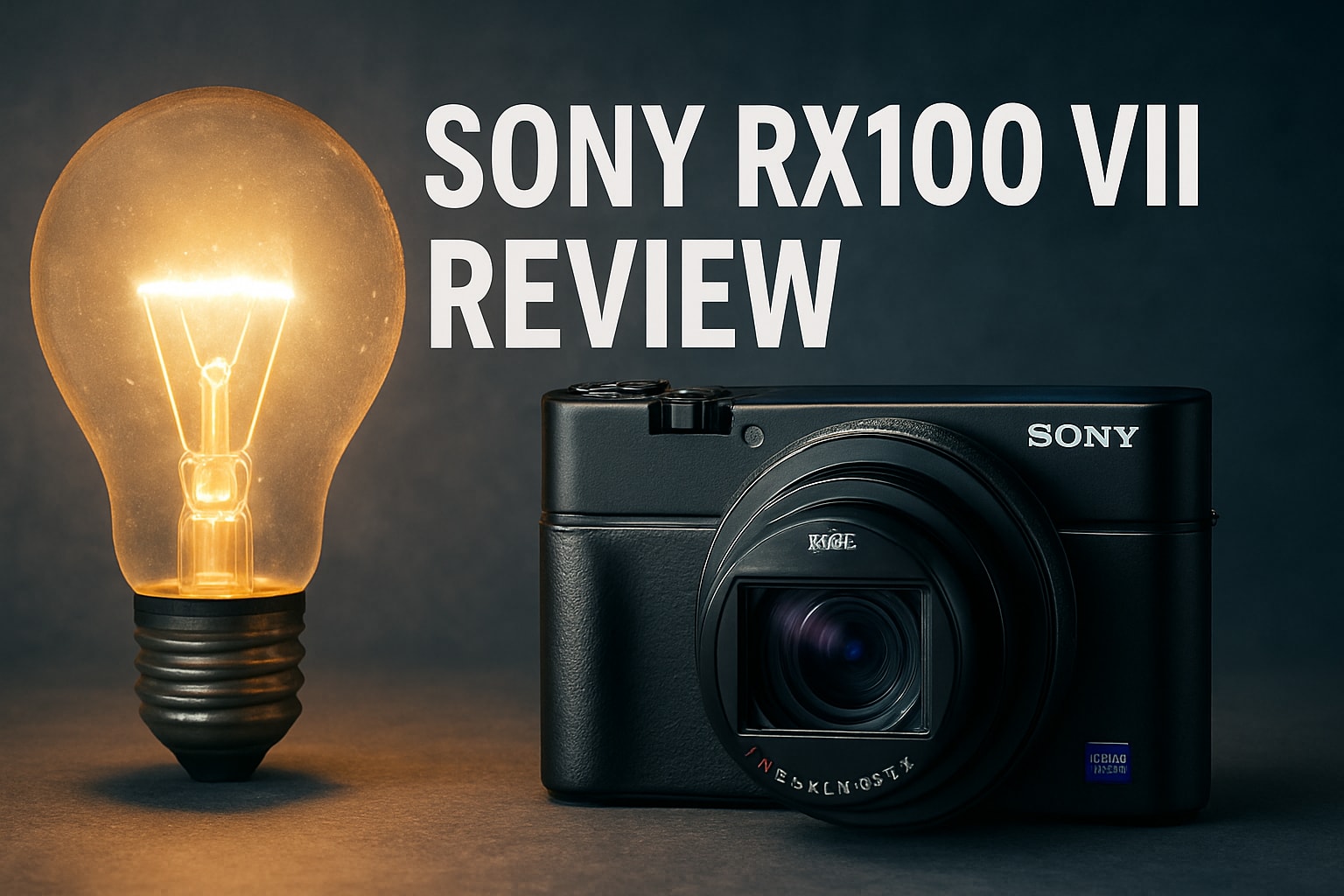
Buy it if: you want the smallest serious all-in-one travel camera and will pay for autofocus, zoom, and a viewfinder.
Skip it if: you want the best low-light files, a large grip, or a cheaper casual camera.
Related review: Sony RX100 VII review.
Panasonic Lumix ZS99 / TZ99: best current pocket zoom
The Panasonic Lumix ZS99, also sold as the TZ99 in some markets, is the practical current option if your first priority is zoom range in a pocketable body. Panasonic lists a 24-720mm equivalent Leica lens, 30x optical zoom, 4K video/photo features, a tilting screen, Bluetooth, Wi-Fi, and USB-C charging. That is a very travel-focused feature set.
I would not pretend the ZS99 has the same image quality ceiling as the RX100 VII. It uses a smaller sensor, so indoor photos, night scenes, and high-contrast files will not hold up as well. But for daylight travel, landmarks, concerts from the seats, casual wildlife, cruise ports, and family trips where reach matters more than shallow depth of field, it is useful in a way a phone often is not.
This is the pick for the traveler who says, “I want to zoom without carrying lenses.” It is also more current and easier to justify than recommending a very old travel-zoom compact that only exists used.

Buy it if: you need a current pocket zoom with a huge focal range.
Skip it if: you often shoot indoors, at night, or want files that tolerate heavy editing.
Related guide: best digital compact cameras.
Canon PowerShot V1: best compact travel camera for creators
The Canon PowerShot V1 is the compact I would consider when travel stills and video are both important, but you do not want an interchangeable-lens camera. It is more modern than most of the old compact-camera recommendations still floating around search results, and it fits the current reality of travel: people shoot photos, short video clips, vertical content, food, hotel rooms, street scenes, and quick talking clips on the same trip.
The V1 is not my first pick for long-reach travel photography because it is not a pocket superzoom. Think of it instead as a higher-standard compact for creators who want a small dedicated camera with better handling and optical quality than a phone, while avoiding the bulk of a mirrorless kit.
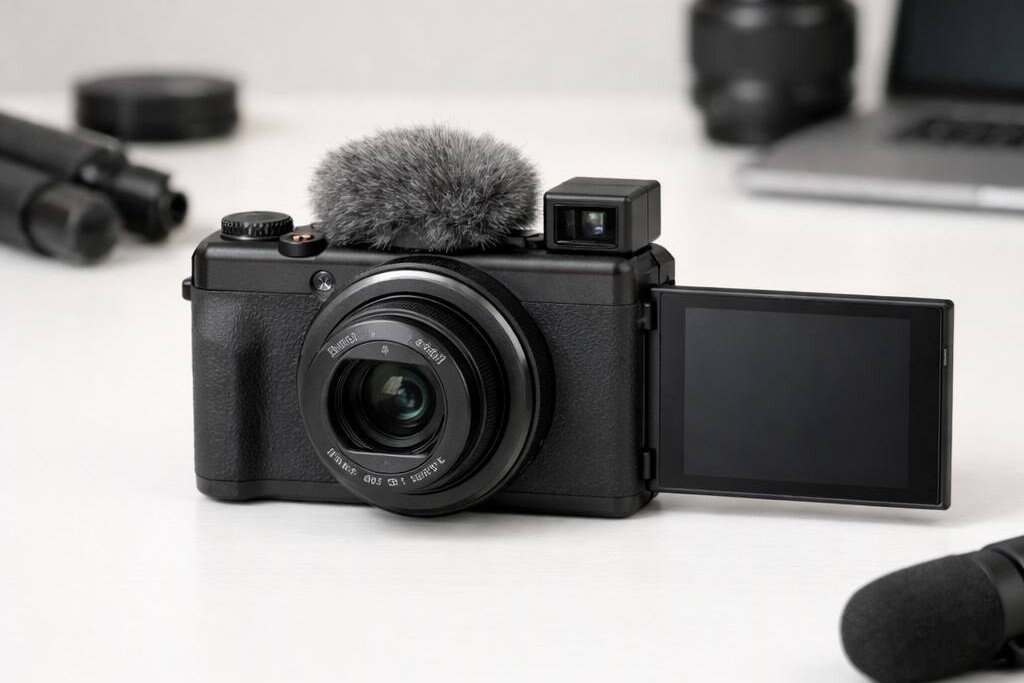
Buy it if: your travel camera needs to handle stills and video without lens changes.
Skip it if: your main reason for buying a camera is distant subjects, wildlife, or sightseeing zoom.
Related review: Canon PowerShot V1 review.
Canon EOS R50: best beginner mirrorless travel camera
The Canon EOS R50 is the travel camera I would hand to someone who wants better image quality than a compact but does not want to fight the camera. Canon lists a 24.2MP APS-C sensor, Dual Pixel CMOS AF II, oversampled 4K up to 30p, and a body around 375g with card and battery. With the small RF-S 18-45mm kit lens, it is light enough for city travel, family trips, and everyday carry.
The advantage over a compact is the APS-C sensor and lens flexibility. The disadvantage is also lens flexibility: you have to choose what to bring. For travel, I would keep the kit simple. The RF-S 18-45mm is the smallest option, but the RF-S 18-150mm is the more useful one-lens travel setup if the budget allows. Add the RF 50mm f/1.8 only if portraits and low light matter.
The R50 is not a rugged camera, and the lack of in-body stabilization matters if you expect a lot of handheld video. Still, for beginners and casual photographers who want clean files, easy autofocus, and a camera that is not intimidating, it is a strong travel choice.

Buy it if: you want a small mirrorless travel kit with strong autofocus and good image quality.
Skip it if: you want a single pocketable camera or plan to shoot a lot of stabilized handheld video.
Related review: Canon R50 review.
Sony a6700: best advanced APS-C travel camera
The Sony a6700 is the stronger choice if you already know you care about autofocus, action, video, and lens choice. It is more camera than most travelers need, but it makes sense for people who want one compact APS-C body for travel, family, street photography, video, and occasional wildlife or sports.
For travel, the Sony E-mount ecosystem is a major advantage. You can build a small kit around a compact zoom, a fast prime, or an all-in-one travel lens. The a6700 also gives you a more serious control layout and more headroom than an entry-level mirrorless body. If you photograph moving kids, street performers, animals, or fast moments in changing light, the autofocus advantage is real.
The drawback is cost. The body is not cheap, and the camera only becomes truly excellent when paired with lenses that also cost money. If you are not going to take advantage of that system, the Canon R50 or a premium compact may be the more rational buy.
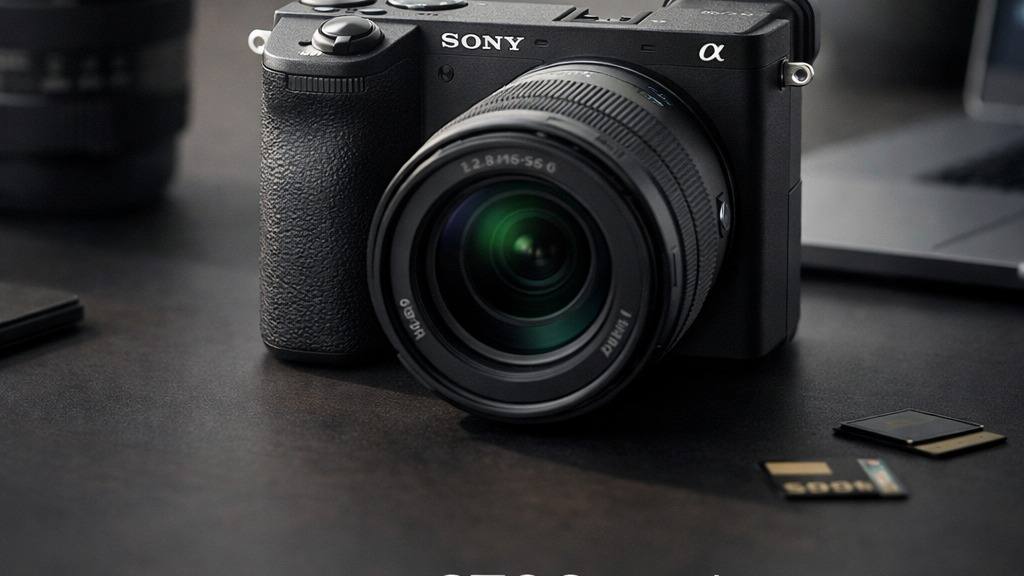
Buy it if: you want a compact but serious interchangeable-lens travel system.
Skip it if: you mostly shoot in auto mode and want the simplest possible kit.
Related review: Sony a6700 review.
Sony a7C II: best compact full-frame travel camera
The Sony a7C II is for travelers who want full-frame files in a smaller body and are willing to build the right lens kit around it. It is not pocketable, but compared with traditional full-frame bodies it is much easier to carry all day. For landscapes, portraits, low light, and high-quality travel photography, it gives you more image-quality headroom than the compact and APS-C picks above.
The warning is simple: full-frame travel only stays compact if the lenses stay compact. A small prime or compact zoom makes the a7C II a beautiful travel setup. Large f/2.8 zooms turn it back into a serious camera bag. That is not a problem if you know what you are buying, but it defeats the purpose for casual travel.
I would choose the a7C II over an older full-frame DSLR for travel almost every time. The autofocus, body size, modern lens options, and video features are all better aligned with how people actually travel now.
Buy it if: you want full-frame travel quality and are willing to choose lenses carefully.
Skip it if: you want a low-cost setup or dislike carrying extra lenses.
Related review: Sony a7C II review. Lens guide: best Sony a7C II lenses.
The Fujifilm X100VI is one of the most desirable travel cameras on the market, and also one of the easiest cameras to recommend badly. It has a 40MP APS-C sensor, a classic 35mm-equivalent field of view, built-in stabilization, beautiful JPEG color, and a shooting experience that encourages you to slow down and see better. For city trips, street photography, environmental portraits, cafes, markets, and everyday travel scenes, it can be wonderful.
But it is not a camera for everyone. There is no zoom. If you want wildlife, distant architecture, stage photos, or tight portraits from across a square, this is the wrong tool. Availability and pricing also matter. The X100VI is popular enough that buying it at a reasonable price can be frustrating, so I would not make it the default travel recommendation.
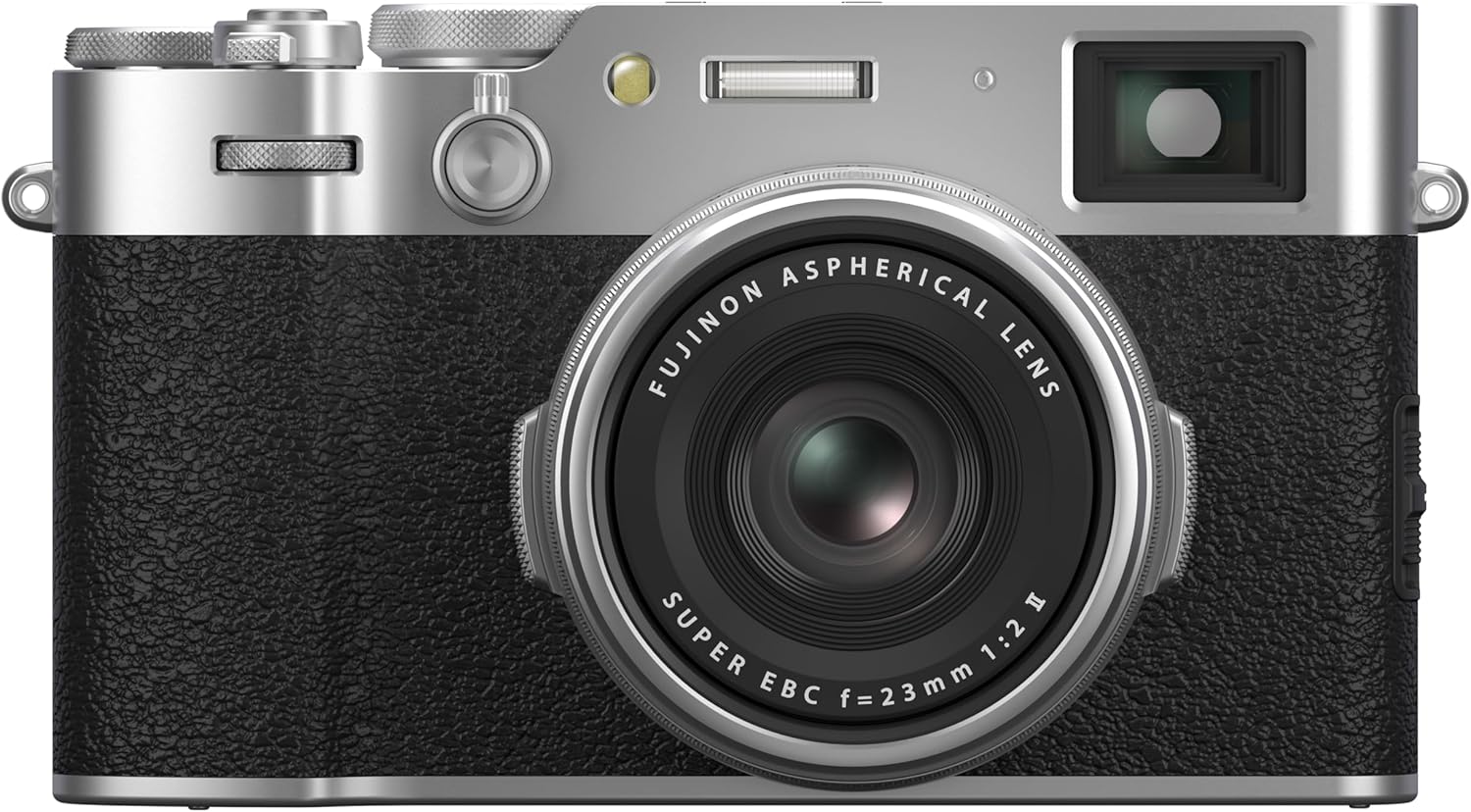
Buy it if: you love the 35mm-equivalent view and want a premium stills-first travel camera.
Skip it if: you need zoom, easy availability, or the best value per dollar.
Related guide: best compact cameras for photography.
OM System Tough TG-7: best rugged travel camera
The OM System Tough TG-7 is the camera I would choose for trips where a normal camera or phone is a liability: beaches, snorkeling, kayaking, snow, dusty trails, wet hikes, kids near water, or situations where dropping the camera is a realistic possibility. OM System lists the TG-7 as waterproof to 15m, freezeproof, dustproof, shockproof, RAW-capable, and capable of 4K video. It is not a luxury compact; it is a purpose-built tough camera.
Image quality is the limitation. The TG-7 uses a small sensor, so it will not compete with an RX100 VII, X100VI, R50, or a6700 in normal conditions. You buy it because it can go places those cameras should not. For underwater macro, rough family travel, and bad-weather trips, that tradeoff makes sense.


Buy it if: your travel camera needs to survive water, drops, sand, cold, or rough handling.
Skip it if: you mostly travel in cities and want the best possible image quality.
Related guide: best underwater cameras.
What about superzoom bridge cameras?
A bridge camera can make sense for safaris, birding trips, cruises, airshows, and travelers who care more about reach than pocketability. I would not make a bridge camera the default answer for “best travel camera,” because most people underestimate how much size matters after day three of a trip. Still, if you know you want long reach, look at cameras like the Panasonic FZ80D or Canon PowerShot SX70 HS and compare them against your phone plus a compact camera.
The honest tradeoff is that bridge cameras often use small sensors. You gain huge zoom and comfortable handling, but you do not gain the same image quality jump you get from a good APS-C or full-frame body. For a dedicated zoom trip, they are useful. For general travel, I would usually choose one of the smaller cameras above.
Related guides: best digital cameras with good zoom and Panasonic Lumix FZ80/FZ80D review.
Compact vs mirrorless for travel
Choose a compact if you want the camera with you at all times. A good compact wins because it removes friction. It fits in a small bag, it attracts less attention, and it is easy to carry during long days. The best compact cameras also give you things phones still struggle with: optical zoom, a viewfinder, better ergonomics, RAW files, and dedicated controls.
Choose mirrorless if you care more about image quality, portraits, low light, action, and future growth. A small mirrorless body with one sensible lens is still a very manageable travel kit. For hiking and wet-weather travel, the OM System OM-5 Mark II is especially compelling because its stabilized, IP53-rated body works with compact sealed zooms. The mistake is packing too many lenses “just in case.” For most trips, one compact zoom and one small fast prime is enough.
Choose a rugged camera if the trip is physically rough. Choose an action camera or pocket gimbal camera if video is the main goal. Do not buy a stills camera and expect it to behave like a GoPro in water or like a gimbal for walking video.
Travel camera buying checklist
- Size: If it is annoying to carry, it is the wrong travel camera.
- Zoom: Phones are already good at wide shots. A camera with real optical zoom gives you a clearer reason to carry it.
- Autofocus: Travel photos often involve people moving unpredictably. Reliable autofocus matters.
- Viewfinder: A viewfinder is extremely useful in harsh sun.
- Charging: USB-C charging is a major travel convenience when available.
- Weather risk: If water, sand, or snow is part of the trip, do not pretend a normal compact is rugged.
- Lens plan: For mirrorless travel, decide the lens kit before buying the body.
- Availability: Do not overpay for a discontinued camera unless it is genuinely exceptional.
What is the best travel camera for most people?
The best travel camera for most people is the Sony RX100 VII if you want a serious pocket camera with zoom, or the Canon EOS R50 if you want a small mirrorless system. The RX100 VII is easier to carry and covers more focal lengths without lens changes. The R50 gives better image quality and more growth potential, but it requires a lens kit.
Is a phone enough for travel photography?
A phone is enough for casual wide-angle travel photos, quick video, navigation, and sharing. A dedicated camera is still worth it if you want real zoom, better handling, RAW files, a viewfinder, stronger subject isolation, or a camera you are willing to use when your phone battery matters.
Should I buy a DSLR for travel?
Usually, no. A DSLR can still take excellent photos, but for travel in 2026 a compact mirrorless camera is generally easier to pack, better for video, and more convenient for autofocus and live-view shooting. I would only choose a DSLR if you already own the system or are buying used for a very specific reason.
Which travel camera should I avoid?
Avoid very old compact cameras sold at inflated prices, discontinued models with poor parts availability, and cheap cameras that do not clearly beat your phone. Also avoid buying a large interchangeable-lens kit if you know you will not carry it. The best travel camera is the one that improves your photos without becoming luggage.