
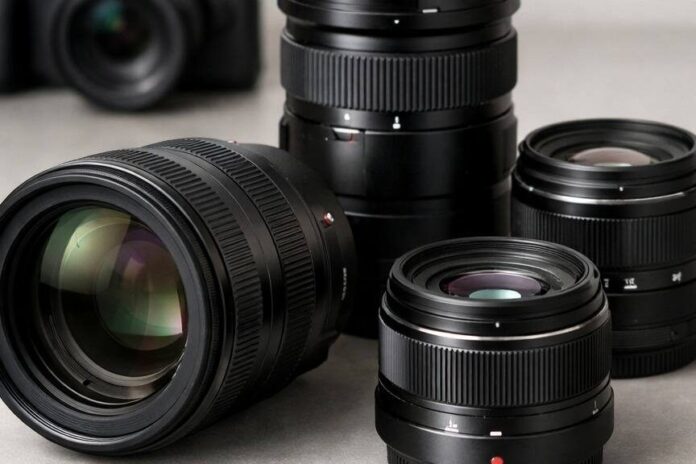
Choosing the best Micro Four Thirds lenses is not about buying the sharpest glass on a test chart. It is about building a small, capable kit that fits the way you actually shoot. The strength of Micro Four Thirds is still the same as it has always been: real reach, compact lenses, and strong stabilization. You can build anything from a tiny street kit to a serious wildlife setup.
I would not build a Micro Four Thirds kit the same way I would build a full-frame kit. You do not need to chase huge lenses to get professional results here. The smarter move is to lean into the system: compact primes, weather-sealed zooms, and stabilized telephotos. A few specialty lenses are genuinely easier to carry than their larger-sensor equivalents.
Quick recommendations
| Use case | My pick | Why it makes sense |
|---|---|---|
| Best all-around zoom | OM System 12-40mm f/2.8 PRO II | Weather sealing, strong close focus, constant f/2.8, useful 24-80mm equivalent range. |
| Best Panasonic video zoom | Panasonic Leica 12-35mm f/2.8 | Compact 24-70mm equivalent lens with optical stabilization for Panasonic bodies. |
| Best tiny everyday prime | Panasonic 20mm f/1.7 II | Excellent image quality in a pocketable 40mm equivalent pancake, with one autofocus caveat. |
| Best value portrait lens | OM System / Olympus 45mm f/1.8 | Small, sharp, affordable, and a natural 90mm equivalent portrait field of view. |
| Best premium portrait lens | Panasonic Leica 42.5mm f/1.2 Nocticron | Beautiful rendering, optical stabilization, and a classic 85mm equivalent perspective. |
| Best wildlife zoom | Panasonic Leica 100-400mm f/4-6.3 II | Huge 200-800mm equivalent reach without carrying a full-frame super-telephoto kit. |
| Best macro lens | OM System / Olympus 60mm f/2.8 Macro | Sharp, light, weather-sealed, and much easier to use with live subjects than shorter macro lenses. |
| Best serious video lens | Panasonic Leica 10-25mm f/1.7 | A fast 20-50mm equivalent zoom that can replace several primes for hybrid creators. |
Why Micro Four Thirds lenses still matter
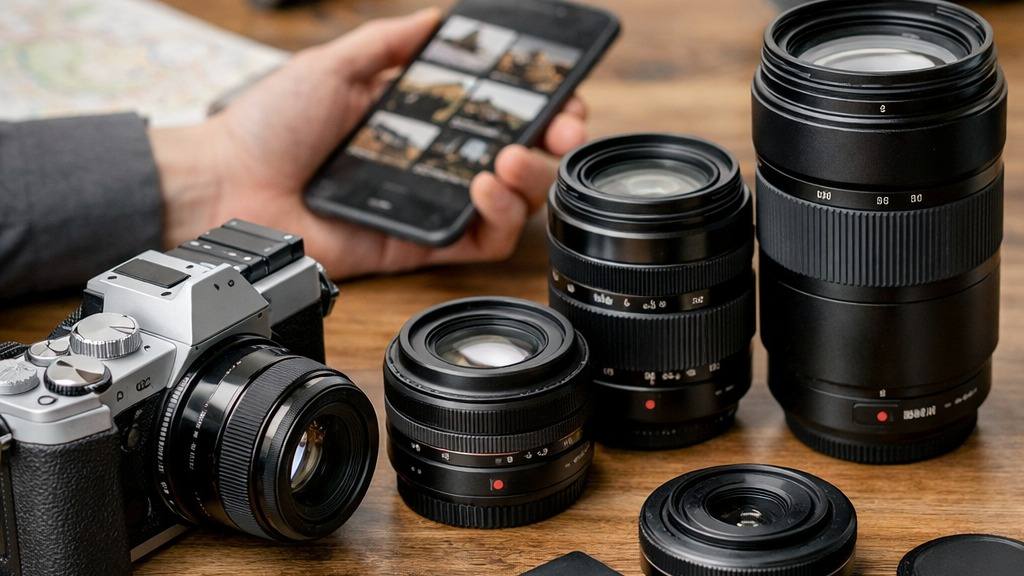
Micro Four Thirds has been declared dead online so many times that it has become almost boring to argue about it. In the field, though, the system still makes a lot of sense. A small OM System or Panasonic body with two or three lenses can cover travel, portraits, macro, wildlife, and video. It does that without turning your camera bag into a workout.
The 2x crop factor is central to the appeal. A 12-40mm lens frames like a 24-80mm full-frame lens. A 100-400mm lens frames like a 200-800mm lens. For wildlife, travel, and hiking, that is not a minor advantage. It changes what you are willing to carry.
The trade-off is also real. Micro Four Thirds does not give you full-frame depth of field at the same f-number and framing. If your main goal is maximum background blur or very clean high-ISO files, a larger sensor still has advantages. But if you care about reach, stabilization, close-focus work, video handling, and a compact kit, the best Micro Four Thirds lenses remain genuinely useful.
The official Micro Four Thirds lens catalog is worth browsing because the system is unusually broad. OM System, Panasonic, Sigma, Laowa, Voigtlander, and several specialty makers all support the mount. That depth is the reason I would still take Micro Four Thirds seriously in 2026.
How to choose without wasting money
Start with your body brand
Micro Four Thirds is a shared mount. Olympus, OM System, Panasonic, and most third-party Micro Four Thirds lenses physically fit the same cameras. That does not mean every combination behaves identically. Panasonic optical stabilization works best with Panasonic bodies that support Dual I.S. OM System Sync IS works only with compatible OM/Olympus lenses and bodies. Some Panasonic Leica aperture rings also behave differently on non-Panasonic bodies.
This is not a reason to avoid mixing brands. I have mixed Panasonic and Olympus glass plenty of times. It is simply a reason to think before buying. If you shoot Panasonic video, stabilized Panasonic zooms make extra sense. If you shoot an OM-1, OM-5 Mark II, E-M1, or E-M5 body in bad weather, OM System PRO lenses are often the cleaner match.
Buy focal lengths you will actually carry
The easiest mistake is buying a “complete” lens kit before you know what you enjoy shooting. Micro Four Thirds rewards restraint. A 12-40mm or 12-35mm f/2.8 can handle most daily photography. Add a 25mm or 45mm prime and you suddenly have a small kit that covers travel, family, low light, and portraits.
Long lenses are where the system becomes especially attractive. If you photograph birds, sports, or distant travel details, Micro Four Thirds lets you reach focal lengths that would be expensive and heavy elsewhere. That is why I would rather see a wildlife shooter buy one great telephoto than five average walkaround lenses.
Best everyday and travel lenses
For everyday photography, I want a lens that does not make the camera feel precious. It should focus quickly, balance well, and handle the boring shots as well as the beautiful ones. Travel lenses need the same quality, with one extra demand: they should not make you leave the camera in the hotel room.
OM System 12-40mm f/2.8 PRO II
If I had to recommend one serious Micro Four Thirds zoom to most photographers, this would be it. The OM System 12-40mm f/2.8 PRO II covers a 24-80mm equivalent range, stays at f/2.8, focuses close, and has the kind of weather-sealed build that makes it feel like a working lens rather than a kit upgrade.
It is not the smallest option, and it lacks optical stabilization. On OM System bodies, that is rarely a problem because the in-body stabilization is excellent. On Panasonic bodies without strong IBIS, I would think harder about the Panasonic 12-35mm f/2.8 instead.
Panasonic Leica 12-35mm f/2.8
The Panasonic Leica 12-35mm f/2.8 is the Micro Four Thirds answer to the classic 24-70mm f/2.8. It is smaller than most people expect, gives a familiar professional zoom range, and includes Power O.I.S. stabilization. That makes it especially attractive on Panasonic bodies for handheld video and stills.
The range is a little shorter than the OM 12-40mm, and the close-focus performance is less distinctive. Still, for a Lumix shooter who wants one high-quality standard zoom, it is one of the safest buys in the system.
Panasonic 20mm f/1.7 II
The Panasonic 20mm f/1.7 II is a lens I would forgive almost anything. The files look that good for the size. It gives a 40mm equivalent view, which sits between classic street and normal-lens territory. It is small enough to make an Micro Four Thirds body feel almost compact-camera casual.
The weakness is autofocus. It is not the lens I would choose for fast children, pets, or video AF. For street, travel, food, quiet portraits, and available-light walkaround work, though, it still has charm. If you want a faster-focusing alternative, look at the OM System 17mm f/1.8 II or the Panasonic Leica 15mm f/1.7.
Best portrait and low-light lenses
Portrait lenses on Micro Four Thirds need to be chosen with expectations in mind. A 45mm f/1.8 behaves like a 90mm field of view. It does not blur backgrounds like a full-frame 85mm f/1.8 used the same way. That said, with good distance, clean backgrounds, and careful framing, the best Micro Four Thirds portrait lenses can look excellent.
OM System / Olympus 45mm f/1.8
The 45mm f/1.8 is the lens I wish more beginners bought before spending money on exotic glass. It is small, sharp, inexpensive, and flattering for portraits. OM System lists it as a 90mm equivalent lens, which is exactly why it works so well for headshots and half-body portraits.
Its build is simple and it is not weather-sealed. That is the compromise. Optically, it gives a lot for the money. It is also light enough to keep in the bag when you are not sure you will need a portrait lens.
Panasonic Leica 42.5mm f/1.2 Nocticron
The Nocticron is the premium portrait choice. It is larger, heavier, and much more expensive than the 45mm f/1.8, but the rendering is different. The f/1.2 aperture, optical stabilization, and Leica-branded optical design give it a smoother, more deliberate look.
I would not recommend it as a first lens unless portraits are your main subject. It is still one of the standout lenses in the mount. I would consider it for wedding details, environmental portraits, low-light portraits, and polished portrait work.
OM System / Olympus 75mm f/1.8
The 75mm f/1.8 is not as flexible as the 45mm lenses, but it can be beautiful. It frames like a 150mm lens, so you need working distance. Outdoors, that compression can make portraits look clean and expensive. Indoors, it may simply be too long.
This is a specialist lens, not a casual everyday prime. I would buy it for portraits, stage work, indoor sports from a distance, or compressed detail shots. If you are still learning your preferred focal length, start with the 45mm f/1.8 first.
Best telephoto and wildlife lenses
Telephoto is where Micro Four Thirds earns its keep. The smaller sensor gives you narrow framing without enormous glass, and stabilization helps at focal lengths that would otherwise be difficult to handhold. This is one of the few systems where serious wildlife reach can still fit in a normal bag.
OM System 40-150mm f/2.8 PRO
The OM System 40-150mm f/2.8 PRO gives you an 80-300mm equivalent range with a constant f/2.8 aperture. It is sharp, weather-sealed, and much more manageable than a full-frame 70-200mm f/2.8 plus crop. It also pairs well with teleconverters when you need more reach.
This is the lens I would choose for events, outdoor portraits, sports, stage work, and larger wildlife. It is not cheap, and it is bigger than casual Micro Four Thirds zooms, but it feels like a professional tool without becoming absurdly heavy.
Panasonic Leica 100-400mm f/4-6.3 II
For birds and distant wildlife, the Panasonic Leica 100-400mm f/4-6.3 II is the more specialized pick. Panasonic describes it as a 200-800mm equivalent lens, and that range is the whole point. You can walk with it, react quickly, and shoot subjects that would require a very large lens on full frame.
The trade-off is aperture. At the long end, f/6.3 means you need reasonable light or a camera body that handles higher ISO well enough for your standards. For daylight wildlife, airshows, travel details, and even close-up nature work, it is one of the strongest arguments for the Micro Four Thirds system.
OM System 300mm f/4 IS PRO
The 300mm f/4 IS PRO is the serious bird and wildlife prime. It frames like a 600mm full-frame lens, has built-in stabilization, and is designed for harsh outdoor use. It is expensive, but it is also the kind of lens that changes what the system can do.
I would only buy it if long-lens work is central to your photography. A casual travel shooter is better served by a zoom. A dedicated bird photographer, especially on an OM-1 or OM-1 Mark II body, will understand why this lens has such a loyal following.
Best macro and close-up lenses
Micro Four Thirds is excellent for macro. The system gives you useful depth of field, strong stabilization, and lightweight lenses. For flowers, insects, product details, and textures, I often prefer the handling of an Micro Four Thirds macro setup to a heavier full-frame kit.
OM System / Olympus 60mm f/2.8 Macro
The 60mm f/2.8 Macro is my first recommendation for most close-up shooters. It gives a 120mm equivalent field of view, true 1:1 magnification, weather sealing, and a comfortable working distance. That last point matters. With insects or nervous subjects, a very short macro lens can force you too close.
It also doubles as a compact detail and portrait lens if you can live with the slower macro-style focus behavior. It is not the fastest lens for general action, but for careful work it is one of the best-value specialty lenses in the system.
Panasonic 30mm f/2.8 Macro
The Panasonic 30mm f/2.8 Macro is smaller and often more affordable. It is useful for flowers, food, products, and casual close-up work. The downside is working distance. At high magnification, you are physically closer to the subject, which can block light or scare insects.
If you shoot mostly tabletop subjects, it is a sensible lens. If you want bugs, nature details, or field macro, I would step up to the 60mm.
Best video-friendly Micro Four Thirds lenses
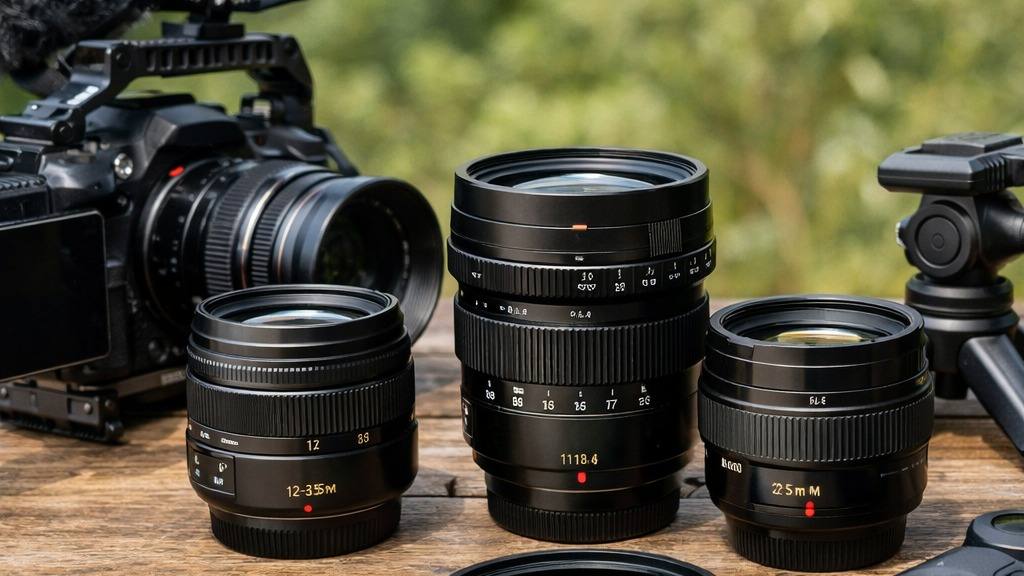
Micro Four Thirds has a long video history. Panasonic GH cameras helped make the format popular with filmmakers and hybrid shooters. Lens choice matters here. I care less about theoretical sharpness here. Stabilization, quiet focus, useful range, rig balance, and smooth exposure changes matter more.
Panasonic Leica 10-25mm f/1.7
The Panasonic Leica 10-25mm f/1.7 is one of the most distinctive Micro Four Thirds lenses ever made. It covers a 20-50mm equivalent range at a constant f/1.7, which means it can replace several primes for video work. Panasonic also emphasizes its smooth exposure behavior, which matters when shooting moving scenes.
The catch is size and cost. It is not a tiny Micro Four Thirds lens. On a larger Lumix GH body, it makes sense. On a very small camera, it can feel front-heavy. For serious hybrid shooters, though, it is one of the few lenses that makes the system feel genuinely different rather than just smaller.
Panasonic Leica 12-35mm f/2.8 and 35-100mm f/2.8
This pair is the practical video zoom kit. The 12-35mm handles establishing shots, interviews, travel, and handheld scenes. The 35-100mm covers tighter details, events, and compressed shots. Both are compact for their equivalent ranges, and both make more sense on Panasonic bodies than on OM bodies because of stabilization integration.
If you shoot mostly stills, I would not rush to buy both. If you shoot events, documentary video, or travel content, the pair is efficient and easy to pack.
Three smart kits I would actually build
Small travel kit
- Panasonic 20mm f/1.7 II or Panasonic Leica 15mm f/1.7
- OM System 12-40mm f/2.8 PRO II or Panasonic Leica 12-35mm f/2.8
- Panasonic 35-100mm f/4-5.6 or Olympus/OM System 40-150mm f/4-5.6 R if you want a light telephoto
This is the kit for walking all day. It is not the most exotic setup, but it is the one you will actually carry.
Portrait and family kit
- OM System 17mm f/1.8 II for environmental scenes
- Panasonic Leica 25mm f/1.4 or OM System 25mm f/1.8 II for normal perspective
- OM System / Olympus 45mm f/1.8 or Panasonic Leica 42.5mm f/1.2 for portraits
This kit is small, bright, and flexible. I prefer it to an oversized zoom setup when the goal is family, travel portraits, and everyday low-light work.
Wildlife and outdoor kit
- OM System 12-40mm f/2.8 PRO II for general outdoor work
- OM System 40-150mm f/2.8 PRO for events, larger wildlife, and action
- Panasonic Leica 100-400mm f/4-6.3 II or OM System 300mm f/4 IS PRO for serious reach
This is where Micro Four Thirds becomes hard to dismiss. The reach-to-weight ratio is excellent, and the kit still fits into a bag that would look modest next to many full-frame wildlife setups.
What I would avoid buying first
I would not make an ultra-wide specialty lens your first upgrade. The exception is if landscapes, architecture, or real estate are your main subjects. I would also avoid buying three fast primes with nearly identical roles. A 17mm, 20mm, and 25mm can all be useful, but owning all three too early usually creates indecision rather than better photos.
I would also be careful with manual-focus specialty lenses. Laowa, Voigtlander, and Lensbaby options can be inspiring, but they are better as creative additions after your core kit is already working. For most photographers, a reliable standard zoom plus one fast prime will improve more images than a drawer full of unusual glass.
How this fits with current Micro Four Thirds cameras
If you already own a Panasonic Lumix body, I would give Panasonic stabilized zooms extra weight. That is especially true for GH or G series cameras. They make handheld video easier and keep the system balanced. If you are comparing bodies before building a lens kit, our best Panasonic Lumix cameras guide gives useful context.
If you are looking at used or unusual Micro Four Thirds bodies, the Kodak PixPro S-1 review is a useful reminder. The mount is broader than just Panasonic and OM System. I would not build a serious modern lens kit around that camera, but it shows why mount compatibility matters when shopping used.
Frequently asked questions
What is the best all-around Micro Four Thirds lens?
For most serious photographers, the OM System 12-40mm f/2.8 PRO II is the best all-around Micro Four Thirds lens. Panasonic shooters who want optical stabilization should also consider the Panasonic Leica 12-35mm f/2.8.
Are Olympus and Panasonic Micro Four Thirds lenses interchangeable?
Yes, the mount is shared, so Olympus, OM System, Panasonic, and most third-party Micro Four Thirds lenses fit compatible Micro Four Thirds camera bodies. The main caveats are stabilization pairing, weather-sealing confidence, aperture-ring behavior, and some body-specific features.
What is the best Micro Four Thirds portrait lens?
The OM System / Olympus 45mm f/1.8 is the best value portrait lens. The Panasonic Leica 42.5mm f/1.2 Nocticron is the premium choice if portrait rendering matters more than price and size.
What is the best Micro Four Thirds lens for wildlife?
The Panasonic Leica 100-400mm f/4-6.3 II is the most flexible wildlife zoom. The OM System 300mm f/4 IS PRO is the more specialized high-end option for dedicated bird and wildlife photographers.
Are Micro Four Thirds lenses good for low light?
Yes, but expectations matter. Fast primes such as 17mm, 20mm, 25mm, 42.5mm, and 45mm lenses help a lot, and in-body stabilization is excellent on many Micro Four Thirds cameras. Full frame still has an advantage for high ISO and very shallow depth of field.
Final buying advice
The best Micro Four Thirds lenses preserve the reason to use the system in the first place. I would build around a strong standard zoom. Then I would add one fast prime that matches your natural field of view. After that, choose a telephoto, macro, or video lens based on what you actually shoot.
If I were starting from scratch today, my practical kit would begin with the OM System 12-40mm f/2.8 PRO II. I would add the OM System / Olympus 45mm f/1.8 next. Then I would choose either the Panasonic Leica 100-400mm II for wildlife or the Panasonic 20mm f/1.7 II for a tiny daily setup. That gives you range, character, and portability without turning Micro Four Thirds into a bulky system that misses its own point.