

View full specs
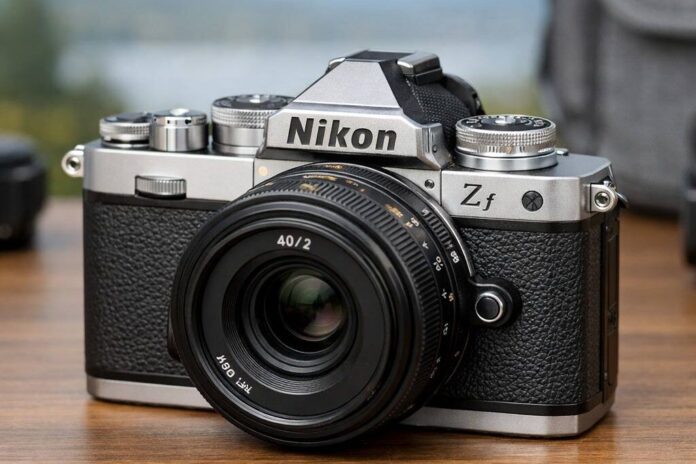
This Nikon Zf review is about the camera behind the handsome shell. The Zf looks like a tribute to Nikon’s film era. The reason it matters is simpler: it gives you a 24.5MP full-frame sensor, EXPEED 7 autofocus, strong in-body stabilization, and a slower shooting experience than most modern mirrorless bodies.
I like the Nikon Zf most with a small prime, a wrist strap, and enough time to think before pressing the shutter. That is when the camera makes the most sense. It can shoot fast, track subjects, and record serious-looking 4K video. Still, its personality is not the same as a Z8 or a sports body. This is a camera for photographers who still care how the tool feels in the hand.
Who the Nikon Zf is really for
The Nikon Zf is best for photographers who want full-frame image quality without giving up tactile controls. Street, travel, family documentary, environmental portraits, and everyday walkaround work all suit it beautifully. The top dials are not decoration. They change how you shoot, especially if you come from Nikon film bodies, Fujifilm X cameras, or older DSLRs where exposure felt more physical.
The central Nikon Zf review question is whether the camera is only a pretty object. It is not. Under the retro body it has Nikon’s newer EXPEED 7 processor, subject detection, 3D tracking, and very capable in-body stabilization. That makes it much more modern than the styling suggests. If you were considering something more practical and budget-driven, our Nikon Z5 review is the better comparison. If you want speed, deep customization, and a pro workflow, the Nikon Z8 review shows what Nikon’s serious hybrid body feels like.
Where the Zf makes less sense is with large zooms and long telephotos. You can mount them, and the files will look excellent, but the shallow front grip changes the balance. With a 40mm f/2, 28mm f/2.8, or 50mm f/1.8, the camera feels natural. With a 24-70mm f/2.8 or 70-200mm, the balance changes. It starts to feel like a compact body doing a bigger body’s job.
Design, build quality, and handling
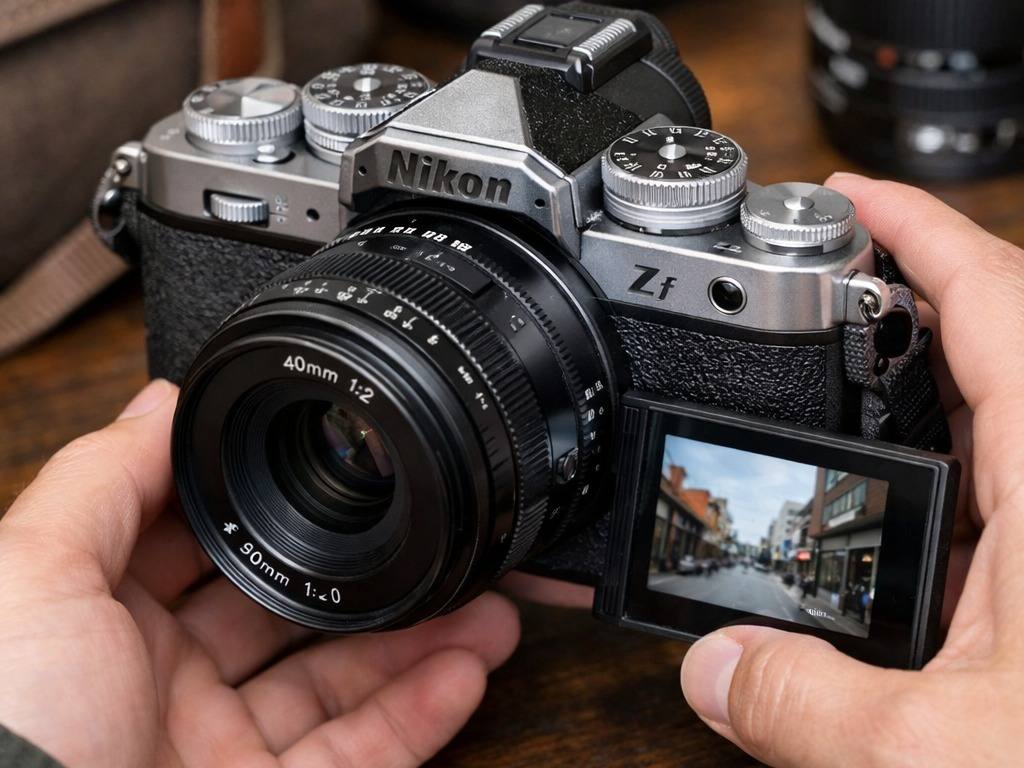
The Zf is a dense, metal-feeling camera with a magnesium-alloy body and a genuinely satisfying set of dials. It does not feel hollow or costume-like. The shutter-speed, ISO, and exposure-compensation dials have enough resistance to feel intentional. The small aperture display on top is also a practical nod to old Nikon handling.
The grip is the one physical compromise you need to understand before buying. It is not uncomfortable with small lenses, but it is not a Z6-style grip. I would happily carry the Zf all afternoon with a compact prime. I would not choose it first for a full wedding day with heavy zooms unless I added a grip extension.
The retro controls are not for everyone
The dials slow you down in a good way if you like seeing your exposure at a glance. They are less ideal if you live in custom button banks, back-button focus tweaks, and rapid exposure changes from a modern command-dial workflow. The Zf can be configured like a normal Nikon mirrorless camera, but its best rhythm is more deliberate.
The fully articulating screen is also more useful than purists may want to admit. It helps for low angles, self-recording, vertical compositions from awkward positions, and video. The only tension is aesthetic: the screen feels very modern on a camera that otherwise wants to feel analog. Functionally, though, I would not trade it for a fixed display.
Where the Nikon Zf can disappoint in real use
The strongest criticism of the Zf is not image quality or autofocus. It is ergonomics. The body looks beautiful, but the flat front and retro control layout are less comfortable with heavy zooms than a modern Z6-style grip. With small primes, the Zf feels natural. With a 24-70mm f/2.8 or a long telephoto, I would want an add-on grip or I would choose a Z6 III instead.
The card setup also deserves a blunt mention. The Zf uses one SD UHS-II slot and one microSD slot. That second slot is useful for backup in a pinch, but it is not the same practical workflow as dual full-size SD or CFexpress/SD. If you shoot paid events and swap cards constantly, this matters more than the camera’s styling.
That is the Zf in one sentence: emotionally excellent, technically strong, ergonomically imperfect. I would buy it because I want to carry it, not because it is the most rational Nikon body for every assignment.
Image quality and sensor performance
The Nikon Zf uses a 24.5MP full-frame BSI CMOS sensor, and that resolution is still a sweet spot. You get enough detail for serious prints and cropping, but files remain manageable and high ISO performance stays strong. Nikon’s color remains one of the Zf’s quiet strengths. Skin tones are calm, greens do not turn electric, and RAW files take editing well.
Dynamic range is excellent for everyday photography. In backlit street scenes and travel images, I would rather protect highlights and lift shadows later than expose too brightly. The Zf files tolerate that approach well. You can recover meaningful shadow detail without the image immediately turning brittle or noisy.
High ISO performance is also convincing. ISO 3200 and 6400 are very usable, and ISO 12,800 is acceptable when the moment matters more than clinical cleanliness. The 8-stop in-body VR rating is a real advantage with unstabilized primes. It does not freeze subject movement, but it lets you keep ISO lower when photographing still subjects in dim interiors or at night.
Autofocus and subject tracking
This is where any honest Nikon Zf review has to push back against the easy stereotype. It is not merely a Z6 II with a vintage jacket. The EXPEED 7 processor brings newer subject detection and 3D tracking behavior, and the camera can recognize people, animals, vehicles, aircraft, trains, and more. Nikon lists the core technical details on its official Zf specifications page, including the 273-point hybrid AF system and subject-detection support.
For people photography, the Zf is confident. Eye detection is quick, and 3D tracking makes it easier to recompose without fighting the focus box. It is not a Z8, and I would not buy it as a dedicated sports or wildlife body. For street portraits, family movement, pets, travel, and documentary work, the autofocus feels modern and trustworthy.
Continuous shooting reaches about 14 fps in extended high-speed mode, with faster JPEG-only capture options available. That is more than enough for casual action. The limitation is not the headline speed; it is the body shape, card setup, and overall handling. If you are shooting bursts all day, Nikon has better tools. If you occasionally need speed inside a mostly stills-focused camera, the Zf has enough.
Video and hybrid shooting
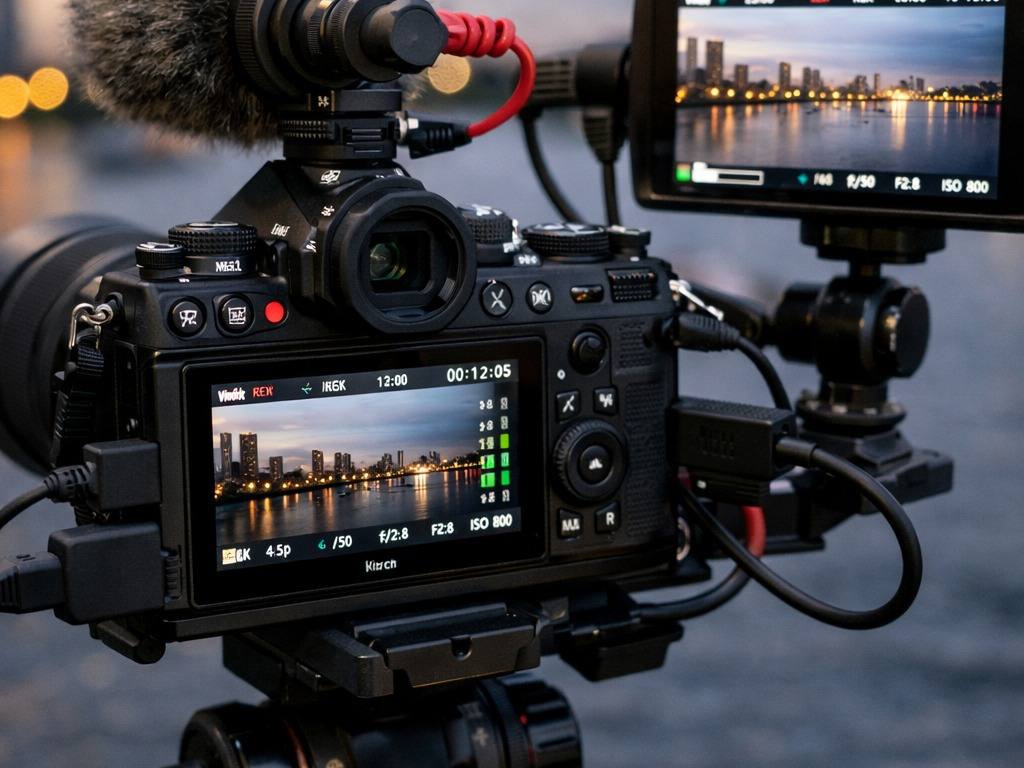
The Zf is a credible hybrid camera, not just a stills body that happens to record video. It can shoot oversampled 4K up to 30p from the full sensor width, and 4K 60p is available with a DX crop. Internal 10-bit H.265, N-Log, and HLG give it more grading room than older Nikon bodies in this class.
For short creator work, travel clips, family films, and behind-the-scenes footage, the Zf is very good. The colors are pleasing, autofocus is reliable in normal light, and the vari-angle screen makes handheld video much easier. The camera also gives you microphone and headphone jacks, which matters if you want clean audio instead of a pretty clip with bad sound.
The video compromise is the cropped 4K 60p. If you shoot wide interiors, handheld walking footage, or gimbal work, that crop changes lens choice. Rolling shutter is also something to respect with fast pans. I would not position the Zf as a video-first camera. Nikon shooters who put filmmaking first should compare it with the Nikon ZR cinema camera. As a photographer’s hybrid body, the Zf is stronger than the retro design suggests.
Battery, cards, and daily practicality
The Nikon Zf uses the EN-EL15c battery, which is good news if you already own recent Nikon full-frame bodies. Battery life is fine rather than exceptional. For a relaxed day of stills, one battery may be enough. For travel, events, heavy review, or video, carry a spare.
Storage is unusual: one SD UHS-II slot and one microSD UHS-I slot. I understand why Nikon did it, because the body is slim, but I do not love it. The full-size SD slot should be your main card. The microSD slot is useful for backup JPEGs, overflow, or casual redundancy, but it does not feel as reassuring as two full-size UHS-II cards.
USB-C charging and power delivery support make the Zf easier to live with on trips. The EVF is a 3.69M-dot OLED finder with 0.8x magnification, and the 3.2-inch vari-angle touchscreen is sharp enough for focusing and image review. None of this makes the Zf a pure workhorse, but it does make it a very practical everyday camera.
Nikon Zf vs Nikon Z6 II, Z6 III, and Fujifilm X-T5
The Nikon Z6 II is still the more comfortable camera with large lenses. It has a deeper grip and a more conventional working layout. The Zf counters with better subject-detection behavior, stronger stabilization, and a much more distinctive shooting experience. If you care about handling efficiency above all, the Z6 II is easier. If you care about connection to the camera, the Zf is more memorable.
The Nikon Z6 III is the more serious hybrid step-up. It is faster, more video-capable, and better suited to demanding paid work. The Zf is the camera I would rather take for a personal photo walk. The Z6 III is the one I would rather take when the brief is strict and the subject will not wait.
The Fujifilm X-T5 is the closest emotional alternative. It gives you tactile dials, beautiful JPEG profiles, smaller APS-C lenses, and much higher resolution. The Zf gives you full-frame depth, Nikon RAW flexibility, better low-light headroom, and access to Z glass. This choice is less about specs and more about which system you want to build around.
Best lenses to pair with the Nikon Zf
The Zf shines with compact Nikon Z primes. The NIKKOR Z 40mm f/2 SE is the obvious match because it looks right and keeps the body light. The 28mm f/2.8 SE is another natural street and travel option. The 50mm f/1.8 S is optically better and still manageable, although it loses some of the tiny-camera charm.
If you are building a small Nikon kit, our best Nikon Z lenses guide is the more complete next stop. My short version: do not buy the Zf and immediately bury it under oversized glass unless you already know that tradeoff works for you.
Zf vs Z6 III: head or heart?
The Zf and Z6 III overlap enough that many Nikon buyers will compare them. My practical answer is simple. Choose the Zf if the camera’s feel, styling, and slower deliberate shooting experience make you want to go out and make photographs. Choose the Z6 III if you want the more comfortable workhorse body, faster workflow, stronger video emphasis, and more conventional card handling.
The Zf is not merely a fashion camera. It has excellent autofocus, strong stabilization, and very good full-frame files. But if I were shooting a long wedding, a sports job, or a day with large zoom lenses, the Z6 III body shape makes more sense. If I were walking a city with a 40mm, 50mm, or small 28mm, I would rather have the Zf.
Final verdict
My Nikon Zf review verdict is simple: it is worth buying if you want full-frame photography to feel intentional again. It gives you that without giving up modern autofocus or image quality. It is stylish, but it is not shallow. The files are strong, the autofocus is much better than older Nikon bodies, and the stabilization is excellent. The video feature set is also good enough for most hybrid shooters.
The drawbacks are equally real. The grip is shallow, the second card slot is microSD, and the body is not ideal with large lenses. If you shoot paid events, sports, wildlife, or long video jobs, a Z6 III, Z8, or another workhorse body may be smarter. For street, travel, portraits, personal documentary work, and everyday photography, the Nikon Zf has a rare quality. It makes you want to bring the camera along.
Nikon Zf alternatives
The main alternatives to the Nikon Zf are Nikon Z6 II, Nikon Z6 III, Fujifilm X-T5, Sony a7C II, Canon EOS R6 Mark II. Compare autofocus, stabilization, video limits, lens choice and current price before deciding which camera fits you best.
Frequently asked questions
Is the Nikon Zf worth buying in 2026?
Yes, if you want a full-frame Nikon body with tactile controls, strong image quality, modern subject detection, and excellent stabilization. It is less ideal if you need a deep grip or dual full-size card slots. It is also not the best Nikon body for sports and long professional jobs.
Is the Nikon Zf good for beginners?
It can be, but it is not the cheapest or simplest way into Nikon. Beginners who enjoy learning exposure manually may love it. Beginners who want a lighter, cheaper, more straightforward camera may be better served by a Z50 II or Z5-style body.
Does the Nikon Zf have image stabilization?
Yes. The Zf has 5-axis in-body VR rated up to 8 stops. That is especially useful with small non-stabilized primes, low-light still subjects, and slower handheld shutter speeds.
What memory cards does the Nikon Zf use?
It uses one SD UHS-II card and one microSD UHS-I card. I would use the full-size SD card as the primary card and reserve the microSD slot for backup, overflow, or JPEG copies.
Is the Nikon Zf better than the Nikon Z6 II?
For autofocus intelligence, stabilization, and shooting personality, the Zf has real advantages. For grip comfort, larger lenses, and a more conventional working layout, the Z6 II is still easier to live with.
Street, travel, portraits, personal documentary work, and Nikon shooters who want tactile full-frame handling.
You mainly use heavy zooms, shoot high-pressure action, need dual full-size card slots, or want a video-first body.
Medium; automatic shooting is easy, but the camera rewards users who want to learn exposure and lenses.
Move to Nikon Z6 III for a faster hybrid body, or Z8/Z9 for serious action and pro workflow.
Excellent for a photographer-led hybrid camera, but cropped 4K 60p and rolling shutter keep it below video-first bodies.
Yes if the tactile shooting experience matters; no if you simply want the most ergonomic Nikon body for large lenses.