
Choosing the best Nikon Z lenses is easier when you match focal length, size, and rendering to the way you actually shoot. I’ve built this guide for photographers who want practical picks, honest trade-offs, and a clear path to the right lens for travel, portraits, landscapes, and daily carry.
How to choose the right Nikon Z lens
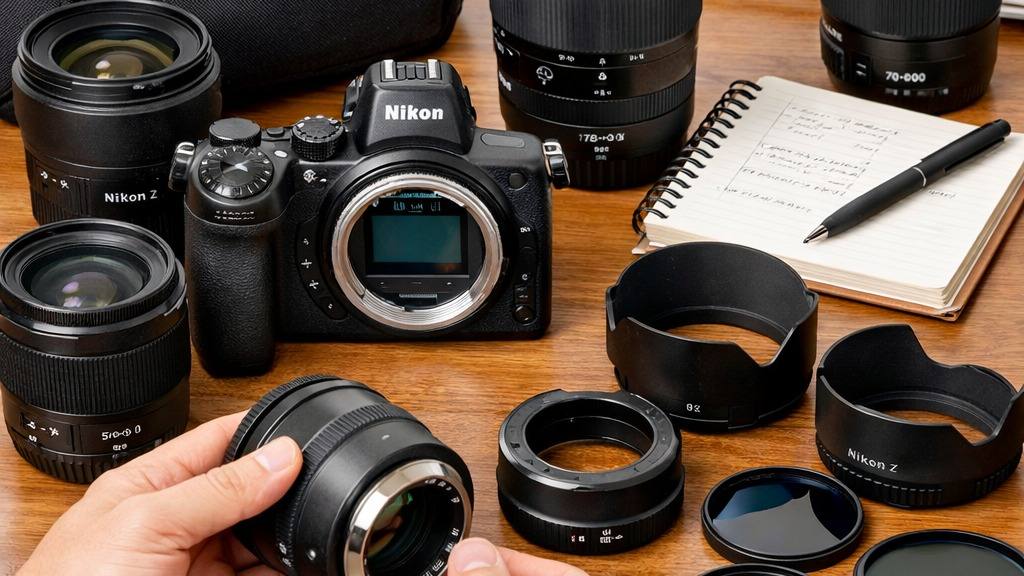
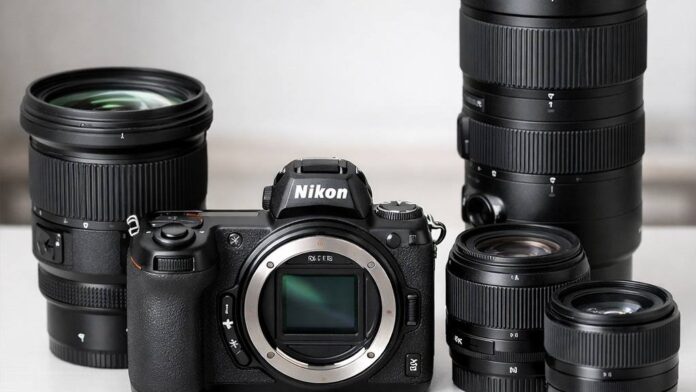
Finding the right Nikon Z lens is as much about understanding your own habits as it is about technical specifications or price. Before you add anything to your kit, ask yourself what you actually shoot, how much gear you want to carry, and what kind of image look you enjoy. The best Nikon Z lenses are the ones you can rely on to deliver your vision, not just the sharpest or heaviest in the catalog.
If portraits are high on your list, compare focal lengths and rendering styles before buying, especially if you are deciding between a versatile 50mm, a classic 85mm, or a more specialized 135mm portrait lens.
Lens choice also makes more sense when you consider the camera body you plan to use, especially if travel, everyday carry, and handling matter as much as image quality. For a practical look at Nikon full-frame handling, this Nikon Z8 review adds helpful context.
Match focal length to your subjects
Every photographer has certain subjects they shoot most often. If you love landscapes, a wide-angle like the Z 14-30mm f/4 will open up your scenes. For portraits, an 85mm lens is classic for its flattering compression and background blur. Street and travel shooters tend to prefer 35mm or 50mm, which give a natural perspective without feeling too tight or too loose. Zooms like the Z 24-70mm f/4 offer flexibility, while primes like the Z 35mm f/1.8 reward you with lighter weight and low-light performance.
- Wide angle (14-35mm): Great for landscapes, interiors, and group photos.
- Standard (35-70mm): Ideal for street, documentary, family, and travel.
- Short telephoto (85-135mm): The portrait sweet spot for headshots and people.
Every focal length brings its own character. Once you know your main subjects, you can choose a lens that helps you capture them at their best.
Decide how much size and weight you can carry
Your lens choice also depends on how much you want to carry. Nikon’s Z system is known for relatively compact designs, especially with its newer primes and f/4 zooms. If you travel often or shoot all day, lighter options like the Z 40mm f/2 or Z 28mm f/2.8 are a joy to carry and don’t attract much attention. For studio or controlled environments, you might not mind the extra heft of the Z 24-70mm f/2.8 S or Z 85mm f/1.2 S, which deliver top-tier optics but demand a sturdy bag (and shoulder).
There’s no single answer here. A lightweight lens that’s always with you will get more use than a “perfect” pro lens left at home. For most shooters, a balance between portability and performance is the sweet spot.
Best Nikon Z lenses for everyday photography
If you’re looking for an all-around lens for daily use, versatility is king. The right Nikon Z everyday lens should handle family moments, city walks, quick portraits, and even the occasional landscape.
Why a standard zoom is the safest first upgrade
For most people, the best Nikon Z standard zoom is the Z 24-70mm f/4 S. It’s sharp, weather-sealed, not too heavy, and covers everything from wide landscapes to tight portraits. The f/4 aperture is bright enough for most daylight scenes, and the optical quality impresses even at 70mm. If you crave even more low-light power or razor-thin depth of field, the Z 24-70mm f/2.8 S is the pro choice, but it’s larger and more expensive.
Those who prefer something even lighter should try the Z 24-50mm f/4-6.3. It’s not as bright or sharp at the edges, but it’s the smallest Nikon Z walkaround lens by a wide margin. This makes it perfect for travel, hiking, or anyone who wants to keep their kit discreet.
- Best all-around: Nikon Z 24-70mm f/4 S
- Lightest option: Nikon Z 24-50mm f/4-6.3
- Budget prime alternative: Nikon Z 40mm f/2 (small, sharp, and bright for its price)
For anyone starting out with Z-mount, a standard zoom lets you explore multiple focal lengths without swapping lenses. You’ll quickly learn which perspectives you use most, which helps you pick your next prime or specialty lens with confidence.
Best Nikon Z lenses for portraits and people
Portraits demand a lens that flatters your subject, separates them from the background, and delivers sharp eyes with smooth transitions. In the Nikon Z system, two focal lengths stand out: 50mm and 85mm. Both are classic choices, but each brings its own strengths.
When to choose an 85mm over a 50mm
The 85mm lens has long been the favorite for portraits. The Nikon Z 85mm f/1.8 S is beautifully sharp, lightweight for its class, and renders backgrounds with smooth, creamy bokeh. This focal length compresses facial features gently, making it ideal for headshots and half-body portraits. If you shoot people outside or in studio, or want to isolate your subject, the Nikon Z 85mm is the lens to beat.
For more environmental portraits or casual family scenes, the Z 50mm f/1.8 S offers a wider field of view. It lets you include more of the setting, which is perfect for lifestyle images, couples, or group shots. The rendering is also excellent, with fast autofocus and great low-light ability. If you work in tighter spaces or want a more “normal” perspective, the Nikon Z 50mm is very versatile.
- Best for classic portraits: Nikon Z 85mm f/1.8 S
- Best for versatility: Nikon Z 50mm f/1.8 S
- Pro option: Nikon Z 85mm f/1.2 S (for ultimate background blur and subject separation)
Many pros use both 50mm and 85mm, choosing based on the space and style of the shoot. If you’re only picking one, let your shooting environment guide you: 50mm is easier indoors and for environmental portraits, while 85mm gives stronger compression and cleaner background separation.
Best Nikon Z lenses for travel and street shooting
Travel and street photography reward photographers who can move quickly, blend in, and react to the scene. The best Nikon Z travel lens is usually one that’s small, light, and fast to focus. Many street shooters favor a single prime, but compact zooms have their place too.
Prime versus zoom for light packing
When I travel, I often reach for the Z 28mm f/2.8 or Z 40mm f/2. Both are extremely small, making the camera almost pocketable. The 28mm is great for tight streets and layered city scenes, while the 40mm is more discreet and gives a balanced, “real life” look. These compact Nikon Z lenses draw little attention, which is a huge benefit when shooting candid moments.
If you need more flexibility, the Z 24-70mm f/4 S remains a top pick. It covers everything from wide architecture to tighter street portraits, but it is a bit larger than the small primes. For those who want the smallest setup possible, the Z 26mm f/2.8 pancake is the thinnest lens in the lineup, perfect for travel and everyday snapshots.
- Best compact primes: Nikon Z 28mm f/2.8, Nikon Z 40mm f/2, Nikon Z 26mm f/2.8
- Best street zoom: Nikon Z 24-70mm f/4 S
For street photographers, a prime helps you pre-visualize scenes and react faster. For travel, a zoom can be more practical, especially if you only want to bring one lens. The choice comes down to your style and how much you value compactness over versatility.
Best Nikon Z lenses for landscape and architecture
If you love capturing sprawling vistas, dynamic cityscapes, or intricate architectural lines, choosing the best Nikon Z landscape lens can make a world of difference. For landscapes and architecture, wide angle coverage, edge-to-edge sharpness, and minimal distortion matter far more than subject isolation or buttery bokeh. Having spent years shooting both city skylines and wild mountain ranges, I’ve learned that a lens’s rendering at the frame’s edges is just as important as sharpness in the center.
The Nikon Z 14-24mm f/2.8 S is the gold standard for serious landscape and architecture shooters. Its ultra-wide focal range delivers dramatic perspectives, while the optics are among the sharpest I’ve ever used. Distortion is well controlled, and the lens remains surprisingly compact for its class. If you’re chasing sunrise light in the field or want crisp lines in modern architecture, this lens is hard to beat. The constant f/2.8 aperture also helps with astrophotography and low-light interiors.
For those who want lighter gear or a lower budget, consider the Nikon Z 14-30mm f/4 S. It is smaller, lighter, and noticeably more affordable. The f/4 aperture is not as fast, but for daylight landscapes or travel architecture shots, this lens offers excellent sharpness and practically zero distortion at the wide end. Its ability to use standard 82mm filters is a huge bonus for landscape photographers who rely on polarizers or ND filters.
Architecture lovers should also look at the Nikon Z 24mm f/1.8 S. While not an ultra-wide, it provides exceptional edge-to-edge sharpness and almost no chromatic aberration. It is particularly strong for handheld city scenes at dusk, and the fast aperture is useful for interior spaces. If you’re after a prime Nikon Z architecture lens, this is a versatile choice that can double for environmental portraits too.
- Best overall wide angle: Nikon Z 14-24mm f/2.8 S
- Best value wide angle: Nikon Z 14-30mm f/4 S
- Best prime for architecture: Nikon Z 24mm f/1.8 S
While there are a few non S wide angles, most of them lag behind in edge sharpness or show more distortion at the extremes. If you shoot landscapes or architecture with any regularity, investing in a high-quality Nikon Z wide angle lens pays off for years.
Best Nikon Z lenses for wildlife sports and action
Wildlife, sports, and action photography demand a different toolset than portraits or landscapes. You need reach, fast autofocus, and often a brighter aperture to keep shutter speeds high. The best Nikon Z telephoto lens for you depends on your subject distance, mobility, and budget. After years on the sidelines and in the field, I’ve found a few clear standouts in the Nikon Z system.
The Nikon Z 100-400mm f/4.5-5.6 VR S is my top recommendation for most wildlife and sports photographers. This lens covers the critical telephoto range, has excellent sharpness even at 400mm, and its autofocus is fast enough for birds in flight or action on the field. Vibration Reduction is effective for handheld shooting, especially in variable light. While not a small lens, it balances well on Z bodies and is lighter than most DSLR equivalents.
If you need even more reach, the Nikon Z 180-600mm f/5.6-6.3 VR is an incredible value. This lens is a dream for birders, safari shooters, and anyone who needs to fill the frame with distant action. Sharpness is strong across the range, and autofocus keeps up with fast-moving subjects. The aperture is slower at the long end, so pair it with a Z camera with good high-ISO performance for best results. For the price, it brings super-telephoto power to a much wider range of photographers.
Sports and event shooters who work in lower light might prefer the Nikon Z 70-200mm f/2.8 VR S. This lens is legendary for its sharpness and subject tracking, and the bright aperture is a real asset for indoor arenas or late-day games. It is also versatile enough for portraits, making it a great dual-purpose lens for those who cover both people and action.
- Best all-round wildlife/sports zoom: Nikon Z 100-400mm f/4.5-5.6 VR S
- Best value super-telephoto: Nikon Z 180-600mm f/5.6-6.3 VR
- Best for sports/portraits: Nikon Z 70-200mm f/2.8 VR S
For those on tighter budgets, the Nikon Z 70-180mm f/2.8 (non S) is a very strong performer for sports at a much friendlier price. While not quite as sharp at the edges as the S-Line, it delivers fast autofocus and good subject separation for action and events.
Should you buy S-Line lenses or save with non S options
The S-Line badge marks Nikon’s premium Z-mount lenses, promising top-tier optics, weather sealing, and robust build quality. But are they always worth the premium, or can you save money by choosing non S options for your needs?
In my experience, Nikon Z S-Line lenses deliver the most noticeable improvements in challenging conditions or specialized genres. For example, landscape and architecture shooters benefit from the superior edge sharpness and low distortion in S-Line wide angles. Portrait photographers see creamier bokeh and more reliable autofocus in S-Line primes and zooms, especially at wider apertures.
However, not every photographer needs the absolute best. Many non S lenses – like the Nikon Z 28-75mm f/2.8 or the 70-180mm f/2.8 – offer excellent value and solid performance for more casual shooters. If you mostly shoot in good light, print small, or prioritize weight and cost, these lenses are often the smarter buy. The main trade-offs are usually in weather sealing, edge sharpness, and sometimes autofocus speed or reliability in low light.
- Choose S-Line if: You demand the highest sharpness, shoot in tough weather, or need fast, reliable autofocus in all conditions.
- Choose non S if: You want to save money, travel light, or shoot mostly for web/social sharing.
Ultimately, a Nikon Z lens comparison should start with your real-world needs. For many, the best value Nikon Z lenses are not always the most expensive ones.
My final recommendations by budget and shooting style
After years of testing and real-world shooting, I have a few go-to picks for every budget and style. Here’s how I would build a kit depending on your needs:
- Best Nikon Z lenses for beginners: Start with the Nikon Z 24-70mm f/4 S or the 28-75mm f/2.8. Both cover a wide range and deliver great images without breaking the bank.
- Best Nikon Z lenses by budget: For tight budgets, the Nikon Z 40mm f/2 and 28mm f/2.8 are sharp, light, and inexpensive. For mid-range, look at the 24-70mm f/4 S or 85mm f/1.8 S. For high-end, the 24-70mm f/2.8 S and 70-200mm f/2.8 S are outstanding choices.
- Best Nikon Z lenses for professionals: Portrait shooters should go for the 85mm f/1.2 S or 50mm f/1.2 S. Landscape pros will love the 14-24mm f/2.8 S. Wildlife and sports pros should prioritize the 100-400mm f/4.5-5.6 VR S or 180-600mm f/5.6-6.3 VR.
Remember, the best Nikon Z lenses are the ones that match your real shooting style, not just the ones with the highest price tag or best specs. As compact digital cameras gain popularity in 2026, having the right Z-mount lens makes your interchangeable lens kit stand out for quality, flexibility, and results.
Frequently asked questions
What is the best Nikon Z lens to buy first?
For most people, the Nikon Z 24-70mm f/4 S is the smartest first lens. It is versatile, sharp, and compact, covering everything from wide landscapes to casual portraits. If you want something brighter for low light, the 28-75mm f/2.8 is a great alternative at a similar price.
Are Nikon Z S-Line lenses worth the extra money?
If you shoot professionally, print large, or want the best possible optical quality, S-Line lenses are absolutely worth the investment. For more casual shooters, non S lenses often deliver 80% of the performance at a much lower cost and weight.
Which Nikon Z lens is best for portraits?
For classic portraits, the Nikon Z 85mm f/1.8 S is an outstanding and affordable choice. If you want even more subject separation and creamy backgrounds, the 85mm f/1.2 S is the top-tier option for professionals.
What is the best Nikon Z lens for travel?
The Nikon Z 24-70mm f/4 S is my top pick for travel due to its balance of wide and standard focal lengths, compact size, and excellent image quality. If you want to go even lighter, the 28mm f/2.8 or 40mm f/2 are both pocketable and sharp for everyday shooting.